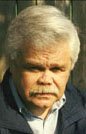
Cooking up The Wild Side
by
Mark L. Van Name
If I’m eating at a restaurant with a chef whose work I respect, I’ll always opt for the tasting menu. Though it often means I’ll be trying dishes I’ve never experienced before, I want to eat the food the chef most wants to prepare.
I edit anthologies the same way. I approach writers whose work I enjoy, tell them the theme of the book, and then turn them loose. I don’t mind not knowing what’s coming; I want to read the stories they most want to tell.
With The Wild Side, my goal was to explore the romantic and sexual elements that are present in so much of urban fantasy. All of my novels to date have been science fiction mystery/adventure stories, tales with mystery and thriller structures set far in the future. Editing this book provided a way for me to work in urban fantasy and also give voice to a character, Diego Chan, who’d been kicking around in my head for quite some time. The noir story that resulted, “The Long Dark Night of Diego Chan,” is at its core about a hard-bitten operative out to do a last right deed by a lost friend.
I did not offer that story as a model to the other writers. Instead, each started with the same blank slate: urban fantasy with an erotic edge. The destinations they reached from that one starting point varied wildly.
Caitlin Kittredge’s “Born Under a Bad Sign” proved to be darker and rougher than my own offering. A story of a fallen angel working in a brothel in 1952, it starts hard and grows harder when some most unwelcome visitors make an already risky job far more dangerous.
By contrast, Dana Cameron’s “Love Knot” is a romp that explores the mystery of why an irresistible ardor overcomes all the people who come into contact with an unusual artifact—and how to dispose of that most troublesome object.
The seven other stories feature witches, zombies, fairies, changelings, and other fantastic creatures; vary in time and place from old London to modern Las Vegas; and range from light and comedic to taut and deadly.
What they have in common are the theme and the fact that I enjoyed reading them. I hope other readers do, too.
THE END
--------------------------------------------------PWA BANQUET
Hey Folks,
Seems some people don't understand that the PWA Banquet is open to the public. Since it's Sept. 1 I was hping you'd post this, with my thanks.
Thrills! Chills! Dinner! Cocktails! Awards! The 30th annual PWA Shamus Awards Banquet will be Friday night, September 16, from 6:30 to 9:00 p.m. at a St. Louis institution. No, we're not telling you which institution it is. It's a suprise - a great surprise, trust us, and transportation will be provided from the hotel. Tickets are $60, and we have lots of room for everyone (the event is open to the public), so email Bob Randisi at RRandisi@aol.com right this very minute for more information and to order your ticket.
RJR
Wednesday, August 31, 2011

Cornell Woolrich by Barry Malzberg

Premiere science fiction and crime writer Barry Malzberg worked with Cornell Woolrich in the last years of Woolrich's life. Here is a legendary piece he wrote about the man.
Cornell
1. He is ordered, once again, to meet his public. Accordingly, he stands behind a lectern while a long line of people, curiously orderly, wait to speak to him one by one. "I loved your dancing," the first, a young man, says, "but essentially, you know, it was very cheap." He agrees with this. "I hated your dancing," an elderly critic points out, "but essentially I admit it was important." He agrees with this. "I both loved and hated your dancing," the third, a young woman, says, "because it was cheap and important," and he agrees with this as the line comes upon him, talking far through the night and passing, one by one, into darkness until he stands blinking in the dawn, rubbing his eyes and looking at the faint trail of litter, wondering if it is a code which somehow he could decipher.
2. He imagines himself being strangled and thrown, still alive, into a small mass of struggle at the bottom of a well. In this well he slowly explodes, balloons to enormous proportion, and as his body slowly fills the area, he perishes in his own breath. This pleases him, rather, although he is not exactly sure how he can get at it artistically.
3. In the hotel room he dreams he is watching on television a tape of his own performance. He has become a dancer and is describing great arcs of grayness while the television host smiles and a chorus of ten sings the songs he loves best. His dancing is a success, and, squinting at his own image, he notices that gaps in his technique appear to have been missed by the studio audience. At the end of his performance the television host embraces him and brings him out for another bow, before the commercial goes on. "Wonderful of you to be herewith us," the host says, "and we'll have you back real soon," but although he dreams that he watches the television unsleeping for many years, he never sees himself again.
4. He receives an award from a national guild of his profession. The award is cast in the form of a finger of silver, pointing at him. No matter which which way he turns the award, the finger always points in his direction. He conceals it with small scraps of paper and hides it in his closet.
5. He is given an assignment but all that he can think of when the time comes to work is cyanosis: the way in which the facial skin will change color when strangulation ensues. It will go from the white of terror to pink to rose to deeper red to purple and finally to gentlest blue of the forgotten sea. The colors tantalize him and he is unable to work for thinking of them, but when the time comes for his assignment to be done he is told that he has done well and is paid accordingly. He then develops a trick of thinking about cyanosis whenever the time comes for work and up to a point this functions well, although he realizes that he cannot rely on such mental tricks forever.
6. He dreams that a girl asks him for his autograph but before he can sign she walks away. Turning in his bed, he finds that this is only partially a dream and that some girl is talking to him in the sheets. He does not know what she is saying. She seems to have a speech impediment and the words are blurred. At a certain point, although he tries to be polite, he throws her out. The girl in the bed and the girl in his dream may have been the same although the question of the speech defect makes this somewhat doubtful. She has asked him very distinctly for his autograph.
7. A man in the hotel lobby asks him for an autograph. He balances the page between his knees while he signs. The man says that he grew up watching him dance and for a moment he doubts the dream until he remembers that all of them all of them all of them are liars.
8. The hotel burns to the ground. Saved, he moves to another hotel whose inscription is: WE ANNOUNCE FIRES BEFOREHAND.
9. While he sleeps something seems to seize him by the throat and he awakens gasping,but it is only the hand of one of the businessmen with whom he deals. "This can't go on indefinitely," the businessman says mildly, and he answers, "I know that very well; let me straighten it out in the morning"—and so on and so forth until the businessman finally goes away, at which point he returns to sleep until dawn. Awakening, it seems that he should remember something but there is already too much on his mind for such worthless games of recollection.
10. He is ordered, once again, to meet his public. Accordingly, he stands behind a lectern and stands behind a lectern and stands behind a lectern and stands—
Afterword to "Cornell"
Cornell Woolrich (1904-68) lived in the Sheraton Russell Hotel on Park Avenue, New York City, through the last decade of his life. He was represented by the literary agency with which I worked from 1965 to 1967, and I sought out Woolrich as an admirer of his work. I was able to do a few things for that work—Ace reissued many titles in the late sixties, Escapade took a story— but I was able to do nothing for the man, who was the unhappiest writer I have ever known. This is quite a statement.
Cornell is still so close and so painful to me (my younger daughter's middle name is his) that I cannot discuss him, in or out of print. This pastiche, written in July 197I and sold to his last patron, Fred Dannay of Ellery Queen's Mystery Magazine, was a false attempt at purgation. No mercy, no mercy: Cornell lives within all of us. His work of the forties was the best of his generation in his field and he will someday be recognized as one of the finest American writers. No mercy there either: such recognition in his lifetime would have made for Cornell no difference. He needed to die.
Tuesday, August 30, 2011
PLease say it ain't true-The Thin Man to be remade
From The Wrap today-
Jurassic Park' Writer David Koepp to Tackle 'Thin Man'
Published: August 30, 2011 @ 1:04 pm
By Joshua L. Weinstein
Super-writer David Koepp has signed on to write "The Thin Man," a remake of the 1934 movie, for Warner Bros., TheWrap has confirmed.
Koepp's credits include "Jurassic Park" and "Carlito's Way," both in 1993, "Mission: Impossible" in 1996, "Panic Room" in 2007" and "Indiana Jones and the Kingdom of the Crystal Skull" in 2008.
He also wrote the troubled "Men in Black III."
"The Thin Man" has some fancy attachments: Johnny Depp is starring as Nick Charles, the part made famous by William Powell.
Also read: Rob Marshall Signs on to Direct Johnny Depp's 'Thin Man' Remake
Rob Marshall, who was nominated for the Academy Award for directing the 2002 "Chicago," is behind the camera. Marshall last directed Depp in this year's "Pirates of the Caribbean: On Stranger Tides." He also directed the 2005 "Memoirs of a Geisha."
The original movie, based on the Dashiell Hammett novel, was a big enough hit that producers made five sequels.
It's about Nick, a retired detective, and his heiress wife, Nora Charles. For fun, the two solve crimes.
Depp, Christi Dembrowski and Kevin McCormick are producing.
Deadline first reported the news.
Jurassic Park' Writer David Koepp to Tackle 'Thin Man'
Published: August 30, 2011 @ 1:04 pm
By Joshua L. Weinstein
Super-writer David Koepp has signed on to write "The Thin Man," a remake of the 1934 movie, for Warner Bros., TheWrap has confirmed.
Koepp's credits include "Jurassic Park" and "Carlito's Way," both in 1993, "Mission: Impossible" in 1996, "Panic Room" in 2007" and "Indiana Jones and the Kingdom of the Crystal Skull" in 2008.
He also wrote the troubled "Men in Black III."
"The Thin Man" has some fancy attachments: Johnny Depp is starring as Nick Charles, the part made famous by William Powell.
Also read: Rob Marshall Signs on to Direct Johnny Depp's 'Thin Man' Remake
Rob Marshall, who was nominated for the Academy Award for directing the 2002 "Chicago," is behind the camera. Marshall last directed Depp in this year's "Pirates of the Caribbean: On Stranger Tides." He also directed the 2005 "Memoirs of a Geisha."
The original movie, based on the Dashiell Hammett novel, was a big enough hit that producers made five sequels.
It's about Nick, a retired detective, and his heiress wife, Nora Charles. For fun, the two solve crimes.
Depp, Christi Dembrowski and Kevin McCormick are producing.
Deadline first reported the news.
Monday, August 29, 2011
Invasion of The Body Snatchers Redux

From 2007:
Fred Blosser pointed me to an interesting article in today's NY Times about the new Nicole Kidman film "Invasion"--the fourth version of Invasion of The Body Snatchers. Here's a section I found interesting:
"Siegel’s laconic style is well suited to conveying a multitude of meanings (as he would prove again in 1971’s “Dirty Harry”), but the open-endedness of “Invasion” was not a conscious goal so much as the result of a tangle of personalities behind the scenes. The film’s producer, Walter Wanger, made his name with issue-driven entertainments like the Spanish Civil War drama “Blockade” and Alfred Hitchcock’s espionage thriller “Foreign Correspondent.” Wanger first read Finney’s story when it was serialized in Collier’s magazine in 1954, and even before the novel was published the following year, he had hired Siegel and the screenwriter Daniel Mainwaring to adapt it.
"The book, notably more upbeat than the film, ends with the vanquishing of the aliens. The movie’s subversive elements can be traced mostly to Mainwaring, whose other screenplay credits include the classic noir “Out of the Past” (1947). A committed leftist who was briefly blacklisted, Mainwaring infused Finney’s scenario with an unsparing pessimism. The love interest (Dana Wynter) winds up a pod and, in the cut Siegel submitted to the studio, Allied Artists, the hero (Kevin McCarthy) is last seen charging out into freeway traffic, issuing a warning that no one heeds: “They’re here already! You’re next!”
"With a budget of less than $400,000, Siegel finished the film in 23 days, but the post-production dragged on for months when Allied Artists complained about the odd mix of humor and horror, and the bleakness of the conclusion. Trims were made, and in a compromise that further mixed the movie’s message, Siegel and Mainwaring, with a minimum of conviction, tacked on a happy ending.
"Mr. Kaufman’s “Invasion,” while fully a product of its time, carries out what Siegel was unable to do, adding hints of comedy even as it pushes its hero (Donald Sutherland) toward the grimmest of fates. Homage is duly paid to its predecessor with a couple of knowing cameos: Siegel is glimpsed as a cabdriver, and an aged Mr. McCarthy reappears, still wild-eyed and running, sounding the alarm like a Paul Revere who’s been at it for 20 years.
"Reissued on DVD last week in a two-disc edition, the ’78 “Invasion” also lends a uniquely creepy dimension to the fraught cold war practice of naming names. The drones, when they notice a human in their midst, alert the others by unleashing a sirenlike banshee wail. (The sound designer Ben Burtt used pig shrieks for the effect.)
for the rest go here ......
http://www.nytimes.com/2007/08/12/movies/12lim.html?_r=1&ref=movies&oref=slogin
Ed here:If you're interested in the subject of the first three movie versions, may I recommend The Invasion of The Body Snatchers Companion that I edited with Kevin McCarthy. Stepen King, Dean Koontz, Jon Breen, Tom Picirrilli, Fred Blosser and many other contribute articles about the various films plus there are extensive interviews with Kevin, Robert Solo (who produced two of the movies), Abel Ferrara and others. I prefer the Stark House edition. A much better looking book with more room for extended interviews. It's still available:
http://www.starkhousepress.com/
Sunday, August 28, 2011
I admit I was wrong about Louie CK
Now I can't even remember what he did or said in one of the first season's episodes that turned me off to his show. But bored last night I decided to try two episodes from this season, Pamela and Country Drive.
I'm sold and I'm hooked. These are like extraordinary literary stories. The observations are fascinating. In Pamela he's a grown up version of Woody Allen; his confession of love manages to be hilarious and moving at the same time. I would not have chosen this actress in an audition and I would have been dead wrong. She's perfect.
Country Drive masterfully deals with old age, the historical disconnect in America's past and parenting. I've rarely seen child actresses as deft as the two little girls are but they match him line for line every time.
I have several more episodes to go and I'm really looking forward to them. I'm now a big big fan of his.
I'm sold and I'm hooked. These are like extraordinary literary stories. The observations are fascinating. In Pamela he's a grown up version of Woody Allen; his confession of love manages to be hilarious and moving at the same time. I would not have chosen this actress in an audition and I would have been dead wrong. She's perfect.
Country Drive masterfully deals with old age, the historical disconnect in America's past and parenting. I've rarely seen child actresses as deft as the two little girls are but they match him line for line every time.
I have several more episodes to go and I'm really looking forward to them. I'm now a big big fan of his.
Friday, August 26, 2011
New Books: Katja From The Punk Band by Simon Logan

Katja From The Punk Band by Simon Logan
I love any form of art which is a puzzle.
“It doesn’t matter whether it’s Chino Moreno’s moody, vague lyrics, David Lynch’s disjointed and inverted narratives or the paintings of surrealists like Roland Penrose – if there’s a puzzle there then it draws me in.
After completing my first full length novel, Pretty Little Things To Fill Up the Void, and it turning out at 98K, I wanted to write something which more stripped down but I also wanted to challenge myself in terms of the narrative structure. Although not a huge fan of either Tarantino or Elmore Leonard, I’d both read Jackie Brown and seen the movie, and its structure of overlapping and sometimes colliding plotlines had stuck with me. It was a puzzle.
I therefore set out to write something which was leaner and meaner than PLTTFUTV and which adopted the interweaving plotlines structure. I started with the first scene - of the protagonist arriving at her work having just shot her boyfriend and stolen a chemical vial to be smuggled off of the island she is on and then hooking up with another character to help her escape –then basically just started spiralling everything out from there.
I tend to write out the entire plot to any of my novels, at least in sketch form, before I even think about beginning writing them and that certainly came in handy for Katja From The Punk Band. I came up with the separate plot threads then spent an afternoon cutting up pieces of paper with the various scenes which made up each thread and then arranging them and re-arranging them on the floor to see how they would best all fit together. Once that was done I filled in the gaps and cut out bits which weren’t going to work – and hey presto the book was born.
As well as the actual structure of the book I also wanted to adopt a more stripped-down approach to the actual writing itself, avoiding any unnecessary elaboration or descriptions and making sure it moved along at a fast pace throughout.
Since being published, Katja From The Punk Band has done really well for me, being selected as one of Spinetingler Magazine’s Top Ten Crime Books of 2010 as well as being nominated for their Best New Voice Award and coming in as joint winner of the Fireball Award for the Best Opening Line. Not only that but it got me an agent, the wonderful Allan Guthrie of Jenny Brown Literary Agency - so I certainly can’t complain.
So, with another two books in the bag in the meantime (Guerra, an industrial thriller about pirate broadcasters fighting a media war, and lovejunky, part dystopic crime thriller and part brooding noir romance) I figure Katja From The Punk Band 2 is a pretty good idea.
So I’m writing it.”
New Books:Deadly Cove by Brendan DuBois

Deadly Cove
by
Brendan DuBois
When I started writing my first novel, “Dead Sand” --- published by Otto Penzler Books --- George Bush was in the White House and we were engaged in combat in Iraq. Now, I’m happy to report that St. Martin’s Press has just released the seventh book in my Lewis Cole mystery series, “Deadly Cove."
Astute readers out there might do the math and say boy, that Brendan DuBois is one prolific son-of-a-gun, but readers who know my depraved sense of humor will do the history, and say, yeah, right, DuBois, nice way to make a joke.
The joke being, of course, that I wrote “Dead Sand” following Iraq’s invasion of Kuwait and the first Persian Gulf War, overseen by the first President George Bush. I believe Marx once said that history repeats itself first as a tragedy, and then a farce, but I’m glad he never said anything about mystery novels repeating themselves.
For that’s the obvious pitfalls for a recurring mystery series, is repeating the same old plots with the same old characters. It’s comforting to go back and walk and re-walk the same characters and situations, but I’d like to think that I avoided those tempting pitfalls in “Deadly Cove.”
First of all, while the cast of characters remains the same, there are important differences. The main character is Lewis Cole, a former Department of Defense research analyst, retired on disability, who has a cushy cover job as a columnist for “Shoreline” magazine and lives in an old house in Tyler Beach, N.H. His best friend is Diane Woods, a gay police detective with the Tyler Police Department, and he also has ties with Paula Quinn, a former lover who’s a newspaper reporter for the Tyler Chronicle. And rounding up the crew is Felix Tinios, a former mob enforcer from Boston’s North End, who has a new career as a security consultant.
Throughout all of my books, Lewis gets involved in things mysterious in and around the historic New Hampshire seacoast, calling on his friends to either help him out or provide back-up where needed. There have been killings, violence, historical discoveries and breathtaking escapes, touched with a funky sense of humor. It’s been a fun series to write, and from a fair number of readers, I’ve had an enthusiastic response to Lewis and his adventures.
But in plotting book seven, I made a conscious decision to mix things up. I started plotting and writing “Deadly Cove” at the start of our current economic downturn, thinking it might be a gamble to do so (what if there was a stunning turnaround), but based on where the economy is now, it was a cinch bet.
This downturn has impacted Lewis and his friends. Lewis’ job at his magazine is threatened, and he’s forced to do more with less. Paula Quinn is now an assistant editor, with the same pay and more responsibilities. Diane Woods has been promoted to detective sergeant, and with the advent of New Hampshire allowing gay marriage, wants to marry her long-time partner, who’s reluctant to make that big step. She’s also dependent on the overtime while working at the nuclear power protests. And even a tough guy like Felix Tinios, quick with his fists and with a gun, is struggling to find a full-paying gig.
In “Deadly Cove,” a number of anti-nuclear protesters have descended upon the Falconer nuclear power plant, to oppose a decision to build a second reactor at the plant site. This comes on the heels of another nuclear disaster in Russia, not unlike Chernobyl, which reenergizes the anti-nuclear movement. (Of course, having the Japanese nuclear disaster strike a few months before “Deadly Cove” was released was just plain creepy). One would think that the protesters would receive deep support from the locals, but that’s not the case.
Many of the locals resent having their lives upended by the thousands of protesters. And beyond that, hundreds of union workers --- seeing the possibility of long-term, good-paying jobs threatened by what they see as long-haired, leftist troublemakers --- also come upon the scene. There’s tension in the air during the demonstrations, and in a sudden burst of violence, a prominent anti-nuclear leader is assassinated in front of Lewis and scores of others.
As before in other works, Lewis swings into action. He’s not so much concerned about the activist who’s been shot; he’s more concerned about his friend, Paula Quinn, who’s been injured during the chaos following the murder.
As Lewis investigates the shooting and its aftermath, he comes under relationship pressure from his girlfriend, a political consultant for a prominent senator running for president, as well as his new boss at “Shoreline” magazine, who is determined to make Lewis’ working environment the proverbial living hell. The shooter, who wants to keep his or her work under wraps, also stalks him. As the novel progresses, the supporting characters play their usual role, but there’s an edge to what’s going on, as the characters react to outside forces and actions beyond their control.
And for a first in my Lewis Cole novels, I also end the novel on a cliffhanger, with a prominent character facing death. It’s an ending that has ensured a number of e-mails from my readers, demanding to know what’s going to happen next, which makes me quite happy. I feel “Deadly Cove” is my strongest series novel yet.
Looking back, I don’t think I made a conscious decision to write a novel that reflects so many of our current economic and political tensions, but I’m glad I did. It’s a stronger novel for it, and I hope it doesn’t disappoint any Marxists out there.
# # #
Thursday, August 25, 2011
Forgotten Books: Hollywood Rock by Marshall Crenshaw

I've always liked Marshall Crenshaw's songs especially the heartbroke ones which he manages to write with a light but no less painful touch. I saw him once in person just after his career started to slide. He's an interesting guy and a fine musician. The interesting guy angle is on display here with this guide to rock'n roll movies.
The Guide goes all the way to 1994. The reviews are sometimes serious demonstrating that besides being a true rocker he's also a perceptive critic. But the most fun for people like me who grew up in the fifties are his reviews of the rock movies of that decade (and on into the sixties).
God were those movies terrible. I lost count of how many had the same basic plot--town/suburb of oldsters hate rock but kids put on a show for charity/fame and convince even the crabbiest oldster in the film what great young `uns they are after all. And those were the ones that were at least about rock `n roll. There were hybrids put together by adults who didn't have a clue. Thus in the same movie you might have Chuck Berry, the Platters and Liberace.
One of these was so bad that Crenshaw calls it "The attempted murder of rock `n roll." This starred Jimmy Clanton as "Teenage Millionaire." The first thing wrong with it Crenshaw notes is that Clanton "looks about twenty-eight." Here you had Jackie Wilson and Dion appearing with Zasu Pitts (talented actress who started in the silents) and that great actor...Rocky Graziano. Crenshaw's summary line for this one: "The producers of this film are probably on the run because there's no statute of limitations on crimes like this."
Inevitably he gets to Elvis movies and has a great time with them. He says that in "Kissin Cousins" "Elvis fights heroically for a nuclear missile site" to be implanted in this lovely bucolic setting (thanks El). There's also a weird sad note for those of us who liked the Fifties western series "Sugarfoot." At the time Will Hutchins appeared in his Elvis movie he was employed by a studio as a bicyle messenger. Edd Byrnes deserved this fate not Will Hutchins.
A dazzling, smart, fond look at the good and bad that has been done to rock `n roll in both American and British films (The Brits were at least as goofy as we were). You can't go wrong with this one.
Wednesday, August 24, 2011
Say it ain't so...`The Wild Bunch' to be re-made

Tony Scott Boarding ‘The Wild Bunch’ While Revving ‘Hell’s Angels’ As Next Pic
By MIKE FLEMING | Thursday August 18, 2011 @ 6:00pm EDT
Tags: Brian Helgeland, Chris Pine, David Ayer, Denzel Washington, Ernest Borgnine, Jeff Bridges, Jerry Weintraub, Robert Ryan, Ryan Reynolds, Sam Peckinpah, Scott Frank, Sonny Barger, Stephen Gaghan, Tom Cruise, Tony Scott, Warren Oates, William Holden
EXCLUSIVE: Deadline revealed this morning that Ridley Scott was returning to his sci-fi classic Blade Runner. His Scott Free partner and brother Tony Scott is also getting serious about a new version of a movie classic. Scott is in talks with Warner Bros to direct a reboot of the 1969 Sam Peckinpah-directed The Wild Bunch. This film becomes one of three or so that Scott is most eager to direct as his follow-up to the Denzel Washington-Chris Pine action film Unstoppable.
Scott’s next assignment will be Hell’s Angels, though its timing will depend on whether he gets the actor he wants to play gang leader Sonny Barger. I’m told that he wants Jeff Bridges. They’ve not met face to face yet, because Bridges is right now touring his self-titled musical album that he recorded after he won the Oscar playing Bad Blake in Crazy Heart. Once Bridges gets back to film work, he’s booked to star with Ryan Reynolds in Universal’s R.I.P.D. and Warner Bros/Legendary Pictures’ The Seventh Son. If Scott has his heart set on Bridges and the actor says yes, Hell’s Angels won’t get underway until next spring or later. Fox 2000′s Hell’s Angels is set around the Laughlin riots of 2001 when the Angels were caught up in a war with rival gang The Mongols. The drama revolves around a friendship that develops between Barger and a young drifter mechanic with a gift for fixing motorcycles. The script is in by Scott Frank, who did numerous rewrites of an earlier draft by Stephen Gaghan.
for the rest go here:
http://www.deadline.com/2011/08/tony-scott-boarding-the-wild-bunch-while-revving-hells-angels-as-next-pic/
Tuesday, August 23, 2011
How Ray Bradbury became a literary icon
MONDAY, AUG 22, 2011 21:01 ET
How Ray Bradbury became a literary icon
A new book explores the acclaimed sci-fi writer's rise to fame -- and how he helped make a genre cool
BY ADAM KIRSCH, BARNES & NOBLE REVIEW
This article appears courtesy of The Barnes & Noble Review.
These days, when it's common to see adults engrossed in Harry Potter on the subway, and the edgiest shows on HBO are about vampires and dragons, it's hard to believe there was once a time when sci-fi and fantasy fiction were confined to a cultural ghetto. But in his new study, "Becoming Ray Bradbury" (Illinois), Jonathan R. Eller shows that being a sci-fi writer in pre-World War II America was thoroughly unglamorous -- less a career than a dubious kind of hobby. Ray Bradbury himself was an undistinguished high school senior when he joined the Los Angeles Science Fiction League in 1937, and in the years that followed he seemed likely to remain in that amateur realm: sending his stories to mimeographed fanzines, scraping together bus fare to attend annual conventions. The highest glory available was to publish in "prozines" with names like Astonishing Stories and Thrilling Wonder, which actually paid their contributors -- sometimes as much as a penny a word.
As Eller shows, Bradbury cherished a secret sense that he was marked out for something greater. "I believe there was always one core of belief in me that burned from the time I was twelve on: I want to be different, to be different from everybody else ... It is only that hard core of wanting to be different that separates the true artist, I believe, from the man who writes merely as a means of livelihood." Eller's book is an academic study, charting Bradbury's early career in thorough, at times numbing detail, up to the publication of the three books that made him famous: "The Martian Chronicles," "The Illustrated Man" and "Fahrenheit 451," which appeared in rapid sequence in the early 1950s.
But it is easy to imagine a novelist turning the young Bradbury into a character like Jude Fawley, in Hardy's "Jude the Obscure": a gifted man, cut off by poverty and provincialism from the sources of high culture, struggling to make his way into the literary world where he belongs. What allowed Bradbury to succeed where Jude failed was partly luck; for one thing, his bad eyesight spared him from the draft, allowing him to spend the World War II years practicing his craft.
for the rest go here:
http://www.salon.com/books/biography/index.html?story=/books/2011/08/22/becoming_ray_bradbury_jonathan_eller
Monday, August 22, 2011
New Books: CLAN by Harry Shannon

CLAN by Harry Shannon is now on Kindle for $3.99
Like most people, I remember my first time. Pretty well, in fact. I was sober. It was wonderful. I was curled up on the bed, with my head on the pillow and my legs extended. Some 50's music was playing. I was probably wearing pajamas; most likely with some stupid-assed Howdy Doody and Buffalo Bob stuff printed all over them. Or maybe it was Rin Tin Tin, I can’t say for sure. Not after more than fifty years. I was already a bookworm, though. I was devouring everything within sight by the time I was seven or eight years old. So this night I was maybe eleven, give or take. And I believe that first horror story I ever read was by H.H. Munro, who wrote under the name of Saki. The masterful little tale was of one angry and abused little boy with a vivid sense of outrage and an “imaginary creature” that was hiding in his room. The kid claimed he could summon it with a low, poetic chant. Adults mocked him. Of course it turned out to be quite real. That story was called “Srendi Vashtar.” The ending sticks with me to this day.
Anyway, that was my first time, and after that I was no longer innocent. I had been shocked into an appreciation for the macabre, and for the literary realm of horror and dark fantasy. Next came the astonishing Ray Bradbury, Ambrose Bierce, John Collier, Anthony Boucher, Richard Matheson, Roald Dahl, Robert Bloch, Robert Heinlein, A.E. Van Vogt, Shirley Jackson. So many gifted folks. And later on Stephen King, Peter Straub, Robert McCammon and a host of other authors inspired me all over again, as did the Gold Medal and Lancer Books of the 60's. But first there was that one gory little tale by Saki.
I suspect it was not an accident that the first story to grab me that way was one of flesh-rending violence. Few of us have made peace with both extremes of our nature; the beastly and the spiritual, the gourmet and the cannibal. The oldest cave paintings treat animals as deities who sacrifice their lives to feed us. They are likely just expressions of our guilt and deep ambivalence about being the earth’s dominant predators. However, our gargantuan base appetites tend to be counter-balanced with a reverence for life that makes the act of killing genuinely disturbing to our higher nature. It is a conundrum. But whether we like it or not, that dark craving does exist. It is a deep down gnawing, gristle-rending lust for blood and bone. Just stop by a steakhouse and watch the patrons chewing away, minds in vapid rapture. Or pay really close attention to the audience at a football game.
Folks, although my new novel CLAN (early incarnation released as Night of the Werewolf in late 2002) does indeed deal with these themes, it is first and foremost an entertainment. It’s a B-movie, a tribute to the spirit of pure pulp and the glory days of mass-market fiction, with a little crime noir tossed in for seasoning. But I would also like to think CLAN stands on its own as a fast-paced thriller. Readers will have to be the judge of that.
I have always had a soft spot for this one, so I'm delighted to have it rewritten, improved and back in print as a more affordable trade paperback and ebook. The first version only sold a modest number of limited-edition hardcover copies. This one should be far more widely read. I'd love to see the movie made someday, now that CG is good enough to bring this one off. Fingers crossed, because there is a screenplay already written. Anyway, should you sample and buy this new baby, I hope you consume a lot of popcorn while reading, and that at least a few of the scenes actually disturb your sleep. Nothing would make me happier than that.
Best,
Harry Shannon
1
Best-Selling Author and Grieving Mother Jude Deveraux Loses $20 Million to ‘Psychics’

Jude Deveraux
From The Daily Mail U.K.
Best-Selling Author and Grieving Mother Loses $20 Million to ‘Psychics’
Bestselling author 'gave fortune tellers $20m after she was told her dead son was somewhere between heaven and hell'
By JOHN STEVENS and TED THORNHILLL
A bestselling author gave $20 million to a group of fortune-telling gypsies after she was told that her dead son was somewhere between heaven and hell, it has been claimed.
Prosecutors said ten 'psychic readers' from Fort Lauderdale in Florida allegedly conned customers out of a total of $40million, telling them that unless they handed over cash and valuables, they would be haunted.
Jude Deveraux, the author of 37 New York Times bestsellers, is reported to be the writer who lost $20 million.
Conned? Jude Deveraux, the author of 37 New York Times bestsellers, is reported to be the writer who lost $20 million to the gang of fortune tellers
Prosecutors refused to identify the author who they said lost her eight-year-old son in a motorcycle accident, but several sources with knowledge of the case has named Ms Deveraux.
More...
Aruba suspect and missing woman did NOT go snorkelling, says witness as man's account of how Robyn Gardner vanished falls apart
'I was up all night trying to figure out how to use those iPhone things.' West Memphis Three on first taste of freedom in 18 years after release for 'satanic' boy scout killings
The author, whose real name is Jude Gilliam Montassir, wrote on her MySpace page that she 'adopted a son, Sam Alexander Montassir… My son died at age 8 in a motorcycle accident.'
Arrested: Nancy Marks is one of the fortune tellers who has been arrested for fraud (file picture)
Ms Deveraux, 63, who has written romantic novels and tales of the paranormal, was allegedly exploited by at least one of the defendants, Rose Marks, who she considered a friend.
'She was under, for want of a better word, the curse of Rose Marks,' Assistant U.S. Attorney Laurence Bardfeld told a judge at a hearing in federal court in West Palm Beach on Friday.
Police swooped on the soothsayers, who are all related by blood or marriage, this week after a huge cross-state investigation dubbed 'Operation Crystal Ball'.
More than 400 rings, 100 watches and 200 necklaces – many of them from Cartier, Tiffany & Co and Gucci – were seized.
Facing charges are Rose Marks, 60, Nancy Marks, 42, Cynthia Miller, 33, Rosie Marks, 36, Victoria Eli, 65, Vivian Marks, 21, Ricky Marks, 39, Michael Marks, 33, Donnie Eli, 38, and Peter Wolofsky, 84.
They all billed themselves as fortune tellers, clairvoyants and spiritual advisers and operated from shops in Fort Lauderdale.
The authorities said that many customers came to them as a desperate last resort, for instance hoping that they could be cured of a disease or put in touch with a deceased loved one.
Read more: http://www.dailymail.co.uk/news/article-2028541/Bestselling-author-reported-Jude-Deveraux-gave-fortune-tellers-20m.html#ixzz1VlojyLFX
Sunday, August 21, 2011
Gold Medal in The 70s by Fred Blosser


GOLD MEDAL IN THE 70s by Fred Blosser
Whenever the old timers write fondly about Gold Medal Books, they seem to dwell mostly on the glory era
of the '50s and '60s. I don't see the '70s GMs discussed much. Maybe I've
missed an article here or a blog there? Or could it be that fans view the '70s
as a twilight era for GM, a sad march toward the line's eventual extinction, and
best forgotten?
One could argue that attrition had hit GM hard. Knox Burger departed in ...
1970? Also by 1970, Stephen Marlowe had left the GM stable, the six-book run of
Richard Stark's Parker under the GM tag (four originals, plus two movie tie-in
reprints from Pocket) had ended, and I believe Lawrence Block had moved on as
well.
The old guard of John D. MacDonald, Donald Hamilton, Philip Atlee, Dan J.
Marlowe, Lou Cameron, Charles Runyon, and Edward S. Aarons hung on through some,
most, or all of the decade. (And in the Western line, "Jonas Ward" plugged on.)
In my opinion, Hamilton's and Marlowe's best work was behind them, although
Hamilton had already started to slip in the mid-'60s when the Matt Helms began
to get longer in page count and flabbier in pace. The '70s cover art, in which
the tough-guy series characters began to look like sleazy lounge singers or porn
actors in long hair and sideburns, didn't help much either.
I can't identify any one dominant trend in the '70s GMs, but there were some
smaller trends, at least in the first half of the decade:
MAFIA NOVELS ... "From the publisher of THE GODFATHER," as Fawcett Gold Medal's
cover blurbs capitalized on the fact that Fawcett Crest had published the
paperback edition of Mario Puzo's bestseller. Could it also have been a
marketing campaign to compete with the rising tide of The Executioner and
similar war-against-the-mafia pulp paperback series?
THIEF-TURNED-SECRET-AGENT NOVELS, a sub-genre not unique to GM at the time by
any means, but Dan J. Marlowe's Earl Drake and Don Smith's Tim Parnell were game
contenders, Marlowe's in relative longevity if not in relative quality (unless
someone would care to argue that Marlowe's OPERATION ... titles were better than
THE NAME OF THE GAME IS DEATH and ONE ENDLESS HOUR).
MOTORCYCLE GANGS -- although I may be stretching a point on this one. Do two
novels -- THE HIGH SIDE by Max Ehrlich and THE SCARRED MAN by Basil Heatter -- a
trend make?
RETURN OF SOME STALWARTS WHO HAD BEEN SCARCE ON THE GM LISTS IN THE LATTER '60S
-- Peter Rabe, Robert Colby, Richard Wormser, and Ovid Demaris (with a reprint
of CANDYLEG as a movie-tie in).
New to the ranks in the '70s were Daniel Da Cruz, Richard Posner, and (a
one-shot, I believe) Mike Jahn. Da Cruz's DOUBLE KILL is pretty good -- reminds
me of Dan Marlowe in places -- and its three sequels in the Jock Sargent series
have their moments. I don't know that I ever read any of Posner's stuff.
All in all, according to my personal tastes, I can't say that GM in the
Watergate and Disco years matched, volt for volt, the energy of the '50s years
with Charles Williams, Stephen Marlowe, and Peter Rabe (and some would probably
add Richard Prather) or the '60s with JDM, Jim Thompson, the best of Dan J.
Marlowe, Block, and the early Matt Helms. But I wouldn't count the line out
altogether after 1969. DOUBLE KILL, THE PADRONE, BLACK MAFIA, THE CANADIAN
BOMBER CONTRACT, and POWER KILL are worthy efforts, to name some that come to
mind.
Saturday, August 20, 2011
DYING MEMORIES by Dave Zeltserman

In ten years Dave Zeltserman has just about covered the waterfront with the range of his novels and stories. In so doing he's created at least three neo-noir masterpieces, done both Rex Stout and Bram Stoker one better, and now he's edged into territory previously the province of the late Richard Condon.
Dying Memories is a flat-out conspiracy novel with an engine that never falters. The story starts in the first sentence and pushes relentlessly to the last sentence. No detours get in the way.
Murders and mysterious e mails lead reporter Bill Conway to a corporation named VIGen whose stated business may sound innocent but isn't. What raises the novel above many conspiracy novels is that Zeltserman is able to keep thrilling us while at the same time seriously examining how human beings are being subjected to experiments and critical intrusions by both corporations and government. He always manages to give us some new twists on being framed for murder.
Think of such great thrillers as North By Northwest and Charade and the early novels of Michael Crichton. The pleasure comes from putting all the pieces together until the smashing climax. If you're up for great intelligent read, this is it. And for only $2.99 wherever e books are sold.
Thursday, August 18, 2011
Alan Guthrie's Thuggish Thirteen
Allan Guthrie’s Thuggish Thirteen—Brit Grit Part 3 From AsheditFor the rest go here:
Filed under: Uncategorized — ashedit
I am beyond thrilled to welcome Allan Guthrie to Ashedit. I asked Allan for “a few words” on the current state of British crime fiction and he delivered a microcosm of space and time in 13 paragraphs—a feat not unlike stuffing a battleship into a bottle. Allan’s name comes up time and again whenever British crime fiction is mentioned. He is the author of 5 novels, including a Top Ten Amazon Bestseller. His debut novel was shortlisted for the CWA Debut Dagger award and went on to win the Theakston’s Crime Novel Of The Year in 2007. He was also nominated for an Edgar Award. When he’s not writing, Allan is a literary agent with Jenny Brown Associates. A complete list of his credits appears at the end of this feature.

Thuggish Thirteen:
Ray Banks, originally from Kirkcaldy but now living in Edinburgh, is part Ted Lewis, part Bukowski, part Palahniuk, and a whole lot Ray Banks. He’s best known for a 4-book series featuring Manchester-based, uprooted Scot, Callum Innes, that might just be the most realistic depiction of a British PI you’ll find. The last book, BEAST OF BURDEN, is just out now in the US and it’s one very brave piece of crime writing. He just released an ebook novella, GUN, which is an excellent introduction to his writing.
David Belbin made his name as a writer of YA fiction. His debut adult crime novel, BONE AND CANE, is set in Nottingham against the backdrop of the 1997 general election, and follows the intersecting storylines of Nick Cane, an ex-con just released after serving a sentence for growing wholesale quantities of cannabis, and Sarah Bone, his ex-girlfriend and Labour MP. Belbin hit the ground running with this book, scoring an Amazon UK #1, and there’s a lot of publisher support for the next book in the series. Very smart crime fiction, potentially as ambitious as David Peace’s RED RIDING QUARTET.
Tony Black’s another Scot with grit in abundance. His series about Edinburgh-based dypso-journo Gus Dury started with PAYING FOR IT and now runs to four books. Black conveys a remarkable sense of place, and Gus Dury – a man who’s never short of an opinion or two – is an excellent guide to the city. The first in a new police procedural series TRUTH LIES BLEEDING is just out as well, and Black has a novella pending with Pulp Press.
For the rest go here:
http://ashedit.wordpress.com/2011/08/17/allan-guthries-thuggish-thirteen—brit-grit-part-3/
Filed under: Uncategorized — ashedit
I am beyond thrilled to welcome Allan Guthrie to Ashedit. I asked Allan for “a few words” on the current state of British crime fiction and he delivered a microcosm of space and time in 13 paragraphs—a feat not unlike stuffing a battleship into a bottle. Allan’s name comes up time and again whenever British crime fiction is mentioned. He is the author of 5 novels, including a Top Ten Amazon Bestseller. His debut novel was shortlisted for the CWA Debut Dagger award and went on to win the Theakston’s Crime Novel Of The Year in 2007. He was also nominated for an Edgar Award. When he’s not writing, Allan is a literary agent with Jenny Brown Associates. A complete list of his credits appears at the end of this feature.

Thuggish Thirteen:
Ray Banks, originally from Kirkcaldy but now living in Edinburgh, is part Ted Lewis, part Bukowski, part Palahniuk, and a whole lot Ray Banks. He’s best known for a 4-book series featuring Manchester-based, uprooted Scot, Callum Innes, that might just be the most realistic depiction of a British PI you’ll find. The last book, BEAST OF BURDEN, is just out now in the US and it’s one very brave piece of crime writing. He just released an ebook novella, GUN, which is an excellent introduction to his writing.
David Belbin made his name as a writer of YA fiction. His debut adult crime novel, BONE AND CANE, is set in Nottingham against the backdrop of the 1997 general election, and follows the intersecting storylines of Nick Cane, an ex-con just released after serving a sentence for growing wholesale quantities of cannabis, and Sarah Bone, his ex-girlfriend and Labour MP. Belbin hit the ground running with this book, scoring an Amazon UK #1, and there’s a lot of publisher support for the next book in the series. Very smart crime fiction, potentially as ambitious as David Peace’s RED RIDING QUARTET.
Tony Black’s another Scot with grit in abundance. His series about Edinburgh-based dypso-journo Gus Dury started with PAYING FOR IT and now runs to four books. Black conveys a remarkable sense of place, and Gus Dury – a man who’s never short of an opinion or two – is an excellent guide to the city. The first in a new police procedural series TRUTH LIES BLEEDING is just out as well, and Black has a novella pending with Pulp Press.
For the rest go here:
http://ashedit.wordpress.com/2011/08/17/allan-guthries-thuggish-thirteen—brit-grit-part-3/
Private Eye Writers Banquet; Literary Brooklyn
FROM ROBERT J. RANDISI, President Private Eye Writers if America
Hey Guys,
Can we get this info on your site, please? Tickets are available for the PWA Banquet in St. Louis.
Fri., Sept. 16, 2011, 6:30 PM to 9:00 PM at a St. Louis institution. Tickets are $60, buses will leave from the Convention Hotel to the venue. Email Christine Matthews ar RRandisi@aol.com for more information, or to order tickets.
RJR
-------------------------------LITERARY BROOKLYN
Brooklyn Takes a Bow as a Town of Writers
By DWIGHT GARNER
Published: August 16, 2011
“Brooklyn, Brooklyn, take me in,” the chorus of an improbably lovely song by the Avett Brothers implores. “Are you aware the shape I’m in?”
Amy Wilton
Evan Hughes
LITERARY BROOKLYN
The Writers of Brooklyn and the Story of American City Life
By Evan Hughes
337 pages. Henry Holt & Company. $17.
Related
Excerpt: 'Literary Brooklyn' (pdf)
Patricia Wall/The New York Times
For generations — long before it became fashionable — Brooklyn has taken in writers fleeing from Manhattan’s steep rents and steeper pretensions. In the first sentence of “Sophie’s Choice” (1979), William Styron’s narrator, Stingo, turns out his pockets and says, “In those days cheap apartments were almost impossible to find in Manhattan, so I had to move to Brooklyn.”
It’s been a refuge too for those who simply needed some quiet, a place that had human scale and dirt under its fingernails. “Young men were writing manifestos in the higher magazines of Manhattan,” Thomas Wolfe said in the 1930s about his years in the borough, “but the weather of man’s life, the substance and structure of the world in which he lives, was soaking in on me in those years in Brooklyn.”
As anyone who has paid attention to the Book Review, Styles and Dining sections of The New York Times is aware, things have changed in Brooklyn. Over the past decade or two it has filled with heat-seeking young writers, editors, artists and chefs, so much so that it’s become the butt of unfair but funny anti-hipster tirades. The novelist Colson Whitehead was compelled to cool the warm jets in 2008 by writing a witty essay in The Times titled: “I Write in Brooklyn. Get Over It.”
For the rest go here:
http://www.nytimes.com/2011/08/17/books/literary-brooklyn-by-evan-hughes-review.html
Hey Guys,
Can we get this info on your site, please? Tickets are available for the PWA Banquet in St. Louis.
Fri., Sept. 16, 2011, 6:30 PM to 9:00 PM at a St. Louis institution. Tickets are $60, buses will leave from the Convention Hotel to the venue. Email Christine Matthews ar RRandisi@aol.com for more information, or to order tickets.
RJR
-------------------------------LITERARY BROOKLYN
Brooklyn Takes a Bow as a Town of Writers
By DWIGHT GARNER
Published: August 16, 2011
“Brooklyn, Brooklyn, take me in,” the chorus of an improbably lovely song by the Avett Brothers implores. “Are you aware the shape I’m in?”
Amy Wilton
Evan Hughes
LITERARY BROOKLYN
The Writers of Brooklyn and the Story of American City Life
By Evan Hughes
337 pages. Henry Holt & Company. $17.
Related
Excerpt: 'Literary Brooklyn' (pdf)
Patricia Wall/The New York Times
For generations — long before it became fashionable — Brooklyn has taken in writers fleeing from Manhattan’s steep rents and steeper pretensions. In the first sentence of “Sophie’s Choice” (1979), William Styron’s narrator, Stingo, turns out his pockets and says, “In those days cheap apartments were almost impossible to find in Manhattan, so I had to move to Brooklyn.”
It’s been a refuge too for those who simply needed some quiet, a place that had human scale and dirt under its fingernails. “Young men were writing manifestos in the higher magazines of Manhattan,” Thomas Wolfe said in the 1930s about his years in the borough, “but the weather of man’s life, the substance and structure of the world in which he lives, was soaking in on me in those years in Brooklyn.”
As anyone who has paid attention to the Book Review, Styles and Dining sections of The New York Times is aware, things have changed in Brooklyn. Over the past decade or two it has filled with heat-seeking young writers, editors, artists and chefs, so much so that it’s become the butt of unfair but funny anti-hipster tirades. The novelist Colson Whitehead was compelled to cool the warm jets in 2008 by writing a witty essay in The Times titled: “I Write in Brooklyn. Get Over It.”
For the rest go here:
http://www.nytimes.com/2011/08/17/books/literary-brooklyn-by-evan-hughes-review.html
Wednesday, August 17, 2011
Canceling The Lone Ranger; Galleys

Ed here: I bet those old Lone Ranger TV episodes didn't cost more than six or seven million apiece. :)
Shutting Down The Lone Ranger
By Lee Pfeiffer of Cinema Retro
"Studios are cracking down on pet projects of big name directors by canceling some high profile productions because of budget costs. Ron Howard and Guillermo Del Toro are among the recent "victims". Now Disney has informed producer Jerry Bruckheimer and star Johnny Depp that their long-planned Lone Ranger film is being shut down. Filming was to start in October- but Disney execs got cold feet when the estimated budget hit $232 million. The studio is insisting that the film cost no more than $200. This is how insane Hollywood has become: $200 million for a movie about a guy on horse and it's considered to be too paltry of a sum. The question remains whether Bruckheimer and Depp will have their egos bruised and scale down the budget in order to make the movie. As of right now, it's officially off Disney's schedule. The underwhelming performance of Cowboys & Aliens has the studio nervous- and there are other factors as well. Disney is sinking a jaw-dropping $250 million into next year's John Carter sci-fi epic and there is also the $200 million Oz: The Great and Powerful in the pipeline. Saying "no" to Johnny Depp is almost unheard of in the industry, especially when he has brought billions into Disney's coffers through the Pirates of the Caribbean franchise. However, his track record outside of that series is spotty at best and the suits at Disney aren't about to invest a king's ransom just to please him."
Then Lee links to: Hitflix.com and writer Gregory Ellwood
"Starring Depp as Tonto and "The Social Network's" Armie Hammer as the masked Western hero, "Ranger" was expected to be one of the studio's major tentpoles for December 2012. The film's budget, however, was said to be hovering at around $232 million and that was just too rich for Disney's tastes. Especially considering the dubious prospects for next year's "John Carter" (a stunning $250 million plus budget) and their $200 million investment in Sam Raimi's "Oz: The Great and Powerful." And yet, this is still bizarre considering Bruckheimer and Depp's billion dollar track record on the "Pirates" series and the $1 billion dollar gross for Depp's "Alice in Wonderland" in 2010. The fact Depp could even help the audience-unfriendly "The Tourist" hit $278 million worldwide can't be disputed either. With Will Smith still on his personal sabbatical Depp is absolutely the biggest draw in the world. So, why would Disney get so skittish about a Johnny Depp adventure movie? Perhaps "Cowboys & Aliens" contributed to their thinking.
for the rest go here:
http://www.hitfix.com/articles/shocker-disney-shuts-down-production-on-the-lone-ranger-with-johnny-depp
------------------------GALLEYS
Last night I ran a review of my new novel (Oct) Bad Moon Rising. If you don't regularly review my books, have a blog and will review the book I have eighteen galleys I can send. ejgorman99@aol.com is my e address. Please put GALLEYS in the subject line (don't want to get spammed) and include your snail mail address. Thanks, Ed

Bad Moon Rising
*Starred Review
Ed Gorman. Pegasus (Norton, dist.), $25 (208p) ISBN 978-1-60598-260-1
Social turmoil overshadows the sleuthing in Gorman’s excellent ninth Sam McCain mystery (after 2009’s A Ticket to Ride). In 1968, a hippie commune near Black River Falls, Iowa, both horrifies and entices the townsfolk with its uninhibited lifestyle. Sardonic lawyer and investigator McCain becomes involved after the discovery of the body of Vanessa Mainwaring, the teenage daughter of a well-to-do local, at the commune, and a Vietnam vet who’s one of its members flees. Interference by a bigoted sheriff, an opportunistic preacher, and a hysterical father makes matters even worse as Sam tries not just to solve the murder but to help the people around him caught in an intensely stressful situation. The real crime, as Sam eventually realizes, is how one generation exploits the next—while the younger generation devours itself. In turn mellow and melancholy, this book grapples with problems that are too complex for any detective to untangle. (Oct.)
Monday, August 15, 2011
Forgotten TV Shows: Dobie Gillis

The Many Loves of Dobie Gillis (1959-1963)
"Teen Dobie wanted hot girls, money and to do as little work as possible, egged on by equally work-adverse beatnik pal Maynard (Bob Denver). But Dobie's modest background made that difficult, as did nemeses like golddigger Thalia (Tuesday Weld), the girl Dobie wanted, and handsome rich kid Milton (Warren Beatty), Dobie's rival for Thalia's affections."
Best TV Shows of the 50s.
Ed here: I was a big Max Shulman fan so I was happy to see one of his best books turned into a TV series. The casting was spot on. Dobie was the kind of earnest kid who couldn't get laid with a bag of cash and a Maserati and Maynard the kind who turned shiftlessness into a protest movement. Perfect. Tuesday Weld was not only radiant and beautiful she obviously had a great time playing heartbreaker Thalia Menninger. And Warren Beatty was perfect too--a pain in the ass then and a pain in the ass still.
The whole cast was rich and deep. Frank Faylen and Flordia Freibus as Dobie's parents, Sheila James as Zelda Gilroy (the "sensible" choice for Dobie to hook up with but whoever wanted "sensible," right?) and of course the great Steve Franken's Chatsworth Osborne Jr. nearly stole every episode he was in. He showed Beatty how to play an obnoxious rich kid.
I still watch these on DVD. The first three seasons are the best. Few things satisfy me as much as hearing Dobie's old man say "I gotta kill that kid someday." Now THAT's my kind of "family" show.
Sunday, August 14, 2011
Gold Medal sales figures. Can these be right?

Ed here: I was researching a piece and stumbled on this post by Edie Dykeman on Bellaonline. BTW House of Flesh is a truly disturbing novel, a little gem--gothic noir.)
Edie Dykeman::
"The noir genre exploded when Fawcett Publications created Gold Medal Books toward the end of 1949. The new line began publishing original stories that tackled the darker cynical side of the genre; and they were not inhibited as to sexual content. Gold Medal soon began publishing eight original paperbacks a month. Although the line started out slowly, in 1951 Richard Carroll, who had worked as a story editor in Hollywood, became editor, and the line quickly established itself as a leader in the field.
"Other popular paperback publishers that followed Gold Medals lead during the 1950’s were Dell, Lion, Ace, and Popular Library, among others. The decade became known for its paperback originals. Gold Medal discovered a number of authors during that time including Charles Williams, Bruno Fischer, and Gil Brewer. Lion Books was instrumental in publishing many of the early works of Jim Thompson.
"House of Flesh (1950) by Fischer sold over 18 million copies, Hill Girl by Williams sold almost 13 million, and 13 French Street (1951) by Brewer sold over 12 million. Although millions of paperbacks were sold during the decade, by the end of the 1950’s the advent of television brought a slowing of sales of paperbacks into the 1960’s."
for the rest go here:http://www.bellaonline.com/articles/art33841.asp
Saturday, August 13, 2011
Canceling The Lone Ranger -Budget Insanity; Galleys
Ed here: I bet those old Lone Ranger TV episodes didn't cost more than six or seven million apiece. :)
Shutting Down The Lone Ranger
By Lee Pfeiffer of Cinema Retro
"Studios are cracking down on pet projects of big name directors by canceling some high profile productions because of budget costs. Ron Howard and Guillermo Del Toro are among the recent "victims". Now Disney has informed producer Jerry Bruckheimer and star Johnny Depp that their long-planned Lone Ranger film is being shut down. Filming was to start in October- but Disney execs got cold feet when the estimated budget hit $232 million. The studio is insisting that the film cost no more than $200. This is how insane Hollywood has become: $200 million for a movie about a guy on horse and it's considered to be too paltry of a sum. The question remains whether Bruckheimer and Depp will have their egos bruised and scale down the budget in order to make the movie. As of right now, it's officially off Disney's schedule. The underwhelming performance of Cowboys & Aliens has the studio nervous- and there are other factors as well. Disney is sinking a jaw-dropping $250 million into next year's John Carter sci-fi epic and there is also the $200 million Oz: The Great and Powerful in the pipeline. Saying "no" to Johnny Depp is almost unheard of in the industry, especially when he has brought billions into Disney's coffers through the Pirates of the Caribbean franchise. However, his track record outside of that series is spotty at best and the suits at Disney aren't about to invest a king's ransom just to please him."
Then Lee links to: Hitflix.com and writer Gregory Ellwood
"Starring Depp as Tonto and "The Social Network's" Armie Hammer as the masked Western hero, "Ranger" was expected to be one of the studio's major tentpoles for December 2012. The film's budget, however, was said to be hovering at around $232 million and that was just too rich for Disney's tastes. Especially considering the dubious prospects for next year's "John Carter" (a stunning $250 million plus budget) and their $200 million investment in Sam Raimi's "Oz: The Great and Powerful." And yet, this is still bizarre considering Bruckheimer and Depp's billion dollar track record on the "Pirates" series and the $1 billion dollar gross for Depp's "Alice in Wonderland" in 2010. The fact Depp could even help the audience-unfriendly "The Tourist" hit $278 million worldwide can't be disputed either. With Will Smith still on his personal sabbatical Depp is absolutely the biggest draw in the world. So, why would Disney get so skittish about a Johnny Depp adventure movie? Perhaps "Cowboys & Aliens" contributed to their thinking.
for the rest go here:
http://www.hitfix.com/articles/shocker-disney-shuts-down-production-on-the-lone-ranger-with-johnny-depp
------------------------GALLEYS
Last night I ran a review of my new novel (Oct) Bad Moon Rising. If you don't regularly review my books, have a blog and will review the book I have eighteen galleys I can send. ejgorman99@aol.com is my e address. Please put GALLEYS in the subject line (don't want to get spammed) and include your snail mail address. Thanks, Ed
Bad Moon Rising
*Starred Review
Ed Gorman. Pegasus (Norton, dist.), $25 (208p) ISBN 978-1-60598-260-1
Social turmoil overshadows the sleuthing in Gorman’s excellent ninth Sam McCain mystery (after 2009’s A Ticket to Ride). In 1968, a hippie commune near Black River Falls, Iowa, both horrifies and entices the townsfolk with its uninhibited lifestyle. Sardonic lawyer and investigator McCain becomes involved after the discovery of the body of Vanessa Mainwaring, the teenage daughter of a well-to-do local, at the commune, and a Vietnam vet who’s one of its members flees. Interference by a bigoted sheriff, an opportunistic preacher, and a hysterical father makes matters even worse as Sam tries not just to solve the murder but to help the people around him caught in an intensely stressful situation. The real crime, as Sam eventually realizes, is how one generation exploits the next—while the younger generation devours itself. In turn mellow and melancholy, this book grapples with problems that are too complex for any detective to untangle. (Oct.)
Subscribe to:
Posts (Atom)