Saturday, October 26, 2013

Great Jake Hinkson Pro-File of Robert Siodmak from The CriminalElement


  Robert Siodmak byJake Hinkson


The classic era of film noir was notable for the incredible amount of talent behind the camera. Famous directors like Alfred Hitchcock and Orson Welles produced notable work in the genre, while lesser known talents like Phil Karlson, Ida Lupino, Anthony Mann, Andre De Toth, Jules Dassin, and Robert Wise (just to name a few) got their chops directing moody, violent crime stories.
Perhaps the director with the finest list of noir credits, though, was Robert Siodmak. Originally from Dresden, he was born into money and a certain social privilege—with a successful father and an artistically inclined mother. At 18 he went to Berlin, which in those days was the swinging, cultural capital of Europe.  During the 1920s, Siodmak, along with his brother Curt (who would himself become an important force in filmmaking), worked his way into the bustling German film industry. It was an incredible time—the age of German Expressionism—and Siodmak worked alongside future film masters like Billy Wilder, Fred Zinnemann, Edgar G. Ulmer, and Fritz Lang. Not incidentally, all of these men would make important contributions to film noir.

Then came the rise of Hitler and the Nazis, and like so many other artists (especially the ones of Jewish descent) Siodmak fled the country and came to America. Here he developed an approach to crime films that was striking and distinctive. Though he was a master of suspense, Siodmak’s American noirs were not as nerve-rattling as Hitchcock’s, and they were not marked by the kind of rough-and-tumble violence that drew attention to Karlson or Mann. What Siodmak did—as well as, or perhaps, better than anyone else—was to create the noir mood, an atmosphere of doom, of anxiety giving way to destruction. His films are, almost without exception, beautifully visual. If you want to learn about noir style, Siodmak is probably the best place to start. His films take place in a world of shadow and light, of footsteps in the dark and smoky doorways in the night.
Here’s your beginner’s guide to Siodmak:
for the rest go here:


http://www.criminalelement.com/blogs/2013/10/noir-s-greatest-
director-robert-siodmak?tm_source=feedburner&utm_medium=feed&utm_campaign=Feed%3A+
criminalelementpartial+%28CE%3A+Front+Page+Partial%29

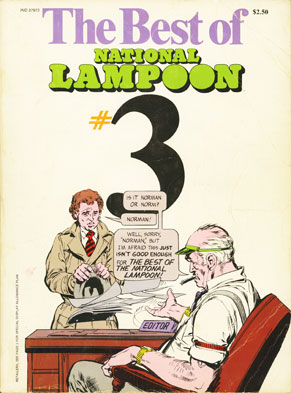
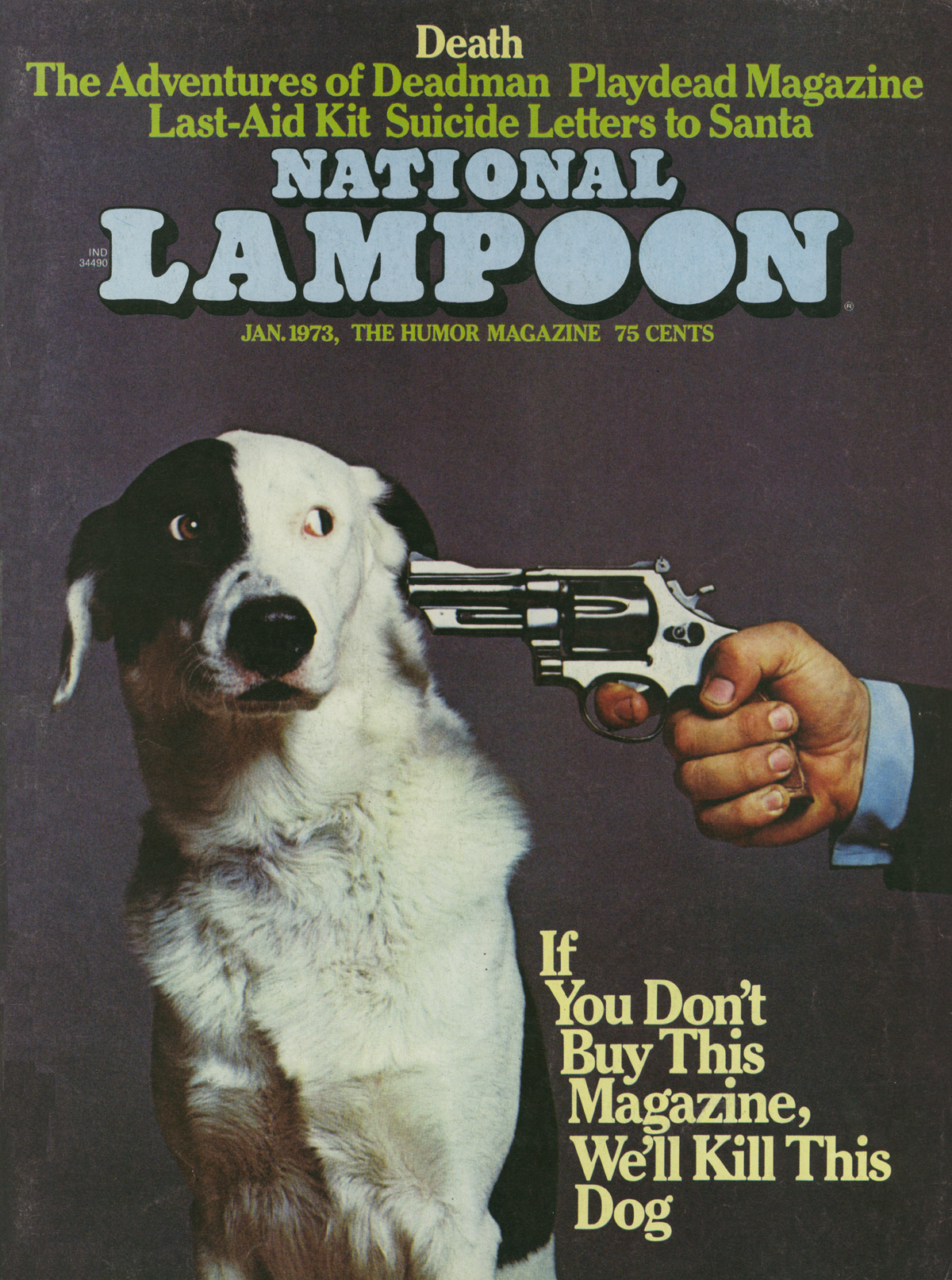
national lampoon covers early 1970s

The Best of National Lampoon #3 - 1973

National Lampoon #34 - January 1973

National Lampoon #41 - August 1973

Wednesday, October 23, 2013

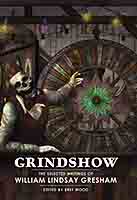
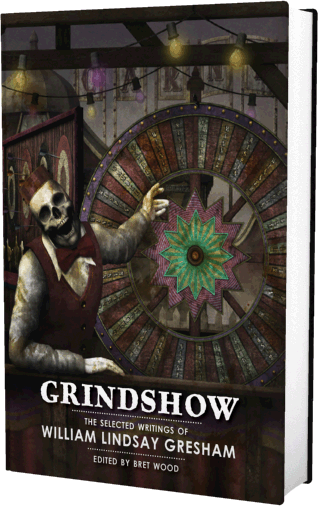
Order Nightmare Alley and Grindshow in beautiful collectors' editions now


Ed here: Continuing last night's post. Here's a piece I wrote about Nightmare Alley and Gresham in 2008. I spent three hours reading into Grindshow today and it's a dazzler. There is a dark desperation to a life overwhelmed by poverty and alcoholism when it searches into the occult and the supernatural aspects of carny life--as well as other venues. Gresham's great aggrieved search is a fascinating statement by a man who was both a poet, a journalist and a novelist.

Excerpted from Hardboiled Maryland:

William Lindsay Gresham

"Nightmare Alley belongs not to the hard-boiled world of Dashiell Hammett and James M. Cain, but to the dark and shadowy world of noir. As a literary term, noir can be applied to any work--especially one involving crime--that is notably dark, brooding, cynical, complex, and pessimistic. Nightmare Alley is certainly all that and more, described by one critic as "a tough, relentless, colorful novel that exposes the private world of the freaks in order to comment on a sick, degrading society." The novel depicts the rise of Stan Carlisle from a carnival mentalist to a successful "spiritualist," preying on the rich and gullible matrons of society, to his eventual fall and total disintegration.

"Gresham's depressed vision of society colored his private life as well; he was an alcoholic and an abusive husband to his wife Joy Davidman, as well as to their children. Joy eventually fled to England with their children, where she conducted a long-term love affair with the author C. S. Lewis, whom she eventually married (their story was recently told in the 1993 film Shadowlands). In 1962 Gresham committed suicide in a run-down hotel room in New York, where he had registered under the name "Asa Kimball, of Baltimore." The only tribute paid to him in the New York Times came from the bridge columnist."

Ed here: Whenever the subject of crime fiction as serious literature comes up the first novel I think of is Nightmare Alley. The book was of its time and Gresham was certainly influenced by the preceding generation of writers. In places you hear James T. Farrell, W.R. Burnett as well as one of his contemporaries, Nathaneal West. But ultimately Greshman was his own man and there is no novel quite like it in noir.

Unlike the writers I've mentioned, however, Gresham offered no hope. There are two kinds of people in the world, he seemed to believe, predators and victims. The book is marked by a mordant existential undertow that charts not only the downfall of Stanton Carlisle but also the few who care about him. The astrological references that shape the story and its thrust create an otherworldly tone as eerie as parts of the carnival itself.

There are many fine books about carnival life in American literature. Jim Tully's work comes to mind, for example. Ray Bradbury gave the carny world a fantastical twist. And Fredric Brown's The Fabulous Clipjoint which creates a kind of hardboiled lyricism for the desperate world it shows us.

But the nod goes to Gresham. A major novel and a true masterpiece.

Tuesday, October 22, 2013

From Centipede Press Beautiful Collectors editions of William Lindsay Gresham


SYNOPSIS
In the decades since its publication, William Lindsay Gresham’s novel Nightmare Alley (1946) has gained recognition as a cornerstone of postwar noir fiction. But the remainder of the author’s work — thematically diverse and voluminous in scale — has gone virtually unexplored.
       Whether writing for the detective pulps of the 1940s, the sci-fi digests of the 1950s, or the lowbrow men’s magazines of the early 1960s, Gresham relentlessly indulged his fascination with crime, psychology, magic, and spiritism, investing each of these almost-forgotten pieces with his dark wit and fatalistic sense of doom. This is the first collection of William Lindsay Gresham’s ever to be published.
       This edition unearths 24 of Gresham’s most fascinating short stories and essays, most of which have never been reprinted since their original publication, and provides, at long last, a comprehensive view of one of pulp fiction's most enigmatic figures.
       A biographical essay by Bret Wood charts Gresham’s tumultuous life and career (including his troubled marriage to Joy Davidman), revealing the events that led to his alcoholism, his struggle for sobriety, and ultimately his suicide in 1962.
http://www.centipedepress.com/

SYNOPSIS
Few hardboiled novels of the 1940s have earned as avid a following as William Lindsay Gresham’s Nightmare Alley. An immediate sensation when it appeared in 1946, the book spawned a classic film starring Tyrone Power and Joan Blondell, sowed the seeds for the literary subgenre of carnival noir, and introduced to the pop-culture vocabulary the term geek.
       Nightmare Alley follows the exploits of Stanton Carlisle, a ruthless hustler who learns the tricks of the carny trade and uses them to establish himself as a spiritual guru, preying on the wealthy and the weak. Carlisle’s determined rise to power and inevitable plunge into depravity is more than great drama, it is an evisceration of the postwar American dream, told by a writer whose hard-luck life was just as compelling as his character’s.
       Collected in this volume is a sampling of Gresham’s other carnival-themed work: essays offering first-hand observations of life beneath the canvas tops. These essays have been long unavailable.
       An essay by Bret Wood, William Lindsay Gresham: The Disillusionist, explores the novelist’s fascination with carnivals, magic, and spiritualism; and Gresham’s lifelong crusade to extract the carefully-guarded secrets that lay hidden within.
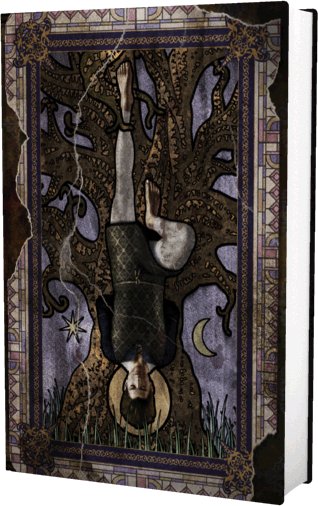
       This handsome edition features striking dustjacket and interior art by David Ho, sumptuous cloth binding with blind stamping and onlay images, Tarot card images in the interior, photographs, article illustrations, original magazine art, movie posters, and much more. 
       Nightmare Alley 
is one of the most highly regarded crime novels ever published. This edition is a fitting testament to an American classic. You will want this superb book for your shelf.

Sunday, October 20, 2013

Charles Willeford’s Portrait of the Artist as a Used Car Salesman by Doug Levin


Charles Willeford's Portrait of the Artist as a Used Car Salesman
Nov 11, 2010 in Books, Guest Posts
Mullholland books 

When I hit certain moments in works by Charles Willeford (1919–1988), I feel like the top of my head is going to rip right off. This is my brain teetering on the strange mental precipice that is the hallmark of Willeford’s odd and destabilizing fiction.
And usually at these heady Willefordian moments, I laugh (nervously? maniacally?) as well. I’m not prone to laughter, but Charles Willeford makes me laugh.
What is the source of Willeford’s idiosyncratic impact on readers—an impact that has won him devoted fans, brought his works back into print, and made him an important part of the 20th-century American crime fiction canon?
In 1989, Richard Gehr. writing in the Village Voice Literary Supplement, dubbed Willeford the “Pope of Psychopulp” (making Patricia Highsmith the “Popette”?), meaning in part: (1) that Willeford has a religious following; and (2) that a special subgenre name—“Psychopulp”—is needed to contain his works.
I’m not altogether crazy about the term “Psychopulp” as a description of Willeford’s content, but the word does aptly describe the effect of his works: my psyche—my psychology—is pulped as Willeford’s fiction unhinges certain bourgeois American attitudes and beliefs.
I would go so far as to argue that Charles Willeford, in his best works, puts art, aesthetic sensibility, critical acumen, morality, and American ideology on a dramatic collision course. Yeah, pretty sophisticated stuff for a guy whose first novels were published by third-string soft-porn paperback houses in the 1950s.
 The typical Willefordian antihero is callous, corrupt, self-centered, materialistic, and violent, but also insightful, charming, and witty. And more crucially, these characters have deep artistic ambitions.
for the rest go here:
http://www.mulhollandbooks.com/2010/11/11/charles-willeford’s
-portrait-of-the-artist-as-a-used-car-salesman/

Saturday, October 19, 2013

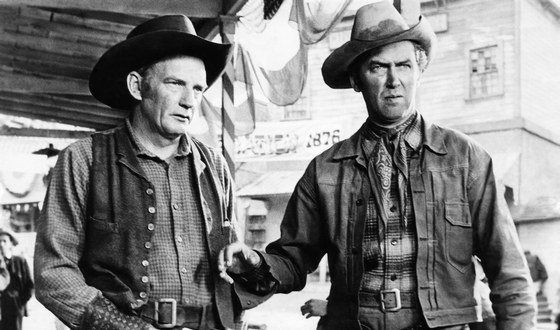
Noir on the Range – The Top Ten Anthony Mann Westerns My obsession with Anthony Mann's films continues


"He was less reckless than Sam Fuller, less passionate than 
Nicholas Ray, yet in the framework of the Western he hit on 
an almost perfect form with more consistency than either 
of his peers - and fuelled it with pain." - Tom Charity (The Rough Guide to Film, 2007)


FromTurner Classic Movies
Director Anthony Mann defined the cowboys of the ’50s, creating what critics dubbed the psychological Western. Taking a note from film noir, Mann’s heroes were beset by past tragedies, frustrated ambitions, and desperate to come to terms with their own torment — often by battling villains who were all too similar to themselves.  A capable director in multiple genres, Mann didn’t need the Western — but the Western needed him.
10. The Last Frontier (1955) 
Victor Mature plays a Davy Crockett-like frontiersman who signs up to fight off warring Indians. Typically, Mann adds an element of moral complication: Mature serves under a hawkish colonel whose main interest isn’t in ending the conflict — but prolonging it! While a minor work that just scratches onto this list, The Last Frontier shows that even when he’s painting with light strokes, Mann deals in more sophisticated themes than his contemporaries.
9. Devil’s Doorway (1950)
Mann’s first Western is even more ambitious in describing the toxic relationships between Native Americans and white-folk. Robert Taylor plays a Shoshone Indian chief who fights courageously in Gettysburg, even winning the Medal of Honor. But when the Civil War hero returns home, he find truculent whites squatting on his land. The audience is meant to root for the Indians — Mann’s boldness earns this one the ninth slot.

8. The Tin Star (1957)

Here, Henry Fonda plays a typical Mann outsider. A former sheriff turned bounty hunter, he likes living on the periphery with no one to answer to but himself. But soon he gets stuck helping an effete Anthony Perkins learn some pistol skills so he can clean up a town. This one’s made of more conventional material than some of Mann’s Westerns, but it’s done so well you’ll hardly notice the shift.
7. The Far Country (1954) 
You know the type: Solitary, introverted, doesn’t play well with others. They usually have delusions of grandeur. In The Far Country, Jimmy Stewart plays a prospector in the Klondike who doesn’t care about anyone but himself and his precious gold flakes. But will the death of a friend finally make him care about someone but himself? Part of the genius of this movie is the sheer level of unscrupulousness it allows Stewart before he changes his ways.
6. The Man from Laramie (1955)
Poor Jimmy Stewart suffers numerous indignities in this movie as he infiltrate a frontier town in an effort to shed light on his… shadowy past. (His efforts earn this one sixth place.) But all his sufferings only amp up the audience’s bloodlust for revenge! You don’t mess with a man’s mules (they get shot) or his shooting hand (which gets plugged at point-blank range). It’s easy to imagine fans of Mr. Smith Goes to Washington chomping at the bit for dear old Stewart to blast away the bad guys.
5. The Furies (1950)
This was a switch-up pitch from Mann — a lesser known work that’s also one of his most interesting. Taking its cues from Greek tragedy, The Furies focuses on the subtly unseemly relationship between widowed cattle-baron Walter Huston and his daughter Vance Jeffords (a typically wonderful Barbara Stanwyck). The movie’s bold Freudian symbolism and fraught familial conflicts were ahead of its time — and make this one a lock for the top five.
4. Man of the West (1958) 
Gary Cooper puts in a great, latter-day performance in this dark, unsung Western. Like a lot of Mann’s heroes, he’s a man who’s wounded by the past. And when the past returns — in the form of his former outlaw buddy Dock Tobin (a malicious Lee J. Cobb) — he must find a way to maintain his new identity. The movie didn’t generate much enthusiasm when it was first released, but later reappraisals (Jean Luc-Godard was a huge fan) have asserted it as one of the great psychological Westerns.
3. Bend of the River (1952)
Stewart plays an ex-Missouri raider who’s found a new career: escorting wagon trains out West. But along the way he discovers an uncomfortable fragment of his own past: an old chum (Arthur Kennedy) who hasn’t given up his outlaw ways. Stewart saves Kennedy and invites him to join the journey, but Kennedy decides he’d rather steal the settlers’ goods for his own profit. Will Stewart go along with it? For the suspense hanging over that question, this one bends its way right into third place.
2. Winchester ’73 (1950)
This moody, noirish Western follows the gun of the title as it passes through many, many hands. What could have been a gimmicky frame device (see the short-lived Robert Altman TV series, Gun) becomes a powerful symbol of the history of violence that interconnects its characters and finally leads to a showdown between heavies Waco (Dan Duryea) and Lin McAdam (Stewart). For its formal daring and and crackling suspense, it’s one of Mann’s best.
1. The Naked Spur (1953)
Our number-one flick features Jimmy Stewart as you’ve rarely seen him — completely and utterly immoral. This is the pinnacle of Mann and Stewart’s long run together, and one of the best Westerns ever made. From start to finish it’s engaging and provocative, and Stewart’s quest, to catch an old friend for reward money, increasingly becomes not a noble mission but a crazed pursuit for money no matter what the cost.


Friday, October 18, 2013

Carolyn Hart; Robert J Randisi; Ed Lauter


Carolyn Hart

With a new introduction
by the author
200 pp
ISBN 978-1-61614-869-0
Paperback • $13.95
November 2013

Also available in ebook format
World Rights


A woman is out to clear her cousin of murder charges after a blackmailer targeting the wealthy Carlisle family turns up dead.

K.C. Carlisle and her cousin Kenneth Carlisle both grew up rich. Kenneth is a corporate lawyer in an exclusive Northern California seaside community while K.C. has a storefront office on the seedy side of town. She takes whatever kind of case walks in her door.

But trouble appears one day when Francine Boutelle shows up pretending she wants to write an expose of the Carlisle family, including some dirt on K.C.'s late and highly respectable father. Francine has visited most of the family and is willing to keep the family secrets in exchange for cash.
When Kenneth is accused of murdering the blackmailer, K.C. is determined to prove his innocence, no matter where the trail of blood and deception leads.

"Strong, assured storytelling. A welcome trip back to classic detective stories, made fresh with a strong female voice, written at a time when women lawyers, as well as women crime novelists, were changing the way the world worked. If you're a Carolyn Hart fan and missed this the first time, rejoice! If you haven't yet discovered Carolyn Hart, oh, I envy the treats you have in store!"

—Cathy Pickens, author of the Southern Fried mysteries


 Ed here: 


"As a young teenager, I devoured hard-boiled private eye books along with titles by Christie, Tey, Rinehart, and Wentworth...and bought books by Erle Stanley Gardner, John Creasy, Donald Hamilton and, Jack Iams...

"Death By Surprise is as near that (hard-boiled) genre as I've ever come, K.C. Carlisle. the protagonist, is a young woman lawyer who has good reason never to quite trust anyone."

You can find these words in Carolyn Hart's introduction to this fine mystery novel. In terms of basic English it's a hoot because it's so much fun listening to Carolyn try out a new voice. Sometimes she's pure hardboiled:

"Joe Solomon looks like an overstuffed lizard. His skin is yellowish and uhealthy. He eyes are thick-lidded, giving him a Mongollian aspect."

But then she's upper-crust snarky:

"It was a debutante ball and a typical one. The girls all in white, which always amused me, danced the first dance with their fathers."

Death By Surprise is not only not only a fine mystery it's also in basic English--booth a hoot at times and a dark, compelling look at the shady business of gossip magazines."


 Ed here: 

----------------------------------------------------------------------------------
ROBERT J. RANDISI


    I admire this novel so much I place it second only to Bob's (as a western writer) masterpiece THE HAM REPORTER.
    This has the lean power of Elmore Leonard's westerns. It has surprise, shock and heartbreak.
    Here's what Publisher's Weekly had to say about it:
    Randisi's (Targett) short but intense western delivers exciting plot in spare, exacting prose. After the gunfighter known only as Lancaster turns down a $10,000 offer to kill a man (Lancaster provides protection but he's not a killer-for-hire), he is forced into a gunfight with his would-be target, with tragic results: Lancaster accidentally kills a six-year-old girl. Haunted by the memory of the girl's vivid blue eyes, Lancaster moves to another town, where he gives up the gun and becomes the town drunk. But fate steps in to change his life once again when he meets nine-year-old Alicia and her mother, who are on the run from Alicia's abusive father, rich and powerful Aaron Delaware. Alicia's mother is killed by one of Delaware's hired guns and Delaware arrives to claim his daughter, but Lancaster comes to the rescue and takes Alicia to the best person he can think of to care for her--the mother of the girl he killed. Readers will experience the pleasures found in old ""B"" Westerns: the simple (but not simplistic) moral opposition between good and evil and the inspiration of personal redemption. (Aug.)

Ed Lauter:

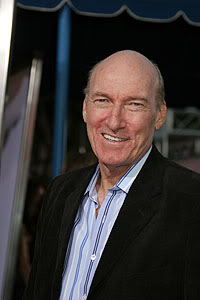
ED LAUTER, ACCLAIMED CHARACTER ACTOR, DEAD AT 74

Thursday, October 17, 2013

Movies RAW DEAL reviewed by Alan Fish


Raw Deal – 1948, Anthony Mann

by Allan Fish
the first in a series of six pieces on the classics of Anthony Mann…a one off to accompany Sam’s piece on Mann.
(USA 1948 78m) DVD1
A whole tidy little pile of rocks
p  Edward Small  d  Anthony Mann  w  Leopold Atlas, John C.Higgins  story  Arnold B.Armstrong, Audrey Ashley  ph  John Alton  ed  Alfred de Gaetano  m  Paul Sawtell art  Edward L.Ilou 
Dennis O’Keefe (Joe Sullivan), Claire Trevor (Pat Cameron), Marsha Hunt (Ann Martin), Raymond Burr (Rick Coyle), John Ireland (Fantail), Curt Conway (Spider), Chili Williams (Marcy), Regis Toomey (Capt.Fields), Harry Tyler (Oscar), Whit Bissell (murderer),
I can’t remember who coined the term ‘termite art’ to describe the ‘B’ movie classics churned out on the cheap in Hollywood in the forties.  Edgar G.Ulmer was probably the most famous exponent, but Anthony Mann deserves a mention, too.  Easy to forget that, prior to his reinvention of the western as a psychological landscape as much as a physical, Mann also stamped his mark on the noir world.  Desperate, T-Men, Side Street, even an uncredited stint on He Walked by Night.  All decent films, yet lacking that authentic grit; Raw Deal was rather a film like the identities faked by Itzhak Stern and co. in Schindler’s List, they were too new, they needed tearing, crunching up, having coffee spilt on them to add that sense of having been places. Raw Deal had it in spades, not on the surface where you could easily spot it, but in the hidden corners, the searchlights at the prison, the smell of the flambĂ© Burr’s suited villain tosses into some poor girl’s face, the musky smell in the room where two characters fight it out in the dark. 
            Joe Sullivan is a typical noir sort of hero, born with a toy eight ball hovering over his pram, through orphanages and scrapes, one after the other, and then being told to take the rap for kingpin Rick Coyle.  He thinks Rick’s on the level when he sends his beloved Pat to tell him of a break out.  Pat only thinks of Joe’s escape.  Rick, however, is rolling the dice, assuming that Joe will get killed in the escape attempt.  Needless to say he doesn’t, or else bang goes our film, and as Joe gets closer to his assignation with Rick, so he gets further into a mire in which struggling is futile and death is written. 
for the rest go here:
http://wondersinthedark.wordpress.com/2010/07/27/raw-deal-1948-anthony-mann/