Showing posts sorted by relevance for query "howard browne". Sort by date Show all posts

Saturday, February 15, 2014

HALO FOR HIRE: THE COMPLETE PAUL PINE by Howard Browne


HALO FOR HIRE: THE COMPLETE PAUL PINE by Howard Browne


HALO FOR HIRE: THE COMPLETE PAUL PINE by Howard Browne


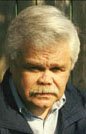
Howard Browne

Over on Rara-Avis there's a letter about the late writer and editor Howard Browne.

If you were an adolescant science fiction-fantasy reader in the Fifties Howard was likely one of your favorite people. He edited both Amazing and Fantastic, the Ziff-Davis publishing twins that offered the kind of adventure sf only a teenager could love. Early in the decade he edited Fantastic when it was upscale with stories by Ray Bradbury, John Collier, Shirley Jackson, etc. But nobody bought it so Ziff-Davis ordered it back to its gaudy past--action stories with purple Venusians, lots of rays guns, hard-boiled interstellar dudes and innumerable lovely interstellar babes. I loved it. For five years those were my two favorite magazines. Later I'd learn that most of the stories I especially liked were by Robert Silverberg. Some of them hold up pretty well today.

Late in my teens I started reading Howard's "Halo" series of mysteries. They owed a lot to Chandler (he insisted they owed a lot to James M. Cain too) but eventually they got rolling on their own entirely. They are well worth reading. He was a good writer line by line and a much better plotter than Chandler.

I mention all this because when I began editing Mystery Scene one of my goals was to get Howard in the magazine. He was somebody I'd always wanted to meet (via phone). He ended up writing three or four pieces of his autobiography for us. He was a great storyteller and a prescient judge of character.

I probably talked to him fifteen times over the years, sometimes at length. A lot of the talk was pretty funny and pretty cynical on both our parts. But then one night he called to say that he wouldn't be finishing his autobiography for the magazine as planned. His wife had died and he said he would never write again. He said that one night he'd gotten out of bed and gone to the bathroom and when he came back a few minutes later she was dead.

He spent his final days in a nursing home. California people put on a big birthday party for him. I'm sure he got a hell of a kick out of it. A great guy, a fine writer.

Here's a long obituary by Jack Adrian no less.


Independent, The (London), Nov 15, 1999 by Jack Adrian
HOWARD BROWNE was that unusual beast, a writer who not only succeeded on both sides of the editorial desk, but who was equally at home in two quite disparate genres, hardboiled detective fiction and SF/ Fantasy. His fantasy, in particular, was of the swashbuckling kind, a million miles - or rather, bowing to the genre, a million light years - from his tales of mean streets, mainly written under his pseudonym John Evans (one of many: others included Lawrence Chandler and Lee Francis).

He successfully jumped media, too, as well as genres, turning, when the pulp magazines began to wither and die in the early 1950s, from writing punchy, riveting prose to creating compelling screen- and tele-plays. And, like all able fictioneers, even at an advanced age he could still turn disaster into triumph - two rejected screenplays, "The Violent World of Jake Lingle" and "A Bowl of Cherries", upon which he had lavished much care and attention, he transformed into a brace of fine late (very late: he was then in his mid-eighties) novels, Pork City (1988) and the hilarious Scotch on the Rocks (1991).

Howard Browne was born in Omaha, Nebraska, the son of a baker, in 1908, and began his education in Lincoln, Nebraska. However, he dropped out of high school and rode the rails (i.e., hid in the boxcar) to Chicago to seek his fortune. He worked as a legman, or stringer, for a local newspaper before, at the age of 21, securing a post as department-store credit manager, a position he held for over a decade and which gave him an unparalleled insight into the psyche of his fellow men.

for the rest go here: http://findarticles.com/p/articles/mi_qn4158/is_19991115/ai_n14274743

Wednesday, April 04, 2012

Howard Browne

THURSDAY, FEBRUARY 14, 2008

Howard Browne

Over on Rara-Avis there's a letter about the late writer and editor Howard Browne.

If you were an adolescant science fiction-fantasy reader in the Fifties Howard was likely one of your favorite people. He edited both Amazing and Fantastic, the Ziff-Davis publishing twins that offered the kind of adventure sf only a teenager could love. Early in the decade he edited Fantastic when it was upscale with stories by Ray Bradbury, John Collier, Shirley Jackson, etc. But nobody bought it so Ziff-Davis ordered it back to its gaudy past--action stories with purple Venusians, lots of rays guns, hard-boiled interstellar dudes and innumerable lovely interstellar babes. I loved it. For five years those were my two favorite magazines. Later I'd learn that most of the stories I especially liked were by Robert Silverberg. Some of them hold up pretty well today.

Late in my teens I started reading Howard's "Halo" series of mysteries. They owed a lot to Chandler (he insisted they owed a lot to James M. Cain too) but eventually they got rolling on their own entirely. They are well worth reading. He was a good writer line by line and a much better plotter than Chandler.

I mention all this because when I began editing Mystery Scene one of my goals was to get Howard in the magazine. He was somebody I'd always wanted to meet (via phone). He ended up writing three or four pieces of his autobiography for us. He was a great storyteller and a prescient judge of character.

I probably talked to him fifteen times over the years, sometimes at length. A lot of the talk was pretty funny and pretty cynical on both our parts. But then one night he called to say that he wouldn't be finishing his autobiography for the magazine as planned. His wife had died and he said he would never write again. He said that one night he'd gotten out of bed and gone to the bathroom and when he came back a few minutes later she was dead.

He spent his final days in a nursing home. California people put on a big birthday party for him. I'm sure he got a hell of a kick out of it. A great guy, a fine writer.

Here's a long obituary by Jack Adrian no less.


Independent, The (London), Nov 15, 1999 by Jack Adrian
HOWARD BROWNE was that unusual beast, a writer who not only succeeded on both sides of the editorial desk, but who was equally at home in two quite disparate genres, hardboiled detective fiction and SF/ Fantasy. His fantasy, in particular, was of the swashbuckling kind, a million miles - or rather, bowing to the genre, a million light years - from his tales of mean streets, mainly written under his pseudonym John Evans (one of many: others included Lawrence Chandler and Lee Francis).

He successfully jumped media, too, as well as genres, turning, when the pulp magazines began to wither and die in the early 1950s, from writing punchy, riveting prose to creating compelling screen- and tele-plays. And, like all able fictioneers, even at an advanced age he could still turn disaster into triumph - two rejected screenplays, "The Violent World of Jake Lingle" and "A Bowl of Cherries", upon which he had lavished much care and attention, he transformed into a brace of fine late (very late: he was then in his mid-eighties) novels, Pork City (1988) and the hilarious Scotch on the Rocks (1991).

Howard Browne was born in Omaha, Nebraska, the son of a baker, in 1908, and began his education in Lincoln, Nebraska. However, he dropped out of high school and rode the rails (i.e., hid in the boxcar) to Chicago to seek his fortune. He worked as a legman, or stringer, for a local newspaper before, at the age of 21, securing a post as department-store credit manager, a position he held for over a decade and which gave him an unparalleled insight into the psyche of his fellow men.

for the rest go here: http://findarticles.com/p/articles/mi_qn4158/is_19991115/ai_n14274743

Friday, November 22, 2013

Remembering my friend Howard Browne


Howard Browne
Editor's Note:
Thanks to Howard Browne's flippant remark upon reading Richard Shaver's "letter to the editor" at Amazing Stories, Ray Palmer dove into that fabled trash basket to retrieve it. Thus began the Shaver Mystery.


Copyright 1999 Newspaper Publishing PLC
The Independent (London)

November 15, 1999By Jack Adrian
HOWARD BROWNE was that unusual beast, a writer who not only succeeded on both sides of the editorial desk, but who was equally at home in two quite disparate genres, hardboiled detective fiction and SF/ Fantasy. His fantasy, in particular, was of the swashbuckling kind, a million miles - or rather, bowing to the genre, a million light years - from his tales of mean streets, mainly written under his pseudonym John Evans (one of many: others included Lawrence Chandler and Lee Francis).
He successfully jumped media, too, as well as genres, turning, when the pulp magazines began to wither and die in the early 1950s, from writing punchy, riveting prose to creating compelling screen- and tele-plays. And, like all able fictioneers, even at an advanced age he could still turn disaster into triumph - two rejected screenplays, "The Violent World of Jake Lingle" and "A Bowl of Cherries", upon which he had lavished much care and attention, he transformed into a brace of fine late (very late: he was then in his mid-eighties) novels, Pork City (1988) and the hilarious Scotch on the Rocks (1991).
Howard Browne was born in Omaha, Nebraska, the son of a baker, in 1908, and began his education in Lincoln, Nebraska. However, he dropped out of high school and rode the rails (i.e., hid in the boxcar) to Chicago to seek his fortune. He worked as a legman, or stringer, for a local newspaper before, at the age of 21, securing a post as department-store credit manager, a position he held for over a decade and which gave him an unparalleled insight into the psyche of his fellow men.


for the rest go here:
http://www.softcom.net/users/falconkam/browne.html

Monday, March 09, 2015

Howard Browne on Words and Writing

from Pulp Serenade

Before he was writing Halo for Satan, Halo in Blood, and The Taste of Ashes, Howard Browne was like the rest of us (well, maybe his life was a little more colorful and exciting than mine -- ok, a lot more). In his own words, here is the inauspicious beginning of Howard Browne's career as a writer.

In 1937 I was in my early thirties, and I told my wife, "I'm going to be a rich and famous writer."

She laughed, saying, "You never finished high school . . . "

"I can read – I figure I can write," was my reply. I had read Jack Woodford's Trial and Error, a book about how to become a professional writer, in which he makes it look so easy, and he said the easiest people in the world to write for were the newspaper syndicates -- if you could spell correctly, they'd buy it.

I'd seen that in the Chicago Daily News they ran a daily short story -- a thousand words. I thought, lemme try it, I ought to be able to write a simple little plot, and I wrote a couple. I wrote them in longhand, but had my secretary type them up at the office. I sent them to Pat Lowry, and soon had a phone call telling me to come in and see him. I thought maybe I'd plagiarized something unconsciously, but I went in to see him. He said, "I'm buying these two stories, and I'll pay you $15 a piece, but don't write any more for me." The Lord giveth and the Lord taketh away.

I said, "Why not?"

He said, "You write too well for this market -- try the pulp magazines."

I went home and thought, "Pulps? Fuck that, I'll write a novel!" I'd been an avid reader of Edgar Rice Burroughs, so I thought, hell, I'll write a Tarzan story -- I know 'em backwards. But I had to prepare myself for it. I took his books and made lists of adjectives -- describing jungle, describing animals, action, etc. -- and I categorized them. So, if I'm writing and I want to describe the jungle, I turn to this list of fine adjectives -- I handled it like I'd handle a problem in school! And I wrote Warrior of the Dawn – it took me 52 Sundays, because that was the only day of the week I had the time to write. A local bookseller, Max Siegel, sent it to a publisher, and he got ahold of the publisher's reader's report, the opening line of which was: "Take the typewriter away from this man before he hurts himself." Now that doesn't exactly fill you with confidence! Then it got nasty. I could have killed the guy. His name was Lawrence Dwight Smith. Later on I wrote a book in which I killed off a Lawrence Dwight Favelle, so I got him.


You might also like:

Thursday, February 14, 2008

Howard Browne

Over on Rara-Avis there's a letter about the late writer and editor Howard Browne.

If you were an adolescant science fiction-fantasy reader in the Fifties Howard was likely one of your favorite people. He edited both Amazing and Fantastic, the Ziff-Davis publishing twins that offered the kind of adventure sf only a teenager could love. Early in the decade he edited Fantastic when it was upscale with stories by Ray Bradbury, John Collier, Shirley Jackson, etc. But nobody bought it so Ziff-Davis ordered it back to its gaudy past--action stories with purple Venusians, lots of rays guns, hard-boiled interstellar dudes and innumerable lovely interstellar babes. I loved it. For five years those were my two favorite magazines. Later I'd learn that most of the stories I especially liked were by Robert Silverberg. Some of them hold up pretty well today.

Late in my teens I started reading Howard's "Halo" series of mysteries. They owed a lot to Chandler (he insisted they owed a lot to James M. Cain too) but eventually they got rolling on their own entirely. They are well worth reading. He was a good writer line by line and a much better plotter than Chandler.

I mention all this because when I began editing Mystery Scene one of my goals was to get Howard in the magazine. He was somebody I'd always wanted to meet (via phone). He ended up writing three or four pieces of his autobiography for us. He was a great storyteller and a prescient judge of character.

I probably talked to him fifteen times over the years, sometimes at length. A lot of the talk was pretty funny and pretty cynical on both our parts. But then one night he called to say that he wouldn't be finishing his autobiography for the magazine as planned. His wife had died and he said he would never write again. He said that one night he'd gotten out of bed and gone to the bathroom and when he came back a few minutes later she was dead.

He spent his final days in a nursing home. California people put on a big birthday party for him. I'm sure he got a hell of a kick out of it. A great guy, a fine writer.

Here's a long obituary by Jack Adrian no less.


Independent, The (London), Nov 15, 1999 by Jack Adrian
HOWARD BROWNE was that unusual beast, a writer who not only succeeded on both sides of the editorial desk, but who was equally at home in two quite disparate genres, hardboiled detective fiction and SF/ Fantasy. His fantasy, in particular, was of the swashbuckling kind, a million miles - or rather, bowing to the genre, a million light years - from his tales of mean streets, mainly written under his pseudonym John Evans (one of many: others included Lawrence Chandler and Lee Francis).

He successfully jumped media, too, as well as genres, turning, when the pulp magazines began to wither and die in the early 1950s, from writing punchy, riveting prose to creating compelling screen- and tele-plays. And, like all able fictioneers, even at an advanced age he could still turn disaster into triumph - two rejected screenplays, "The Violent World of Jake Lingle" and "A Bowl of Cherries", upon which he had lavished much care and attention, he transformed into a brace of fine late (very late: he was then in his mid-eighties) novels, Pork City (1988) and the hilarious Scotch on the Rocks (1991).

Howard Browne was born in Omaha, Nebraska, the son of a baker, in 1908, and began his education in Lincoln, Nebraska. However, he dropped out of high school and rode the rails (i.e., hid in the boxcar) to Chicago to seek his fortune. He worked as a legman, or stringer, for a local newspaper before, at the age of 21, securing a post as department-store credit manager, a position he held for over a decade and which gave him an unparalleled insight into the psyche of his fellow men.

for the rest go here: http://findarticles.com/p/articles/mi_qn4158/is_19991115/ai_n14274743

Saturday, March 17, 2012

Halo for Hire: The Paul Pine Mysteries - Haffner Press


Ed here: I've blogged about Haffner Press' forthcoming ambitious Fredric Brown books but here's another collection of major importance. Like Fredric Brown Howard Browne needs to be re-discovered big time. I count these novels among the finest in the history of private detective fiction. And knowing how beautifully produced Haffner books are, the workmanship will be as masterful as the contents. For information on all the Haffner books-- remember not only Fredric Brown but also the Henry Kuttner mysteries are on the way--go here: info@haffnerpress.com

Halo for Hire: The Paul Pine Mysteries
Howard Browne
ISBN-13 9781893887695
600+ page Hardcover
$40.00

“Of all of Raymond Chandler’s followers, the most Chandlerish of them all might have been Howard Browne. And Browne’s private eye hero, PAUL PINE, is simply one of the great eyes, no matter how inspired by (or derivative of ) Chandler’s Philip Marlowe he might have been.
Still, deriviative or not, the Pine books are well worth reading, and A Taste of Ashes (1957) is just a flat-out, stone-cold private eye classic. Pine is a former investigator for the Illinois State attorney’s office in Chicago who works as a P.I. in Chicago. He’s got the obligatory cynicism and snappy similes and metaphors down pat, though he tends to be a bit more down to earth than Marlowe, and often mocks his own tendencies to moroseness and world-weariness. And Browne was a stronger plotter than Chandler.
In 1985, almost thirty years after Pine’s last appearance, Dennis McMillan published a book The Paper Gun. This volume collected the only previously-published Pine story, “So Dark For April,” plus an incomplete Pine novel that Browne, in the forword, calls “a story complete in itself. But it is not the whole novel.” He states that he had lost interest in the private eye genre, and so the story is only 122 pages in length, too long for a short story, but too short for a novel. —adapted from “Paul Pine” by Kevin Burton Smith from www.thrillingdetective.com
TABLE OF CONTENTS REVIEWS EXCERPTS
Halo for Blood
A Halo for Satan
Halo in Brass
"So Dark for April"
The Taste of Ashes
"The Paper Gun"

Friday, December 23, 2011

HALO FOR HIRE: THE COMPLETE PAUL PINE by Howard Browne


HALO FOR HIRE: THE COMPLETE PAUL PINE by Howard Browne

Not much to add on this title at the moment, except to say that work progresses and we thought we'd give you a look back at some of the covers to the original presentation of the "Paul Pine" stories by Howard Browne (aka John Evans):

• HALO IN BLOOD
• HALO FOR SATAN
• HALO IN BRASS
• "So Dark for April" from MANHUNT
• THE TASTE OF ASHES
• "The Paper Gun"

Sunday, November 06, 2011

Fred Brown, Howard Browne; Bad Moon #7; Triumph The Insult Comic Dog

Ed here: The crime publications --Fredric Brown, Howard Browne, Henry Kuttner-C.L. Moore--are knockouts enough. But for those of us who like-sf-fantasy this is an unimaginable list!

From Stephen Haffner::

Hey, everybody!

Things have been über-busy at the Secret Moon Base, but it's time for a status update on all that's happening so . . . Onward!

1) SHANNACH—THE LAST: FAREWELL TO MARS
We now hold copies of this brand new release—and it's be-yoo-tee-full! With Kelly Freas' vintage cover art, this is a really great looking book. And the contents are equally awesome. Of course, with all this "keen-ness" something went wrong. The original dustjacket had an intolerable typo (my bad) on the spine, so we've gone ahead and printed a corrected second-state dustjacket. All copies ordered direct from Haffner Press, and select retailers, will ship with the first-state jacket wrapped to the book and shrinkwrapped, with a rolled and bagged copy of the second state jacket included. $40 gets it to you with free shipping in the Continental USA.

2) 2011 WORLD FANTASY CONVENTION
We're also recovering from an unplanned opportunity to exhibit at the 2011 World Fantasy Convention in San Diego last week. We arranged to have SHANNACH—THE LAST: FAREWELL TO MARS make it's debut, and we tried as best we could to collect autographs in the charity books, IN MEMORY OF WONDER'S CHILD and THIRTY-FIVE YEARS OF THE JACK WILLIAMSON LECTURESHIP. We think succeeded fairly well on all counts and we'll announce in a few weeks what new signatures have been added to these books.

3) ARTIST ROLL CALL
We are *extremely* pleased to announce that we have deals with the following artists for two of our 2012 releases:

• THE COMPLETE JOHN THUNSTONE by Manly Wade Wellman will have cover art by Raymond Swanland. Raymond's work is ideally suited to the supernatural horrors that John Thunstone faces in this massive collection. We hope to have images before the end of the year.

• THE MICHAEL GRAY MYSTERIES by Henry Kuttner & Catherine L. Moore, a collection of four paperback original novels from the late 50s, will feature original cover art by classic movie poster and paperback artist Robert McGinnis. Mr. McGinnis has recently been providing cover art for Hard Case Crime's line of books, and we're eager to see what he delivers for this Kuttner/Moore title.

4) THUNDER IN THE VOID
Holy cow! As if that weren't enough, we're days away from sending THUNDER IN THE VOID, a massive collection of Space Opera stories by Henry Kuttner (including a never-before-published story, "The Interplanetary Limited") to the printer. You can reserve your $40 copy here: http://www.haffnerpress.com/Thunder.html or, preorder it as part of one of our (in)famous "Early Bird" deals on the Haffner Press homepage: http://www.haffnerpress.com.

5) HOLLYWOOD ON THE MOON / MAN ABOUT TIME: THE PETE MANX ADVENTURES
With all the other goings-on with our Henry Kuttner projects, we want to assure you all that this project to collect all the SF collaborations of Henry Kuttner and Arthur K. Barnes is going forward and we look for a release in Late February. Details are here: http://www.haffnerpress.com/hollywood.html

6) FREDRIC BROWN MYSTERIES
Keep Watching the Skies for news on our upcoming slate of Fredric Brown titles. Editorial work on the first two volumes is in the home stretch and we will announce contents, pricing, and availability as soon as possible.

7) HALO FOR HIRE: THE PAUL PINE MYSTERIES
Meanwhile, we will take this opportunity to briefly announce that we have an agreement to collect all the novels and shorts featuring Chicago private eye Paul Pine from Howard Browne (sometimes writing as "John Evans".)
Contents are:
• HALO IN BLOOD
• HALO FOR SATAN
• HALO IN BRASS
• "So Dark for April"
• A TASTE OF ASHES
• "The Paper Gun"

A fine summary of the "Paul Pine" works is here: http://www.thrillingdetective.com/pine.html

We'll have ordering information as soon as it becomes available.

Okay, fellow astrogators. That's it for now. We'll send another update around the Thanksgiving holiday.

Meanwhile, there are hundred of orders still to be processed for SHANNACH—THE LAST: FAREWELL TO MARS. (Oh, my aching back!)

Keep Watching the Skies!

Stephen Haffner
Big Poobah
HAFFNER PRESS

-------------Yesterday Bad Moon Rising was #6 and Baker & Taylor now #7 so maybe its run is ending. But it was good while it lasted

------------http://teamcoco.com/video/triumph-occupy-wall-st Triumph The Insult Comic Dog goes to Occupy. The dog's material is always the most obvious (how many geeks-are-virgins gags did he do visiting that Star Trek convention?) but somehow in his irritating way he's funny. Though I still think someday somebody's going to rip him off Smigel's arm and punch Smigel in the mouth.

.

Friday, May 01, 2009

Contact information for Howard Browne


I'm trying to help an anthologist find rights to a Howard Browne story that he wants to reprint for a forthcoming anthology. Since I knew Howard I always went to him for rights. Now that he's gone I don't know who controls his estate. I was given two names but was unable to reach either of them. I'd appreciate any help you can give me. If you know somebody who might know please contact them. Howard was a fine writer and deserves to be kept in print. This will be a major book and he belongs in it. Thanks everybody. Ed

Friday, October 17, 2008

Hardboiled Sentimentality

Dorothy Parker once said that "Hemingway talks sentimental out of the side of his mouth." Meaning that Two-Gun Ernie for all his hardboiled nihilism was as full of sentimentality as most of us.

In the LA Times today Sarah Weinman reviews a book called 'Hard-Boiled Sentimentality' by Leonard Cassuto
The connection between crime fiction and 19th century sentimental novels.

Here are a few quotes form the review:

"DEVOTED readers of crime fiction can recite the tropes of hard-boiled novels by heart. Tough-talking detectives. Femmes fatales. Prose harder than diamonds. And lots of violence, preferably by someone holding a gun.

"Dashiell Hammett and Raymond Chandler are the standards, giving rise to the idea that the darker the crime novel, the better -- and more respected by the literati and academia.

(more)

"The book's title comes from a letter by John D. MacDonald's publisher at Gold Medal, Knox Burger, praising the early Travis McGee novels' "hard-boiled sentimentality . . . as enormously successful and attractive."

(more)

"One can always play the equivalent of fantasy baseball with a book like "Hard-Boiled Sentimentality," quibbling with what's included (forgettable, out-of-print work by Robert Finnegan and Harold Browne), or with what's left out. Mickey Spillane's Mike Hammer novels merit just a few sentences; James Crumley's P.I. protagonists, Milo Milodragovitch and C.W. Sughrue, are not mentioned at all."

I have to say that I disagree with Sarah on Robert Finnegan, a serious writer Maxim Jakubowski and I have been pushing for years. To me he was a leftist radical whose crime novels on post-war San Francisco work as both mysteries and fascinating snapshots of SF of that time. As for "Harold Brown" if Howard Browne is meant I'd argue that A Taste of Ashes is one of the finest private eye novels ever written.

These things aside, I'd say that there isn't a more elegant, graceful, adenturesome reviewer in our field today. If I ever had to teach a course in writing reviews I'd copy this one and hand it out to my students.

Read the entire review here:
http://www.latimes.com/features/books/la-et-book17-2008oct17,0,298939.story

Wednesday, July 02, 2014

Brash Books Pro-File: Sleeping Dog by Dick Lochte


Sleeping Dog


Dick Lochte's terrific, award winning, and incredibly well-reviewed novels SLEEPING DOG and LAUGHING DOG are being republished by Brash Books in September. 

1. Tell us about your book / books that Brash is publishing.

Brash is bringing back my first two novels – SLEEPING DOG and LAUGHING DOG. They’re comedy-noir thrillers that team Leo (The Bloodhound) Bloodworth, a  hard-drinking middle-aged Los Angeles private eye suffering from hypertension and a low tolerance for precocious teenagers and Serendipity Dahlquist, a bright and strong-willed schoolgirl of fourteen who’s been raised by her actress grandmother. The books are narrated by both Leo and Serendipity. The justification for what was then a fairly unique device was that they each wrote separate accounts of their adventures that a bottom-line publisher insisted be jumbled together. I  like to think of it as a mashup of Raymond Chandler and Judy Blume. Humorous, but with some pretty dark elements. SLEEPING won the Nero Wolfe Award and was short-listed for every other crime award that year. The Independent Mystery Booksellers Association named it as one of the 100 Favorite Mysteries of the Century. LAUGHING went into four printings. I should note that of all the covers the books have had in this country and internationally, the Brash editions feature the best I’ve seen. 

2. Can you give a sense of what you're working on now?

In the past I’ve focused on one book at a time, but now, because of the digital revolution, I find myself with three projects. I’m preparing an eBook collection of the twelve Leo and Serendipity short stories that I’ve written. I’m working on a novella, tentatively titled WET WORK, that introduces a new character, Quinn O’Connor, the owner of a Marine Construction Company in Florida who’s having a bit of trouble with the members of a homicidal Santeria offshoot. And, most important, probably, I’m about two-thirds into a sequel to the novel BLUES IN THE NIGHT that was nominated last year for the Shamus.   

3. What is the greatest pleasure of a writing career?

I guess the greatest pleasure is when you’ve finished proofing that last paragraph of the book. But, that aside, you get a pretty good feeling when the pages it took you a day to grind out  still make you smile the morning after.

4. What is the greatest DISpleasure?

It’s the phone call you get from your editor – the one responsible for your three-book contract -- telling you he or she is leaving the publishing house. Your new editor may be even better, but at that moment, even if you don’t tend toward pessimism, you’re not feeling rosy.   

5. If you have one piece of advice for the publishing world, what is it?

No question but that publishers are going to have to continue to play nice with Amazon.com. But they should also be much more inventive and helpful in marketing their product to the dwindling independent booksellers who, though in an apparently losing game of Monopoly, are still capable of influencing bestseller lists.  

6. Are there two or three forgotten mystery writers you'd like to see in print again?

First up would be Frank Gruber, whose Johnny Fletcher and Sam Cragg novels are like B-movie classics, fast, funny and full of action, with the added element of unique insight into an aspect of Americana, be it California history, comic-strip creation, shoe manufacturing, wedding planning. All treated to Gruber’s breezy style. In any discussion of writers influenced by Dashiell Hammett, Thomas B. Dewey’s novels featuring the PI known as Mac should be near the top. The early ones are the best – hardboiled, lean, beautifully constructed. My third choice would be Howard Browne, whose novels about Chicago PI Paul Pine aren’t just Chandler-like, they read as if Chandler wrote them. Browne used the pseudonym John Evans for the first three, but THE TASTE OF ASHES, the best of  the bunch, carries his real name. So does the stand-alone, THIN AIR. In it a weary husband, wife and daughter, on their way home after a car trip stop at a roadside diner. They drive home and the wife suddenly disappears. A neighbor says he’s seen her getting into a cab. Later, she’s found dead. What the heck? The ingenious premise has been used, with credit, in just about every Universal TV mystery series, including Rockford and Simon and Simon. 


7. Tell us about selling your first novel. Most writers never forget
that moment.

Well, the actual selling was something of an anti-climax. I was a columnist for the Book Review section of the L.A. Times. The editor liked to add a biographical line at the bottom of each article. I suggested “Dick Lochte is working on a screenplay.” But Digby Diehl, the editor didn’t like that. “This is a BOOK review,” he said. “Aren’t you working on a book?” I told him I could be, adding, “Make it a mystery,” since that was, and is, my favorite genre. So it went, until about six months later when I received a phone call from Knopf editor Ashbel Green who was in Southern California to meet with his writer Ken Millar (Ross Macdonald). Digby had mentioned my “mystery novel” and he was eager to see it. I explained that the manuscript wasn’t quite ready, but that I would be happy to send it to him as soon as it was. That’s when I started writing SLEEPING DOG. Seven months later, the manuscript was completed and in the hands of a top NYC agent. He sent it to Green at Knopf and . . . Green sent it back, saying it was too talky. I’d barely had time to slump in my chair when the agent was back with an offer from Arbor House. It wasn’t Knopf, but I wound up a published mystery writer, sharing Arbor House’s fall catalog with the likes of Elmore Leonard.

--


Tuesday, December 30, 2008

Dick Lochte

Dick Lochte

Born in New Orleans in 1944, Dick Lochte worked several years as a magazine writer, film critic and theater reviewer in Los Angeles before publishing his first mystery novel, "Sleeping Dog," in 1986. It was nominated for an Edgar Award, and won the Nero Wolfe Award; and, in 2000, "Sleeping Dog" - which featured the innovative teaming of a veteran gumshoe named Leo Bloodworth with the smart if obstreperous 13-year-old Serendipity Dahlquist - was named "one of the best 100 mysteries of the twentieth century" by the Independent Mystery Booksellers Association.

The book's successor, "Laughing Dog," followed in 1988. Since then, Lochte has written several more novels, including four in collaboration with attorney Christopher Darden.

Readers and reviewers have praised Lochte's deft combination of humor and serious detection. Critic Sharon A. Russell cited the author's ability to "combine interesting technical innovations in the genre with a careful exploration of some of its more traditional elements." Lochte, she said, writes "with a style that acknowledges the past. At the same time he develops his own voice, combining wit and insight in his depiction of the present."

Modern hard-boiled, with a wry sense of humor: a mixture even the hard-to-please Raymond Chandler could admire.


1 Tell us about your current novel.

My current novel, Croaked!, which is actually over a year old now, is a semi-autobiographical comedy-thriller set in a men's magazine in the mid-1960s. I spent a good portion of my youth working at Playboy during its go-go years. It was part goofy fun and part serious business and sex was a key element in both. I tried to put all that into the book, along with several murders and what I think is a tricky, but very fair play who-done-it finale.


2. Can you give us a sense of what you're working on now?

I can't say too much about it, not merely because I'm paranoid. I can say it's a comedy-thriller and the start of a new series, written in collaboration with a very entertaining gent (who shall be temporarily nameless). He knows considerably more about the locale and the milieu than I. But I think I probably know more about the villain, a world class assassin, than he.

3. What is the greatest pleasure of a writing career?

In the two decades or so since I wrote my first book there have been many changes in publishing that have undercut the pleasures of the writing life. One pleasure that remains is the joy I get from putting words on paper (or more precisely on the monitor) that say exactly what I wanted them to. Maybe it's dialogue that has the right ring, or a description that does the job in a unique way. Or a chapter that ends on precisely the right note.

4. The greatest DIS-pleasure?
I'm not comfortable with the non-writing aspects. I have a great agent, which means I don't have to deal with the peddling of the manuscripts. But it's some of the post-publication chores that get me down. I like to appear on panels and to show up for events like book fairs. Store visits are hit-and-miss. If readers show up, great. If they don't, it's downright painful. Most painful of all for me is self-promotion. I'm not lacking in self-confidence, but doing a sales pitch for your book, and consequently, yourself, seems cheesy. I've friends who are better salespeople than they are writers. More power to them. I'd rather put my efforts into the writing. It's one of the things that makes collaboration so appealing.

5. If you have one piece of advice for the publishing world, what is it?

Considering the recent spate of consolidations and firings, it seems as if current business practices aren't working. Maybe it's time to return to the grand old days when quality trumped quantity and a strong editorial staff was held in higher regard than bottom line accountants.

6. Are there two or three forgotten mystery writers you'd like to see in
print again?

At least three. Craig Rice would be at the top of my list with her fast and funny adventures of Jake and Helane Justice and John J. Malone. The books were popular enough for Rice to have been the first mystery writer to appear on the cover of Time. (Have there been any since?) Frank Gruber's tales of book salesmen and con artists Johnny Fletcher and Sam Cragg are clever mixtures of fast patter, fair play detection and unique backgrounds. Each novel involves a specific enterprise, from Las Vegas casino operation to comic strip syndication to shoe manufacturing. Of the endless number of private eyes following in Philip Marlowe's footsteps, none comes closer to filling them than Howard Browne's Paul Pine. Browne wrote the first three Pines under the pen name John Evans, but for the forth and last he used his own name. That should tell you that it was the best of an excellent quartet, all of which deserve to be back in print.


7. Tell us about selling your first novel. Most writers never forget that
moment.

I was very, very lucky. I'd quit Playboy and traveled west in search of movie gold. While panning for those elusive nuggets, I fended off starvation by writing freelance reviews -- a theater column in Los Angeles magazine, films in the L.A. Free Press and books in the L.A. Times. The Times liked to identify writers with a one-line description. "Just say I'm working on a screenplay," I suggested to the then-editor of The Book Review, Digby Diehl. He replied that everybody was writing a screenplay. This was The Book Review. Wasn't I working on a book. "Sure," I lied, and because the scripts I'd been struggling with were all crime-based, I added, "I'm writing a mystery novel." That misinformation ran almost every week in the paper. A few months later, I received a phone call from Ashbel Green, Ross Macdonald's editor at Knopf. He was in town meeting with Macdonald and wanted to see my novel. I told him it still needed a little work. I replaced the phone and began writing my first book, Sleeping Dog. Six months later, I sent the ms. to Mr. Green. He sent it back, saying it was too talky. Three days later, my agent sold the book to the first publisher on his list.

8. What do you consider the highlight of your career thus far?
I suppose it had to be the success of that first book. Sleeping Dog went into three printings in hardcover, two in paperback. The reviews were absurdly good. Publisher's Weekly said it surpassed the California novels of Chandler and Macdonald. I wasn't delusional enough to believe that, but it was lovely to see. The book was nominated for all of the awards and won the Nero Wolfe. It was picked up by publishers throughout the world. And now, twenty-three years later, it's still in print, here and in Japan.

9. How about the low point?

That involved Sleeping Dog, too. The movie. When the film companies came calling, against the advice of agent, editor, just about everybody, I signed on to adapt the screenplay. Five versions and fifteen months later, the movie hadn't come together. And I was way, way past the deadline for the literary sequel. By the time I'd finished the ms for Laughing Dog my original publisher had been gobbled up by Morrow. New publisher. New editor. New publicists. New attitude. Because of the three-year interval, the good will and positive reaction to Sleeping Dog had dissipated. I was back at square one. Laughing Dog received good notices and, because its initial print run was larger, sold more copies in hardcover than Sleeping Dog. But the script-writing diversion, in spite of its financial rewards, took its toll on my literary career.

10. Which book or short story would you recommend to readers unfamiliar with your work?

Sleeping Dog should be the pick, especially since it's still in print. But The Neon Smile is my most ambitious book and my best, I think. It contrasts the New Orleans of the turbulent 1960s with the city in 1995, when the novel was published. I liked the idea of seeing how the city and a set of characters changed over a thirty-year period, with the link being the detective, Terry Manion, re-examining a series of murders that took place when he was a little boy. Every now and then I wonder what happened to Manion when Katrina struck. Maybe I'll find out some day.

Wednesday, February 25, 2009

Philip Jose Farmer, R.I.P. Gorman-Mason

The following appeared, in a slightly different version, in the most recent edition of The Farmerphile.

Phil Farmer

When I was fourteen I called up the editor the science fiction magazine Other Worlds. I was nervous about this of course but I was on a sacred mission.

The latest issue of the magazine had included a letter from no less a master than Philip Jose Farmer. Phil wanted Raymond A. Palmer (better known to fans as RAP) to know that he’d better not be kidding about his forthcoming “discovery,” which he claimed was a novel as good as early Edgar Rice Burroughs. Phil was not to be taken lightly.

Couple things. As we all know Phil holds ERB in the highest esteem so he didn’t want RAP trifling with the man’s name or legend. And as for RAP himself…he was the one who’d fished the first story in the Shaver Mystery out of the wastebasket in his office after his assistant editor, the excellent writer Howard Browne, pitched it there, grumbling that it was trash. Well, while it was trash indeed, RAP revised it and turned it into saga that would take Amazing Stories, where he then worked, to nearly a quarter million in circulation. Unheard for an sf magazine.

In case you’re not aware of it the Shaver Mystery, so named for its writer Richard Shaver, consisted of exploits of an ancient civilization that lived in the bowels (an appropriate region given the story itself) of the earth and intended Real Bad Things for Earth. As I recall Shaver even visited those bowels a few times.

I didn’t mention Shaver during my phone call. I was so nervous I just kept muttering about Phil Farmer. “What about Farmer?” I recall RAP saying as if I was a prankster. RAP had fallen on hard times. He’d left Amazing Stories and now published his own magazine Other Worlds. The magazine was done on the cheap and filled with his carnival-barker boasting about upcoming issues and how great they would b. The magazine’s publishing schedule was at best irregular. I admired RAP then and I admire him still. He’d been run over by a truck at a young age and was forever after stooped and small. But he’d become a popular pulp writer and then editor. I can imagine him that day trying to make sense of some hayseed kid calling him and being so scared he couldn’t get to the point. But he was courteous and patient and I think maybe just a bit amused.

“Ask Philip Jose Farmer to write a story for you.”

I got the words out but not much else. RAP said he’d do just that but that he was busy now and needed to go. I spent the rest of the day in my sf-packed room wanting to vomit because I’d made such a fool of myself.

My admiration for Phil and his work goes back many decades. I believe I bought just about every book he published, including the very cool Essex House novels which I treasured especially because I had to drive some distance to get them. He’s always been style and substance, from his immersion in the world of pulp figures to the wry detachment of Lord Tyger, a fantastic (in all senses) adventure and a serious treatment of religious myth.

And then of course we have Riverworld. For me there’s never been a concept as compelling and beautiful as Phil’s masterful novel set on the great river. Alltime Allhistory Allhumanity. In its own way it’s another examination of religious myth—the great religion of the universe, its essence. I’ve read the books and stories many, many times. In my stoner days I’m told that I read from them out loud. Leslie Fiedler certainly shared my enthusiasm. It was through his essays that Phil was brought to the attention of the serious lit people.

I have my Phil Farmer shelf along with my Raymond Chandler shelf, my John O’Hara shelf, my Dashiell Hammett shelf, my Ray Bradbury shelf, my Graham Greene shelf, my Richard Matheson shelf, my F. Scott Fitzgerald shelf, my Fritz Leiber shelf, my Robert Bloch shelf, my Algis Budrys shelf, my Philip K. Dick shelf—seventeen shelves reserved for the best of the best. They form a kind of church for me and I go there often for pleasure and wisdom. In my mind they’re all co-equal, parts of a vast whole that helps me to understand what do about what one philospher called “the dilemma of existence.”

I don’t know what Phil would think about his work being likened to a kind of scripture—my kind of scripture, anyway—but in its way it is. His imagination has long helped me escape the shackles of realism. Whether it be The World of Tiers, Herald Childe, Doc Caliban and Lord Grandrith or Opar—or the alternate universes of such fine standalones as Night of Light, The Stone God Awakens, The Unreasoning Mask—his worlds are lucid, exciting and meaningful. And memorable. If pressed I could probably recite whole paragraphs from various pieces of his work.

All of which is to say that I was really flattered when I was asked to contribute a story to Tales of The Riverworld. But as thrilled as I was I was also anxious about it. I’ve written for a pretty good number of anthologies but I’d never written for the approval of one of my true literary gods before. Don’t forget I was championing him when I was only fourteen. And in those days long distance calls didn’t come cheap. And here I was writing for a book he was editing.

Phil accepted my story so I assume it was at least adequate. And a spiffy book it was, too. Top of the line in design and typeset. As was only fitting, given the prominence of the theme and its creator.

I’m no less pleased and thrilled to be writing this for Phil. He is one of my favorite writers and favorite people. His work will read and revered for many ages to come.

--Ed Gorman

Update: Over the years I talked to Phil several times and we exchanged a number of letters. Our mutual friend the writer Tracy Knight had introduced us and kept us informed of how the other was doing. We exchanged books, too. I was particularly pleased that he liked three of the books I sent him. I felt his enthusiasm was honest because he sure didn’t like the fourth book. We discussed at some length the private eye novel he’d always wanted to write. But his health worsened and he never got to it. He’s on the River now and I hope to meet up with him again someday.

----From Todd Mason

Philip Jose Farmer, a writer who was shaking up fantastic fiction right out of the gate with his novella “The Lovers” (STARTLING STORIES, 1952, and the single biggest marker that STARTLING was ready to challenge all the other sf magazines as a source of first-rate fiction, and briefly led to STARTLING apparently being the best-selling magazine in the sf field), has died at age 81, family members report.

“The Lovers” was a borderline horror sf story, involving the affair between a human man and a humanoid alien woman, where things, it can be said, don’t quite work out the way he expected. A lot closer to William Burroughs than Edgar Rice, a comparison that Farmer would explore in later work (such as his WB’s version of Tarzan story, “The Jungle Rot Kid on the Nod.”). Farmer would go on to write further major work dealing with sexual themes, playful notions of the interface between fiction and reality (notably TO YOUR SCATTERED BODIES GO), and some relatively straightforward, if sometimes pornographic, horror fiction. He also wrote fiction as if by the characters in Kurt Vonnegut’s books, “Kilgore Trout”’s VENUS ON THE HALF SHELL and more, mostly for THE MAGAZINE OF FANTASY AND SCIENCE FICTION in the 1970s.

A restless innovator, by no means always achieving what he set out to do, but I think he mostly had fun doing it. He’d been suffering from a long illness.

Todd Mason

Monday, September 20, 2010

Stephen Marlowe remembers Evan Hunter

Ed here: I want to run a few older pieces for newer readers. I've always liked this one especially. Stephen Marlowe's autobiography will be out in 2011.


Stephen Marlowe remembers Evan Hunter
THOUGHTS ABOUT EVAN, AND ME, AND EVAN AND ME

In the early 1950s, when we first met, he was still Sal Lombino and I was still Milt Lesser. Sal, a Navy veteran and sometime schoolteacher, was working the phones for a wholesaler of lobsters in New York, taking orders from restaurants, and I was working as chief editor–at the grand old age of 23–of a large literary agency, having been hired straight out of college because the agent, Scott Meredith, didn't like to advance editors through the ranks and dreaded resorting to a classified ad in the New York Times, knowing it would result in a couple hundred wannabes storming his office. I'd got the job on a tip from sci-fi writer Damon Knight the day before Meredith would have placed his ad, and I worked a year or so before deciding to give up the munificent salary of 40 bucks a week (raise to 50, if I stayed!) to freelance full-time–this on the basis of a couple of sci-fi stories I'd sold to Howard Browne at Amazing Stories.

I well knew the problem of those wannabes storming the gates, because interviewing for staff positions had become one of my jobs at the Meredith office. How to winnow the applicants? Well, I wrote a short story called "Rattlesnake Cave," intentionally the worst short story ever written, though on the surface it seemed plausible. Applicants for the job, before being interviewed, wrote a critique of the story, and it swiftly cut the number from hundreds to a handful.

The wholesale lobster salesman, Sal Lombino, showed an immediate and instinctive grasp of all I'd intentionally done wrong in the story–and maybe a few things I hadn't realized I'd done wrong. He wryly observed that this story hadn't come in over the transom, as I'd claimed, but had been concocted for the purpose, and dared me to deny it. I didn't. Milt Lesser became the freelance writer and Sal Lombino the editor who wrote nights.

The Meredith office in those years was a spawning ground for writers, some of whom stayed on for years, some hardly long enough to hang their hats. Two who come immediately to mind are Lester del Rey and Don Westlake, but there are others.
By the mid-1950s, after a couple of years that Sal spent at the agency and I in the army, we were both freelancing. Sal/Evan lived in Hicksville, NY, with his wife Anita and their three children, and I a few miles away in Syosset with my wife Leigh and our two daughters. We had drinks and dinner every month or so, until it became apparent that Leigh and Anita disliked each other. Both were New Yorkers born and bred, both were brash and bright. Possibly they saw in each other aspects of themselves that less than pleased them.

Sal by then had written a couple of suspense novels and a short story that in 1954 became his groundbreaking first straight novel The Blackboard Jungle. Earlier, when Popular Library was about to publish the first suspense novel, Sal had put the pen name Evan Hunter on it. Nice name, I said. He smiled, waiting for me to ask how he'd come up with it. I asked. "Simple," he said. "I went to Evander Childs High School and Hunter College." He would sometimes later deny the origin of the name, but that was what he told me then.

And so a writer with a brand-new name was born, and he made it his legal name (half a dozen years before I changed mine). He quickly needed another one, as Ed McBain split off for the 87th Precinct.

Evan was the easiest writer I ever knew. By this I mean that his stuff just flowed, as they say, swift as a mountain stream, letter perfect, as fast as he could type. And he avoided revisions like the plague. I wrote that way too, when I was young. Evan wrote that way the rest of his life, and the quality of his work never diminished.

One morning out of the blue he phoned me to ask for a short-short story to fill a hole in Ed McBain's Mystery Magazine, which he was editing. When did he need it? That afternoon. We batted it around for a while, and I sat down and wrote "Drumbeat" in about an hour, took the train to New York, and gave it to him. We both smiled. In a way I'd accepted his challenge, as he'd accepted the challenge of "Rattlesnake Cave." "Drumbeat" has been anthologized more times than I can count. Evan was contagious that way.

But our friendship got hung up for a time on the rock of geography and our wives' mutual dislike. I began to wander the world in search of background material for my globe-trotting private eye, Chet Drum. Evan, meanwhile, was a quintessential New Yorker. How he loved that town–and showed it in every page of his nameless 87th Precinct city. The geography may have been turned on its side so that Isola was a sort of horizontal Manhattan, but the entire city itself was straight-up New York, though in the 87th Precinct's fifty novels he never called it anything but this city.

When I next saw Evan, in the 1980s, it was not in New York. After some phone tag, we caught up with each other in London, where I was lunching at the Groucho Club with my second wife, Ann, and Liz Calder of Jonathan Cape to celebrate the publication in the UK of my novel The Memoirs of Christopher Columbus, and Evan was at Claridge's with his second wife, Mary Vann. I had reason to thank Evan. A couple of years earlier, I'd begun to write Columbus but felt very insecure about such an offbeat novel. I wrote to Evan and he urged me on. After I finished it, four good U.S. agents said its anachonistic tone made it unsalable. It was many months–by which time Ann and I were in Spain with scarcely a peseta–before a Brit agent saw it, loved it, and sold it at auction. Other countries followed, including the USA, with advances of the sort I'd never seen before. Evan didn't know any of this until I wrote him a long letter that seemed to be saying, "You and your advice, thanks for nothing, pal"–until I divulged the good news at the end. The letter didn't fool Evan. Hey, he wrote back, I write mysteries too and I know how to foreshadow happy endings, but I didn't peek at the ending, I read your letter in the order you wrote it.
In London we had lunch, and I met Mary Vann for the first time. She was very much the Suth-ren belle, and my wife Ann had been born in a village on Canada's Gaspe Peninsula, literally within sight of spouting whales. Both had done some writing–Ann had published a trio of romantic suspense novels, Mary Vann a literary novel. As they felt each other out, a look passed between Evan and me, as if to say, Is it happening again?

Evan and I stayed in touch, and back in Connecticut for a spell, where the Hunters owned a splendid house in Norwalk and the Marlowes rented one in Madison, we got together periodically. Evan and I talked nostalgically about old times and with great optimism about what we still planned to do. (Like most writers, we both lived as much in the future and the past as in the present.) Our wives remained as studiedly sweet to each other as only women who disdain each other can.
Ann and I wandered overseas again, and came back to find that Evan and Mary Vann had split, and Evan had found the delightful Dragica (called Dina early on, until Evan decided people could handle Dragica's real name)–and Ann and Dragica liked each other!

In all the years I knew him–half a century and more, on and off–Evan's writing never changed, except to get better. "One and only," indeed. Long friendship aside, he was the sharpest, clearest, and best suspense writer I ever knew.
posted by Gormania at 5:42 AM
posted by Ed Gorman @ 7:52 AM 1 comments

Sunday, February 24, 2008

Stephen Marlowe

I want to start re-running a few of the pieces Steve wrote for my blog. So long, Steve.

Stephen Marlowe remembers Evan Hunter
THOUGHTS ABOUT EVAN, AND ME, AND EVAN AND ME

In the early 1950s, when we first met, he was still Sal Lombino and I was still Milt Lesser. Sal, a Navy veteran and sometime schoolteacher, was working the phones for a wholesaler of lobsters in New York, taking orders from restaurants, and I was working as chief editor–at the grand old age of 23–of a large literary agency, having been hired straight out of college because the agent, Scott Meredith, didn't like to advance editors through the ranks and dreaded resorting to a classified ad in the New York Times, knowing it would result in a couple hundred wannabes storming his office. I'd got the job on a tip from sci-fi writer Damon Knight the day before Meredith would have placed his ad, and I worked a year or so before deciding to give up the munificent salary of 40 bucks a week (raise to 50, if I stayed!) to freelance full-time–this on the basis of a couple of sci-fi stories I'd sold to Howard Browne at Amazing Stories.

I well knew the problem of those wannabes storming the gates, because interviewing for staff positions had become one of my jobs at the Meredith office. How to winnow the applicants? Well, I wrote a short story called "Rattlesnake Cave," intentionally the worst short story ever written, though on the surface it seemed plausible. Applicants for the job, before being interviewed, wrote a critique of the story, and it swiftly cut the number from hundreds to a handful.

The wholesale lobster salesman, Sal Lombino, showed an immediate and instinctive grasp of all I'd intentionally done wrong in the story–and maybe a few things I hadn't realized I'd done wrong. He wryly observed that this story hadn't come in over the transom, as I'd claimed, but had been concocted for the purpose, and dared me to deny it. I didn't. Milt Lesser became the freelance writer and Sal Lombino the editor who wrote nights.

The Meredith office in those years was a spawning ground for writers, some of whom stayed on for years, some hardly long enough to hang their hats. Two who come immediately to mind are Lester del Rey and Don Westlake, but there are others.
By the mid-1950s, after a couple of years that Sal spent at the agency and I in the army, we were both freelancing. Sal/Evan lived in Hicksville, NY, with his wife Anita and their three children, and I a few miles away in Syosset with my wife Leigh and our two daughters. We had drinks and dinner every month or so, until it became apparent that Leigh and Anita disliked each other. Both were New Yorkers born and bred, both were brash and bright. Possibly they saw in each other aspects of themselves that less than pleased them.

Sal by then had written a couple of suspense novels and a short story that in 1954 became his groundbreaking first straight novel The Blackboard Jungle. Earlier, when Popular Library was about to publish the first suspense novel, Sal had put the pen name Evan Hunter on it. Nice name, I said. He smiled, waiting for me to ask how he'd come up with it. I asked. "Simple," he said. "I went to Evander Childs High School and Hunter College." He would sometimes later deny the origin of the name, but that was what he told me then.

And so a writer with a brand-new name was born, and he made it his legal name (half a dozen years before I changed mine). He quickly needed another one, as Ed McBain split off for the 87th Precinct.

Evan was the easiest writer I ever knew. By this I mean that his stuff just flowed, as they say, swift as a mountain stream, letter perfect, as fast as he could type. And he avoided revisions like the plague. I wrote that way too, when I was young. Evan wrote that way the rest of his life, and the quality of his work never diminished.

One morning out of the blue he phoned me to ask for a short-short story to fill a hole in Ed McBain's Mystery Magazine, which he was editing. When did he need it? That afternoon. We batted it around for a while, and I sat down and wrote "Drumbeat" in about an hour, took the train to New York, and gave it to him. We both smiled. In a way I'd accepted his challenge, as he'd accepted the challenge of "Rattlesnake Cave." "Drumbeat" has been anthologized more times than I can count. Evan was contagious that way.

But our friendship got hung up for a time on the rock of geography and our wives' mutual dislike. I began to wander the world in search of background material for my globe-trotting private eye, Chet Drum. Evan, meanwhile, was a quintessential New Yorker. How he loved that town–and showed it in every page of his nameless 87th Precinct city. The geography may have been turned on its side so that Isola was a sort of horizontal Manhattan, but the entire city itself was straight-up New York, though in the 87th Precinct's fifty novels he never called it anything but this city.

When I next saw Evan, in the 1980s, it was not in New York. After some phone tag, we caught up with each other in London, where I was lunching at the Groucho Club with my second wife, Ann, and Liz Calder of Jonathan Cape to celebrate the publication in the UK of my novel The Memoirs of Christopher Columbus, and Evan was at Claridge's with his second wife, Mary Vann. I had reason to thank Evan. A couple of years earlier, I'd begun to write Columbus but felt very insecure about such an offbeat novel. I wrote to Evan and he urged me on. After I finished it, four good U.S. agents said its anachonistic tone made it unsalable. It was many months–by which time Ann and I were in Spain with scarcely a peseta–before a Brit agent saw it, loved it, and sold it at auction. Other countries followed, including the USA, with advances of the sort I'd never seen before. Evan didn't know any of this until I wrote him a long letter that seemed to be saying, "You and your advice, thanks for nothing, pal"–until I divulged the good news at the end. The letter didn't fool Evan. Hey, he wrote back, I write mysteries too and I know how to foreshadow happy endings, but I didn't peek at the ending, I read your letter in the order you wrote it.
In London we had lunch, and I met Mary Vann for the first time. She was very much the Suth-ren belle, and my wife Ann had been born in a village on Canada's Gaspe Peninsula, literally within sight of spouting whales. Both had done some writing–Ann had published a trio of romantic suspense novels, Mary Vann a literary novel. As they felt each other out, a look passed between Evan and me, as if to say, Is it happening again?

Evan and I stayed in touch, and back in Connecticut for a spell, where the Hunters owned a splendid house in Norwalk and the Marlowes rented one in Madison, we got together periodically. Evan and I talked nostalgically about old times and with great optimism about what we still planned to do. (Like most writers, we both lived as much in the future and the past as in the present.) Our wives remained as studiedly sweet to each other as only women who disdain each other can.
Ann and I wandered overseas again, and came back to find that Evan and Mary Vann had split, and Evan had found the delightful Dragica (called Dina early on, until Evan decided people could handle Dragica's real name)–and Ann and Dragica liked each other!

In all the years I knew him–half a century and more, on and off–Evan's writing never changed, except to get better. "One and only," indeed. Long friendship aside, he was the sharpest, clearest, and best suspense writer I ever knew.
posted by Gormania at 5:42 AM

Monday, December 22, 2008

Robert J. Randisi

From Saddlebums:

Robert J. Randisi is the author of more than 400 novels—some 300 are in the western genre. He is the creator and writer of The Gunsmith series, which is published under his J.R. Roberts pseudonym, as well as numerous westerns under his own name and others. He is the co-founder of, with Ed Gorman, Mystery Scene magazine, and he is the founder of the Private Eye Writer’s of America (PWA). He also created the PWA’s Shamus awards, as well as the “Eye”—which is the PWA’s Life Achievement Award.

Mr. Randisi is a versatile writer who has written in the mystery, thriller, horror, adventure, and western genres. He received a starred review from Publisher’s Weekly for his excellent mystery novel Alone with the Dead, and he has been called the “next Louis L’Amour” by author Jake Foster. He is prolific; he has published one novel a month since 1982, and if that isn’t enough, he has also edited numerous anthologies, including the First Cases series of crime anthologies.

----------------
Robert J. Randisi

1 Tell us about your current novel.

The Current book is HEY THERE, YOU WITH THE GUN IN YOUR HAND, the third in my Rat Pack series. This one features Sammy Davis Jr. in search of a photo he's being blackmailed with. Frank Sinatra asks pit boss Eddie G. to help Sammy get it back.


2. Can you give us a sense of what you're working on now?

Just finished the screenplay for the first Rat Pack book, EVERYBODY KILLS SOMEBODY SOME TIME. Shooting is planned for Jan. 2010. Also just finished the fourth Rat Pack book, YOU'RE NOBODY TIL SOMEBODY KILLS YOU. in which Dean asks Eddie G. to help Marilyn Monroe. There's more about Eddie G., though, as he must go back to Brooklyn for a family funeral.


3. What is the greatest pleasure of a writing career?

Seeing a project like these Rat Pack books come to fruition. I've wanted to do these books for a long time. Finally, they're here. And then seeing the reviews--the best of my career--and making the movie deal. It's all pure pleasure.


4. The greatest DIS-pleasure?

Seeing what's happening to publishing these days, on both sides. To go into what I mean by this would take a whole column. Let's just say that people without talent are showing up on both sides of the book. The inmates are running the asylum.


5. If you have one piece of advice for the publishing world, what is it?

Get a grip.


6. Are there two or three forgotten mystery writers you'd like to see in
print again?

If I named personal favorites they'd be writers lots of people may not have heard of: Ralph Dennis, Jeff Jacks, Marvin Albert. If I were to name three authors whose names would be more recognized I'd say: Thomas B. Dewey, Howard Browne and William Campbell Gault.


7. Tell us about selling your first novel. Most writers never forget that
moment.

I sold it over time, starting with tending bar at MWA parties and meeting authors and editors. I met my first editor that way, over time sold him on the idea of a 4 book P.I. series, but when he was suddenly told not to do any multi-book contracts for a while he bought the first book. he said by the time he'd bought all 4 that way, the publisher wouldn't know they'd published a new series. But nothing happened after the first book. That was what was supposed to be the "Henry Po" series.

8. What do you consider the highlight of your career thus far?

These Rat Pack books. As I said above, they've garnered the best reviews of my career. And the first Joe Keough book, ALONE WITH THE DEAD, which was the first time I ever really used my 8 years of experience with the NYPD.

9. How about the low point?

Lots of low points. Every rejection, every book that failed to sell, every time I was let go by a publisher, every time I was told that private eye books don't sell, anthologies don't sell, westerns don't sell . . . I could go on.

10. Which book or short story would you recommend to readers unfamiliar with your work?

I'll name one of each. Book: ALONE WITH THE DEAD (1995), the first Joe Keough book, which received a starred review from PW. Shory story: "Upon My Soul" from the anthology GREATEST HITS (2005) which, to that point, I believe to be my finest story. I'm not a very good short story writer, so this one was a turning point for me.

Friday, March 01, 2013

From my old friend Stephen Marlowe-about Evan Hunter


SUNDAY, FEBRUARY 24, 2008

Stephen Marlowe

I want to start re-running a few of the pieces Steve wrote for my blog. So long, Steve.

Stephen Marlowe remembers Evan Hunter
THOUGHTS ABOUT EVAN, AND ME, AND EVAN AND ME

In the early 1950s, when we first met, he was still Sal Lombino and I was still Milt Lesser. Sal, a Navy veteran and sometime schoolteacher, was working the phones for a wholesaler of lobsters in New York, taking orders from restaurants, and I was working as chief editor–at the grand old age of 23–of a large literary agency, having been hired straight out of college because the agent, Scott Meredith, didn't like to advance editors through the ranks and dreaded resorting to a classified ad in the New York Times, knowing it would result in a couple hundred wannabes storming his office. I'd got the job on a tip from sci-fi writer Damon Knight the day before Meredith would have placed his ad, and I worked a year or so before deciding to give up the munificent salary of 40 bucks a week (raise to 50, if I stayed!) to freelance full-time–this on the basis of a couple of sci-fi stories I'd sold to Howard Browne at Amazing Stories.

I well knew the problem of those wannabes storming the gates, because interviewing for staff positions had become one of my jobs at the Meredith office. How to winnow the applicants? Well, I wrote a short story called "Rattlesnake Cave," intentionally the worst short story ever written, though on the surface it seemed plausible. Applicants for the job, before being interviewed, wrote a critique of the story, and it swiftly cut the number from hundreds to a handful.

The wholesale lobster salesman, Sal Lombino, showed an immediate and instinctive grasp of all I'd intentionally done wrong in the story–and maybe a few things I hadn't realized I'd done wrong. He wryly observed that this story hadn't come in over the transom, as I'd claimed, but had been concocted for the purpose, and dared me to deny it. I didn't. Milt Lesser became the freelance writer and Sal Lombino the editor who wrote nights.

The Meredith office in those years was a spawning ground for writers, some of whom stayed on for years, some hardly long enough to hang their hats. Two who come immediately to mind are Lester del Rey and Don Westlake, but there are others.
By the mid-1950s, after a couple of years that Sal spent at the agency and I in the army, we were both freelancing. Sal/Evan lived in Hicksville, NY, with his wife Anita and their three children, and I a few miles away in Syosset with my wife Leigh and our two daughters. We had drinks and dinner every month or so, until it became apparent that Leigh and Anita disliked each other. Both were New Yorkers born and bred, both were brash and bright. Possibly they saw in each other aspects of themselves that less than pleased them.

Sal by then had written a couple of suspense novels and a short story that in 1954 became his groundbreaking first straight novel The Blackboard Jungle. Earlier, when Popular Library was about to publish the first suspense novel, Sal had put the pen name Evan Hunter on it. Nice name, I said. He smiled, waiting for me to ask how he'd come up with it. I asked. "Simple," he said. "I went to Evander Childs High School and Hunter College." He would sometimes later deny the origin of the name, but that was what he told me then.

And so a writer with a brand-new name was born, and he made it his legal name (half a dozen years before I changed mine). He quickly needed another one, as Ed McBain split off for the 87th Precinct.

Evan was the easiest writer I ever knew. By this I mean that his stuff just flowed, as they say, swift as a mountain stream, letter perfect, as fast as he could type. And he avoided revisions like the plague. I wrote that way too, when I was young. Evan wrote that way the rest of his life, and the quality of his work never diminished.

One morning out of the blue he phoned me to ask for a short-short story to fill a hole in Ed McBain's Mystery Magazine, which he was editing. When did he need it? That afternoon. We batted it around for a while, and I sat down and wrote "Drumbeat" in about an hour, took the train to New York, and gave it to him. We both smiled. In a way I'd accepted his challenge, as he'd accepted the challenge of "Rattlesnake Cave." "Drumbeat" has been anthologized more times than I can count. Evan was contagious that way.

But our friendship got hung up for a time on the rock of geography and our wives' mutual dislike. I began to wander the world in search of background material for my globe-trotting private eye, Chet Drum. Evan, meanwhile, was a quintessential New Yorker. How he loved that town–and showed it in every page of his nameless 87th Precinct city. The geography may have been turned on its side so that Isola was a sort of horizontal Manhattan, but the entire city itself was straight-up New York, though in the 87th Precinct's fifty novels he never called it anything but this city.

When I next saw Evan, in the 1980s, it was not in New York. After some phone tag, we caught up with each other in London, where I was lunching at the Groucho Club with my second wife, Ann, and Liz Calder of Jonathan Cape to celebrate the publication in the UK of my novel The Memoirs of Christopher Columbus, and Evan was at Claridge's with his second wife, Mary Vann. I had reason to thank Evan. A couple of years earlier, I'd begun to write Columbus but felt very insecure about such an offbeat novel. I wrote to Evan and he urged me on. After I finished it, four good U.S. agents said its anachonistic tone made it unsalable. It was many months–by which time Ann and I were in Spain with scarcely a peseta–before a Brit agent saw it, loved it, and sold it at auction. Other countries followed, including the USA, with advances of the sort I'd never seen before. Evan didn't know any of this until I wrote him a long letter that seemed to be saying, "You and your advice, thanks for nothing, pal"–until I divulged the good news at the end. The letter didn't fool Evan. Hey, he wrote back, I write mysteries too and I know how to foreshadow happy endings, but I didn't peek at the ending, I read your letter in the order you wrote it.
In London we had lunch, and I met Mary Vann for the first time. She was very much the Suth-ren belle, and my wife Ann had been born in a village on Canada's Gaspe Peninsula, literally within sight of spouting whales. Both had done some writing–Ann had published a trio of romantic suspense novels, Mary Vann a literary novel. As they felt each other out, a look passed between Evan and me, as if to say, Is it happening again?

Evan and I stayed in touch, and back in Connecticut for a spell, where the Hunters owned a splendid house in Norwalk and the Marlowes rented one in Madison, we got together periodically. Evan and I talked nostalgically about old times and with great optimism about what we still planned to do. (Like most writers, we both lived as much in the future and the past as in the present.) Our wives remained as studiedly sweet to each other as only women who disdain each other can.
Ann and I wandered overseas again, and came back to find that Evan and Mary Vann had split, and Evan had found the delightful Dragica (called Dina early on, until Evan decided people could handle Dragica's real name)–and Ann and Dragica liked each other!

In all the years I knew him–half a century and more, on and off–Evan's writing never changed, except to get better. "One and only," indeed. Long friendship aside, he was the sharpest, clearest, and best suspense writer I ever knew.