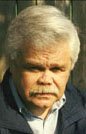
Ed here: Excellent article on the Coen Brothers and their original cinematographer on the occasion of MOMA in NYC.
The Coen Brothers Were Never Better Than with Barry Sonnenfeld
The Gruesome Threesome showcased at the MOMA
By S.T. VanAirsdale
Tuesday, July 29th 2008
MOMA
Thank you, Barry Sonnenfeld.
Barry Sonnenfeld is known to tell the story of that day in Texas 25 years ago when he walked onto the set of Blood Simple—the Coen Brothers' debut and his first feature film as a cinematographer—and couldn't turn on the camera. Things seemed to work out OK over the next month and a half—and over the next seven years, in fact, when the trio's work on Blood Simple, Raising Arizona, and Miller's Crossing established each of them in careers that would fork dramatically in the decades to come.
The triptych is the highlight of MOMA's latest installment of "Collaborations in the Collection," an ongoing series that highlights film partnerships. Screening nine films, the program spotlights the Coens' stock players (including John Turturro, Frances McDormand, and Steve Buscemi) and technicians. Few behind the camera, however, had an impact as deep as Sonnenfeld's, whose presence can be felt even in the Coen films he didn't shoot—from the wildly formalist Southwestern sketches undergirding the Roger Deakins–shot No Country for Old Men to the accentuated archetypes recurring over all of the brothers' 13 films.
The native New Yorker met fellow NYU film-school alum Joel Coen at a party in 1982, when he and his brother Ethan had recently completed the script for Blood Simple. Sonnenfeld shot a mock trailer with them to attract investors for the $1.5 million feature. The film would be set in Texas—as likely a place as any to host a jealous husband's passion killing, Joel later acknowledged in the film's production notes, though its status as a right-to-work state meant cheaper labor on a non-union shoot.
For the rest go here
http://www.villagevoice.com/2008-07-29/film/the-coen-brothers-were-never-better-than-with-barry-sonnenfeld/
Copyright © 2008 Village Voice LLC • 36 Cooper Square • New York NY 10003
The Village Voice and Voice are registered trademarks of Village Voice Media Holdings, LLC. All rights reserved. View our privacy policy.
Thursday, July 31, 2008

Wednesday, July 30, 2008
Baby Moll by John Farris
John Farris was my generation's first literary rock star. When his novel Harrison High was published it quickly became controversial because of its honest depiction of life among American teenagers. This was 1959. America still believed that if teens weren't exactly like Ricky and David Nelson they certainly weren't like Elvis. Given the fact that many of these teens would be in the streets protesting the Viet Nam war only a few years later, you can see how badly books such as Pat Boone's Twixt twelve and Twenty misjudged them.
The paperback edition became a companion to Peyton Place, published a few years earlier, both Great Reads and both purveyors of unpopular truths.
Mr. Farris, now famous, was all of twenty-three when the book was published. But he was no beginner. Born in 1936 he could already claim the following novels in print:
* The Corpse Next Door (Graphic Books, 1956) (as John Farris)
* The Body on the Beach (Bouregy & Curl, 1957, hc) (as Steve Brackeen)
* Baby Moll (Crest, 1958, pb) (as Steve Brackeen)
* Danger in My Blood (Crest, 1958, pb) (as Steve Brackeen)
He was writing and publishing before he could legally buy beer.
Hard Case Crime has now given us a chance to look at some of Farris' early work with Baby Moll appearing this month. And fine work it is.
"Six years after quitting the Florida Mob, Peter Mallory is about to be dragged back in.
"Stalked by a vicious killer and losing his hold on power, Mallory’s old boss needs help—the kind of help only a man like Mallory can provide. But behind the walls of the fenced-in island compound he once called home, Mallory is about to find himself surrounded by beautiful women, by temptation, and by danger—and one wrong step could trigger a bloodbath."
If you have any doubt about Farris' writing skills open the book and read the first chapter. It is both lyrical and ominous, an unlikely combination in a paperback crime novel. This establishes the way Farris even then managed to take some of the familiar tropes of genre fiction and make them entirely his own.
The set-up itself is unique. Mallory called back to save the life of a boss he despises but a man he owes his life. The boss got him off the bottle.
The story, as it plays out, is also all Farris'. While parts of the first act brought Peter Rabe to mind Farris takes the gangster novel in a different direction. Given the relationship of the people on the island the book becomes almost Gothic in its entanglements and ambience.
Farris of course went on to write numerous bestsellers, a number of them staples of modern dark suspense and horror, but even here, early on, he was a cunning storyteller fascinated by the perplexity and perversity of the human soul.
The paperback edition became a companion to Peyton Place, published a few years earlier, both Great Reads and both purveyors of unpopular truths.
Mr. Farris, now famous, was all of twenty-three when the book was published. But he was no beginner. Born in 1936 he could already claim the following novels in print:
* The Corpse Next Door (Graphic Books, 1956) (as John Farris)
* The Body on the Beach (Bouregy & Curl, 1957, hc) (as Steve Brackeen)
* Baby Moll (Crest, 1958, pb) (as Steve Brackeen)
* Danger in My Blood (Crest, 1958, pb) (as Steve Brackeen)
He was writing and publishing before he could legally buy beer.
Hard Case Crime has now given us a chance to look at some of Farris' early work with Baby Moll appearing this month. And fine work it is.
"Six years after quitting the Florida Mob, Peter Mallory is about to be dragged back in.
"Stalked by a vicious killer and losing his hold on power, Mallory’s old boss needs help—the kind of help only a man like Mallory can provide. But behind the walls of the fenced-in island compound he once called home, Mallory is about to find himself surrounded by beautiful women, by temptation, and by danger—and one wrong step could trigger a bloodbath."
If you have any doubt about Farris' writing skills open the book and read the first chapter. It is both lyrical and ominous, an unlikely combination in a paperback crime novel. This establishes the way Farris even then managed to take some of the familiar tropes of genre fiction and make them entirely his own.
The set-up itself is unique. Mallory called back to save the life of a boss he despises but a man he owes his life. The boss got him off the bottle.
The story, as it plays out, is also all Farris'. While parts of the first act brought Peter Rabe to mind Farris takes the gangster novel in a different direction. Given the relationship of the people on the island the book becomes almost Gothic in its entanglements and ambience.
Farris of course went on to write numerous bestsellers, a number of them staples of modern dark suspense and horror, but even here, early on, he was a cunning storyteller fascinated by the perplexity and perversity of the human soul.
Monday, July 28, 2008
Jenny Siler; Mad Men; The Scribes
About halfway through my chemo sessions I start watching the clock. Doesn't matter how I've been distracting myself--book, DVD, audio tape--when I hit the halfway point all I can think is getting out of there. I've never been able to count patience among my many virtues.
Unheard of thing happened today. I was so engrossed in a novel that it didn't quite register that the nurse came over, took out the IV and said goodbye. I know all these things happened because when she came back and said, "Are you all right?" I looked down at my hand and there was the band aid covering the spot where the needle had been taken out.
She was smiling. "We wondered if you were all right. You're usually out of here like a shot. But you've been sitting here for fifteen minutes reading."
True unexaggerated facts.
The book is called Shot by Jenny Siler. In broadstroke it's a not unfamiliar story about a sinister government-industry cover-up set in a small Colorado town. Lucy Greene's life takes a startling turn with the accidental death and then a burglar breaking into her home soon after. Right before his death her husband Carl contacted Kevin Burns, a CNN reporter who got tossed for fudging a story, and told him that he had a story that would Kevin back in business.
Not unfamiliar, as I say. But the truth is in the writing and Siler is about as good a stylist as I've come across in a long time, capable of images of people and landscapes that can rock you. She has John D. MacDonald's ability to take the recognizable types of contemporary popular fiction and give them quirky and real life. She is also a cunning plotter; she structures her story for maximum speed that nonethless allows her make the book as much about people as plot.
I tried to finish it when when I was driving home. (Now that's an exaggeration.)
A damned good writer, Jenny Siler.
----Mad Men
As you've been able to tell my negative review of Mad Men pretty much put that show to rest, eh? Ratings soared! I know I'm in the minority and I'm pretty sure it's me not you.
-----The Scribes
Scribe Awards
Winners in bold type. Link via Lee Goldberg.
BEST GENERAL FICTION ORIGINAL
CSI NY: DELUGE by Stuart M. Kaminsky
**MR. MONK AND THE TWO ASSISTANTS by Lee Goldberg
MURDER SHE WROTE: PANNING FOR MURDER by Jessica Fletcher & Donald Bain
CRIMINAL MINDS: JUMP CUT by Max Allan Collins
BEST GENERAL FICTION ADAPTED
**AMERICAN GANGSTER by Max Allan Collins
BEST SPECULATIVE ORIGINAL
LAST DAYS OF KRYPTON by Kevin J. Anderson
**STARGATE ATLANTIS: CASUALTIES OF WAR by Elizabeth Christensen
STAR TREK: THE NEXT GENERATION - Q&A by Keith R.A. DeCandido
BEST GAME-RELATED ORIGINAL (SPECIAL SCRIBE AWARD)
HITMAN: ENEMY WITHIN by William C. Dietz
FORGE OF THE MINDSLAYERS by Tim Waggoner
**EBERRON: NIGHT OF THE LONG SHADOWS by Paul Crilley
BEST SPECULATIVE ADAPTED
RESIDENT EVIL: EXTINCTION by Keith R.A. DeCandido
52: THE NOVEL by Greg Cox
**30 DAYS OF NIGHT by Tim Lebbon
BEST YOUNG ADULT ORIGINAL
BUFFY THE VAMPIRE SLAYER: THE DEATHLESS by Keith R.A. DeCandido
GOODLUND TRILOGY: VOLUME THREE: WARRIORS BONES by Stephen D. Sullivan
**NANCY DREW AND THE CLUE CREW #10: TICKET TROUBLE by Stacia Deutsch & Rhody Cohon
BEST YOUNG ADULT ADAPTED
**THE 12 DOGS OF CHRISTMAS by Steven Paul Leiva
Unheard of thing happened today. I was so engrossed in a novel that it didn't quite register that the nurse came over, took out the IV and said goodbye. I know all these things happened because when she came back and said, "Are you all right?" I looked down at my hand and there was the band aid covering the spot where the needle had been taken out.
She was smiling. "We wondered if you were all right. You're usually out of here like a shot. But you've been sitting here for fifteen minutes reading."
True unexaggerated facts.
The book is called Shot by Jenny Siler. In broadstroke it's a not unfamiliar story about a sinister government-industry cover-up set in a small Colorado town. Lucy Greene's life takes a startling turn with the accidental death and then a burglar breaking into her home soon after. Right before his death her husband Carl contacted Kevin Burns, a CNN reporter who got tossed for fudging a story, and told him that he had a story that would Kevin back in business.
Not unfamiliar, as I say. But the truth is in the writing and Siler is about as good a stylist as I've come across in a long time, capable of images of people and landscapes that can rock you. She has John D. MacDonald's ability to take the recognizable types of contemporary popular fiction and give them quirky and real life. She is also a cunning plotter; she structures her story for maximum speed that nonethless allows her make the book as much about people as plot.
I tried to finish it when when I was driving home. (Now that's an exaggeration.)
A damned good writer, Jenny Siler.
----Mad Men
As you've been able to tell my negative review of Mad Men pretty much put that show to rest, eh? Ratings soared! I know I'm in the minority and I'm pretty sure it's me not you.
-----The Scribes
Scribe Awards
Winners in bold type. Link via Lee Goldberg.
BEST GENERAL FICTION ORIGINAL
CSI NY: DELUGE by Stuart M. Kaminsky
**MR. MONK AND THE TWO ASSISTANTS by Lee Goldberg
MURDER SHE WROTE: PANNING FOR MURDER by Jessica Fletcher & Donald Bain
CRIMINAL MINDS: JUMP CUT by Max Allan Collins
BEST GENERAL FICTION ADAPTED
**AMERICAN GANGSTER by Max Allan Collins
BEST SPECULATIVE ORIGINAL
LAST DAYS OF KRYPTON by Kevin J. Anderson
**STARGATE ATLANTIS: CASUALTIES OF WAR by Elizabeth Christensen
STAR TREK: THE NEXT GENERATION - Q&A by Keith R.A. DeCandido
BEST GAME-RELATED ORIGINAL (SPECIAL SCRIBE AWARD)
HITMAN: ENEMY WITHIN by William C. Dietz
FORGE OF THE MINDSLAYERS by Tim Waggoner
**EBERRON: NIGHT OF THE LONG SHADOWS by Paul Crilley
BEST SPECULATIVE ADAPTED
RESIDENT EVIL: EXTINCTION by Keith R.A. DeCandido
52: THE NOVEL by Greg Cox
**30 DAYS OF NIGHT by Tim Lebbon
BEST YOUNG ADULT ORIGINAL
BUFFY THE VAMPIRE SLAYER: THE DEATHLESS by Keith R.A. DeCandido
GOODLUND TRILOGY: VOLUME THREE: WARRIORS BONES by Stephen D. Sullivan
**NANCY DREW AND THE CLUE CREW #10: TICKET TROUBLE by Stacia Deutsch & Rhody Cohon
BEST YOUNG ADULT ADAPTED
**THE 12 DOGS OF CHRISTMAS by Steven Paul Leiva
Letters; I get letters...
(Responses to recent blogs)
(Robert S. Levinson is an award-winning bestselling crime novelist who spent years in the music business as one of the leading agents and public relations men. He represented some of the biggest mega-stars of the rock era. I almost convinced him to write his autobiography which, I was sure, would be eloquent, insightful and generous--just like Bob himself.)
Hi, Ed...
Just caught up with your Saturday blogging and thought to share with you...
Casey Kasem, one of the first and nicest guys I met and got to know quite well after I got into the business and was managing a band called "Don and the Goodtimes." A walking encyclopedia of contemporary music. Gave the band its first weekend playdates, at concerts he promoted at various municipal parks, one of the sidelines that helped make him a multi-millionaire.
Paul Revere & the Raiders were on Dick Clark's "Where the Action Is" when I landed my band a regular spot on the seires. Came a time Revere wanted to replace his bass player with ours, Charlie Coe, who was anxious to make the switch, and we wound negotiating an equitable trade. Think Charlie was still with Revere when he cut "Indian Nation."
"Tell Laura I Love Her" was written by Jeff Barry and Ben Raleigh. Jeff, a Brill Building legend, and I were briefly partners at one time, trying to turn his life story (and his catalog of chart hits) into a movie. Close but no production...Ben wrote many of the Elvis Presley movie songs and often dropped by my office to spend time with Grelun Landon, who joined me following Elvis' death and remained in almost daily touch with Col. Parker...
Memories, memories, memories...
Best,
Bob
(Ed here: per my comments on teenage tragedy songs a girkl I knew in highs school wrote m and said, "You liked that stuff as much as I did. You just wouldn;t admit it." Probably true, Karen.)
-------------------
From Tom Piccirilli
(recent winner of thr International Thriller Award)
Hey Ed:
RUN STRANGER RUN is probably better known as HAPPY MOTHER'S DAY, LOVE GEORGE, if you can believe it. Came out a year or two before HAPPY DAYS, so Ron Howard was on the cusp of swingin into either serious dramatic shoes or comedic TV role all-innocence footsteps.
The story features Ron Howard as the new kid who comes to a quaint small town hunting for his biological parents. He finds his birth mom, played by Cloris Leachman, who refuses to tell him who his father is. Murders eventually start piling up around him.
The film also stands out for the fact that it's McGavin's only film directorial, and it also stars Tessa Dahl, daughter of Patricia Neal (and who plays Neal's daughter in the movie too) and Roald Dahl.
Worth checking out in that "didn't they make freakyass little movies back in the 70s" way.
------------------
From Mike Doran
Mike Doran said...
And did you know... David Janssen's last theatrical filn was the legendary Sun Myung Moon production INCHON? This one sat on the shelf for more than a year, being constantly re-edited, and Janssen's death was one of the main reasons. The Moonies simply decided to cut Janssen out entirely,which played merry havoc with the continuity (as memory serves, Janssen was to have had second or third billing after Olivier). As things turned out, David Janssen may have been the lucky one...
**************
Get fantasy football with free live scoring. Sign up for FanHouse Fantasy Football today.
(http://www.fanhouse.com/fantasyaffair?ncid=aolspr00050000000020)
(Robert S. Levinson is an award-winning bestselling crime novelist who spent years in the music business as one of the leading agents and public relations men. He represented some of the biggest mega-stars of the rock era. I almost convinced him to write his autobiography which, I was sure, would be eloquent, insightful and generous--just like Bob himself.)
Hi, Ed...
Just caught up with your Saturday blogging and thought to share with you...
Casey Kasem, one of the first and nicest guys I met and got to know quite well after I got into the business and was managing a band called "Don and the Goodtimes." A walking encyclopedia of contemporary music. Gave the band its first weekend playdates, at concerts he promoted at various municipal parks, one of the sidelines that helped make him a multi-millionaire.
Paul Revere & the Raiders were on Dick Clark's "Where the Action Is" when I landed my band a regular spot on the seires. Came a time Revere wanted to replace his bass player with ours, Charlie Coe, who was anxious to make the switch, and we wound negotiating an equitable trade. Think Charlie was still with Revere when he cut "Indian Nation."
"Tell Laura I Love Her" was written by Jeff Barry and Ben Raleigh. Jeff, a Brill Building legend, and I were briefly partners at one time, trying to turn his life story (and his catalog of chart hits) into a movie. Close but no production...Ben wrote many of the Elvis Presley movie songs and often dropped by my office to spend time with Grelun Landon, who joined me following Elvis' death and remained in almost daily touch with Col. Parker...
Memories, memories, memories...
Best,
Bob
(Ed here: per my comments on teenage tragedy songs a girkl I knew in highs school wrote m and said, "You liked that stuff as much as I did. You just wouldn;t admit it." Probably true, Karen.)
-------------------
From Tom Piccirilli
(recent winner of thr International Thriller Award)
Hey Ed:
RUN STRANGER RUN is probably better known as HAPPY MOTHER'S DAY, LOVE GEORGE, if you can believe it. Came out a year or two before HAPPY DAYS, so Ron Howard was on the cusp of swingin into either serious dramatic shoes or comedic TV role all-innocence footsteps.
The story features Ron Howard as the new kid who comes to a quaint small town hunting for his biological parents. He finds his birth mom, played by Cloris Leachman, who refuses to tell him who his father is. Murders eventually start piling up around him.
The film also stands out for the fact that it's McGavin's only film directorial, and it also stars Tessa Dahl, daughter of Patricia Neal (and who plays Neal's daughter in the movie too) and Roald Dahl.
Worth checking out in that "didn't they make freakyass little movies back in the 70s" way.
------------------
From Mike Doran
Mike Doran said...
And did you know... David Janssen's last theatrical filn was the legendary Sun Myung Moon production INCHON? This one sat on the shelf for more than a year, being constantly re-edited, and Janssen's death was one of the main reasons. The Moonies simply decided to cut Janssen out entirely,which played merry havoc with the continuity (as memory serves, Janssen was to have had second or third billing after Olivier). As things turned out, David Janssen may have been the lucky one...
**************
Get fantasy football with free live scoring. Sign up for FanHouse Fantasy Football today.
(http://www.fanhouse.com/fantasyaffair?ncid=aolspr00050000000020)
Sunday, July 27, 2008
Gettin Sentimental; David Janssen; Lost Movies
From Cinema Retro- Getting Sentimental With John Cleese
"Attention all eligible ladies! If your goal in life is to marry John Cleese, you may want to reconsider. Appearing on a British chat show, former Monty Python star Cleese had jaws dropping when he unleashed his anger on the two women in his life who have caused him the most angst: his now deceased mother and his third wife, whom he divorced in a bitter, high profile court case. Of his mum, Cleese said, "'And she lived to 101 - I thought I'd never get rid of her.' Of his ex-wife, he said, "'Her voice alone could tear the testicles off a rabbit. She never stops talking." "
-----------City In Fear
From Internatioal Movie Data Base:
"City in Fear, a 1980 ABC made for television movie,which is loosely based on the Son of Sam murders, is television at its best. Anyone who gets the chance to view this movie will be in for a treat. The viewer can't lose with veteran actors like Robert Vaughn, Susan Sullivan, Mickey Rourke, Perry King and the forever amazing, but often underrated actor, David Janssen.
David Janssen would have been an Oscar nominee in films had he lived. The character of Vince Perrino played by Janssen is that of a frustrated, cynical alcoholic columnist, who is a man of many excesses one of them being alcohol. Janssen is hired by a wealthy Robert Vaughn, who recalls Janssen as a legendary columnist, who he (Vaugh)hopes can revamp a Los Angeles newspaper that has just been brought by Vaughn, when a series of murders of young women begins, that will by the end of the movie create a reign of terror in the city.
"Watching this movie is almost like gradually seeing the curtains close in on the career of one of the finest actors in film and television. David Janssen died of a heart attack on February 13, 1980, he was 48 years old. City in Fear was a three (3) hour movie of the week. City in Fear aired on ABC a month after his death."
Ed here: This review overpraises the movie, I think, but it's an intersting film only because it reminds us of the influence newspapers once held. It reminded me in fact of a darker version of the old Lou Grant newspaper series with the excellent Ed Asner.
Janssen is especially interesting here because he's hustling rather than hiding. There are several good scenes with Janssen and Robert Vaughan who brings real nuance to his role. Janssen looks burnt out--no making up the baggy eyes, the burgeoning paunch--and that only helps the character. There's a great scene with his agent trying to sell Jansseen to Vaughan in a haughty irritating way. He's trying the old We have absolutely no interest in your offer routine. Janssen looks near death and tries one of his grimacing smiles on Vaughan who then cuts through the bullshit by listing how much Janssen owes to his ex-wives, the IRS, his bank. Janssen adds disollution to his usual sorrow and it's moving to watch.
I used to watch the Irv Kupcinet show in Chicago. No more decent man was ever in front of the camera than Kup. On weekends he usually had stars coming through town to promote films and tv shows. Janssen looked rehab-ready. Really bad and probably half in the bag. I may be confusing shows here but I think this was the one where Tennessee Williams was also a guest. Talk about rehab-ready. Ole Tennessee was born that way. There was a moment of tension when the subject of male gay stars came up and Janssen offered to name a few if Kup wanted him to. Real panic in Kup's eyes. He didn't have that kind of show. Too nice a guy. I don't recall that Janssen was particularly mean about it. His whole interview was sort of off the wall anyway so this fit right in. He chain smoked and sipped what might have been wine and looked forlorn and allowed himself one of those occasional painful laughs. He would be dead within sixty days.
He's very good in this movie. He didn't make it on the big screen but he was a classic player on the small one. He brought intelligence, compassion and quiet grief to a medium that abhorred all three.
------------Run Stranger Run
Looking through John Stanley's Creature Feature book and came across a listing for Run, Stranger, Run (1973) A psychothrillerdirected by Darin McGavin with Ron Howard, Cloris Leachman, Patricia Neal, Bobby Darin and Simon Oakland. What a cast. Anybody ever see this movie?
"Attention all eligible ladies! If your goal in life is to marry John Cleese, you may want to reconsider. Appearing on a British chat show, former Monty Python star Cleese had jaws dropping when he unleashed his anger on the two women in his life who have caused him the most angst: his now deceased mother and his third wife, whom he divorced in a bitter, high profile court case. Of his mum, Cleese said, "'And she lived to 101 - I thought I'd never get rid of her.' Of his ex-wife, he said, "'Her voice alone could tear the testicles off a rabbit. She never stops talking." "
-----------City In Fear
From Internatioal Movie Data Base:
"City in Fear, a 1980 ABC made for television movie,which is loosely based on the Son of Sam murders, is television at its best. Anyone who gets the chance to view this movie will be in for a treat. The viewer can't lose with veteran actors like Robert Vaughn, Susan Sullivan, Mickey Rourke, Perry King and the forever amazing, but often underrated actor, David Janssen.
David Janssen would have been an Oscar nominee in films had he lived. The character of Vince Perrino played by Janssen is that of a frustrated, cynical alcoholic columnist, who is a man of many excesses one of them being alcohol. Janssen is hired by a wealthy Robert Vaughn, who recalls Janssen as a legendary columnist, who he (Vaugh)hopes can revamp a Los Angeles newspaper that has just been brought by Vaughn, when a series of murders of young women begins, that will by the end of the movie create a reign of terror in the city.
"Watching this movie is almost like gradually seeing the curtains close in on the career of one of the finest actors in film and television. David Janssen died of a heart attack on February 13, 1980, he was 48 years old. City in Fear was a three (3) hour movie of the week. City in Fear aired on ABC a month after his death."
Ed here: This review overpraises the movie, I think, but it's an intersting film only because it reminds us of the influence newspapers once held. It reminded me in fact of a darker version of the old Lou Grant newspaper series with the excellent Ed Asner.
Janssen is especially interesting here because he's hustling rather than hiding. There are several good scenes with Janssen and Robert Vaughan who brings real nuance to his role. Janssen looks burnt out--no making up the baggy eyes, the burgeoning paunch--and that only helps the character. There's a great scene with his agent trying to sell Jansseen to Vaughan in a haughty irritating way. He's trying the old We have absolutely no interest in your offer routine. Janssen looks near death and tries one of his grimacing smiles on Vaughan who then cuts through the bullshit by listing how much Janssen owes to his ex-wives, the IRS, his bank. Janssen adds disollution to his usual sorrow and it's moving to watch.
I used to watch the Irv Kupcinet show in Chicago. No more decent man was ever in front of the camera than Kup. On weekends he usually had stars coming through town to promote films and tv shows. Janssen looked rehab-ready. Really bad and probably half in the bag. I may be confusing shows here but I think this was the one where Tennessee Williams was also a guest. Talk about rehab-ready. Ole Tennessee was born that way. There was a moment of tension when the subject of male gay stars came up and Janssen offered to name a few if Kup wanted him to. Real panic in Kup's eyes. He didn't have that kind of show. Too nice a guy. I don't recall that Janssen was particularly mean about it. His whole interview was sort of off the wall anyway so this fit right in. He chain smoked and sipped what might have been wine and looked forlorn and allowed himself one of those occasional painful laughs. He would be dead within sixty days.
He's very good in this movie. He didn't make it on the big screen but he was a classic player on the small one. He brought intelligence, compassion and quiet grief to a medium that abhorred all three.
------------Run Stranger Run
Looking through John Stanley's Creature Feature book and came across a listing for Run, Stranger, Run (1973) A psychothrillerdirected by Darin McGavin with Ron Howard, Cloris Leachman, Patricia Neal, Bobby Darin and Simon Oakland. What a cast. Anybody ever see this movie?
Saturday, July 26, 2008
Michael Connelly; Casey Kasem; Teen Angel; First Line
Terrill Lankford has produced another excellent video for Michael Connelly. Go here
http://www.youtube.com/watch?v=YcLrRQlEaOE
What I admire about it so much is that it not only builds suspense it takes you into the heart of the book while it's doing so. I'm hoping that someday soon somebody will be doing a video for Terrill himself, one of the most gifted crime novelists of our time.
------Casey Kasem
While driving over to Mystery Cat books today I heard a a 1970-something rebroadcast of a Casey Top 4000 or whatever the hell it was. In the days of many less pound sand far sturdier knees I was a half-assed runner. I always listened to Casey on my Walkman or whatever they were then. My favorite part was the weekly dedication, which I assume was written by some demonic stoner on casey's staff. But I'd forgotten just how cheesy they were-- Straight from Nathaneal West's Miss Lonelyhearts. I'm sending one to the old Caster just to see if he'll use it.
"Dear Casey-- looks like I now not only have my sister knocked up but my Mom, too. Ever since the cops took Dad away again I've kind of had to become the Man of The House, if you know what I mean. Dad always said it was Ok if I spent time with Sis but Mom was strictly hands off. Well, Casey, now my Dad's gettng out of prison and boy is he going to be pissed off at me. I was wondering if you could play his favorite Elvis song `Big Hunk `O Love' and tell him it's from his son DeWayne. Thanks, Casey, I knew you'd understand."
------Indian Nation
I remember a local dj playing Paul Revere's "Indian Nation" one day and then getting all sappy about Native Americans and the Mesquakie reservation (now casino) about thirty miles form here. One of the phoniest most cynical hammiest (and to me irritating) Poltiically Correct songs of all time done by a bunch of no-talent white boys...and this dj is getting all misty. But then there was Running Bear back in The Fifties, another white boy paen to the folks we stole this country from. But it had a great fake Indian chorous hooba-hooba,ias you the elderly persuasion will likely recall.
These were second only to the teen tragedy songs, my favorite being Tell Laura I love Her. Wasn't this the one where the dipshit teen singing the song is in the Indy 500 or something, wipes out aand they drag his burning body out and his last words were Tell Laura i Love Her? I remember laughing out loud the first time I heard it and a girl I knew telling me how insensitive I was. Needless to say she was right. And needless to say it became number one.
-------Politically InCorrect
Carol collects opening lines to share with students in her writing class. Any time I see one I type it out and e mail it to her so she'lll have a record of it.
Donald Hamilton and Philip Atlee are two espionage writers of the Fifties, Sixties and Seventies I find fresh as anybody working today. So I reread them frequently.
Today I grabbed Atlee's The Death Bird Contract from the shelf opened it up and immediately did cartoon eyes--you know. when your eyes bug out like Slinkies?
Here's the first sentence: "I awakened from a dark, drugged sleep, and without opening my eyes knew I was in Mexico because I could smell Mexicans."
http://www.youtube.com/watch?v=YcLrRQlEaOE
What I admire about it so much is that it not only builds suspense it takes you into the heart of the book while it's doing so. I'm hoping that someday soon somebody will be doing a video for Terrill himself, one of the most gifted crime novelists of our time.
------Casey Kasem
While driving over to Mystery Cat books today I heard a a 1970-something rebroadcast of a Casey Top 4000 or whatever the hell it was. In the days of many less pound sand far sturdier knees I was a half-assed runner. I always listened to Casey on my Walkman or whatever they were then. My favorite part was the weekly dedication, which I assume was written by some demonic stoner on casey's staff. But I'd forgotten just how cheesy they were-- Straight from Nathaneal West's Miss Lonelyhearts. I'm sending one to the old Caster just to see if he'll use it.
"Dear Casey-- looks like I now not only have my sister knocked up but my Mom, too. Ever since the cops took Dad away again I've kind of had to become the Man of The House, if you know what I mean. Dad always said it was Ok if I spent time with Sis but Mom was strictly hands off. Well, Casey, now my Dad's gettng out of prison and boy is he going to be pissed off at me. I was wondering if you could play his favorite Elvis song `Big Hunk `O Love' and tell him it's from his son DeWayne. Thanks, Casey, I knew you'd understand."
------Indian Nation
I remember a local dj playing Paul Revere's "Indian Nation" one day and then getting all sappy about Native Americans and the Mesquakie reservation (now casino) about thirty miles form here. One of the phoniest most cynical hammiest (and to me irritating) Poltiically Correct songs of all time done by a bunch of no-talent white boys...and this dj is getting all misty. But then there was Running Bear back in The Fifties, another white boy paen to the folks we stole this country from. But it had a great fake Indian chorous hooba-hooba,ias you the elderly persuasion will likely recall.
These were second only to the teen tragedy songs, my favorite being Tell Laura I love Her. Wasn't this the one where the dipshit teen singing the song is in the Indy 500 or something, wipes out aand they drag his burning body out and his last words were Tell Laura i Love Her? I remember laughing out loud the first time I heard it and a girl I knew telling me how insensitive I was. Needless to say she was right. And needless to say it became number one.
-------Politically InCorrect
Carol collects opening lines to share with students in her writing class. Any time I see one I type it out and e mail it to her so she'lll have a record of it.
Donald Hamilton and Philip Atlee are two espionage writers of the Fifties, Sixties and Seventies I find fresh as anybody working today. So I reread them frequently.
Today I grabbed Atlee's The Death Bird Contract from the shelf opened it up and immediately did cartoon eyes--you know. when your eyes bug out like Slinkies?
Here's the first sentence: "I awakened from a dark, drugged sleep, and without opening my eyes knew I was in Mexico because I could smell Mexicans."
Thursday, July 24, 2008
Stuff
Carol and her sister Christy are on an eleven day vacation on the east coast. They've spent yesterday and today at a Cape Cod hotel so they can hang around with our friends Kevin and Kate McCarthy. Carol says even at 93 Kevin is as dashing and courtly as ever. Nobody tells showbiz stories than Kevin. The vacation cultimates in three days with our son in CT. Granddaughter Kate is having her fourth birthday.
--------William Castle
There's an excellent article on Wlliam Castle on the Time Out London website. Thanks to John Betancourt I have excellent copies of Castle's first three films. They were based on the popular 1940s radio series The Whistler and they are hard-core noir. In fact two of the storylines are based on Cornell Woolrich stories.
---------Roger Ebert
Roger says goodbye to the tv show he helped create. And that made him famous. A melancholy piece that choked me up a few times. Brought back so many memories. As I've said before Roger and I were friends in the Fifties and eary Sixties because of science fiction fandom. (Look in the Amazing Stories of that time and you'll see the name of a certain Bill Crider in there, too.) But at my age and in my health the memoir reminded me of how god damned strange life is.
The people back then. Dick Lupoff, who still writes some of the most unique and memorable fiction of our time. Kent Moomaw, who maybe had more raw talent than any of us, dead by his own hand at seventeen. An excited post card from Marion Zimmer Bradley telling me about selling her novel The Door Through Space to Ace Books. Ron Haydock the most dashing of us all fronting a really good Chicago rock band and then heading to California where nothing went right and he ended up buried in soft corn porn and getting killed by a truck while hitchhiking. One of three sweetest women on the planet Juanita Coulson, and a gifted wonderful writer she is. And her husband Buck who loved playing the curmudgeon. Their fanzine Yandro able to brighten my bluest day. The guy who ended up joning the American Nazi party. The guy who tried to murder his wife. The guy who always had the finest grass an earthling ever partook of--and happy he was to hand it out. Seeing Roger again in the mid-Sixties when I was producing commercials in Chicago (man, Chicago had a lot of bars). For the most part still the finest and most interesting group of people I've ever known.
for the rest go here:
http://blogs.suntimes.com/ebert/2008/07/the-balcony-is-closed.html
--------William Castle
There's an excellent article on Wlliam Castle on the Time Out London website. Thanks to John Betancourt I have excellent copies of Castle's first three films. They were based on the popular 1940s radio series The Whistler and they are hard-core noir. In fact two of the storylines are based on Cornell Woolrich stories.
---------Roger Ebert
Roger says goodbye to the tv show he helped create. And that made him famous. A melancholy piece that choked me up a few times. Brought back so many memories. As I've said before Roger and I were friends in the Fifties and eary Sixties because of science fiction fandom. (Look in the Amazing Stories of that time and you'll see the name of a certain Bill Crider in there, too.) But at my age and in my health the memoir reminded me of how god damned strange life is.
The people back then. Dick Lupoff, who still writes some of the most unique and memorable fiction of our time. Kent Moomaw, who maybe had more raw talent than any of us, dead by his own hand at seventeen. An excited post card from Marion Zimmer Bradley telling me about selling her novel The Door Through Space to Ace Books. Ron Haydock the most dashing of us all fronting a really good Chicago rock band and then heading to California where nothing went right and he ended up buried in soft corn porn and getting killed by a truck while hitchhiking. One of three sweetest women on the planet Juanita Coulson, and a gifted wonderful writer she is. And her husband Buck who loved playing the curmudgeon. Their fanzine Yandro able to brighten my bluest day. The guy who ended up joning the American Nazi party. The guy who tried to murder his wife. The guy who always had the finest grass an earthling ever partook of--and happy he was to hand it out. Seeing Roger again in the mid-Sixties when I was producing commercials in Chicago (man, Chicago had a lot of bars). For the most part still the finest and most interesting group of people I've ever known.
for the rest go here:
http://blogs.suntimes.com/ebert/2008/07/the-balcony-is-closed.html
Wednesday, July 23, 2008
The New Hollywood
Ed here: Cinema Retro linked to this article from the UK Guardian. It's a fascinating look at the New Hollywood and an interesting history of how we got here--starting with radio in the Twenties.
Above the world so high
http://film.guardian.co.uk/News_Story/Guardian/0,,2291381,00.html
The age of gods and princes on the silver screen has passed, as we turn instead to fleeting celebrity and digital thrills. Phil Hoad tells of how we conspired to kill the stars
Friday July 18, 2008
The Guardian
After he assailed Oprah Winfrey's couch in May 2005, you have to hope Tom Cruise mused on the meaning of change. When he imagined his outbreak of zaniness, maybe it played in his head like a bar scene from Cocktail; but the derision with which the public greeted it was a tiny hint that the mood toward movie stars had darkened since Cruise's jubilant 80s and 90s. Hollywood's reigning king of kings was sacked by Paramount 14 months later, and though he was later made head of the revitalised United Artists, he's not in the clear yet: the knives are already out for his much-delayed Hitler assassination pic, Valkyrie.
(more)
Dark clouds have gathered over the whole of Hollywood's top tier. "Star power is definitely waning," says one producer at a major Hollywood production company. "There's no mystique any more. The power of celebrity has been commodified, and that weakens people's willingness to go and see stars. I can see Tom Cruise on Perez Hilton; why should I go to the cinema?"
The showbiz colossi that straddled the industry in top-heavy, high-concept blockbusters are fading: Arnold gone to politics; Mel gone off the rails; Bruce, Sly and Harrison all making their last throw of the dice with the recent returns of their superannuated franchises. Other stars have followed in their wake, of course, but few with the power to carry a movie. Will Smith is the only actor widely regarded as a sure thing at the box office, transcending race, class and even, as this month's Hancock showed, duff reviews.
You can't exactly say the stars got small, but somewhere along the line, in the 90s, it was the pictures that got big. The huge franchises that now dominate the release schedules, rolled out like military operations, often employ ensemble casts and invariably splurge on the CGI, decentralising the importance of the star actor. The Sparta epic 300 was typical of new-millennium thinking: jacked up to the helmet plumes on comic-book attitude and blue-screen aesthetics, but not a big-name actor in sight.
In this climate, the studios are beginning to seriously question whether the A-list are worth the going rate. Going or gone are the deals that were routine a few years ago, whereby a star would receive a fixed fee plus a percentage of the eventual box-office haul (Keanu Reeves tops the earning charts, having bagged $30m plus 15% to make an eventual $256m from the Matrix sequels). With the DVD profits that made these deals possible shrinking, and the world economy on the turn, Hollywood is looking to tighten its belt.
For the rest go here
http://film.guardian.co.uk/News_Story/Guardian/0,,2291381,00.html
Above the world so high
http://film.guardian.co.uk/News_Story/Guardian/0,,2291381,00.html
The age of gods and princes on the silver screen has passed, as we turn instead to fleeting celebrity and digital thrills. Phil Hoad tells of how we conspired to kill the stars
Friday July 18, 2008
The Guardian
After he assailed Oprah Winfrey's couch in May 2005, you have to hope Tom Cruise mused on the meaning of change. When he imagined his outbreak of zaniness, maybe it played in his head like a bar scene from Cocktail; but the derision with which the public greeted it was a tiny hint that the mood toward movie stars had darkened since Cruise's jubilant 80s and 90s. Hollywood's reigning king of kings was sacked by Paramount 14 months later, and though he was later made head of the revitalised United Artists, he's not in the clear yet: the knives are already out for his much-delayed Hitler assassination pic, Valkyrie.
(more)
Dark clouds have gathered over the whole of Hollywood's top tier. "Star power is definitely waning," says one producer at a major Hollywood production company. "There's no mystique any more. The power of celebrity has been commodified, and that weakens people's willingness to go and see stars. I can see Tom Cruise on Perez Hilton; why should I go to the cinema?"
The showbiz colossi that straddled the industry in top-heavy, high-concept blockbusters are fading: Arnold gone to politics; Mel gone off the rails; Bruce, Sly and Harrison all making their last throw of the dice with the recent returns of their superannuated franchises. Other stars have followed in their wake, of course, but few with the power to carry a movie. Will Smith is the only actor widely regarded as a sure thing at the box office, transcending race, class and even, as this month's Hancock showed, duff reviews.
You can't exactly say the stars got small, but somewhere along the line, in the 90s, it was the pictures that got big. The huge franchises that now dominate the release schedules, rolled out like military operations, often employ ensemble casts and invariably splurge on the CGI, decentralising the importance of the star actor. The Sparta epic 300 was typical of new-millennium thinking: jacked up to the helmet plumes on comic-book attitude and blue-screen aesthetics, but not a big-name actor in sight.
In this climate, the studios are beginning to seriously question whether the A-list are worth the going rate. Going or gone are the deals that were routine a few years ago, whereby a star would receive a fixed fee plus a percentage of the eventual box-office haul (Keanu Reeves tops the earning charts, having bagged $30m plus 15% to make an eventual $256m from the Matrix sequels). With the DVD profits that made these deals possible shrinking, and the world economy on the turn, Hollywood is looking to tighten its belt.
For the rest go here
http://film.guardian.co.uk/News_Story/Guardian/0,,2291381,00.html
Tuesday, July 22, 2008
FORGOTTEN BOOKS - The Pat Hobby Stories
Losers have always interested me more than winners. There's a line from a Leonard Cohen poem "The simple life of heroes/The twisted lives of saints." I'll take the saints (though Cohen isn't talking about folks the Vatican bestows sainthood on that's for sure).
My formative years were the Fifties. The films that influenced me the most were the noirs my father took me to and such fare as The Sweet Smell of Success and A Face in the Crowd. No heroes there. The same for my preferred reading (in additon to the Gold Medals and sf)--Hemingway, James Jones, Irwin Shaw (short stories), Graham Greene and Richard Wright among others. No heroes there either. Same for theater (I was writing terrible plays early on). O'Neill, Miller, Williams. Not a hero in sight.
We call a good deal of crime fiction dark. But is it? Cops replaced cowboys and now we have Cops (or investigators of any kind) with Personal Problems and reviewers think this is some kind of dangerous fiction. Not to me.
The constraints of commercial fiction are such that you risk losing a sale if your protagoist is an outright loser. The Brits were way ahead of us Yanks. Derek Raymond has spawned two generations of daring writers. The first time I read him I was struck by how much the texture of his prose remided me of one of my five favorite books of all time, Dow and Out in Paris and London by George Orwell. I read fifty pages of it the other day. What with globalization the world is once again as Orwell described it in the Thirties.
The literary writer Brian Moore (who started out writing Gold Medals and Dell originals under three different names) made a brief early career out of losers. The Lucky Of Ginger Coffee, for only one example, is about a daydreamer most people love but ultimately a selfish man whose daydreams are destroying his wife and children. He can't accept that he's an average guy--a loser. And that turns him into a dark loser indeed.
F. Scott Fitzgerald's work is filled with losers. Handsome, poetic ones, yes, but losers nonetheless. Winter Dreams, as one of his best stories is called, describes the near lifelong love of a man for woman he can never have. He has great business success but still there is his failure to possess her. The last few pages will give you chills.
Here we have The Pat Hobby Stories. They are set in the Hollywood the late Thirties and feature a once prominent screeenwriter who is reduced to virtually begging for work at the various studios that once wined and dined him. The Fitzgerald myth is so tied to the notion of Romantic Loss that we forget that he was also funnier than hell. And causitc.
As Arnold Gingrich said shortly after Fitzgerald's death, "These stories were the last word from his last home, for much of what he felt about Hollywood and about himself permeated these stories."
And damned good stories they are, too. Not major Fitzgerald but cunning and crafty tales of bars, studios, whores of both genders, unhappy winners and drunken losers.
My favorite here is "Pat Hobby and Orson Welles." The luckless Hobby is hanging around the writer's building trying to cadge anything he can get--even a B-western--when somebody mentions Orson Welles. And Hobby almost loses it. Everywere he turns he hears about Orson Welles--newspaper, magazines, radio, movies. Orson Welles Orson Welles.
Fitzgerald uses Welles as a symbol of generational turn. Hobby and other men his age were major players in their time but now their time is gone. One studio head admits (reluctantly) to Hobby that he doesn't know what the hell all the fuss about Welles is either but dammit the young people on his staff swoon every time his name is mentioned. So this studio head and others push enormous sums of money on Welles. Hobby bitterly wnders why Welles doesn't stay in the East where he belongs---with the snobs. The West, dammit, is for common folk. (Well, except for the mansions and Rodeo Drive.)
This is a book fileld with boozy grief, hilarious bitterness and a fascinating look from the inside as to what writers went through under the old studio management.
As Fitzgerald himself said, "This was not art, this was industry. (Who) you sat with at lunch was more important than what you (wrote) in your office."
A fine little collection.
My formative years were the Fifties. The films that influenced me the most were the noirs my father took me to and such fare as The Sweet Smell of Success and A Face in the Crowd. No heroes there. The same for my preferred reading (in additon to the Gold Medals and sf)--Hemingway, James Jones, Irwin Shaw (short stories), Graham Greene and Richard Wright among others. No heroes there either. Same for theater (I was writing terrible plays early on). O'Neill, Miller, Williams. Not a hero in sight.
We call a good deal of crime fiction dark. But is it? Cops replaced cowboys and now we have Cops (or investigators of any kind) with Personal Problems and reviewers think this is some kind of dangerous fiction. Not to me.
The constraints of commercial fiction are such that you risk losing a sale if your protagoist is an outright loser. The Brits were way ahead of us Yanks. Derek Raymond has spawned two generations of daring writers. The first time I read him I was struck by how much the texture of his prose remided me of one of my five favorite books of all time, Dow and Out in Paris and London by George Orwell. I read fifty pages of it the other day. What with globalization the world is once again as Orwell described it in the Thirties.
The literary writer Brian Moore (who started out writing Gold Medals and Dell originals under three different names) made a brief early career out of losers. The Lucky Of Ginger Coffee, for only one example, is about a daydreamer most people love but ultimately a selfish man whose daydreams are destroying his wife and children. He can't accept that he's an average guy--a loser. And that turns him into a dark loser indeed.
F. Scott Fitzgerald's work is filled with losers. Handsome, poetic ones, yes, but losers nonetheless. Winter Dreams, as one of his best stories is called, describes the near lifelong love of a man for woman he can never have. He has great business success but still there is his failure to possess her. The last few pages will give you chills.
Here we have The Pat Hobby Stories. They are set in the Hollywood the late Thirties and feature a once prominent screeenwriter who is reduced to virtually begging for work at the various studios that once wined and dined him. The Fitzgerald myth is so tied to the notion of Romantic Loss that we forget that he was also funnier than hell. And causitc.
As Arnold Gingrich said shortly after Fitzgerald's death, "These stories were the last word from his last home, for much of what he felt about Hollywood and about himself permeated these stories."
And damned good stories they are, too. Not major Fitzgerald but cunning and crafty tales of bars, studios, whores of both genders, unhappy winners and drunken losers.
My favorite here is "Pat Hobby and Orson Welles." The luckless Hobby is hanging around the writer's building trying to cadge anything he can get--even a B-western--when somebody mentions Orson Welles. And Hobby almost loses it. Everywere he turns he hears about Orson Welles--newspaper, magazines, radio, movies. Orson Welles Orson Welles.
Fitzgerald uses Welles as a symbol of generational turn. Hobby and other men his age were major players in their time but now their time is gone. One studio head admits (reluctantly) to Hobby that he doesn't know what the hell all the fuss about Welles is either but dammit the young people on his staff swoon every time his name is mentioned. So this studio head and others push enormous sums of money on Welles. Hobby bitterly wnders why Welles doesn't stay in the East where he belongs---with the snobs. The West, dammit, is for common folk. (Well, except for the mansions and Rodeo Drive.)
This is a book fileld with boozy grief, hilarious bitterness and a fascinating look from the inside as to what writers went through under the old studio management.
As Fitzgerald himself said, "This was not art, this was industry. (Who) you sat with at lunch was more important than what you (wrote) in your office."
A fine little collection.
Monday, July 21, 2008
Stuff
Patti Abbott has a funny bit on TV commercials tonight. I'd like to add three more to the list of risible spots.
The contact lens commercial with the gorgeous girl playing the National Geographic type photographer out in the desert? Please. This woman is laughable in this tough-chick role. The grittist she does is her nails.
I've said here before that I'm willing to lead a planet-wide prayer asking that God teach plugster Billy May how a microphone works. You don't have to SHOUT at it. It does the shouting for you. His carnival barker approach must work because he's now hawking two new products. But I'm sure at family meal time his kids make him eat outside. The blast of his voice would be too hard to take otherwise.
The new John McCain commercial today that blames Barrack Obama for gas prices. No kidding. The part that irritates me is the chorus of voices shouting Obama! when the voice over dude goes and Who's to blame? Lynch mob anybody? I think we're probably working up to that. Hang the Negro! McCain is a stupid man (yet another howler this morning--when he confused Pakistan and Adghanistan!), a privileged bully boy used to geting his own way. Graduated near the bottom of his class in both high school and Annapolis--and only got through the latter because he came from generations of Admirals. Just like Bush at Yale. And spare me his POW story. It has no bearing on a run for the presidency. I honestly expect him to lose it and call Obama a racist name before the campaign is over.
----WORKING CLASS HEROES
Senator Bernie Sanders and Matt Tiabbi are among the few honest brokers in the senate and press respectively. From a long Tiabbi interview with Sanders.
"Here's the thing: nobody needs me or Bernie Sanders to tell them that it sucks out there and that times are tougher economically in this country than perhaps they've been for quite a long time. We've all seen the stats — median income has declined by almost $2,500 over the past seven years, we have a zero personal savings rate in America for the first time since the Great Depression, and 5 million people have slipped below the poverty level since the beginning of the decade. And stats aside, most everyone out there knows what the deal is. If you're reading this and you had to drive to work today or pay a credit card bill in the last few weeks you know better than I do for sure how fucked up things have gotten. I hear talk from people out on the campaign trail about mortgages and bankruptcies and bill collectors that are enough to make your ass clench with 100 percent pure panic.
"None of this is a secret. Here, however, is something that is a secret: that this is a class issue that is being intentionally downplayed by a political/media consensus bent on selling the public a version of reality where class resentments, or class distinctions even, do not exist. Our "national debate" is always a thing where we do not talk about things like haves and have-nots, rich and poor, employers versus employees. But we increasingly live in a society where all the political action is happening on one side of the line separating all those groups, to the detriment of the people on the other side.
"We have a government that is spending two and a half billion dollars a day in Iraq, essentially subsidizing new swimming pools for the contracting class in northern Virginia, at a time when heating oil and personal transportation are about to join health insurance on the list of middle-class luxuries. Home heating and car ownership are slipping away from the middle class thanks to exploding energy prices — the hidden cost of the national borrowing policy we call dependency on foreign oil, "foreign" representing those nations, Arab and Chinese, that lend us the money to pay for our wars."
ATTENTION ALL FOUR ED GORMAN READERS IN THE UNITED KINGOM:
I learned today that BBC Audio, the large print publishers, will be bringing out SLEEPING DOGS. This makes me very happy so I'm pleased to report it.
The contact lens commercial with the gorgeous girl playing the National Geographic type photographer out in the desert? Please. This woman is laughable in this tough-chick role. The grittist she does is her nails.
I've said here before that I'm willing to lead a planet-wide prayer asking that God teach plugster Billy May how a microphone works. You don't have to SHOUT at it. It does the shouting for you. His carnival barker approach must work because he's now hawking two new products. But I'm sure at family meal time his kids make him eat outside. The blast of his voice would be too hard to take otherwise.
The new John McCain commercial today that blames Barrack Obama for gas prices. No kidding. The part that irritates me is the chorus of voices shouting Obama! when the voice over dude goes and Who's to blame? Lynch mob anybody? I think we're probably working up to that. Hang the Negro! McCain is a stupid man (yet another howler this morning--when he confused Pakistan and Adghanistan!), a privileged bully boy used to geting his own way. Graduated near the bottom of his class in both high school and Annapolis--and only got through the latter because he came from generations of Admirals. Just like Bush at Yale. And spare me his POW story. It has no bearing on a run for the presidency. I honestly expect him to lose it and call Obama a racist name before the campaign is over.
----WORKING CLASS HEROES
Senator Bernie Sanders and Matt Tiabbi are among the few honest brokers in the senate and press respectively. From a long Tiabbi interview with Sanders.
"Here's the thing: nobody needs me or Bernie Sanders to tell them that it sucks out there and that times are tougher economically in this country than perhaps they've been for quite a long time. We've all seen the stats — median income has declined by almost $2,500 over the past seven years, we have a zero personal savings rate in America for the first time since the Great Depression, and 5 million people have slipped below the poverty level since the beginning of the decade. And stats aside, most everyone out there knows what the deal is. If you're reading this and you had to drive to work today or pay a credit card bill in the last few weeks you know better than I do for sure how fucked up things have gotten. I hear talk from people out on the campaign trail about mortgages and bankruptcies and bill collectors that are enough to make your ass clench with 100 percent pure panic.
"None of this is a secret. Here, however, is something that is a secret: that this is a class issue that is being intentionally downplayed by a political/media consensus bent on selling the public a version of reality where class resentments, or class distinctions even, do not exist. Our "national debate" is always a thing where we do not talk about things like haves and have-nots, rich and poor, employers versus employees. But we increasingly live in a society where all the political action is happening on one side of the line separating all those groups, to the detriment of the people on the other side.
"We have a government that is spending two and a half billion dollars a day in Iraq, essentially subsidizing new swimming pools for the contracting class in northern Virginia, at a time when heating oil and personal transportation are about to join health insurance on the list of middle-class luxuries. Home heating and car ownership are slipping away from the middle class thanks to exploding energy prices — the hidden cost of the national borrowing policy we call dependency on foreign oil, "foreign" representing those nations, Arab and Chinese, that lend us the money to pay for our wars."
ATTENTION ALL FOUR ED GORMAN READERS IN THE UNITED KINGOM:
I learned today that BBC Audio, the large print publishers, will be bringing out SLEEPING DOGS. This makes me very happy so I'm pleased to report it.
Sunday, July 20, 2008
E. Howard Hunt
Charles Ardai has announed that he'll be publishing an E. Howard Hunt novel in the Hard Case line. I've talked about Hunt here before. Watergate made him notorious though even before then he had a reputation for somebody who swung a little too wide in politics.
He once offered to parachute into Cuba wearing a red wig and kill Castro. The only thing he hadn't worked out was how he was going to escape. Some of this tale may owe more to urban legend than fact but remember Hunt HIRED G. Gordon Liddy to help him burgle Dem headquarters in Watergate. This doesn't say much for his judgement. Liddy was already on the shortlist of the craziest of GOP ops.
I've also mentioned that Hunt started out not as a pulp writer but a mainstream if not literary one. In addition to three novels he also wrote a pay of note and was cited as one of the bright new lights to come out of the big war by the then very influential Esquire. One of the five others mentioned included Norman Mailer and Gore Vidal.
I've never been able to find out why a writer who was working in mainstream fiction as late as 1948 suddenly appeared in 1950 writingt books for Gold Medal. That had to be seen as a step down.
He was a good solid craftsmen. Many reviewers didn't want to admit that because of his association with Watergate but he knew how to tell a story--some of them quite lurid, especially his horror novels of the Seventies as by David. St. John--but for me his Steve Bentley novels about politics were my favorites.
If you want to know the mind set the privileged right-wing Cold Warriors of the Fifties and Sixties just pick up one of his Bentley novels. These weren't the Doomsday books so popular at the time but rather believable mysteries involving the sort of people you meet in and around politics. The rich, right-wing kind. In case you hadn't noticed, they're with us today. Most of them involve the intersection of money and politics. Hunt had been CIA and a GOP op for many years. He spoke true.
Hard Case is doing on a Gordon Davis, HOUSE DICK. It's a good one and worth the wait.
He once offered to parachute into Cuba wearing a red wig and kill Castro. The only thing he hadn't worked out was how he was going to escape. Some of this tale may owe more to urban legend than fact but remember Hunt HIRED G. Gordon Liddy to help him burgle Dem headquarters in Watergate. This doesn't say much for his judgement. Liddy was already on the shortlist of the craziest of GOP ops.
I've also mentioned that Hunt started out not as a pulp writer but a mainstream if not literary one. In addition to three novels he also wrote a pay of note and was cited as one of the bright new lights to come out of the big war by the then very influential Esquire. One of the five others mentioned included Norman Mailer and Gore Vidal.
I've never been able to find out why a writer who was working in mainstream fiction as late as 1948 suddenly appeared in 1950 writingt books for Gold Medal. That had to be seen as a step down.
He was a good solid craftsmen. Many reviewers didn't want to admit that because of his association with Watergate but he knew how to tell a story--some of them quite lurid, especially his horror novels of the Seventies as by David. St. John--but for me his Steve Bentley novels about politics were my favorites.
If you want to know the mind set the privileged right-wing Cold Warriors of the Fifties and Sixties just pick up one of his Bentley novels. These weren't the Doomsday books so popular at the time but rather believable mysteries involving the sort of people you meet in and around politics. The rich, right-wing kind. In case you hadn't noticed, they're with us today. Most of them involve the intersection of money and politics. Hunt had been CIA and a GOP op for many years. He spoke true.
Hard Case is doing on a Gordon Davis, HOUSE DICK. It's a good one and worth the wait.
Saturday, July 19, 2008
YAs are bustin out all over; Blog Views
Ed here-with so many genre writers turning to writing Young Adult novels, I thought this might interest those of you who (like me) sometimes get confused as to what's appropriate for YA and what's not. From the NY Times:
I'm YA and I'm OK
By MARGO RABB
Published: July 20, 2008
When my agent called to tell me that my novel, “Cures for Heartbreak,” had sold to a publisher, she said, “I have good news and bad news.” The good news: an editor at Random House had read it overnight and made an offer at 7:30 a.m. The bad news: the editor worked at Random House Children’s Books.
My agent recounted the story of my novel’s sale, its rejections and close calls, and its particularly close call with editors at two Random House adult imprints. Both had wanted to buy it until the editor in chief decided the novel would be “better served” by the young adult division.
My literary novel about death and grief, which I’d worked on for eight years, was a young adult book?
for the rest go here:
http://www.nytimes.com/2008/07/20/books/review/Rabb-t.html?_r=1&ref=books&oref=slogin
-----BLOG VIEWS
I was in a supermarket the other day when a man came up and introduced himself as regular reader of this blog. He said he enjoyed it but he gets the sense that I prefer the writers of the past to the writers of today. I said that that was the case sometimes but that in the last few months I've praised a lot of contemporary authors as well.
The thing is that most writers today promote themselves on line. And many of the same writers, the prominent ones, get muy space in print and on web. So I like to remind writers where they came from by talking about memorable writers of the past.
But as I look back over the past months I see I've recommended, among others, Allan Guthrie, Megan Abbott, Duane Swierczynski , Ken Bruen, Dave Zeltserman, Tom Piccirilli, Christa Faust. And I'd add to that list John McFetridge whose novel Dirty Sweet I finished today. He's one cunning, gifted writer. A major new talent.
I'm YA and I'm OK
By MARGO RABB
Published: July 20, 2008
When my agent called to tell me that my novel, “Cures for Heartbreak,” had sold to a publisher, she said, “I have good news and bad news.” The good news: an editor at Random House had read it overnight and made an offer at 7:30 a.m. The bad news: the editor worked at Random House Children’s Books.
My agent recounted the story of my novel’s sale, its rejections and close calls, and its particularly close call with editors at two Random House adult imprints. Both had wanted to buy it until the editor in chief decided the novel would be “better served” by the young adult division.
My literary novel about death and grief, which I’d worked on for eight years, was a young adult book?
for the rest go here:
http://www.nytimes.com/2008/07/20/books/review/Rabb-t.html?_r=1&ref=books&oref=slogin
-----BLOG VIEWS
I was in a supermarket the other day when a man came up and introduced himself as regular reader of this blog. He said he enjoyed it but he gets the sense that I prefer the writers of the past to the writers of today. I said that that was the case sometimes but that in the last few months I've praised a lot of contemporary authors as well.
The thing is that most writers today promote themselves on line. And many of the same writers, the prominent ones, get muy space in print and on web. So I like to remind writers where they came from by talking about memorable writers of the past.
But as I look back over the past months I see I've recommended, among others, Allan Guthrie, Megan Abbott, Duane Swierczynski , Ken Bruen, Dave Zeltserman, Tom Piccirilli, Christa Faust. And I'd add to that list John McFetridge whose novel Dirty Sweet I finished today. He's one cunning, gifted writer. A major new talent.
Friday, July 18, 2008
Clifton Adams
"It was in the streets of Palamera that Gunner Flagg lost interest in bank robbing as a profession."
Clifton Adams was a jazz musician who wrote westerns of a high order in the Fifties and Sixties. Donald Westlake has talked about how much he admired Adams' The Desperado when it first appeaared from Gold Medal back in the Fifties. And numerous other writers of both crime and western have talked about his influence on them.
While the recent floods didn't do any serious damage to our house in Cedar Rapids, rain did leak ito a couple of boxes in a corner of the basment. Books of course. I was salvaging what I could when I came across four Adams titles, two crime and two westerns. I got hooked on the opening sentence quoted above and read forty pages before I remembered that I had a lot of stuff to do today.
I like Adams because his bad guys have always struck me as real card-carrying members of the criminal class. They aren't mythic. They just want money or sex and power. When you read James Reasoner's fine Draw: The Greatest Gunfighters of The American West you soon see what joke the mythic west is. The criminal class, whether high or low, has always been the same in just about every historical context. I'm sure that street gangs controlled parts of ancient Rome and we have only to look at early New Orleans and Boston to see that various forms of gunfighters roamed the streets and killed a whole lot of peope.
Adams wrote a lot of books and as result some were better than others. I'm partial to A Partnership With Death. I once said that David Goodis didn't write novels, he wrote suicide notes. I could say the same about Partnership. Hot Town is a Hammett-like noir that could have appeared in the early years of Black Mask when they ran hardboiled westerns. One hard mutha of a narrator telling one mutha of a tale of crooked politcians in the old west. You have only to look at the oil indstry today to see that this binch is still doing well. The Most Dangerous Profession is a western crime story about a drifter signing on to guide four easterns on a hunting trip. Good grim stuff.
He wrote, that I've been able to figure out, four Gold Medal crime novels and all of them are excellent. Vintage Hardboiled Reads reviewed Death's sweet Songs awhilee back and had this to say:
"Joe Hooper owns a fled-bag motel in Oklahoma and is about to go under. Along pulls up Karl Sheldon, with his beautiful young wife Paula. Hooper is desperate for extra cash and Shelden, with sexy Paula's help, wheels him into a payroll robbery. Things go wrong, deadly wrong....
"This may be the best crime fiction novel that Gold Medal published in the 50s. It's a story of how things can spiral out of control once you take that step-and you can't go back. Joe Hooper is a character the reader cares for, even as he goes bad. You feel the weight and burden he carries, which slowly drags him deeper and deeper until the end; where he decides his own fate. Adams builds on the relationship between Hopper and his father in the story. Hooper struggles knowing he is disappointing his father through his actions and this compounds his inner torment. Hooper sweats it out throughout the novel and we are right there with him.
"Strong characters, nicely paced and well told. Definitely noir-fiction. Robbery-Cheating-Murder-This one slams into you."
He also wrote a pair of Ace crime novels as Johnathan Gant (paired with other writers in Double Book form) and at least one soft core novel.
Like most writers, he had at least one obsession and in his case it was the relationship between fathers and sons. On several occasions he had the ability to hurt you with his observations on that theme.
Clifton Adams was a jazz musician who wrote westerns of a high order in the Fifties and Sixties. Donald Westlake has talked about how much he admired Adams' The Desperado when it first appeaared from Gold Medal back in the Fifties. And numerous other writers of both crime and western have talked about his influence on them.
While the recent floods didn't do any serious damage to our house in Cedar Rapids, rain did leak ito a couple of boxes in a corner of the basment. Books of course. I was salvaging what I could when I came across four Adams titles, two crime and two westerns. I got hooked on the opening sentence quoted above and read forty pages before I remembered that I had a lot of stuff to do today.
I like Adams because his bad guys have always struck me as real card-carrying members of the criminal class. They aren't mythic. They just want money or sex and power. When you read James Reasoner's fine Draw: The Greatest Gunfighters of The American West you soon see what joke the mythic west is. The criminal class, whether high or low, has always been the same in just about every historical context. I'm sure that street gangs controlled parts of ancient Rome and we have only to look at early New Orleans and Boston to see that various forms of gunfighters roamed the streets and killed a whole lot of peope.
Adams wrote a lot of books and as result some were better than others. I'm partial to A Partnership With Death. I once said that David Goodis didn't write novels, he wrote suicide notes. I could say the same about Partnership. Hot Town is a Hammett-like noir that could have appeared in the early years of Black Mask when they ran hardboiled westerns. One hard mutha of a narrator telling one mutha of a tale of crooked politcians in the old west. You have only to look at the oil indstry today to see that this binch is still doing well. The Most Dangerous Profession is a western crime story about a drifter signing on to guide four easterns on a hunting trip. Good grim stuff.
He wrote, that I've been able to figure out, four Gold Medal crime novels and all of them are excellent. Vintage Hardboiled Reads reviewed Death's sweet Songs awhilee back and had this to say:
"Joe Hooper owns a fled-bag motel in Oklahoma and is about to go under. Along pulls up Karl Sheldon, with his beautiful young wife Paula. Hooper is desperate for extra cash and Shelden, with sexy Paula's help, wheels him into a payroll robbery. Things go wrong, deadly wrong....
"This may be the best crime fiction novel that Gold Medal published in the 50s. It's a story of how things can spiral out of control once you take that step-and you can't go back. Joe Hooper is a character the reader cares for, even as he goes bad. You feel the weight and burden he carries, which slowly drags him deeper and deeper until the end; where he decides his own fate. Adams builds on the relationship between Hopper and his father in the story. Hooper struggles knowing he is disappointing his father through his actions and this compounds his inner torment. Hooper sweats it out throughout the novel and we are right there with him.
"Strong characters, nicely paced and well told. Definitely noir-fiction. Robbery-Cheating-Murder-This one slams into you."
He also wrote a pair of Ace crime novels as Johnathan Gant (paired with other writers in Double Book form) and at least one soft core novel.
Like most writers, he had at least one obsession and in his case it was the relationship between fathers and sons. On several occasions he had the ability to hurt you with his observations on that theme.
Thursday, July 17, 2008
Dean Koontz; Talking To Mr. Frazee; Hunting
My friend Dean Koontz has been doing podcasts on his website lately. Dean is a very witty and talented reader and actor so they're well worth listening to.
One of the podcasts concerns the time Dean and Gerda decided to stop by ole Cedar Rapids and visit the Gormans. Carol always says she knows when I'm talking to Dean because no matter where I am in the house she can hear me laughing.
Here's the podcast (scroll down):
http://www.deankoontz.com/entertainment/podcasts.php
-----Steve Frazee
The other night Mystery*File ran a review of a movie based on a book by one of the finest western novelists in history, Steve Frazee. His crime story--it'll knock your socks off--My Brother Down There, won the Edgar.
Anyway, when I was starting out thirty years ago I wrote a lot of western stories because I love the genre. An editor asked me if I;d like to edit an anthology of my favorite stories and I said of course. One of them was by Steve Frazee. I started gathering permissions for the various stories. I asked around about Mr. Frazee and was told he was deceased and that I needed to talk to his son, who was handling the estate.
So I call this number and a very polite gentleman answers and I said that I wanted to talk to Steve Frazee's son to get a story clearance. And then I said, quite respectfully, that I was sorry that Mr. Frazee had passed on and would this gentleman be nice enough to have the son call when he got back home.
And then the man said, "Well, looks like I'll have to do. I don't know who told you I was dead but I guess they haven't told me yet."
I was talking, of course, to Steve Frazee.
-----------Hunting
My post about the Chemo room and the self-styled tough guy keeps on garnerig mail. Two people wrote me and said that I was wrong to stereotype hunters and that just because he wore a PROUD HUNTER ballcap didn't automatically make him a jerk.
I'm a Midwestern boy. For a year I lived on a farm and went hunting with my uncle. My grandfather hunted and now my son hunts. I'm against hunting unless you're starving and really need the food. I'm a vegan and have been for twenty six years. Back then Carol was diagnosed with MS and our world came crashing down. I found a copy of the controversial Dr. Swank MS diet book and by God it worked for us. She had two years of terrible symptoms but has since been symptom free. The first thing Dr. Swank said was give up all meat. I knew it would be tough for Carol to do that so I did it myself.
The irony is that she's gone back to eating chicken and the occasional piece of beef. Not me. I'm PETA all the way.
I didn't mean to stereotype hunters, I simply meant to describe a belligerent, swaggering tool who did a Clint Eastwood walk getting to his Chemo lounger.
And swaggering is something I know about having spent more time than I care to remember drinking in taverns and bars where the parking lot was there for two reasons--to puke in and to watch two guys damned near kill each other over ladies or chance remarks. This was David Goodis territory and there were swaggering fools all lver the place. Hell I did my share of swaggering myself, though it was probably pretty embarassing to watch.
The only time I have disagreements with hunters is when they tie their pleasures into all the NRA bullshit. I have a moral disagreement with hunting but since I don't run the world I guess I'll just have to live with it.
One of the podcasts concerns the time Dean and Gerda decided to stop by ole Cedar Rapids and visit the Gormans. Carol always says she knows when I'm talking to Dean because no matter where I am in the house she can hear me laughing.
Here's the podcast (scroll down):
http://www.deankoontz.com/entertainment/podcasts.php
-----Steve Frazee
The other night Mystery*File ran a review of a movie based on a book by one of the finest western novelists in history, Steve Frazee. His crime story--it'll knock your socks off--My Brother Down There, won the Edgar.
Anyway, when I was starting out thirty years ago I wrote a lot of western stories because I love the genre. An editor asked me if I;d like to edit an anthology of my favorite stories and I said of course. One of them was by Steve Frazee. I started gathering permissions for the various stories. I asked around about Mr. Frazee and was told he was deceased and that I needed to talk to his son, who was handling the estate.
So I call this number and a very polite gentleman answers and I said that I wanted to talk to Steve Frazee's son to get a story clearance. And then I said, quite respectfully, that I was sorry that Mr. Frazee had passed on and would this gentleman be nice enough to have the son call when he got back home.
And then the man said, "Well, looks like I'll have to do. I don't know who told you I was dead but I guess they haven't told me yet."
I was talking, of course, to Steve Frazee.
-----------Hunting
My post about the Chemo room and the self-styled tough guy keeps on garnerig mail. Two people wrote me and said that I was wrong to stereotype hunters and that just because he wore a PROUD HUNTER ballcap didn't automatically make him a jerk.
I'm a Midwestern boy. For a year I lived on a farm and went hunting with my uncle. My grandfather hunted and now my son hunts. I'm against hunting unless you're starving and really need the food. I'm a vegan and have been for twenty six years. Back then Carol was diagnosed with MS and our world came crashing down. I found a copy of the controversial Dr. Swank MS diet book and by God it worked for us. She had two years of terrible symptoms but has since been symptom free. The first thing Dr. Swank said was give up all meat. I knew it would be tough for Carol to do that so I did it myself.
The irony is that she's gone back to eating chicken and the occasional piece of beef. Not me. I'm PETA all the way.
I didn't mean to stereotype hunters, I simply meant to describe a belligerent, swaggering tool who did a Clint Eastwood walk getting to his Chemo lounger.
And swaggering is something I know about having spent more time than I care to remember drinking in taverns and bars where the parking lot was there for two reasons--to puke in and to watch two guys damned near kill each other over ladies or chance remarks. This was David Goodis territory and there were swaggering fools all lver the place. Hell I did my share of swaggering myself, though it was probably pretty embarassing to watch.
The only time I have disagreements with hunters is when they tie their pleasures into all the NRA bullshit. I have a moral disagreement with hunting but since I don't run the world I guess I'll just have to live with it.
Wednesday, July 16, 2008
Stephen Crane
I've been reading Stephen Crane since I was in Seventh grade. The nun assigned me a short story of his to appraise for my weekly reading assignment. Even then I new he was my kind of writer.
In college one of my English profs said that the line of American Lit went from Twain to Crane to Hemingway. That was the connective tissue that spawned the greatest writing in the first half of the last century.
Every once in awhile I hear the argument that Hammett actually pre-dated Hemingway and so the line should include him. I hadn't thought about any of this for a long time--I have other things to do, dammit; Dancing With The Stars is in finals this week!--unti the other night when for no particular reason I picked up Crane's Collected Stories and read The Blue Hotel.
Man, my prof was right. Twain's there in the rough humor; Hemingway's there in the bleakness and fatalism; and Hammett is all over it. especially in the dialogue, that blunt anxious male talk that made Hammett the master (for my taste, much more than Chandler).
I think Blue Hotel is one of the best stories in the language. If you can find a copy of the old PBS TV version of it, take an hour and watch it. The savage weather, the paranoia, Crane's obsession with Nebraska as a kind of mythic graveyard...A brutal mesmerizing story that you can still hear echoes of in hardboiled fiction.
-------------Chemo Room
I received an even dozen letters about my post last night inquiring about my health. Yes, I have incurable cancer but right now I'm doing pretty well. I'm going on seven years with a cancer that has claimed the lives of eighty per cent of the people who were diagnosed with it the same day I was. So I've been blessed. The prognosis is another three-five years. And who knows maybe I can beat even that. I have some very bad days but most of the time I do ok. Not great. That'll never happen for me again. But decent. And I'm alive to see my grandkids grow and spend my days with my beautiful wife Carol and to be in the running for the Histler Man of The Year Award. What more could a Democrat ask for? Thanks for the letters, friends.
In college one of my English profs said that the line of American Lit went from Twain to Crane to Hemingway. That was the connective tissue that spawned the greatest writing in the first half of the last century.
Every once in awhile I hear the argument that Hammett actually pre-dated Hemingway and so the line should include him. I hadn't thought about any of this for a long time--I have other things to do, dammit; Dancing With The Stars is in finals this week!--unti the other night when for no particular reason I picked up Crane's Collected Stories and read The Blue Hotel.
Man, my prof was right. Twain's there in the rough humor; Hemingway's there in the bleakness and fatalism; and Hammett is all over it. especially in the dialogue, that blunt anxious male talk that made Hammett the master (for my taste, much more than Chandler).
I think Blue Hotel is one of the best stories in the language. If you can find a copy of the old PBS TV version of it, take an hour and watch it. The savage weather, the paranoia, Crane's obsession with Nebraska as a kind of mythic graveyard...A brutal mesmerizing story that you can still hear echoes of in hardboiled fiction.
-------------Chemo Room
I received an even dozen letters about my post last night inquiring about my health. Yes, I have incurable cancer but right now I'm doing pretty well. I'm going on seven years with a cancer that has claimed the lives of eighty per cent of the people who were diagnosed with it the same day I was. So I've been blessed. The prognosis is another three-five years. And who knows maybe I can beat even that. I have some very bad days but most of the time I do ok. Not great. That'll never happen for me again. But decent. And I'm alive to see my grandkids grow and spend my days with my beautiful wife Carol and to be in the running for the Histler Man of The Year Award. What more could a Democrat ask for? Thanks for the letters, friends.
Tuesday, July 15, 2008
Kate Stine; Elmore Leonard; Blissed Out
Hi Ed,
Art Taylor has written a terrific article about books dealing with civil rights which discusses THE COLOR OF HATE.
Would you happen to have a photo of Joe Hensley? If not, could you maybe post a query on your blog to see if anyone else has one we could use in Mystery Scene?
Hope all is well with you!
Best,
kate
Kate Stine, Editor in chief
Mystery Scene Magazine
331 W. 57th Street, Suite 148
New York, NY 10019-3101
www.mysteryscenemag.com
Tel: 212-765-7124
Ed here: I don't have a photo of Big Joe but maybe one of you out there could help out. He was one hell of a guy and one hell of a writer.
---------Elmore Leonard
I get several review books a week. I open the package and read ten, fifteen pages and if it looks like something that might interest me, I put it on the To Read stack.
In the past two days I've received six crime novels (I also get science fiction and fantasy) and this morning I sat down to see which of them I might like to review.
Three of them surprised me. They started out more Elmore Leonard than even Elmore Leonard is. At one point in one of them I thought I was reading an old Leonard called Gold Coast. Honest.
I suppose Hammett and Chandler were as slavishly copied, too, in their time but my little experience this morning startled me. Wow. So many crime writers have adopted his style, his attitude even some of his scenes.
Just think--if you had to pay a writer for copying him Elmore Leonard would be richer than the Saudis.
----------The Chemo Room
Like most cancer patients I receive a couple of cancer magazines a month. One of them is scientific and I at least give that one a look. The other is inspirational. I have nothing against it but I'm pretty hard to inspire.
I have been diagnosed three times with cancer. The third time turned out to be a mis-diagnosis but it got my attention nonetheless.
I was diagnosed with my first cancer, of the thyroid, in Jan and had two operations for it. Complete success. Month and a half later I was dignosed with multiple myeloma. Incurable.
Around this time I started reading some of those inspirational articles that said that cancer would so consume my attention that I would begin to see all my other concerns as foolish and forgettable. No more pettiness, jealously, anger, spite. I would finally be the dude the nuns always said I could be.
Unfortunately, I was one of those faux hippies who, no matter how many drugs, how much wine, coud never reach Bliss. And I'm afraid my cancer self has failed the same kind of test. I'm still the same pricky guy I've always been.
I was reminded of this while I was getting chemo this afternoon. Usually my stay in the chemo room is pleasant. The nurses are great and the atmosphere is gentle and friendly.
I contribute to this beatific atmosphere by never running my mouth about politics. Hell, a good share of us in there are dying. Better to talk about the grandkids and old times and how those new meds are doing for you.
Today however I sat next to a guy about my own age who swaggered in with a McCain button and a ball cap that said PROUD HUNTER. There was one only seat left. Next to mine, of course.
I buried my head in the new Richard Stark novel (which is great by the way) sensing that it would be best if I just smiled at the guy and paid no attention to him.
This proved hard to do when he started yapping to the guy on the other side about how the Dems and the gays and the Muslims (Guess who? Just like in that New Yorker cover of him!) were a bunch of anti-American sissies who wanted to destroy all that right thinking `mericans hold dear.
Even a couple of the nurses, passing by, smiled at me and rolled their eyes. I of course wanted to play Homer Simpson to his Bart. You know, starngling him till his tongue stuck out a yard or so.
To be my credit I almost made it to the end. But when he started in on Michelle Obama I couldn't take it anymore. I started laughing out loud. Theatrically loud. His head swung around and he glared at me, not sure how to interpret my laughter. "What's funny?"
"Your Rush Limbaugh routine." And then I said, "You seem like way too bright a guy to believe any of this crap. You're just putting us on, right?"
"Hello, no, I'm not putting you on."
"Oh, God, I'm sorry."
But for the final fifteen minutes of my chemo, he spoke his idiocy in a much lower voice.
Art Taylor has written a terrific article about books dealing with civil rights which discusses THE COLOR OF HATE.
Would you happen to have a photo of Joe Hensley? If not, could you maybe post a query on your blog to see if anyone else has one we could use in Mystery Scene?
Hope all is well with you!
Best,
kate
Kate Stine, Editor in chief
Mystery Scene Magazine
331 W. 57th Street, Suite 148
New York, NY 10019-3101
www.mysteryscenemag.com
Tel: 212-765-7124
Ed here: I don't have a photo of Big Joe but maybe one of you out there could help out. He was one hell of a guy and one hell of a writer.
---------Elmore Leonard
I get several review books a week. I open the package and read ten, fifteen pages and if it looks like something that might interest me, I put it on the To Read stack.
In the past two days I've received six crime novels (I also get science fiction and fantasy) and this morning I sat down to see which of them I might like to review.
Three of them surprised me. They started out more Elmore Leonard than even Elmore Leonard is. At one point in one of them I thought I was reading an old Leonard called Gold Coast. Honest.
I suppose Hammett and Chandler were as slavishly copied, too, in their time but my little experience this morning startled me. Wow. So many crime writers have adopted his style, his attitude even some of his scenes.
Just think--if you had to pay a writer for copying him Elmore Leonard would be richer than the Saudis.
----------The Chemo Room
Like most cancer patients I receive a couple of cancer magazines a month. One of them is scientific and I at least give that one a look. The other is inspirational. I have nothing against it but I'm pretty hard to inspire.
I have been diagnosed three times with cancer. The third time turned out to be a mis-diagnosis but it got my attention nonetheless.
I was diagnosed with my first cancer, of the thyroid, in Jan and had two operations for it. Complete success. Month and a half later I was dignosed with multiple myeloma. Incurable.
Around this time I started reading some of those inspirational articles that said that cancer would so consume my attention that I would begin to see all my other concerns as foolish and forgettable. No more pettiness, jealously, anger, spite. I would finally be the dude the nuns always said I could be.
Unfortunately, I was one of those faux hippies who, no matter how many drugs, how much wine, coud never reach Bliss. And I'm afraid my cancer self has failed the same kind of test. I'm still the same pricky guy I've always been.
I was reminded of this while I was getting chemo this afternoon. Usually my stay in the chemo room is pleasant. The nurses are great and the atmosphere is gentle and friendly.
I contribute to this beatific atmosphere by never running my mouth about politics. Hell, a good share of us in there are dying. Better to talk about the grandkids and old times and how those new meds are doing for you.
Today however I sat next to a guy about my own age who swaggered in with a McCain button and a ball cap that said PROUD HUNTER. There was one only seat left. Next to mine, of course.
I buried my head in the new Richard Stark novel (which is great by the way) sensing that it would be best if I just smiled at the guy and paid no attention to him.
This proved hard to do when he started yapping to the guy on the other side about how the Dems and the gays and the Muslims (Guess who? Just like in that New Yorker cover of him!) were a bunch of anti-American sissies who wanted to destroy all that right thinking `mericans hold dear.
Even a couple of the nurses, passing by, smiled at me and rolled their eyes. I of course wanted to play Homer Simpson to his Bart. You know, starngling him till his tongue stuck out a yard or so.
To be my credit I almost made it to the end. But when he started in on Michelle Obama I couldn't take it anymore. I started laughing out loud. Theatrically loud. His head swung around and he glared at me, not sure how to interpret my laughter. "What's funny?"
"Your Rush Limbaugh routine." And then I said, "You seem like way too bright a guy to believe any of this crap. You're just putting us on, right?"
"Hello, no, I'm not putting you on."
"Oh, God, I'm sorry."
But for the final fifteen minutes of my chemo, he spoke his idiocy in a much lower voice.
Monday, July 14, 2008
Interesting bank disaster effect on movies
copyright Financial Times
Paramount forced to suspend $450m financing
By Matthew Garrahan in Los Angeles
Published: July 15 2008 00:12 | Last updated: July 15 2008 00:12
The credit crunch has hit home in Hollywood after Paramount Pictures, which has released a string of hit movies this year, was forced to suspend plans for a $450m film financing.
The studio has been working with Deutsche Bank on a financing that would have provided funds for up to 30 films, including possible blockbusters such as the sequel to Transformers and a new version of Star Trek.
However, Deutsche has decided to close its film finance unit and concentrate on other areas. With the Paramount deal proving difficult to close because of a market-wide lack of enthusiasm for the senior debt component of the deal, the financing has effectively been left in limbo.
Although another bank may yet step in and rescue the package Paramount is likely to have to put the deal on ice. Liquidity has dried up and although film slate deals can generate lucrative returns, potential lenders are steering clear of asset classes that are not triple-A rated.
Both Paramount and Deutsche Bank declined to comment.
Under the Deutsche deal, which would have also covered Tropic Thunder, the new Ben Stiller comedy, and The Curious Case of Benjamin Button, which stars Brad Pitt, the syndicate assembled by the bank would have effectively taken a 25 per cent of each of the 30 films.
But while the bank was able to assemble the equity and junior debt component, the credit freeze meant the bank could not generate interest in the deal’s senior debt component.
In the last few years Wall Street has beat a path to the door of Hollywood studios, with lenders and investors eager to share in the glamour and potential returns of the film industry.
for the rest you ned to log on to Financial Times.com
Paramount forced to suspend $450m financing
By Matthew Garrahan in Los Angeles
Published: July 15 2008 00:12 | Last updated: July 15 2008 00:12
The credit crunch has hit home in Hollywood after Paramount Pictures, which has released a string of hit movies this year, was forced to suspend plans for a $450m film financing.
The studio has been working with Deutsche Bank on a financing that would have provided funds for up to 30 films, including possible blockbusters such as the sequel to Transformers and a new version of Star Trek.
However, Deutsche has decided to close its film finance unit and concentrate on other areas. With the Paramount deal proving difficult to close because of a market-wide lack of enthusiasm for the senior debt component of the deal, the financing has effectively been left in limbo.
Although another bank may yet step in and rescue the package Paramount is likely to have to put the deal on ice. Liquidity has dried up and although film slate deals can generate lucrative returns, potential lenders are steering clear of asset classes that are not triple-A rated.
Both Paramount and Deutsche Bank declined to comment.
Under the Deutsche deal, which would have also covered Tropic Thunder, the new Ben Stiller comedy, and The Curious Case of Benjamin Button, which stars Brad Pitt, the syndicate assembled by the bank would have effectively taken a 25 per cent of each of the 30 films.
But while the bank was able to assemble the equity and junior debt component, the credit freeze meant the bank could not generate interest in the deal’s senior debt component.
In the last few years Wall Street has beat a path to the door of Hollywood studios, with lenders and investors eager to share in the glamour and potential returns of the film industry.
for the rest you ned to log on to Financial Times.com
The Strand Magazine Awards
Laura Lippman and Marcus Sakey win the Strand Magazine’s Critics Award
New York, NY, July 14, 2008 -- The winners of the 2007 Strand Magazine Critics Award are Laura Lippman for best novel (What the Dead Know) and Marcus Sakey for best first mystery novel (The Blade Itself). The winners were announced at an invitation only cocktail party in Manhattan, by bestselling author Jonathan Santlofer.
Both of the winners and several of the nominees were in attendance at the Midtown Executive Club. Lippman and Sakey were gracious winners thanking the panel of book reviewers, congratulating their fellow nominees and acknowledging they were up against stiff competition.
- Down River by John Hart (Thomas Dunne Books/Minotaur)
- The Shotgun Rule by Charlie Huston (Ballantine Books)
- The Strangler by William Landay (Delacorte Press)
- The Watchman by Robert Crais (Simon and Schuster)
- What the Dead Know by Laura Lippman (William Morrow)
Best First Novel
- The Blade Itself by Marcus Sakey (St. Martin's Minotaur)
- In the Woods by Tana French (Viking)
- The Mark by Jason Pinter (Mira Books)
- Missing Witness by Gordon Campbell (William Morrow)
- When One Man Dies by Dave White (Crown Publishing)
Lippman a former journalist for The Baltimore Sun, is no stranger to winning many of the top crime fiction prizes, she has won the Edgar, The Anthony, The Shamus, and The Barry Awards. Her latest novel Another Thing to Fall was released this March by William Morrow.
In just two years, Marcus Sakey has blazed a trail as a new and talented mystery author with his two well written crime novels The Blade Itself and At The City’s Edge. A former St. Martin’s author, he has recently signed a deal with Dutton who will publish his next book Good People in August.
"This was such a great group of nominees, it must have been difficult to choose the winner," said Frank Simon, Associate Publisher of The Strand. "Laura and Marcus were worthy winners, in the past few years Laura has produced a fantastic body of work and Marcus is a new talent who I have no doubt in the future will be nominated for the best mystery novel award."
Nest year, the panel of judges will led by Otto Penzler and will feature critics from The Washington Post, the LA Times, The Associated Press, NPR, Time Magazine, Publishers Weekly and The New York Sun. For more information, please contact Christine Jones at 248 569 3702 or cjones@strandmag.com.
###
New York, NY, July 14, 2008 -- The winners of the 2007 Strand Magazine Critics Award are Laura Lippman for best novel (What the Dead Know) and Marcus Sakey for best first mystery novel (The Blade Itself). The winners were announced at an invitation only cocktail party in Manhattan, by bestselling author Jonathan Santlofer.
Both of the winners and several of the nominees were in attendance at the Midtown Executive Club. Lippman and Sakey were gracious winners thanking the panel of book reviewers, congratulating their fellow nominees and acknowledging they were up against stiff competition.
- Down River by John Hart (Thomas Dunne Books/Minotaur)
- The Shotgun Rule by Charlie Huston (Ballantine Books)
- The Strangler by William Landay (Delacorte Press)
- The Watchman by Robert Crais (Simon and Schuster)
- What the Dead Know by Laura Lippman (William Morrow)
Best First Novel
- The Blade Itself by Marcus Sakey (St. Martin's Minotaur)
- In the Woods by Tana French (Viking)
- The Mark by Jason Pinter (Mira Books)
- Missing Witness by Gordon Campbell (William Morrow)
- When One Man Dies by Dave White (Crown Publishing)
Lippman a former journalist for The Baltimore Sun, is no stranger to winning many of the top crime fiction prizes, she has won the Edgar, The Anthony, The Shamus, and The Barry Awards. Her latest novel Another Thing to Fall was released this March by William Morrow.
In just two years, Marcus Sakey has blazed a trail as a new and talented mystery author with his two well written crime novels The Blade Itself and At The City’s Edge. A former St. Martin’s author, he has recently signed a deal with Dutton who will publish his next book Good People in August.
"This was such a great group of nominees, it must have been difficult to choose the winner," said Frank Simon, Associate Publisher of The Strand. "Laura and Marcus were worthy winners, in the past few years Laura has produced a fantastic body of work and Marcus is a new talent who I have no doubt in the future will be nominated for the best mystery novel award."
Nest year, the panel of judges will led by Otto Penzler and will feature critics from The Washington Post, the LA Times, The Associated Press, NPR, Time Magazine, Publishers Weekly and The New York Sun. For more information, please contact Christine Jones at 248 569 3702 or cjones@strandmag.com.
###
Sunday, July 13, 2008
Piccirilli; Edwards; Sallis
Two writers who are good friends of this blog have won major awards:
The International Thriller Writers Award for Best Paperback Original has gone to Tom Piccirilli for his novel The Midnight Road.
The UK Crime Writers have given the Short Story Dagger to Martin Edwards "The Bookbinder's Apprentice"
Congratulations!
-------Thomas Disch
Ed here: James Sallis his written an eloquent goodbye to his friend Tom Disch and in the course of it reminded all us scribblers what our chosen calling is really all abou.
"Outside the science fiction world, little notice seems to have been taken of Tom's death. Not that he fit at all comfortably in that world either, mind you. He was one of a kind, possessed of a particular, quirkily American genius, forever on the fence between the literary and the pulpish, poetry and fiction, realism and the fantastic, genteel and aggressive, uptown, downtown.
"He wrote some of the best short stories ever put to page. A lot of the best short stories ever put to page. And his novels, especially "Camp Concentration," "334" and "On Wings of Song," for their quality and their influence, merit a place among the classics of SF. Add reams of astute criticism, hundreds of poems, marvelous romps like "Black Alice."
"Making their way to the inmost chambers of caves, bypassing other interiors that seem to us just as suitable, our ancestors covered walls with their paintings. We've little idea what purposes (social? religious?) the chambers served, all those detailed renderings, those grand animals. But there in privacy a few invented, for us all, the entire vocabulary of our arts: image, narrative, celebration, form. They speak to us still: We were here. This is what we saw. This is how we experienced our world."
For the rest go here http://www.latimes.com/features/books/la-bk-tomdisch13-2008jul13,0,3532164.story
The International Thriller Writers Award for Best Paperback Original has gone to Tom Piccirilli for his novel The Midnight Road.
The UK Crime Writers have given the Short Story Dagger to Martin Edwards "The Bookbinder's Apprentice"
Congratulations!
-------Thomas Disch
Ed here: James Sallis his written an eloquent goodbye to his friend Tom Disch and in the course of it reminded all us scribblers what our chosen calling is really all abou.
"Outside the science fiction world, little notice seems to have been taken of Tom's death. Not that he fit at all comfortably in that world either, mind you. He was one of a kind, possessed of a particular, quirkily American genius, forever on the fence between the literary and the pulpish, poetry and fiction, realism and the fantastic, genteel and aggressive, uptown, downtown.
"He wrote some of the best short stories ever put to page. A lot of the best short stories ever put to page. And his novels, especially "Camp Concentration," "334" and "On Wings of Song," for their quality and their influence, merit a place among the classics of SF. Add reams of astute criticism, hundreds of poems, marvelous romps like "Black Alice."
"Making their way to the inmost chambers of caves, bypassing other interiors that seem to us just as suitable, our ancestors covered walls with their paintings. We've little idea what purposes (social? religious?) the chambers served, all those detailed renderings, those grand animals. But there in privacy a few invented, for us all, the entire vocabulary of our arts: image, narrative, celebration, form. They speak to us still: We were here. This is what we saw. This is how we experienced our world."
For the rest go here http://www.latimes.com/features/books/la-bk-tomdisch13-2008jul13,0,3532164.story
Saturday, July 12, 2008
Backstory
Yes, another cranky post from Gorman...
Tonight Patti Abbott talks about the use of backstory in fiction. I thought I'd post my response here.
One of the reasons I read so little contemporary hardboiled crime fiction is because there is so little character development. The old hardboiled stuff had its character cliches but so does the new stuff. You see same characters again and again all comepeting to be cool and stylish in that neo-noir way.
This is probably my age showing yet again. But I grew up reading Hemingway and Falkner and Fitzgerald and John O'Hara and Irwin Shaw (short stories) and Cheever and I was always aware that some of their greatest art was in how they used backstory to enrich the reading experience. Hell, some of their best writing and most stunning observation was in the backstory.
And I found the same thing in JohnD, Charles Williams, Peter Rabe, Vin Packer, W.R. Burnett etc.
I realize that fiction has changed, in many respects for the better, but terseness for the sake of terseness gets tiresome to me.
If you want to know how backstory can be just as powerful and compelling as fron story (and not slow the action) I recommend reading Appointment in Samarra by John O'Hara.
Tonight Patti Abbott talks about the use of backstory in fiction. I thought I'd post my response here.
One of the reasons I read so little contemporary hardboiled crime fiction is because there is so little character development. The old hardboiled stuff had its character cliches but so does the new stuff. You see same characters again and again all comepeting to be cool and stylish in that neo-noir way.
This is probably my age showing yet again. But I grew up reading Hemingway and Falkner and Fitzgerald and John O'Hara and Irwin Shaw (short stories) and Cheever and I was always aware that some of their greatest art was in how they used backstory to enrich the reading experience. Hell, some of their best writing and most stunning observation was in the backstory.
And I found the same thing in JohnD, Charles Williams, Peter Rabe, Vin Packer, W.R. Burnett etc.
I realize that fiction has changed, in many respects for the better, but terseness for the sake of terseness gets tiresome to me.
If you want to know how backstory can be just as powerful and compelling as fron story (and not slow the action) I recommend reading Appointment in Samarra by John O'Hara.
Subscribe to:
Posts (Atom)