Friday, November 15, 2013

DETOUR’S DETOUR Posted by David Kalat from Movie Morlocks long but excellent


Posted by David Kalat on March 10, 2012
Once upon a time there was a motion picture called Detour (1945). It was a small, wiry thing, gristle and bone. It would have been the runt of any litter, except for the sad fact that it came from a litter of runts, movies made for pocket change and thrust out into the world without support, left to fend for themselves in a harsh and competitive environment.
What Detour lacked in polish and graces it made up for with a steely constitution. It was made of stern stuff, this angry little poem written in the language of failure and defeat. Its flickering frames contain a story of an aspiring artist whose talent would seem to merit one kind of fate, glorious and celebratory, but whose life is shuttled down a cruel detour to a very different destination. He begins his adventure dreaming of a new life in a sunnier world, and finishes up lost and lonely, an exile.
The grubby little picture flailed its way across movie screens in 1945 with no greater or lesser prominence than any of its impoverished brethren. It was a B-movie, and such things have no shelf life. Detour, however, did. More than a half-century later, film critics and fans were still falling over themselves to shower it with accolades. In movie parlance, Detour had “legs.”
It was fashioned by a man named Edgar G. Ulmer, who like some Jewish mystic of myth had a habit of pulling clay from the ground and giving it his special imprint such that it could come to eternal life, a Golem. Detour was not Ulmer’s only bid to cinema immortality, but it was his most distinctive and memorable. His own life had been touched by such detours: an artist of no small ability whose destiny was redirected, stunted, misfired. For the pointy-heads who took up Detour as their cause-celebre, the film and its maker were a recursive Moebius strip, art and artist endlessly reflected in one another.
Ulmer has been called many things—King of the B’s is a common title. But the nickname says more about his circumstances than his role within them. Look past the fact that he made low-budget programmers, look only at the films themselves, and we can see he was heir to the grand traditions of German Expressionism, and a direct precursor and inspiration to the avatars of the French New Wave. That he worked in American genre pictures, mercenary as mercenary gets, makes his legacy that much more important: here was living proof that the world of European high-art cinema and American commercial moviemaking were not mutually exclusive.
Or so film historical conventional wisdom would have you believe. Real life is never so tidy.

for the rest go here:
http://moviemorlocks.com/2012/03/10/detours-detour/

Thursday, November 14, 2013

GRIND JOINT LAUNCHES SATURDAY!


Speaking of books, amici, Saturday is the official book launch of Dana King’s, Grind Joint. If you can’t make it to the launch itself, order it pronto because this one really sings. It’s catching high praise from authors like Jack Getze and John McFetridge (two great writers themselves) …

Dana King
Saturday, November 16, 2013
Coffee & Crime author breakfast at 10 am

Dana King grew up in Lower Burrell, about ten miles from Oakmont. The fictional town of Penns River, where Grind Joint takes place, is an amalgam of Lower Burrell, New Kensington, and Arnold, so there is a local angle in inviting this author to come to Mystery Lovers to present Grind Joint, his brand new Mafia crime thriller.

A new casino is opening in the rural town of Penns River, Pennsylvania but just where the money is coming from no one really knows. When the body of a drug dealer is dumped on the casino steps shortly before its grand opening, Detectives Ben “Doc” Dougherty and Willie Grabek have figure out not only who’s behind the murder, but what it means. Grind Joint is a mesmerizing mix of betrayal, police action, small town politics, sudden violence and the lives of the people of a town just trying to look after itself.

Mystery Lovers loves to take a gamble on introducing new authors to our customers. You can bet this one will be a local winner. To quote the late Leighton Gage: You’re going to be surprised and delighted. It’s a great book, and I recommend it unreservedly.

Join us for coffee, pastries and conversation with Dana King. The event is free, but reservations are suggested. Call us at 412-828-4877, or use our Contact Form to let us know you are coming.

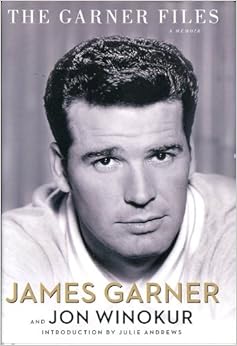
Forgotten Books: The Garner Files by James Garner with Jon Winokur


I wish I hadn't read this book.
   I first saw James Garner the night "Maverick" appeared on a Sunday night way back in 1956. I've been a fan of his acting ever since.
   To repeat I wish I hadn't read this book; even more I wish he hadn't WRITTEN it.
   I don't know who Jon Winokur is but he has served Garner poorly. I'm not naive enough to believe that the Garner of movie and TV fame is the Garner of reality. But Winokur (or Garner who did after all have the last word) should have given us an impression beyond that of an inexplicably angry man who carries so many grudges it's amazing he can stand upright.
   The most irritating issue in the entire (and frequently irritating book) is Garner's treatment of Roy Huggins.  Now I have mixed feelings about Huggins as a man. He named names to House UnAmerican Activities so he could keep his own enviable career going. I've written before that I don't know what I would've done in the same circumstances. Fifty-fifty I would've named names.
   That said Roy Huggins is one of the giants of television. He created among other shows "Maverick," "The Fugitive" and "The Rockford Files." Note that "Maverick"created Garner's stardom and "Rockford" helped sustain it.  He quotes  Huggins' line: "I love Jim Garner and he hates me." Garner agrees and then bitterly brushes Huggins off.
   Garner is nice to film and tv crews, supports liberal causes, loves his wife and daughter, appreciates what some writers, directors and actors have done for him. I believe all this. I don't think he's this terrible guy.
   But all the people he's punched or wishes he'd punched (we get it he's a macho man), all the people he thinks have ripped him off or let him down, all the people he mocks or belittles...you know some of this would add texture and spice to the average Hollywood autobiography. But here the tone of these incidents and opinions quickly begin to make you wonder why, after all his success, he's still so troubled by a life he's clearly earned and deserves...but a life that leaves him singularly unsatisfied.
   The other negative is that Winokur speeds through numerous moments that could easily have been expanded and developed. If they had been there wouldn't have been so much room left for all the bitching and misery.

Wednesday, November 13, 2013

An interview with Doug Borton/Michael Prescott super suspense writer and e book star


CATHnewLOGOforNook


DOUG BORTON

I got to know Doug Borton back when I was editing Mystery Scene.  He was a young writer of horror in his first incarnation and a good one but he’d come of age just when the horror boom was fizzling out.

He began using the name “Brian Harper” to write much more ambitious suspense thrillers. They were damned fine books.  Finally he ended up as “Michael Prescott” where he had a good run of very well done suspense novels exploring many different and exciting themes.

We’d kept in vague touch over the years.  The only thing I knew about him was that he kept on providing superior entertainment and appeared to be doing well in the trench warfare business of publishing.

Then I got a letter from him telling me that not only would his own publisher not buy his new book, no other publisher would, either.  Some months later I heard that he’d quit writing.

Several years went by and then one day, Googling for another writer, I ran across a piece about Doug that contained the following:

“Changes in the publishing industry made it hard for me to get a print deal after FINAL SINS. Ebooks, however, are more than taking up the slack. In 2010, I self-published RIPTIDE as an ebook and a print-on-demand paperback. This was followed by new ebook editions of most of my backlist titles. Sales have far exceeded my expectations, and by the summer of 2012 I had sold about 1.1 million ebooks, hitting the New York Times and USA Today bestseller lists.”   

Say what?

Gorman  What was the novel that suddenly ended your otherwise smooth ride as a suspense writer? What was the criticism of it?

Prescott   There wasn't any one particular title that was responsible. It was just a gradual falloff in sales. I don't think it had much to do with the books themselves. As for criticism, I don't think the last few books were noticed by anyone, so nobody had any reason to criticize them!

The problem was that I was seen exclusively as a mass-market paperback guy, and during that period the mass-market paperback end of the industry was severely contracting. It became almost impossible to sell a paperback, so everybody started trying to get into hardcover instead, but there just weren't enough openings. And since publishing houses were laying off their staffs and shutting down some of their imprints, editors were reluctant to approve a book unless it looked like a surefire breakout hit. Everybody was looking for the next Da Vinci Code, which wasn't the kind of thing I could offer.

G  How long did it take for you to realize that making a living at writing was no longer possible?

P  Probably a couple of years. I wrote Riptide and couldn't get it published. Then I wrote another book called Grave of Angels, and got a new agent to handle it. But that one didn't sell either. That was when I realized my career had petered out. It didn't come as a total surprise. After all, the sales had been declining for years, and I’d always assumed I would run out of luck eventually. That's show business.

G Did you have an agent for most of your first successful run?  What was his/her response to you suddenly not being able to sell your book?

P For most of my career, I was handled by Jane Dystel of Dystel & Goderich Literary Management. She did a good job for me and got me published consistently, up until Riptide. After that, I switched agents simply because I felt I had to try something new. But it really wasn't Jane's fault, and the new agent couldn't do anything either.

G I imagine you had some depressing times. Was there a period when you didn’t do much at all?

P It was a little depressing, but I was kind of burned out at that point anyway, so I can't say I was too upset about it. As I'm sure you know, writing a whole lot of books does take something out of you. Sometimes you feel the need to take a break. In this case, the break was forced on me by circumstances, but I didn't mind too much. I did very little fiction writing for a year or two, but I kept busy with other things. I have a blog that focuses on evidence for life after death, and I kept working on that - it’s kind of a strange obsession, but it does help to keep the ups and downs of life in perspective!

G You’ve said that you found a way to make a living outside of writing.  Would you tell us what it was?

P I started trading options. Mostly I would sell covered calls with fairly short expiration dates. I've always been interested in investing, and I’d built up a decent portfolio, though I took a big hit in the 2008-2009 crash. By the time I started trading options, the market was on its way back up, so it was pretty easy to make money. It wasn’t day-trading, because the volume of trades was never that high, and I didn’t do anything on margin. I followed a fairly conservative strategy that worked well at the time. I enjoyed it, too. In some ways I liked it better than writing - strangely enough, I found it less stressful! But I did feel a little bit frustrated at having no creative outlet.

G When did you become aware of ebooks? What was your first reaction to them?

P I was aware of ebooks early on, because my book Stealing Faces, the second Michael Prescott title, was put out in a Rocket Ebook edition back around 2001. The Rocket Ebook was a neat little device that was kind of bulky by the standards of today's ebook reading devices, but very ergonomically designed. I liked it a lot. It retailed for about $350. I read a whole lot of public domain classics on that thing – books I downloaded from Project Gutenberg. Just as it was starting to become popular, the company was taken over by the people who put out TV Guide, and they completely screwed things up. They made the device less functional without lowering its cost. They got rid of many of the online resources. Basically they wanted you to choose from only a select number of bestselling titles available at their website, and they made it impossible for you to upload your own documents, such as Project Gutenberg books. In short, they were idiots, and they killed off the device, which was a shame.

Even so, I always figured that sooner or later ebooks would catch on and traditional publishers would be caught flat-footed, because historically they have been very slow to adapt to new technology. And I have to say I looked forward to that day, because I really don't think the traditional publishers ever treated most of their writers very well. Today you see people like Stephen King bemoaning the decline of traditional publishing, but Stephen King was always treated as a superstar by his publisher, for obvious reasons. Midlist authors never got that kind of treatment. When you consider that the author might garner only 8% of the sales price of the book, with the other 92% split between the publisher and the retailer, you have to figure that something was not quite right. And after I‘d spent twenty years with Penguin, I got no acknowledgement of any kind when they stopped publishing me – not so much as a goodbye note. Things like that make you realize how disposable you always were in the eyes of the higher-ups . I don’t mean the editors, I mean the upper management.

So I was hopeful that ebooks would eventually shake things up. But I didn't expect it to happen as soon as it did. As a matter of fact, when I put out my first self-published book, Riptide, I originally intended to do it only as a print-on-demand paperback. The ebook edition was an afterthought. And yet, after a slow start, the ebook ended up selling many times more copies than the paperback.

G  Did your ebook career begin with Amazon?

P Yes, Riptide was put out as a Kindle ebook, and later in a Nook edition also. Some time afterward I did a two-book deal with Thomas & Mercer, a division of Amazon Publishing, for Grave of Angels and a backlist title, The Shadow Hunter. They did a good job for me, and I liked working with them, but I found I preferred self-publishing.

G  Publisher’s Weekly said that you began making around two hundred thousand dollars a year.  Did you write any of the editors who’d bounced your book with the good news? You know—friends like to share. ☺

P  No, I'm not even sure who the editors were. And I can't really blame them for passing on both Riptide and Grave of Angels. As I said, they were worried about their own jobs. And by then, the process had become so convoluted that two or three editors had to agree on any acquisition. This was pretty much a guaranteed deal killer, because it's almost impossible to get two or three editors to agree on anything! I don't think the editors themselves were any happier with the situation than the authors were. Many of them ended up having to work exclusively on vampire erotica, which was one of the few genres still being published in mass-market paperback. I doubt that this was exactly a dream assignment for the average English Lit major who had imagined developing the next Philip Roth or J.D. Salinger, or at least the next Ken Follett.

G  There are many books and blogs that offer all kinds of advice for making significant money with ebooks. Yet more and more established writers are saying that their ebook income is faltering. What’s your take on the army of midlist traditional writers trying to survive on ebooks?

P My earnings have gone down, but I’m still doing better than I did in traditional publishing. 2012 was my best year, because sales were still quite high and I had raised my prices from $0.99 to $2.99 per book. That greatly increased the royalties. Now sales are tailing off a bit, which I’d expected.

I think it's just a matter of increased competition. When I got into ebooks in  2011, the field was wide open, and I was probably one of the few writers with some kind of traditional publishing credibility who had a large backlist available at only $0.99 per title. That gave me a leg up on a lot of other people. Now everybody is getting into ebooks, and I’m not so unusual anymore. And the $0.99 price point is no longer that effective. Too many junky ebooks, like 35-page “novels” and poorly formatted collections of blog posts, have been published at that price.

But you can still find ways to move your product. There are services like BookBub that will promote your book for a fee. Advertising on Facebook can be effective. And you never know what's going to take off. I recently put out an old backlist title called Shatter, originally published back around 1995. I didn't expect it to do anything special, but it sold like crazy. I have no idea why. I didn't do anything in particular to promote it. Sometimes these things just catch on. Your best bet is just to go along for the ride and see what happens. 

Monday, November 11, 2013

Charlie Stella talks about Grind Joint coming this weekend


I was honored to write the forward to Dana King’s, Grind Joint. I’ve been looking very forward to this weekend, when a guy who should’ve been published years ago makes his debut in print. Dana proves perseverance isn’t just a tavern in Cape Town (look it up). The “official” launch is at the Mystery Lovers Bookshop, in Oakmont PA, at 10:00 EST, Saturday, November 16. I wish to hell I could be there wearing my Rangers jersey (because we finally beat Dana’s Penguins last week, immediately canceled out by Dana’s Steelers crushing my Bills), but I’ll be up north at an MFA mini-reunion. In the meantime, check out Dana and his debut novel, Grind Joint.

Dana has worked as a musician, public school teacher, adult trainer, and information systems analyst. His short story, "Green Gables," was published in the anthology Blood, Guts, and Whiskey, edited by Todd Robinson. Other short fiction has appeared in New Mystery Reader, A Twist of Noir, Mysterical-E, and Powder Burn Flash. Dana's first two novels, Wild Bill and Worst Enemies have received praise from authors such as Charlie Stella, Timothy Hallinan, Adrian McKinty, and Leighton Gage. The author lives in Laurel, Maryland.

Booklist Weighs In On Grind Joint

The following will appear in the November 15 edition of Booklist: King has created vividly drawn characters, a plot the late Elmore Leonard would appreciate, and dialogue that hits all the right notes. His Penns River recalls K.C. Constantine’s wonderfully rendered Rocksburg, another struggling, soulful Pennsylvania mill town. But the reclusive Constantine has retired. Let's hope Grind Joint is the first in a new series chronicling life and crime in the Alleghenies.

Grind Joint, Dana King ... crime fans will want this one ... fans of great writing will also ... Dana King’s debut is rock solid. You’ll be smart to pre-order now. Dana is one of the best around—fact.

Like it says in the newsletter, amici: "wall to wall great writing." What does that mean? "Dana King’s Grind Joint does for mob fiction what prohibition did for organized crime—it provides the juice for it to flourish in a world consumed with special effects and cartoons..."

Go to the Stark House site and pre-order this book ... you won’t regret it.

From author Jack Getze … This crime fiction reader has been in a funk since Elmore Leonard died, knowing I have only one more of my favorite author's novels left to read. And then along comes Dana King. Yahoo! If you could see me in the Charlotte airport, you might think the TSA police are on their way, and maybe they are -- I'm dancing and grinning and these southern people are staring while I celebrate the book's big finish. GRIND JOINT is everything I won't be missing in the years to come: Tight woven sentences of action and insight; clever humorous dialogue that carries the story; and a real talent for leaving out what I would have skipped. Thank you Dana King, Stark House, and Charlie Stella, who deserves much credit his for Italian cooking.

In GRIND JOINT, the lonely suburban stretches of highway outside Pittsburgh teem with crimes and criminals -- a mafia crew on the decline, an upswinging Russian gang led by Yuri the crazy man (who scared the hell out of me). Good villains are tough, but King gets it perfect. Watch Yuri in fascination, the sweat forming on your lip. I was worried from the page he appears, not only because the heroes of this novel -- the local cops and a cousin -- are the kind of people you want living next door, but because they are honest cops. Good cops SMART cops. People to root for, most notably Doc and his cousin Nick. I cannot remember a book I've read -- including anything by Elmore -- where the cops sounded more like cops, tricking suspects, stumbling with women, smart-talking the tough guys, and finally getting out of a big shootout (another Elmore favorite) with brains, brawn, and guts.

Saturday, November 09, 2013

"The Scarf" review by Cullen Gallagher Pulp Serenade


"The Scarf" by Robert Bloch (Avon, 1947)


Ed here: Like many, many people I miss my daily fix of Pulp Serenad. Here's a Golden Oldie.

Cullen Gallagher:


Most famous for writing the original novel of Psycho, which Alfred Hitchcock based his movie on, Robert Bloch had a writing career that spanned not only nearly his whole life, but also the 20th century. Born in 1917 in Chicago, IL, Bloch sold his first short story to Weird Tales in 1934 - when he was just seventeen years old! Before his death in 1994, Bloch published twenty-five novels and hundreds of short stories that ranged from horror to mystery to science-fiction, as well many other works for television, radio, movies.

His first novel, The Scarf (Avon #494) was published in 1947. It tells the story of a writer, Daniel Morley, who uses real women as models for his characters. But as soon as he is done writing the story, he is compelled to murder them, and always the same way: with the maroon scarf he has had since childhood. We start in Minneapolis and follow him and his trail of dead bodies to Chicago, New York, and finally Hollywood, where his hit novel is going to be turned into a movie, and where his self-control may have reached its limit.

Bloch uses a first-person narration that puts us not only in the mind of Daniel, but also in his hands as he crafts his stories and wraps the scarf around the necks of his victims. In many ways, it reminded me of Jim Thompson’s psychological noir thrillers such as The Killer Inside Me or Pop. 1280. A key difference is that Bloch is interested in finding the root of the character’s psychology, whereas Thompson doesn’t rationalize psychosis but instead confronts the reader face-to-face with it. Both writers each have their distinct approach, and each of them is disturbing in their own ways. Neither novelist will leave you feeling comfortable and secure – but instead touches something deep and dark within you, that little piece of security that makes you believe that the world will be all right tomorrow. In Bloch and Thompson’s world – nothing is all right tomorrow, and it never will be.

Bloch also seems to have channeled his own frustrations as a writer into The Scarf. Daniel Morley continually doubts his own creative talents, and is particularly pessimistic about the financial and commercial possibilities as a writer
 or the rest go here:
http://www.pulpserenade.com/2009/03/scarf-by-robert-bloch-avon-1947.html

Thursday, November 07, 2013

Bob Randisi; Forgotten Books: John McPartland writer & The Face of Evil; Bill Crider

book cover of 

Eye In The Ring

One of my favorite boxing novels - buy it now!

Ed,
      For the next 2 days my first Mile Jacoby book, EYE IN THE RING, and the three Gil & Claire novels I wrote with Christine Matthews, MURDER IS THE DEAL OF THE DAY, THE MASKS OF AUNTIE LAVEAU and SAME TIME, SAME MURDER, will be available for .99 cents on Kindle at Amazon.
RJR


John Fraser: John McPartland


WEDNESDAY, FEBRUARY 07,007


John Fraser--John McPartland

Dear Ed,

McPartland deserves the attention. He seems rather to have slipped through the critical net, maybe
because he didn't deal in the to my mind rather cliched noir depressiveness,
with the inevitable failure of love. I'm glad you yourself have been onto
him.

He can really SCARE you, can't he?

Best,

John.

John Fraser has a very readable and wise website devited to books of various kinds. http://www.jottings.ca/john/thriller_main.html

John McPartland by John Fraser

John McPartland

She was the kind of woman a man noticed, mostly because of her eyes. Dark, almost black pools, they had a warmth that I felt could turn to fire. She had turned her head, looking over the shoulder of the man she was with, and we looked at each other. The third or fourth time it happened he noticed it and I paid some attention to what he was like.

He was a type. You find guys like him driving ten-wheeler transport trucks, or flying, or sometimes as chief petty officers in the Navy, on a sub or a destroyer. Square-built, tough tanned skin, big hands with knuckles that are chunks of stone.The type—what makes him recognizable as a wanderer, a fighter, sometimes a killer—shows in his face.

Big white teeth, yellow a little from cigarettes like his fingers, and he smiles with his teeth closed, talking through them when he’s angry. A thin line of short black hairs for a mustache, sideburns of curling hair, hair black and curly, a face that is rough and yet young, and it won’t change much if he lives to be fifty. The eyes are fierce, amused, hard.

It’s a special breed of man, and the breed are men. Maybe a mixture of German, Irish, French-Canadian, with a streak of Comanche, Ute, or Cheyenne in there about three generations back. You meet men like this one in the truck-stop cafés along U.S. 40, with the diesels drumming outside; or you meet them walking toward the plane on the airstrip; or in jail, still smiling, still ready for a fight.

This guy was laughing as he swung off the bar stool. He was still laughing as he walked over to me.

The Face of Evil (1954)
I

McPartland is that rarity, a writer of tough novels who feels tough himself. (Was Spillane a barroom brawler? If so, did he win?)

McPartland was one of the Gold Medal blue-collar writers; had served in Korea; obviously knew the black-market milieu of that war; came back and wrote raw, rugged, at times very powerful novels; obviously drank, lived with a mistress and illegitimate kids before it was OK to do so; and died young of a heart attack. He was the kind of person who knew what it meant to be in trouble with the law, doing dumb impetuous things, getting into fights.

What comes across again and again in his novels is his understanding of power, the hard masculine will to dominate others, break them, destroy them. His bad guys are some of the most frightening in thriller fiction: Southern rednecks, syndicate “troopers,” the Mob. His fights are fights in which the loser can get hurt very badly.

When a black-marketing non-com says he’s going to scramble someone’s eggs with his combat boots (crush his testicles), or the middle-echelon syndicate enforcer Whitey Darcy tells the fixer Bill Oxford, “We’re going to make you cry, feller,” or when Buddy Brown, the twenty-year-old petty crook in Big Red’s Daughter (1955) tells Jim Work that he’s going to make him crawl, we know that’s just what they intend to do.

They are hard men.

King McCarthy in The Face of Evil (1955) is a natural fighter. Buddy Brown wins his first two fights with the hero—knocks him down with a sucker punch; gets a painful lock on his knuckles and punches him in the throat while they’re sitting drinking beer in a barroom booth. And the Syndicate, the Mafia, punish offenders ruthlessly. Oxford knows what it will be like to go to prison and have your kidneys smashed by an inmate, crippled with pain for the rest of your life every time you pee. Johnny Cool’s end in The Kingdom of Johnny Cool is dreadful.

However, in most of the novels there isn’t just violence, there’s also love, and things work out all right in the end for the hero and heroine. They very easily couldn’t, though. A strong, focussed counter-energy on the part of the heroes is necessary.
II

McPartland’s best book is The Face of Evil, about the fixer Bill Oxford, who’s been on the long downward slide of compromise, complicity, corruption, and has been sent to Long Beach by the PR agency to which he’s attached to ruin a genuinely decent reform candidate, upon pain of being stripped of all his high-living perks and slammed into prison. It is tense and well-made throughout.

The Kingdom of Johnny Cool is his other best novel. When it appeared, I wrote to Ross Macdonald (a total stranger, but he’d done a Ph.D. in English himself) to ask him to review it for a student journal I was co-editing. He declined, saying that it seemed to be simply Spillane-type melodrama. He was wrong.

The novel is a powerful account of a Sicilian criminal’s rise and fall in America—a more interesting one than W.R. Burnett’s Little Caesar (1929)—and it takes us into dark cold waters full of predators. McPartland was on to the Mafia as a subject twelve years before The Godfather, and his attitude towards it is far healthier than Puzo’s sentimental power worship. There’s nothing cute or admirable about McPartland’s Italianos.

Ed here: From Time Magazine‘s Milestones : “Died. John McPartland, 47, husky, bushy-haired chronicler of suburban sex foibles (No Down Payment), successful freelance journalist; of a heart attack; in Monterey, Calif. McPartland, who once wrote, “Sex is the great game itself,” lived as harum-scarum a life as any of his characters, had a legal wife and son at Mill Valley, California, a mistress at Monterey who bore him five children and who, as “Mrs. Eleanor McPartland,” was named the city’s 1956 “Mother of the Year.” Later, McPartland’s legal widow submitted the daughter of an unnamed third woman as one of the novelist’s rightful heirs. (9/14/58)”
-----------LAST NIGHT I POSTED THIS BUT THE RIGHT PART OF 
THE PIECE GOT WAS CUT OFF. THIS IF ROM BILL CRIDER--


Crossroad Press, the e-book publishers of the early books in the Sheriff Rhodes series would like to do a promotion for Too Late to Die.  The problem is that there are too few reviews, and the publication Crossroad wants to use won't take the book.  So if you've ever read it and would consider leaving a short review on Amazon or Barnes & Noble, it would help.  I'll probably post this a couple of times to be sure that everybody sees it.  The sheriff and I appreciate your support.

Update: As an incentive, Crossroad will give a copy of the e-book free to the first 20 people who ask for one and will leave a review.  Also, if you've read the book and will leave a review, Crossroad will give you a book of your choice from their catalog.  Such a deal!  Just e-mail me, and I'll send you the info on how to get your book.


Wednesday, November 06, 2013

Bill Crider; Forgotten Books- Jonathan Fast


Looking for a Few Reviews  from Bill Crider

Crossroad Press, the e-book publishers of the early books in the Sheriff Rhodes series would like to do a promotion for Too Late to Die.  The problem is that there are too few reviews, and the publication Crossroad wants to use won't take the book.  So if you've ever read it and would consider leaving a short review onAmazon or Barnes & Noble, it would help.  I'll probably post this a couple of times to be sure that everybody sees it.  The sheriff and I appreciate your support.

Update: As an incentive, Crossroad will give a copy of the e-book free to the first 20 people who ask for one and will leave a review.  Also, if you've read the book and will leave a review, Crossroad will give you a book of your choice from their catalog.  Such a deal!  Just e-mail me, and I'll send you the info on how to get your book.

WEDNESDAY, FEBRUARY 24, 2010


This novel came along shortly after the books of Stephen King launched the horror boom. If its storyline owes anything to a classic horror writer it's Robert Bloch. A) Because it concerns a diabolical plot that spans most of the last century and B) Because it's steeped in Holywood lore, this time circa 1979. C) It's wry and funny as hell.

Louis Pinkle is a Los Angeles magazine writer who is peddling a screenplay every chance he gets. When his old friend and mega TV star Tony Valenti shows up at his apartment one night pleading to stay and insisting that somebody is trying to kill him, Pinkle manages to ease him out the door. Pinkle wakes up to read in the paper of his wealthy friend's death in an automobile accident. He of course believes that it was no accident at all.

Why I've enjoyed reading this book several times since its publication is not so much the plot, which works very well, but rather its grace notes, its rich human observations and the way Fast makes loopy LA architecture a real part of the story.

"There's a malady I call Dr. Chauvinism that everybody suffers from: my Dentist is The Best Dentist in New York City; the surgeon who did my uncle Murray's surgery is the best Surgeon on the East Coast..."

"I was going through a dry spell at the time, six or seven months without a woman. Celibacy in the East isn't isn't so bad, but out here in the West where the sun superheats your skin and the women walk around half or three-quarters naked, and every
billboard displays vast vistas of flawless flesh, it's worse."

"Once he said to me, `Kitty, are you scared of dying?' And I said, `Yes, I suppose I am. I've never thought about it much.' And he said, `Kitty, that's why I write so much. I think if I leave enough paper with my name on it, people will have to remember me after I'm dead.'"

Then there's a beautifully done scene when a detective visits the badly beaten Pinkle in the hospital. Now there are a lot of ways to write this scene but I've never read one like this before.

"I'll make this as brief as possible, Mr. Pinkle."

Asks him name, birth date, profession. After profession, cop says: "What do you think of Saul Bellow?"

"Bellow?"

"What's your opinion of his work?"

"I...I like it."

"But don't you think the Nobel prize should have gone to Graham Greene?"

"Maybe." His voice became animated and he began to gesture with his hands, enormous hands with black hairs on the back.

"What I mean is, Bellow is basically a photographer like Roth and many of the other modern Jewish writers. His prose is marvelously descriptive, but does he have anything to say?"

"I don't know. Does he?"

(Turns out the cop is in a writing class and offers to "share" his short stories with Pinkle.)

I was laughing out loud when I read this because when we were in a clinic one day waiting for the results of a test a doc came in with said results but decided that since I'd written writer for my occupation we'd do a little book chatting first.  He talked for at least ten minutes about how not only he but his daughter wanted to write novels. We just wanted to know if the cancer had spread. Carol, exasperated, finally said: "How did the test come out?"

I just like this book. I like the voice and I like the slant on life and I like the people. Fast wrote a number of science fiction novels in addition to this and then gave up fiction for teaching. Our loss. He had the touch.