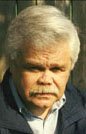
James Reasoner recently posted a short piece about his amazing year--this year he wrote and published a million words. I've been meaning to acknowledge that (to me) staggering accomplishment so I'm reprinting James' pst as well as a Pro-File I did with him awhile back. Congratulations, James.
A Million and Counting
Around the middle of the day today, I passed the million-word mark for this year. That makes five years in a row I've written at least a million words. I don't say that to brag. I've been extraordinarily lucky to have had the opportunity to write that much, and I owe it to the readers who buy the books and the editors who've had faith in me, and I want to thank all of them for making it possible.
Still . . . a million words a year . . . five years in a row . . . I'd be lying if I didn't say I think that's pretty cool. (And no, before you ask, that's not Livia and me in the picture.)
Posted by James Reasoner at 5:22 PM
THURSDAY, FEBRUARY 16, 2006
Pro-File: James Reasoner
Ed Here: I supsect that James Reasoner would have been happiest back in the Twenties and Thirties when the pulps dominated newstands. This doesn't mean that his books read like old pulp. On the contrary, his cult novel Texas Wind remains one of the finest private eye novels I've ever read and brings a distinctly modern viewpoint to the dusty truths of Texas. And that modern viepoint and style can be found in almost all his books. I think what he shares with the pulp boys and girls is their spirit and the simple love of telling good stories. You find this spirit and love in virtually everything he writes--and he writes virtually everything--westerns, mysteries, war stories, tie-ins, mainstream...and I'm sure I'm leaving out a couple of categories here. The pro's pro, James Reasoner.
1. Tell us about your current novel.
CALL TO ARMS, the first book in a new Civil War series entitled THE PALMETTO TRILOGY, was published in the fall, and the second book will be out in the spring, with the third and final book scheduled for next fall. These are in collaboration with my wife Livia, who is using the pseudonym Livia Hallam on them.
2. Can you give a sense of what you're working on now?
I just finished a house-name Western and plan to write a fantasy short story next, before moving right on to a historical novel which will also be under a house-name.
3. What is the greatest pleasure of a writing career?
Seeing a new book of mine and knowing that people will be reading it and I hope enjoying it.
4. What is the greatest DISpleasure?
Waiting. You send the books in and then wait for all the other steps in the process to unfold.
5. If you have one piece of advice for the publishing world, what is it?
Stop cancelling books -- and entire lines -- that make money, provide livings for their authors, and entertain their readers, simply because they don't make *enough* money.
6. Are there two or three forgotten mystery writers you'd like to see in print again?
I don't know if they're forgotten, but how about Ed Lacy, George Harmon Coxe, and Henry Kane (the early novels, not the later stuff).
7. Tell us about selling your first novel. Most writers never forget that moment.
I had a post office box at the time, and one day there was a large manila envelope stuffed in it. Inside were several copies of a contract from Manor Books for my novel TEXAS WIND. No letter, just the contracts. But I didn't need a letter because I knew from the contracts they were actually going to buy and publish my book. I rushed home to tell Livia instead of going on to the real-world job I was holding down. The euphoria was tempered a bit when I actually *read* the contract and saw how little they were planning to pay me. We looked at each other and said, "That can't be right. That's all they pay for an entire *book*?"
Little did we know. They actually paid us even less.
But in the long run it was okay, because Manor published the book, and although I had sold short stories before, after that day I was an honest-to-gosh novelist.
POSTED BY GORMANIA AT 12:37 PM
0 COMMENTS:
Tuesday, December 15, 2009

Monday, December 14, 2009
Leigh Brackett-Edmond Hamilton -The Big Sleep
Dave Truesdale at Tangent on-line has posted an extraordinary and very long 1976 interview with Leigh Brackett and Edmond Hamilton, the last before their deaths. The interview is accompanied by appreciations from jack Williamson and James Gunn.
Here's an excerpt with Leigh Brackett discussing her work on the first film of The Big Sleep:
TANGENT: In The Big Sleep, Leigh, there's always a question Bogart fans seem to ask: Whatever happened to the chauffeur? He just dropped out about halfway through.
BRACKETT: The whole thing is confusing; the novel is confusing. I was down at the set one day and Bogart asked me who killed Owen Taylor, the chauffeur, and I said I didn't know, and they asked Bogart and he didn't know, and Hawks said let's send Chandler a wire and find out, and his answer came back, “I don't know.” It's a very confusing plot and one of my favorite novels because the forward momentum is so tremendous and the characters are so interesting that you really don't care.
HAMILTON: The Big Sleep appeared in the summer of 1946. I was assiduously playing court to this young lady, and so I was living with my sister in Arcadia and I had to go all the way downtown---not having a car at that time―to see that. Well, I got in on the middle of that damn picture, and let me tell you...it's confusing enough when you get in on the beginning of that picture. But the picture improves; by that I mean that when you overcome all the mind boggling difficulties with plot and so on-- I liked it better than I ever used to. It really had a beautiful tempo.
TANGENT: What was it like working with William Faulkner? I've heard a lot about his peculiarities.
BRACKETT: Well, he did used to disappear in the middle of a script from time to time. It didn't bother me because in any real sense we didn't work together. This was my first big job; I had had one job at Republic a month or so before doing a thing called The Vampire's Ghost, and I was three weeks on the script with another writer, and they shot the film in ten days and that was two days over schedule (laughing). They fired the cameraman after the second day because he was taking too much time. But uh, it was not the greatest film ever made.
So then this thing was dropped into my lap because Howard had read the book and liked the dialogue and put me under contract, and I'm making this thing with Humphrey Bogart, who, you know, is my favorite actor, and William Faulkner's already on the script. I walk in, you know, feeling about this big and I think how in the world am I going to work with Faulkner. Well, there was no problem. He greeted me courteously. He put the book down and said, “We will do alternate sections. You will do these chapters and I will do these chapters,” and so on. But that's the way he wanted it done. He turned around and walked into his office and I never saw him again, except to say good morning. He lived behind a wall about eight feet thick. I think you could have worked with that man for ten years and never known him. He had a few close friends... He did, he disappeared occasionally.
for the rest go here:
http://www.tangentonline.com/index.php/interviews-columnsmenu-166/1270-classic-leigh-brackett-a-edmond-hamilton-interview
Here's an excerpt with Leigh Brackett discussing her work on the first film of The Big Sleep:
TANGENT: In The Big Sleep, Leigh, there's always a question Bogart fans seem to ask: Whatever happened to the chauffeur? He just dropped out about halfway through.
BRACKETT: The whole thing is confusing; the novel is confusing. I was down at the set one day and Bogart asked me who killed Owen Taylor, the chauffeur, and I said I didn't know, and they asked Bogart and he didn't know, and Hawks said let's send Chandler a wire and find out, and his answer came back, “I don't know.” It's a very confusing plot and one of my favorite novels because the forward momentum is so tremendous and the characters are so interesting that you really don't care.
HAMILTON: The Big Sleep appeared in the summer of 1946. I was assiduously playing court to this young lady, and so I was living with my sister in Arcadia and I had to go all the way downtown---not having a car at that time―to see that. Well, I got in on the middle of that damn picture, and let me tell you...it's confusing enough when you get in on the beginning of that picture. But the picture improves; by that I mean that when you overcome all the mind boggling difficulties with plot and so on-- I liked it better than I ever used to. It really had a beautiful tempo.
TANGENT: What was it like working with William Faulkner? I've heard a lot about his peculiarities.
BRACKETT: Well, he did used to disappear in the middle of a script from time to time. It didn't bother me because in any real sense we didn't work together. This was my first big job; I had had one job at Republic a month or so before doing a thing called The Vampire's Ghost, and I was three weeks on the script with another writer, and they shot the film in ten days and that was two days over schedule (laughing). They fired the cameraman after the second day because he was taking too much time. But uh, it was not the greatest film ever made.
So then this thing was dropped into my lap because Howard had read the book and liked the dialogue and put me under contract, and I'm making this thing with Humphrey Bogart, who, you know, is my favorite actor, and William Faulkner's already on the script. I walk in, you know, feeling about this big and I think how in the world am I going to work with Faulkner. Well, there was no problem. He greeted me courteously. He put the book down and said, “We will do alternate sections. You will do these chapters and I will do these chapters,” and so on. But that's the way he wanted it done. He turned around and walked into his office and I never saw him again, except to say good morning. He lived behind a wall about eight feet thick. I think you could have worked with that man for ten years and never known him. He had a few close friends... He did, he disappeared occasionally.
for the rest go here:
http://www.tangentonline.com/index.php/interviews-columnsmenu-166/1270-classic-leigh-brackett-a-edmond-hamilton-interview
Sunday, December 13, 2009
Stuff
We've always assumed that our eldest granddaughter Shannon was the family's drama queen. Most of the time she kids the role which makes it funny. We hadn't counted on her five year old sister Maggie upstaging her. They stayed with us and Saturday morning Carol introduced Maggie and her seven year old sister Reagan to Go Fish. My God, those silent screen ladies had nothing on Maggie when it came to dramatically demonstrating her various reactions.
When Maggie was doing all right she laughed and beamed but when she wasn't doing all right she'd slap both hands over her face or throw her arms up in the air or hang her head and shake it. The fact that neither of them quite grasped the game didn't matter. For a time Maggie wanted to see if Reagan had any "one" cards. We had to remind her that cards started at two. And neither of them got the idea about the face cards. Kings were K and Jacks J etc. At the end when Reagan won Maggie looked at me and said "This is the worst day of my life!" She had the grace to laugh with the rest of us. All we can figure out is that while all the other kindergartners are sleeping on their rugs Maggie is watching soap operas somewhere.
----------Dave Zeltserman's Pariah has made the Washington Post's Best Books of 2009 list. He made the list last year too.
----------Bob Randisi has a mighty fine new story on Beat To A Pulp.
----------I watched a two hour History Channel documentary on the Protestant Reformation. Fascinating. The most interesting part concerned the split that came a century later between Protestants ministers on the subject of slavery. Some ministers owned slaves and were in the trade. Others despised it. But what interested me most was the discussion with Bible experts. Nowhere in the Bible is slavery condemned. On the contrary most references advocate slavery. Even Christ with the parable of Ham seems to encourage it. One more reason not to take the Bible seriously.
---------Singer/musician John Pizzarelli and his singer/musician wife Jessia Mulaskey have a great jazz radio show called Radio DeLuxe. Yesterday John talked about a recent event honoring a famous jazz musician. Enormous stars of several generations were there that night. Pizzarelli and a handful of other singers took the stage and offered songs. Pizarelli said that every single one of them (himself included) blew the lyrics and that a few just sort of wandered around inside the music, including Tony Bennett. That would've been a hoot--of a kind.
When Maggie was doing all right she laughed and beamed but when she wasn't doing all right she'd slap both hands over her face or throw her arms up in the air or hang her head and shake it. The fact that neither of them quite grasped the game didn't matter. For a time Maggie wanted to see if Reagan had any "one" cards. We had to remind her that cards started at two. And neither of them got the idea about the face cards. Kings were K and Jacks J etc. At the end when Reagan won Maggie looked at me and said "This is the worst day of my life!" She had the grace to laugh with the rest of us. All we can figure out is that while all the other kindergartners are sleeping on their rugs Maggie is watching soap operas somewhere.
----------Dave Zeltserman's Pariah has made the Washington Post's Best Books of 2009 list. He made the list last year too.
----------Bob Randisi has a mighty fine new story on Beat To A Pulp.
----------I watched a two hour History Channel documentary on the Protestant Reformation. Fascinating. The most interesting part concerned the split that came a century later between Protestants ministers on the subject of slavery. Some ministers owned slaves and were in the trade. Others despised it. But what interested me most was the discussion with Bible experts. Nowhere in the Bible is slavery condemned. On the contrary most references advocate slavery. Even Christ with the parable of Ham seems to encourage it. One more reason not to take the Bible seriously.
---------Singer/musician John Pizzarelli and his singer/musician wife Jessia Mulaskey have a great jazz radio show called Radio DeLuxe. Yesterday John talked about a recent event honoring a famous jazz musician. Enormous stars of several generations were there that night. Pizzarelli and a handful of other singers took the stage and offered songs. Pizarelli said that every single one of them (himself included) blew the lyrics and that a few just sort of wandered around inside the music, including Tony Bennett. That would've been a hoot--of a kind.
Saturday, December 12, 2009
Available now: A wonderful novel by a truly wonderful guy

From Gravetapping: Ben Boulden
TICKET TO RIDE by Ed Gorman
The eighth, and reportedly last, Sam McCain novel opens in 1965 at a Vietnam peace rally in Black River Falls, Iowa. The rally is held in the local Presbyterian Church and after 90 minutes of the same arguments—being spoken by different people—McCain is ready to leave the rally for the comforts of a double feature at the drive-in. But then as the newest local superstar, a pretty boy named Harrison Doran, is speaking a man takes the stage and asks to rebut the protestor’s arguments.
The man is not only the father of a casualty of war, his son died in Da Nang, but he is also a prominent and wealthy resident of Black River Falls. His name is Lou Bennett, and it doesn’t take long for boos to start and the scene to turn ugly. There is an altercation between Doran and Bennett, and then later that night Bennett is found dead. Harrison Doran is the likeliest suspect. McCain doesn’t like Doran, but he is enlisted to defend him, and it is a position that makes Sam less than popular amongst the mostly conservative population.
Ticket to Ride is a real treat. It features all of the regulars; the town’s pornographer, writer of sleaze, and McCain buddy Kenny Thibodeau, Judge Esme Anne Whitney, Jamie Newton—McCain’s guileless, but less than competent secretary—and the obnoxious and usually wrong police chief Clifford (Cliffie) Sykes, Jr. Mr Gorman perfectly captures the essence of small town America and he does it with a subtleness that never succumbs to cliché or stereotype. His characters are living, breathing people, who are never clearly good or bad—he shows their humanity in brief and poignant moments of vulnerability, weakness, and strength.
The plot is smooth and sharp; the prose is understated, readable and powerful—
“I wanted to say something smart, but his honesty surprised me. He was admitting that all the scorn hurt him. He had no right to tell me this, because, at least for the moment here, I had to feel bad about making fun of him all the time. Cliffie was supposed to be a cartoon. It pissed me off that he’d forced me to see him as a human being.”
The amazing achievement of Ticket to Ride is that it is written with a humor and innocent cynicism that allows the story a power of both place and time, and also a social commentary that is relevant for the story's Vietnam-era setting, as well as that of modern America. It is simple a brilliantly rendered private eye novel that is a wonderful addition to the series and the genre.
POSTED BY BEN BOULDEN AT 12:58 PM 0 COMMENTS
LABELS: ED GORMAN, MYSTERY, PRIVATE EYE, SAM MCCAIN
Friday, December 11, 2009
Mystery.File.com; The Thrilling Detective site
This is a shout-out to two of the finest mystery sites on line. Steve Lewis' Mystery.File.com is as close to a mystery history course as anything I've ever seen. Same for Kevin Burton Smith's Thrilling Detective site.
In the last week or so alone on Mystery.File we've seen pieces on a Mary Pickford mystery film, a Wade Miller novel and a very funny piece on Bill Pronzini's hilarious Gun In Cheek. And the start of an overview of early films about Women In Prison, a sub-genre of great interest to dudes I'd guess.
Thrilling Detective offers fiction, reviews and enough historical information about private eye fiction to qualify as graduate course with tenure maybe in the offing. I appreciate being able to look at the entire p.i. field in all its permutations down the years. The author biographies are packed with information you probably won't find elsewhere.
Do you yourself a favor. If you're any kind of mystery fan, you'll want to look at these sites at least once a week. They're rich with treasures.
http://www.mysteryfile.com/blog/
http://www.thrillingdetective.com/
In the last week or so alone on Mystery.File we've seen pieces on a Mary Pickford mystery film, a Wade Miller novel and a very funny piece on Bill Pronzini's hilarious Gun In Cheek. And the start of an overview of early films about Women In Prison, a sub-genre of great interest to dudes I'd guess.
Thrilling Detective offers fiction, reviews and enough historical information about private eye fiction to qualify as graduate course with tenure maybe in the offing. I appreciate being able to look at the entire p.i. field in all its permutations down the years. The author biographies are packed with information you probably won't find elsewhere.
Do you yourself a favor. If you're any kind of mystery fan, you'll want to look at these sites at least once a week. They're rich with treasures.
http://www.mysteryfile.com/blog/
http://www.thrillingdetective.com/
Thursday, December 10, 2009
John Trinian

John Trinian
I keep trying to remember where I saw a relatively recent review of North Beach Girl. The writer likened the novel to Malcolm Braly's Shake Him Till It Rattles, noting that both books deal with the intersection of Beat culture and crime in the late 50s and early 60s.
Two of you have asked me off-line to recommend a couple of Gold Medals that I consider noteworthy despite the fact that they get overlooked in most GM overviews.
Try North Beach Girl and Shake Him Till It Rattles. Fine novels and serious historical documents.
Wednesday, December 09, 2009
Forgotten Books: Bonjour Tristesse by Francoise Sagan
Bonjour Tristesse - Francoise Sagan
In the summer of 1958 I was sixteen years old and going through my first real heartbreak. My only solace was in books and movies. Seeing people was too painful. I mention this because my state of mind had a good deal to do with my reaction to a slender Dell paperback I'd been hearing about.
Bonjour Tristesse had been written by a seventeen-year-old French schoolgirl and it had the good fortune to become a scandal in both Europe and the United States. The story concerned seventeen-year-old Cecile whose wealthy and handsome father is what one might call, in crude Yankee tongue, an ass-bandit. His latest young thing is Elsa whom Cecile likes because she's the kind of trivial beauty her father will dump after a few months. But then Anne appears and Cecile must plot to get rid of her. Anne is serious competition to Cecile. She will take Cecile's father from her, at least mentally and spiritually. From here the story deals with Cecile's attempt to destroy a fine woman--and one of her deceased mother's best friends--before her father falls in love with her. The end is tragic.
The novel is about pain and betrayal and loneliness and is told so simply and directly it has the effect of a stage monologue. It was condemned by most of the old farts--the French Catholic novelist Francois Mauriac reviewed it and sounded as if he was making the case for Sagan's execution--while the more charitable critics found it earnest and compelling if not quite as important as all the fuss would have it.
There was an Iowa angle, too. Otto Preminger discovered eighteen-year-old Jean Seberg from Marshalltown, Iowa and starred her in his catastrophic production of St. Joan. The critics loved her melancholy beauty (who wouldn't?) but she certainly wasn't up to a role this difficult. This could have ended her career but she was quickly cast in Bonjour Tristesse--which wasn't much of a movie--and did a fine job. Later she would become a French film icon when she did Breathless with Jean Paul Belmondo.
But Seberg had a troubled life very much like that of a Sagan heroine. At least one of her husbands beat her and J. Edgar Hoover had his creeps stalk her here and in France. He tried to destroy her by feeding tales to the press of how she just might be seeing a black man and showing a definite interest in left-wing politics. She died at forty-one in circumstances that the authorities believed pointed to suicide. She had long struggled with depression.
I followed Sagan's career to the end because Bonjour had given me so much comfort that terrible summer. In France she was seen, at least early on, as a kind of J.D. Salinger, though I always thought her take on this vale of tears was far richer than his. And by the time she wrote Those Without Shadows a few years later she was far out of his league. And she certainly never disappointed the media. Here, from Wikipedia, just a bit of her life story:
Personal life
Sagan was married twice; to Guy Schoeller ( married 13 March 1958, an editor with Hachette, 20 years older than Sagan, divorced June 1960), and to Bob Westhof ( a young American playboy and would-be ceramist, married 10 January 1962, divorced 1963.
Their son Denis was born in June 1963.)[3] She took a lesbian longer term lover in fashion stylist Peggy Roche; and had a male lover Bernard Frank, a married essayist obsessed with reading and eating. She added to her self-styled "family" by beginning a long-term lesbian affair with the French Playboy magazine editor Annick Geille, after she approached Sagan for an article for her magazine.[1]
Fond of travelling in the United States, she was often seen with Truman Capote and Ava Gardner. She was once involved in a car accident in her Aston Martin sports car - (14 April 1957) - which left her in a coma for some time. She also loved driving her Jaguar automobile to Monte Carlo for gambling sessions.
Also, in the 1990s, Sagan was charged with and convicted of possession of cocaine.
Sagan was, at various times of her life, addicted to a number of drugs. She was a long-term user of prescription pills, amphetamines, cocaine, morphine, and alcohol.When police came for inspection in her house her dog called Banko showed cocaine to them and also licks cocaine. Sagan told police " Look! he likes it too."
In the summer of 1958 I was sixteen years old and going through my first real heartbreak. My only solace was in books and movies. Seeing people was too painful. I mention this because my state of mind had a good deal to do with my reaction to a slender Dell paperback I'd been hearing about.
Bonjour Tristesse had been written by a seventeen-year-old French schoolgirl and it had the good fortune to become a scandal in both Europe and the United States. The story concerned seventeen-year-old Cecile whose wealthy and handsome father is what one might call, in crude Yankee tongue, an ass-bandit. His latest young thing is Elsa whom Cecile likes because she's the kind of trivial beauty her father will dump after a few months. But then Anne appears and Cecile must plot to get rid of her. Anne is serious competition to Cecile. She will take Cecile's father from her, at least mentally and spiritually. From here the story deals with Cecile's attempt to destroy a fine woman--and one of her deceased mother's best friends--before her father falls in love with her. The end is tragic.
The novel is about pain and betrayal and loneliness and is told so simply and directly it has the effect of a stage monologue. It was condemned by most of the old farts--the French Catholic novelist Francois Mauriac reviewed it and sounded as if he was making the case for Sagan's execution--while the more charitable critics found it earnest and compelling if not quite as important as all the fuss would have it.
There was an Iowa angle, too. Otto Preminger discovered eighteen-year-old Jean Seberg from Marshalltown, Iowa and starred her in his catastrophic production of St. Joan. The critics loved her melancholy beauty (who wouldn't?) but she certainly wasn't up to a role this difficult. This could have ended her career but she was quickly cast in Bonjour Tristesse--which wasn't much of a movie--and did a fine job. Later she would become a French film icon when she did Breathless with Jean Paul Belmondo.
But Seberg had a troubled life very much like that of a Sagan heroine. At least one of her husbands beat her and J. Edgar Hoover had his creeps stalk her here and in France. He tried to destroy her by feeding tales to the press of how she just might be seeing a black man and showing a definite interest in left-wing politics. She died at forty-one in circumstances that the authorities believed pointed to suicide. She had long struggled with depression.
I followed Sagan's career to the end because Bonjour had given me so much comfort that terrible summer. In France she was seen, at least early on, as a kind of J.D. Salinger, though I always thought her take on this vale of tears was far richer than his. And by the time she wrote Those Without Shadows a few years later she was far out of his league. And she certainly never disappointed the media. Here, from Wikipedia, just a bit of her life story:
Personal life
Sagan was married twice; to Guy Schoeller ( married 13 March 1958, an editor with Hachette, 20 years older than Sagan, divorced June 1960), and to Bob Westhof ( a young American playboy and would-be ceramist, married 10 January 1962, divorced 1963.
Their son Denis was born in June 1963.)[3] She took a lesbian longer term lover in fashion stylist Peggy Roche; and had a male lover Bernard Frank, a married essayist obsessed with reading and eating. She added to her self-styled "family" by beginning a long-term lesbian affair with the French Playboy magazine editor Annick Geille, after she approached Sagan for an article for her magazine.[1]
Fond of travelling in the United States, she was often seen with Truman Capote and Ava Gardner. She was once involved in a car accident in her Aston Martin sports car - (14 April 1957) - which left her in a coma for some time. She also loved driving her Jaguar automobile to Monte Carlo for gambling sessions.
Also, in the 1990s, Sagan was charged with and convicted of possession of cocaine.
Sagan was, at various times of her life, addicted to a number of drugs. She was a long-term user of prescription pills, amphetamines, cocaine, morphine, and alcohol.When police came for inspection in her house her dog called Banko showed cocaine to them and also licks cocaine. Sagan told police " Look! he likes it too."
Tuesday, December 08, 2009
E-books: Richard Curtis, Nat Sobel
Ed here: I've always thought that two of the coolest guys in publishing were agents Nat Sobel and Richard Curtis. Their track records speak for themselves. Here's Curtis writing about Sobel on E-Reads.
MONDAY, DECEMBER 7, 2009
Agent Nat Sobel Challenges Publishers to Hold Back E-Reprints
Literary agent Nat Sobel, one of the most respected figures in his field, has issued an appeal to book industry leaders urging them to resist the temptation to release e-book reprints of hardcover books too early. Noting with alarm that movie exhibitors had recently pulled a film after learning that an early release of the DVD had been scheduled, Sobel draws the analogy with booksellers whose hardcover sales are cannibalized by early release of e-book editions.
The issues Sobel raises reared their head last summer when Dominique Raccah, publisher of Sourcebooks, put the brakes on simultaneous e-print of a hardcover YA thriller, Bran Hambric: The Farfield Curse by Kaleb Nation. When pundits questioned the wisdom of waiting to release the e-edition, Raccah wrote a lively defense of her decision in a posting for E-Reads called Are E-Books the New Cheap Paperback Reprint Edition?
Now Sobel is advancing Raccah's argument with a plea for publishers to hold back e-prints to give hardcovers their moment in the sun without fear of being undercut by a cheap digital edition. "I suggest that the electronic versions not be made available for six months after initial publication, eventually being released when the paperback hits the market," Sobel writes. "I’d like to believe that electronic book sales can and should be the mass market of the future."
For the rest go here:
http://www.ereads.com/2009/12/agent-nat-sobel-challenges-publishers.html
MONDAY, DECEMBER 7, 2009
Agent Nat Sobel Challenges Publishers to Hold Back E-Reprints
Literary agent Nat Sobel, one of the most respected figures in his field, has issued an appeal to book industry leaders urging them to resist the temptation to release e-book reprints of hardcover books too early. Noting with alarm that movie exhibitors had recently pulled a film after learning that an early release of the DVD had been scheduled, Sobel draws the analogy with booksellers whose hardcover sales are cannibalized by early release of e-book editions.
The issues Sobel raises reared their head last summer when Dominique Raccah, publisher of Sourcebooks, put the brakes on simultaneous e-print of a hardcover YA thriller, Bran Hambric: The Farfield Curse by Kaleb Nation. When pundits questioned the wisdom of waiting to release the e-edition, Raccah wrote a lively defense of her decision in a posting for E-Reads called Are E-Books the New Cheap Paperback Reprint Edition?
Now Sobel is advancing Raccah's argument with a plea for publishers to hold back e-prints to give hardcovers their moment in the sun without fear of being undercut by a cheap digital edition. "I suggest that the electronic versions not be made available for six months after initial publication, eventually being released when the paperback hits the market," Sobel writes. "I’d like to believe that electronic book sales can and should be the mass market of the future."
For the rest go here:
http://www.ereads.com/2009/12/agent-nat-sobel-challenges-publishers.html
Sunday, December 06, 2009
The New Pulp Press

The New Pulp Press:
An interview with publisher Jon Bassoff
First of all what made you decide to become a publisher in these economic
times?
I have a history of buying high and selling low. Actually, the state of
the economy didn't play a big role in my deciding to go through with this
enterprise. My goal has always been to make just enough money to replace
the stolen hubcaps on my '83 Toyota Tercel. I've got one replaced already.
Truthfully, our company is not an extremely high risk venture. The
advances we pay are embarrassing. And fortunately we've gotten enough
positive feedback and enough positive reviews to keep the racket going.
How long have you been reading hard-boiled and noir?
Well, I hated reading until I started devouring the Hardy Boys at age
eight or so. Okay, so the Hardy Boys are not exactly hard-boiled, but it
led me in that direction. My father was a big fan of all the old Film
Noirs and indoctrinated me to THE MALTESE FALCON, DOUBLE INDEMNITY etc.
But it wasn't until I got an eyeful of Jim Thompson when I was in college
that I became obsessed with hard-boiled and noir. He took things in such a
different direction, playing against type, and it made me see the vast
boundaries of crime fiction.
Name some of the writers you hope to publish.
Wish list? Well, there are obviously an unbelievable number of talented
crime fiction writers out there. I think we're in something of a golden
age for the genre. I tend to prefer what Dave Zeltserman coined "Psycho
Noir," or having an extremely warped and unreliable narrator. Give me
Jason Starr, Dave Zeltserman, Allan Guthrie to name a few. I actually
broached the subject with Jason Starr. He said he'd be interested--but he
needed enough money to pay the rent. Unfortunately, he lives in Manhattan
so our negotiations were not very successful.
What attracted you to Gil Brewer's Flight to Darkness?
I've been a huge fan of Gil's for some time. I think he's really one of
the under appreciated crime writers of the 50's. I knew from the beginning
that I wanted to get some of his books back into print. I contacted his
family and asked them what they'd like to get back into print. We settled
on the well-known THE RED SCARF and the little known FLIGHT TO DARKNESS. I
liked the idea of a narrator who may or may not be insane. A narrator who
may or may not be telling us everything. And a femme fatale that rivals
Ann Savage in Detour for pure cruelty.
What books comes after Flight To Darkness?
Next up we've got a book of short stories called AS I WAS CUTTING from a
maniac named L.V. Rautenbaumgrabner. I can't tell you much about it except
to say that it is one of the more disturbing books I have ever read, and
that includes BRIDGES OF MADISON COUNTY. I probably shouldn't have
published it, but I felt bad for the author who I am convinced is not well
emotionally. In February we're reissuing Lynn Kostoff's A CHOICE OF
NIGHTMARES which initially came out in the early 90's and was not marketed
at all by the publisher who became squirmish by the noirish themes. It's a
hell of a read, and people like Megan Abbott, Marcus Sakey, Charlie
Stella, and Sara Gran have read it and fallen in love with it. After A
CHOICE OF NIGHTMARES, we'll be releasing a couple of books from first-time
authors: BAD JUJU AND OTHER TALES OF MADNESS AND MAYHEM by Jonathan Woods
and RABID CHILD by Pete Risley. BAD JUJU is a book of pulpy short stories
(Ken Bruen calls the book "astonishing") while RABID CHILD is what I would
call Gothic Noir. After that, we'll be putting out a few more reissues.
The plan is to put out Brewer's THE RED SCARF, Lionel White's HOSTAGE FOR
A HOOD, and Day Keene's SLEEP WITH THE DEVIL. So we've got quite a year
ahead of us.
How successful have your titles been so far?
More successful than I expected, less successful than Hard Case Crime. I
hope that we can continue to build our reputation and improve the sales
numbers, although I don't expect us ever to gain entry on the New York
Times best seller list.
Given the fact that there are several small press publishers reprinting
material similar to yours, what niche are you hoping to make your own?
Our niche group? Probably prisoners and the criminally insane. We try to
stay away from mainstream noir and push our books toward the
aforementioned "psycho noir." But in the end it comes down to us
publishing books that we want to publish. You can only sub-categorize so
many times.
Thanks very much, Jon
How low can you go?
An old friend of mine sent me a link to a brief overview of bottom line studios such as Monogram and PRC. I've always known there were studios even more bottom line than these two but I'd never heard what they paid for their movies. Wow
"Producers Releasing Corporation (PRC) was founded by a former film exchange manager, Ben Judell, in 1939. PRC's first release was the timely Beasts of Berlin (1939), one of the first dramatic films to deal with Hitler's Germany. PRC profited even more when it later reissued the film to capitalize on the stardom of its male second lead, Alan Ladd (1913–1964). The company produced westerns, mysteries, horror films, and even some musicals and costume films. Sam Newfield (1899–1964) directed so many films for PRC—more than fifty over the course of seven years—that he used several pseudonyms in addition to his own name. Films made by Monogram, Republic, and PRC were made in only a week or two, usually for less than $100,000—sometimes considerably less.
"Finally, there were those ragtag companies that existed on the fringes of the motion picture industry making Poverty Row quickies. If films from Monogram and PRC often looked threadbare, Poverty Row quickies were the bottom of the barrel. Generally made for under $25,000 and in less than a week, movies made by companies like Empire, Peerless, Puritan, and Victory were poorly shot and often verged on incoherence."
Read more: http://www.filmreference.com/encyclopedia/Academy-Awards-Crime-Films/B-Movies-THE-Bs-OF-POVERTY-ROW.html#ixzz0YwkuWMNw
http://www.filmreference.com/encyclopedia/Academy-Awards-Crime-Films/B-Movies-THE-Bs-OF-POVERTY-ROW.html
"Producers Releasing Corporation (PRC) was founded by a former film exchange manager, Ben Judell, in 1939. PRC's first release was the timely Beasts of Berlin (1939), one of the first dramatic films to deal with Hitler's Germany. PRC profited even more when it later reissued the film to capitalize on the stardom of its male second lead, Alan Ladd (1913–1964). The company produced westerns, mysteries, horror films, and even some musicals and costume films. Sam Newfield (1899–1964) directed so many films for PRC—more than fifty over the course of seven years—that he used several pseudonyms in addition to his own name. Films made by Monogram, Republic, and PRC were made in only a week or two, usually for less than $100,000—sometimes considerably less.
"Finally, there were those ragtag companies that existed on the fringes of the motion picture industry making Poverty Row quickies. If films from Monogram and PRC often looked threadbare, Poverty Row quickies were the bottom of the barrel. Generally made for under $25,000 and in less than a week, movies made by companies like Empire, Peerless, Puritan, and Victory were poorly shot and often verged on incoherence."
Read more: http://www.filmreference.com/encyclopedia/Academy-Awards-Crime-Films/B-Movies-THE-Bs-OF-POVERTY-ROW.html#ixzz0YwkuWMNw
http://www.filmreference.com/encyclopedia/Academy-Awards-Crime-Films/B-Movies-THE-Bs-OF-POVERTY-ROW.html
Friday, December 04, 2009
Block; Monk; Zeltserman; Piccirilli
I've just finished reading the spectacular new issue of Mystery Scene. Of particular note is Lawrence Block's new column which he devotes to his memories of the people and places of his literary past. He writes here of the late short story genius Stanley Ellin. A fascinating portrait of Ellin's working methods. Larry is the last of the giants (we lost Don Westlake, Mickey Spillane and Evan Hunter all too soon) and his Proustian take on the decades of his career will be the first thing I read when MS arrives.
---------------MONK
I don't think I've ever seen a finer finale--and Mary Tyler Moore me no Mary Tyler Moores etc--than the two-part Monk that concluded last night. The writing and the acting were superb and both dug deep. I haven't seen Carol cry like that in front of the tube in a long time. I used to think that Rockford was my all-time favorite crime show. Now I'd have to have a two-way winner for first place. Monk was done with enormous talent and enormous love. It is a true classic and one I'd put up with any crime show that's ever been on television.
---------------VAMPIRE CRIMES
I'v just read the manuscript of Dave Zeltserman's new novel, Vampire Crimes. This is one of the few fresh takes on vampirism I've read in years. It's as if Charles Bukowski sat down and said, OK, Bram Stoker, how about this? Here's a piece from it:
"That day started off worse than most of the others. He had hooked up
the night before with another addict, a deathly thin blonde woman about
twenty years older than him. He didn't remember much about her other
than how damn hollow her eyes looked, how her lips were so unnaturally
pale with this hint of blue tingeing them and hard it was for her to
find a vein to tap. When he woke up the next morning she was gone along
with his roll of over three grand and his stash. There was nothing in
her apartment worth any money. She wasn't coming back. His cash and
junk were long gone. He was just lucky she didn't take his clothes, and
even luckier she didn't take his army-issued boots. He sat on the floor
for a long time holding his head, needing a fix as badly as he ever
did. Eventually the stench of garbage got to him and he staggered out
of the apartment.
Most of what happened that day was lost to him, but he remembered that
night ending up in a diner. He tried to palm a couple of bucks from the
counter and that was when a burly tattooed arm went around his
shoulder, corralling him."
----------------------Tom Piccirilli
Tom Piccirilli was generous enough to interview about my new Sam McCain novel TICKET TO RIDE
on his website The Big Adios. You can read it here: http://thebigadios.yuku.com/topic/995?page=-1
---------------MONK
I don't think I've ever seen a finer finale--and Mary Tyler Moore me no Mary Tyler Moores etc--than the two-part Monk that concluded last night. The writing and the acting were superb and both dug deep. I haven't seen Carol cry like that in front of the tube in a long time. I used to think that Rockford was my all-time favorite crime show. Now I'd have to have a two-way winner for first place. Monk was done with enormous talent and enormous love. It is a true classic and one I'd put up with any crime show that's ever been on television.
---------------VAMPIRE CRIMES
I'v just read the manuscript of Dave Zeltserman's new novel, Vampire Crimes. This is one of the few fresh takes on vampirism I've read in years. It's as if Charles Bukowski sat down and said, OK, Bram Stoker, how about this? Here's a piece from it:
"That day started off worse than most of the others. He had hooked up
the night before with another addict, a deathly thin blonde woman about
twenty years older than him. He didn't remember much about her other
than how damn hollow her eyes looked, how her lips were so unnaturally
pale with this hint of blue tingeing them and hard it was for her to
find a vein to tap. When he woke up the next morning she was gone along
with his roll of over three grand and his stash. There was nothing in
her apartment worth any money. She wasn't coming back. His cash and
junk were long gone. He was just lucky she didn't take his clothes, and
even luckier she didn't take his army-issued boots. He sat on the floor
for a long time holding his head, needing a fix as badly as he ever
did. Eventually the stench of garbage got to him and he staggered out
of the apartment.
Most of what happened that day was lost to him, but he remembered that
night ending up in a diner. He tried to palm a couple of bucks from the
counter and that was when a burly tattooed arm went around his
shoulder, corralling him."
----------------------Tom Piccirilli
Tom Piccirilli was generous enough to interview about my new Sam McCain novel TICKET TO RIDE
on his website The Big Adios. You can read it here: http://thebigadios.yuku.com/topic/995?page=-1
The 25th Hour; Don Congdon
I saw Spike Lee's 25th Hour the day it opened. I was was jazzed for it because I'd read the novel in galley and thought it was brilliant. The novelist David Benioff also wrote the screenplay. I left the theater thinking this had to be one of the finest films I'd ever seen. Then I started reading the reviews. Most of the major ones trashed it. I couldn't believe it. Like Vince Keenan and many others I kept pushing the movie over the years. Slowly I saw appreciations starting to appear on the net. This year with Decade's Best lists appearing I see that it's in many top tens and top fives and even number ones in--as I recall--one or two. People like to chatter about how all the indie movies break rules and take chances. Spike Lee and Benioff throw most of the rules away and in so doing get performances from Edward Norton, Phillip Seymour Hoffman, Rosario Dawson, Anna Paquin, Barry Pepper and Brian Cox you will never forget. If you've never seen it, now's the time when it's finally getting it's due.
--------------Don Congdon, Longtime Literary Agent for Ray Bradbury, Dies at 91
Ed here: I had four or five long conversations with Don Congdon over the years. I could never meet his prices for things I wanted to reprint but I always seemed to catch him in a talkative mood. He had a lot of great stories and was a generous man in sharing credit with others. A fine tough gentleman from the time when publishing was really publishing.
By WILLIAM GRIMES (from the New York Times today)
Don Congdon, a literary agent who spotted the talent of Ray Bradbury early in both their careers and whose long list of celebrated authors also included William Styron, Jack Finney, Evan S. Connell, William L. Shirer and David Sedaris, died on Monday at his home in Brooklyn Heights. He was 91.
The death was confirmed by his son, Michael.
Mr. Congdon, who started out as a messenger at a small New York agency, developed an enviable reputation as a skilled editor, tough negotiator and shrewd judge of talent. While still a young editor at Simon & Schuster, he tuned in to the early stories of Ray Bradbury, who became one of his first clients after he set up as a full-time literary agent in 1947.
In 1966 he caused a stir in the publishing world, and precipitated a celebrated lawsuit by Jacqueline Kennedy, when, after spirited bargaining, he sold Look magazine the serial rights to “The Death of a President,” William Manchester’s study of John F. Kennedy’s assassination, for more than $600,000.
for the rest go here:
http://www.nytimes.com/2009/12/04/books/04congdon.html
--------------Don Congdon, Longtime Literary Agent for Ray Bradbury, Dies at 91
Ed here: I had four or five long conversations with Don Congdon over the years. I could never meet his prices for things I wanted to reprint but I always seemed to catch him in a talkative mood. He had a lot of great stories and was a generous man in sharing credit with others. A fine tough gentleman from the time when publishing was really publishing.
By WILLIAM GRIMES (from the New York Times today)
Don Congdon, a literary agent who spotted the talent of Ray Bradbury early in both their careers and whose long list of celebrated authors also included William Styron, Jack Finney, Evan S. Connell, William L. Shirer and David Sedaris, died on Monday at his home in Brooklyn Heights. He was 91.
The death was confirmed by his son, Michael.
Mr. Congdon, who started out as a messenger at a small New York agency, developed an enviable reputation as a skilled editor, tough negotiator and shrewd judge of talent. While still a young editor at Simon & Schuster, he tuned in to the early stories of Ray Bradbury, who became one of his first clients after he set up as a full-time literary agent in 1947.
In 1966 he caused a stir in the publishing world, and precipitated a celebrated lawsuit by Jacqueline Kennedy, when, after spirited bargaining, he sold Look magazine the serial rights to “The Death of a President,” William Manchester’s study of John F. Kennedy’s assassination, for more than $600,000.
for the rest go here:
http://www.nytimes.com/2009/12/04/books/04congdon.html
Thursday, December 03, 2009
Forgotten Books: The Evil Days by Bruno Fischer
Bruno Fischer had one of those careers you can't have any more. There's no market for any of it. He started out as editor and writer for a Socialist newspaper, shifted to terror pulps when the newspaper started failing, became a successful and respected hardcover mystery novelist in the Forties and early Fifties, and finally turned to Gold Medal originals when the pb boom began. His GMs sold in the millions. His House of Flesh is for me in the top ten of all GMs.
Then for reasons only God and Gary Lovisi understand, Fischer gave up writing and became an editor for Colliers books. But he had one more book in him and it turned out to be the finest of his long career.
Fischer shared with Howard Fast (Fast when he was writing mysteries under his pen names) a grim interest in the way unfulfilling jobs grind us down, leave us soulless. Maybe this was a reflection of his years on the Socialist newspaper. The soullessness features prominently in The Evil Days because it is narrated by a suburban husband who trains to work each day to labor as an editor in a publishing company where he is considered expendable. Worse, his wife constantly reminds him (and not unfairly) that they don't have enough money to pay their bills or find any of the pleasures they knew in the early years of their marriage. Fischer makes you feel the husband's helplessness and the wife's anger and despair.
The A plot concerns the wife finding jewels and refusing to turn them in. A familiar trope, yes, but Fischer makes it work because of the anger and dismay the husband feels when he sees how his wife has turned into a thief. But ultimately he goes along with her. Just when you think you can scope out the rest of the story yourself, Fischer goes all Guy de Maupassant on us. Is the wife having an affair? Did she murder her lover? Is any of this connected to the jewels? What the hell is really going on here?
Sometimes we forget how well the traditional mystery can deal with the social problems of an era and the real lives of real people. The hopelessness and despair of these characters was right for their time of the inflation-dazed Seventies. But it's just as compelling now as it was then when you look at the unemployment numbers and the calm reassurances by those who claim to know that the worst is yet to come.
All this wrapped in one hell of a good tale by a wily old master.
Then for reasons only God and Gary Lovisi understand, Fischer gave up writing and became an editor for Colliers books. But he had one more book in him and it turned out to be the finest of his long career.
Fischer shared with Howard Fast (Fast when he was writing mysteries under his pen names) a grim interest in the way unfulfilling jobs grind us down, leave us soulless. Maybe this was a reflection of his years on the Socialist newspaper. The soullessness features prominently in The Evil Days because it is narrated by a suburban husband who trains to work each day to labor as an editor in a publishing company where he is considered expendable. Worse, his wife constantly reminds him (and not unfairly) that they don't have enough money to pay their bills or find any of the pleasures they knew in the early years of their marriage. Fischer makes you feel the husband's helplessness and the wife's anger and despair.
The A plot concerns the wife finding jewels and refusing to turn them in. A familiar trope, yes, but Fischer makes it work because of the anger and dismay the husband feels when he sees how his wife has turned into a thief. But ultimately he goes along with her. Just when you think you can scope out the rest of the story yourself, Fischer goes all Guy de Maupassant on us. Is the wife having an affair? Did she murder her lover? Is any of this connected to the jewels? What the hell is really going on here?
Sometimes we forget how well the traditional mystery can deal with the social problems of an era and the real lives of real people. The hopelessness and despair of these characters was right for their time of the inflation-dazed Seventies. But it's just as compelling now as it was then when you look at the unemployment numbers and the calm reassurances by those who claim to know that the worst is yet to come.
All this wrapped in one hell of a good tale by a wily old master.
Wednesday, December 02, 2009
The new Mystery Scene!
At the Scene, November 2009 Solving the mystery of what to read next!
In This Issue
Greetings from Kate
Legal Thrillers
Overheard
Gift Guide
Quick Links
Current Issue
Book Reviews
Mystery Scene Blog
Follow us at...
Holiday delivery! Mystery Scene #112
on its way to a mailbox near you
Sara Paretsky, Larry Block, Peter Lovesey, MS Gift Guide
Hello everyone,
The holiday season is just getting started, and it's the perfect time of the year to ponder peace... and justice. MS contributing editor Cheryl Solimini does just that in her interview with author and social crusader Sara Paretsky, who tackles civil rights and racism in her latest V.I. Warshawski novel, Hardball.
Jon L. Breen also rounds up the best new legal thrillers (for a taste see below); Tom & Enid Schantz sit down with Britsh mystery luminary Peter Lovesey; Nate Pedersen continues his informative series "Building Your Book Collection" with an installment on booksellers' terms; and we embark down memory lane with Lawrence Block as he relates how the writer Stanley Ellin once put one over on Crime Club editor Lee Wright...
And last, but not least, check out the killer gift ideas in the eclectic "Mystery Scene Gift Guide." Happy holidays everyone!
Sincerely,
Kate Stine
Editor-in-Chief
P.S. If you'd rather not receive these emails, just click here.
Read Anything Good Lately?
Lisa Boushehri says: "All 17 Phryne Fisher mysteries by Kerry Greenwood are quick, fun, witty, and the other day, one of them even made me cry!"
Lisa won a free book for her recommendation. Email us your fave raves for the "Our Readers Recommend" feature and be entered to win!
Legal Eagle: Robert Rotenberg
Just one of the many picks from "Criminal Sentences: Outstanding Legal Thrillers" in MS Issue #112
The best first novel in my stack is Robert Rotenberg's Old City Hall (Farrar, Straus and Giroux, $26.00). Canadian radio broadcaster Kevin Brace, charged with the bathtub stabbing murder of his common-law wife Katherine Torn, told his newspaper deliveryman "I killed her," but thereafter refused to speak, communicating minimally with his defense lawyer through notes. Solicitor/barrister Nancy Parish and her opponent Crown Attorney Albert Fernandez are each arguing a murder case for the first time. The style, characters, courtroom combat, and vivid and loving portrait of Toronto (including an unlikely run for the Stanley Cup by the Maple Leafs) are all fine, and the wild closing action leads to a possibly unique in-court climax. The multi-twist plot may be too over-the-top nutty to take seriously, but sequels are worth watching for. - Jon L. Breen
Photo credit: John Narvali
"I think of lots of things while I'm walking, and a few while I'm sitting still, and I don't generally hurry to the computer to share them with the world. In this particular instance, however, it struck me that I might very well be the only person left to tell the tale. Lee Wright and Stanley Ellin both died in 1986, Don Westlake on the last day of 2008. Who else is left to remember?"
- Lawrence Block, from his debut column "The Murders in Memory Lane" in Holiday Issue #112
Pictured: Stanley Ellin (1916-1986), a master of the mystery short story.
MS Gift Guide! Tasty treats for
mystery fans and more...
From books to games to spy gadgets - we've got you covered this holiday
For those who like their mayhem sunny side up, MS gift guru Kevin Burton Smith recommends this killer egg frying mold as a stocking stuffer. Find this and much more in our biggest gift guide yet.
And did you know that Mystery Scene gift subscriptions come with a personalized holiday note on festive snowflake cards? Simply purchase your gift subscription here and enter whatever message you choose in the "Gift Card text box." New gifts will receive a hand-mailed holiday issue with your special message. For guaranteed holiday delivery, please place your gift order before December 16, 2009. Any orders received after Dec. 16 will begin with Mystery Scene Winter Issue (mid-February 2010).
Mystery Scene Magazine
331 W. 57th Street, Suite 148
New York, NY 10019
www.mysteryscenemag.com
Email: info@mysteryscenemag.com
© 2009 Mystery Scene Magazine
In This Issue
Greetings from Kate
Legal Thrillers
Overheard
Gift Guide
Quick Links
Current Issue
Book Reviews
Mystery Scene Blog
Follow us at...
Holiday delivery! Mystery Scene #112
on its way to a mailbox near you
Sara Paretsky, Larry Block, Peter Lovesey, MS Gift Guide
Hello everyone,
The holiday season is just getting started, and it's the perfect time of the year to ponder peace... and justice. MS contributing editor Cheryl Solimini does just that in her interview with author and social crusader Sara Paretsky, who tackles civil rights and racism in her latest V.I. Warshawski novel, Hardball.
Jon L. Breen also rounds up the best new legal thrillers (for a taste see below); Tom & Enid Schantz sit down with Britsh mystery luminary Peter Lovesey; Nate Pedersen continues his informative series "Building Your Book Collection" with an installment on booksellers' terms; and we embark down memory lane with Lawrence Block as he relates how the writer Stanley Ellin once put one over on Crime Club editor Lee Wright...
And last, but not least, check out the killer gift ideas in the eclectic "Mystery Scene Gift Guide." Happy holidays everyone!
Sincerely,
Kate Stine
Editor-in-Chief
P.S. If you'd rather not receive these emails, just click here.
Read Anything Good Lately?
Lisa Boushehri says: "All 17 Phryne Fisher mysteries by Kerry Greenwood are quick, fun, witty, and the other day, one of them even made me cry!"
Lisa won a free book for her recommendation. Email us your fave raves for the "Our Readers Recommend" feature and be entered to win!
Legal Eagle: Robert Rotenberg
Just one of the many picks from "Criminal Sentences: Outstanding Legal Thrillers" in MS Issue #112
The best first novel in my stack is Robert Rotenberg's Old City Hall (Farrar, Straus and Giroux, $26.00). Canadian radio broadcaster Kevin Brace, charged with the bathtub stabbing murder of his common-law wife Katherine Torn, told his newspaper deliveryman "I killed her," but thereafter refused to speak, communicating minimally with his defense lawyer through notes. Solicitor/barrister Nancy Parish and her opponent Crown Attorney Albert Fernandez are each arguing a murder case for the first time. The style, characters, courtroom combat, and vivid and loving portrait of Toronto (including an unlikely run for the Stanley Cup by the Maple Leafs) are all fine, and the wild closing action leads to a possibly unique in-court climax. The multi-twist plot may be too over-the-top nutty to take seriously, but sequels are worth watching for. - Jon L. Breen
Photo credit: John Narvali
"I think of lots of things while I'm walking, and a few while I'm sitting still, and I don't generally hurry to the computer to share them with the world. In this particular instance, however, it struck me that I might very well be the only person left to tell the tale. Lee Wright and Stanley Ellin both died in 1986, Don Westlake on the last day of 2008. Who else is left to remember?"
- Lawrence Block, from his debut column "The Murders in Memory Lane" in Holiday Issue #112
Pictured: Stanley Ellin (1916-1986), a master of the mystery short story.
MS Gift Guide! Tasty treats for
mystery fans and more...
From books to games to spy gadgets - we've got you covered this holiday
For those who like their mayhem sunny side up, MS gift guru Kevin Burton Smith recommends this killer egg frying mold as a stocking stuffer. Find this and much more in our biggest gift guide yet.
And did you know that Mystery Scene gift subscriptions come with a personalized holiday note on festive snowflake cards? Simply purchase your gift subscription here and enter whatever message you choose in the "Gift Card text box." New gifts will receive a hand-mailed holiday issue with your special message. For guaranteed holiday delivery, please place your gift order before December 16, 2009. Any orders received after Dec. 16 will begin with Mystery Scene Winter Issue (mid-February 2010).
Mystery Scene Magazine
331 W. 57th Street, Suite 148
New York, NY 10019
www.mysteryscenemag.com
Email: info@mysteryscenemag.com
© 2009 Mystery Scene Magazine
Tuesday, December 01, 2009
Rita and Bob; Mensa List

Yes that IS Bob Levinson, highly-regarded novelist and former major music biz publicist. If Bob made a list of all the famous people he's met and known over the years you'd need two big packs of paper to run it off. Seriously.
--------------------Thanks to John Helfers and Marty Greenberg for sending me this Mensa List
This is the Washington Post's annual Mensa Invitational, which once
again asked readers to take any word from the dictionary, alter it by adding, subtracting, or changing one letter and supply a new definition. Here are the winners:
1. Cashtration (n.): The act of buying a house, which
renders the subject financially impotent for an indefinite period of time.
2. Ignoranus: A person who's both stupid and an asshole.
3. Intaxication: Euphoria at getting a tax refund, which
lasts until you realize it was your money to start with.
4. Reintarnation: Coming back to life as a hillbilly.
5. Bozone (n.): The substance surrounding stupid people that stops
bright ideas from penetrating. The bozone layer,
unfortunately, shows little sign of breaking down in the near future.
6. Foreploy: Any misrepresentation about yourself for the
purpose of getting laid.
7. Giraffiti: Vandalism spray-painted very, very high
8. Sarchasm: The gulf between the author of sarcastic wit
and the person who doesn't get it.
9. Inoculatte: To take coffee intravenously when you are running late.
10. Osteopornosis: A degenerate disease. (This one got extra credit.)
11. Karmageddon: It's like, when everybody is sending off all these
really bad vibes, right? And then, like, the Earth explodes
and it's like, a serious bummer.
12. Decafalon (n.): The gruelling event of getting through
the day consuming only things that are good for you
13. Glibido: All talk and no action.
14. Dopeler Effect: The tendency of stupid ideas to seem
smarter when they come at you rapidly.
15. Arachnoleptic Fit (n.): The frantic dance performed just after
you've accidentally walked through a spider web. (I do this
in my garden often. Quite a sight. )
16. Beelzebug (n.): Satan in the form of a mosquito, that
gets into your bedroom at three in the morning and cannot be cast out.
17. Caterpallor (n.): The color you turn after finding half
a worm in the fruit you're eating.
The Washington Post has also published the winning submissions to its
yearly contest, in which readers are asked to supply alternate meanings
for common words. And the winners are:
1. coffee, n. the person upon whom one coughs.
2. flabbergasted, adj. appalled by discovering how much
weight one has gained.
3. abdicate, v. to give up all hope of ever having a flat stomach.
4. esplanade, v. to attempt an explanation while drunk.
5. willy-nilly, adj. impotent.
6. negligent, adj. absentmindedly answering the door when
wearing only a nightgown.
7. lymph, v. to walk with a lisp.
8. gargoyle, n. olive-flavored mouthwash.
9. flatulence, n. emergency vehicle that picks up someone
who has been run over by a steamroller.
10. balderdash, n. a rapidly-receding hairline.
11. testicle, n. a humorous question on an exam.
12. rectitude, n. the formal, dignified bearing adopted by
proctologists.
13. pokemon, n.. a Rastafarian proctologist.
14. oyster, n. a person who sprinkles his conversation with
Yiddishisms.
15. Frisbeetarianism, n. the belief that, after death, the
soul flies up onto the roof and gets stuck there.
16. circumvent, n. an opening in the front of boxer shorts
worn by Jewish men.
Monday, November 30, 2009
Lionel White's The Money Trap-Glen Ford & Rita Hayworth
Another prize in this issue of Noir City Sentinel is Vince Keenan's piece on the films that Glen Ford and Rita Hayworth made together. Vince is particularly eloquent on the subject of The Money Trap based on (for me) Lionel White's finest novel of the same name. Don Westlake always acknowledged his debt to White. But he wasn't just talking about the caper novels that helped establish Parker. Get a copy of the novel and you'll find it reads very much like early Westlake hardboiled. As Vince notes, the movie is an especially grim one. And it does have a decided pre-hippie Sixties feel to it. Deaths in a thousand Danish modern living rooms while consuming a few million martinis.
Vince Keenan:
Hayworth’s star faded as Ford made some of his most successful films. But
his luster had also dimmed by the time they were drawn together for one final
movie that makes the most of their rich history. The pity is hardly anyone saw it.
The Money Trap(1966), like many black-and-white films of the mid-to-late
60s, seems infused with a sense of its own futility. That only intensifies the over-
all mood of melancholy. Naturally, this Burt Kennedy-directed adaptation of a
novel by Lionel White (The Killing) haunted the bottom half of double bills before
vanishing into the ghostly realm of late-night TV.
Ford plays weary LAPD detective Joe Baron. The echo of the name Dave
Bannion from The Big Heat is apt; Joe is a wised-up Dave back on the force and
opting to coast. He’s married to a wealthy younger woman (Elke Sommer), and
that’s taking a toll. The Money Trapsurrounds him with flesh – Sommer teasingly
undressing at the edge of the frame, loads of curvy women in garter belts – all of
it fueling Joe’s fear that living off his wife’s money has diminished him as a man.
The missus begins having cash flow problems just as Joe catches the case of
a thief gunned down in front of a safe by Mob physician Joseph Cotten. Joe and
his partner (a bristling Ricardo Montalban) scheme to heist the safe’s contents
themselves. When Joe approaches the thief’s widow he’s stunned to discover that
it’s Rosalie (Hayworth), his first love from the old neighborhood. At that point The
Money Trapbecomes more than a solid crime drama. It’s transformed into a med-
itation on age and memory.
Hayworth’s ravaged, almost unrecognizable face retains its bearing. This is a
woman who was once a queen, and Ford will always regard her as one. “Tell me
how you been,” Joe implores. “I been around,” Rosalie replies. When Joe offers a
heartfelt “It’s good to see you, Rosie,” the look she gives him is shattering.
A quarrel with his wife sends Joe back to Rosalie, who’s living in the build-
ing where they first made love. They reminisce about the old days, comparing their
grim realities to the dreams of their youth. They sleep together, the weathered hunk
and the withered beauty giving each other some small bit of comfort in the long
night.
Ed here: This is a must-read article. Hell, the whole issue is. Film Noir Foundation, Send what you can afford and the issue is yours.
Vince Keenan:
Hayworth’s star faded as Ford made some of his most successful films. But
his luster had also dimmed by the time they were drawn together for one final
movie that makes the most of their rich history. The pity is hardly anyone saw it.
The Money Trap(1966), like many black-and-white films of the mid-to-late
60s, seems infused with a sense of its own futility. That only intensifies the over-
all mood of melancholy. Naturally, this Burt Kennedy-directed adaptation of a
novel by Lionel White (The Killing) haunted the bottom half of double bills before
vanishing into the ghostly realm of late-night TV.
Ford plays weary LAPD detective Joe Baron. The echo of the name Dave
Bannion from The Big Heat is apt; Joe is a wised-up Dave back on the force and
opting to coast. He’s married to a wealthy younger woman (Elke Sommer), and
that’s taking a toll. The Money Trapsurrounds him with flesh – Sommer teasingly
undressing at the edge of the frame, loads of curvy women in garter belts – all of
it fueling Joe’s fear that living off his wife’s money has diminished him as a man.
The missus begins having cash flow problems just as Joe catches the case of
a thief gunned down in front of a safe by Mob physician Joseph Cotten. Joe and
his partner (a bristling Ricardo Montalban) scheme to heist the safe’s contents
themselves. When Joe approaches the thief’s widow he’s stunned to discover that
it’s Rosalie (Hayworth), his first love from the old neighborhood. At that point The
Money Trapbecomes more than a solid crime drama. It’s transformed into a med-
itation on age and memory.
Hayworth’s ravaged, almost unrecognizable face retains its bearing. This is a
woman who was once a queen, and Ford will always regard her as one. “Tell me
how you been,” Joe implores. “I been around,” Rosalie replies. When Joe offers a
heartfelt “It’s good to see you, Rosie,” the look she gives him is shattering.
A quarrel with his wife sends Joe back to Rosalie, who’s living in the build-
ing where they first made love. They reminisce about the old days, comparing their
grim realities to the dreams of their youth. They sleep together, the weathered hunk
and the withered beauty giving each other some small bit of comfort in the long
night.
Ed here: This is a must-read article. Hell, the whole issue is. Film Noir Foundation, Send what you can afford and the issue is yours.
Sunday, November 29, 2009
King Creole as Noir; Radney Foster, Tim McGraw
I've been pushing Noir City Sentinel (just log on to Film Noir Foundation and contribute to the cause and it'll be yours). There are so many fantastic articles I can't cover them all but Vince Keenan mentioned editor Dan Malcolm's piece as a special one. And it is. Malcolm takes a wise sometimes amused look at Elvis movies and then makes the case for "King Creole" being a noir. He makes his case very well.
"The sizzling jazz-blues-rock soundtrack is practically extrane-
ous to the pulpy proceedings, but it features several
of Elvis’s finest movie songs and performances,
including Leiber and Stoller’s kick-ass anthem
“Trouble,” “Dixieland Rock,” the chart-topping hit
“Hard-Headed Woman,” “Crawfish,” “New
Orleans” and the pulsating title tune. The richly
evocative, chiaroscuro New Orleans location pho-
tography is as atmospherically effective here as it was
in Elia Kazan’s Panic in the Streets(1950), and the
screenplay by Robbins and Herbert Baker often
crackles with brutal wit in the best noir tradition.
“That’s a pretty piece of material,” Danny says to the
haunted, horny hooker as he fondles her one night on
the street. “You oughta have a dress made out of it.”
Another piece of pulp poetry: one evening when
Ronnie is set up to seduce Danny in Maxie’s pad, the
smitten lad laments, “Your heart wouldn’t be in it.”
“You wouldn’t miss it,” she fires back. This isn’t ter-
rain typically associated with Elvis—it’s a world
removed from the sunny Vegas racetrack and the
happy Hawaiian luau. Hoods, hookers, killers, strip-
pers, and stylishly seedy nightclubs occupy this (land)..."
Get the message-Join the Film Noir Foundation NOW!
------------------------------Country western singers
Last night I, in my usual intemperate way, dismissed an entire group of people, namely the current crop of country western singers. I enjoy a number of them actually. My favorite is Radney Foster who is one hell of a song writer. And for all his status as a he-man lady killer Tim McGraw has chosen to work with some excellent writers who certainly produce some atypical C&W songs. Hard to believe that anybody else at the top could get away with a song as brutal and sad as "Angry All The Time" about a failing marriage. He also did "Red Rag Top" which to me is shocking in a C&W context because it deals with a pair of teenagers who decide to get an abortion rather than the girl's having the baby. Given that Buck Owens once had to take out a full page ad in Variety apologizing to the C&W world for covering a Beatles song...wow. McGraw choosing to release that one took some guts. If you have iTunes get them both and you'll see what I'm talking about. And be sure to get Foster's "Nobody Wins." A great great piece of work.
"The sizzling jazz-blues-rock soundtrack is practically extrane-
ous to the pulpy proceedings, but it features several
of Elvis’s finest movie songs and performances,
including Leiber and Stoller’s kick-ass anthem
“Trouble,” “Dixieland Rock,” the chart-topping hit
“Hard-Headed Woman,” “Crawfish,” “New
Orleans” and the pulsating title tune. The richly
evocative, chiaroscuro New Orleans location pho-
tography is as atmospherically effective here as it was
in Elia Kazan’s Panic in the Streets(1950), and the
screenplay by Robbins and Herbert Baker often
crackles with brutal wit in the best noir tradition.
“That’s a pretty piece of material,” Danny says to the
haunted, horny hooker as he fondles her one night on
the street. “You oughta have a dress made out of it.”
Another piece of pulp poetry: one evening when
Ronnie is set up to seduce Danny in Maxie’s pad, the
smitten lad laments, “Your heart wouldn’t be in it.”
“You wouldn’t miss it,” she fires back. This isn’t ter-
rain typically associated with Elvis—it’s a world
removed from the sunny Vegas racetrack and the
happy Hawaiian luau. Hoods, hookers, killers, strip-
pers, and stylishly seedy nightclubs occupy this (land)..."
Get the message-Join the Film Noir Foundation NOW!
------------------------------Country western singers
Last night I, in my usual intemperate way, dismissed an entire group of people, namely the current crop of country western singers. I enjoy a number of them actually. My favorite is Radney Foster who is one hell of a song writer. And for all his status as a he-man lady killer Tim McGraw has chosen to work with some excellent writers who certainly produce some atypical C&W songs. Hard to believe that anybody else at the top could get away with a song as brutal and sad as "Angry All The Time" about a failing marriage. He also did "Red Rag Top" which to me is shocking in a C&W context because it deals with a pair of teenagers who decide to get an abortion rather than the girl's having the baby. Given that Buck Owens once had to take out a full page ad in Variety apologizing to the C&W world for covering a Beatles song...wow. McGraw choosing to release that one took some guts. If you have iTunes get them both and you'll see what I'm talking about. And be sure to get Foster's "Nobody Wins." A great great piece of work.
Saturday, November 28, 2009
Nelli McKay

Nellie McKay:
Wikipedia:
"Her music has showcased different genres, from jazz to rap and disco to funk. Her eclectic style and sharp lyrics distinguish her as an original voice. Her songs sometimes have a political tinge; she is a vocal feminist, and wrote a satirical song relating to feminist issues called "Mother of Pearl". McKay also "is a proud member of PETA" (album notes), wrote a song ("Columbia Is Bleeding") dealing with the issue of Columbia University's cruelty to animals, and ("John John") about her feelings in favor of political candidate Ralph Nader as well as performing concerts as benefits for WBAI."
Ed here: Since Patti Abbott posted about music today--and since I've already run my mouth about rap and the Toby Keith school of country music (give me Hank Snow any day)--I thought I'd mention one of my favorite very talented and amusing singers.
Like most human beings I get tired of most songs after I hear them sixty or seventy times on the radio. As fetching as Norah Jones' Come Away With Me CD was I o'd on it because it was on the rock-jazz-elevator schedules for months. When I read that a smart young singer had written an album called Get Away From Me in response I had to hear it (remember, Married With Children's cynicism was created in direct response to the Cosby show's treacle).
Get Away From Me made me a fan. The lyrics are hilarious. The jibes at former boyfriends, the lyricism of the music one moment morphing into a show tune the next...fantastic. I've seen her interviewed maybe a dozen times. She's quite fetching and knows it. She overplays a bit now and then but she'll redeem it with a sarcastic response a few minutes later. Her most annoying habit, to me, is this breathy little girl voice she uses between songs on large stages. But she is quite quite fetching and she seems to be a genuine pop music scholar, pop of the Twenties and Thirties and Forties as well as today.
The CDs subsequent to Get Away From Me haven't done as well. Get Away was a Columbia product following which she had a battle with the suits as to how many tracks she'd be allowed on her next album. She went to a jazz label next and now she's at another jazz label. Back in 06 or so I thought she was going to be a major headliner. She's got the voice and the moves and the looks. She's funny as hell and she is in all ways an original.
I tuned in Prairie Home Companion (a show I don't much care for) just to hear her live. She did material from her her CD which covers Doris Day songs from the 1940s to the 1960s. It's a sensational album and I hope it outsells Get Away. Doris Day, so many people forget, was a first-rate big band singer before she ever went to Hwood. I hope Ms. Day likes her tribute album as much as I--and many critics--do.
Friday, November 27, 2009
Mr. Blandings; Connie Marshall
I've never understood why most serious film critics think that Mr. Blandings Builds His Dream House is lesser Cary Grant-Myrna Loy-Melvin Douglas. For those few of you who've never seen it, the story is about and ad man and his family who who build a new house in the country. Many many many things go wrong. Of course. My favorite scene is when Loy tells the builder what colors she wants in each room. She goes into great and foolish detail. "Yellow but not yellow yellow; butter yellow; perhaps you could send your painter to the store to look at butter before he starts painting." No matter how incomprehensible her demands are the stolid builder just keeps saying "Uh-huh." He must say this fifteen times, always in the same way. He is an Olympian of patience. Or seems to be anyway. If you've never seen it make a point of renting it and watch Melvyn Douglas, one of my all-times faves, steal the movie from both Grant and Loy.
Last night I talked about Connie Marshall, the young actress in Home Sweet Homicide. I mentioned that she disappeared after making several A movies and being a cover girl for major magazines. Today somebody sent me a link that explained her disappearance:
"Her last picture was "Rogue Cop" 1954 as Francis an uncredited part. Connie then went back to West Beverly High school in 1955 having been told she had polio thus ending her short career in the cinema. She met and married Frank Geldert and they had four children, three girls and a boy. Connie continued in her love of the art for the rest of her life, something which her children have kept. She passed away on the morning of 22nd May 2001 at 8am in her family home in Santa Rosa, California of cancer. This little girl will not be forgotten and was sadly over-looked in her time in the picture business.
IMDb Mini Biography By: Malcolm James / malcolmjames@london.com "
Last night I talked about Connie Marshall, the young actress in Home Sweet Homicide. I mentioned that she disappeared after making several A movies and being a cover girl for major magazines. Today somebody sent me a link that explained her disappearance:
"Her last picture was "Rogue Cop" 1954 as Francis an uncredited part. Connie then went back to West Beverly High school in 1955 having been told she had polio thus ending her short career in the cinema. She met and married Frank Geldert and they had four children, three girls and a boy. Connie continued in her love of the art for the rest of her life, something which her children have kept. She passed away on the morning of 22nd May 2001 at 8am in her family home in Santa Rosa, California of cancer. This little girl will not be forgotten and was sadly over-looked in her time in the picture business.
IMDb Mini Biography By: Malcolm James / malcolmjames@london.com "
Thursday, November 26, 2009
Craig Rice; Astaire-Rogers; Ugly covers
Carol and my daughter-in-law Mitsue are in Japan for ten days meeting up with our oldest granddaughter Shannon who is studying there. Since Mitsue grew up in Tokyo she's able to show Carol places ordinary tourists might not see.
I'm home alone but with so much work to do I don't mind. For Thanksgiving dinner I had three eggs, soy bacon, a large helping of spinach and a diet Pepsi. Gobble gobble.
Late this afternoon I quit working and watched, thanks to my buddy James Reasoner, Home Sweet Homicide, the comic mystery Craig Rice wrote about a crime novelist, who not unlike herself, tries to write with her three children as a distraction. This is a real charmer. Lynn Bari and Randolph Scott are the adult stars but thirteen-year-old Peggy Anne Garner is top billed with a very little Dean Stockwell and a true find Connie Marshall as the youngest daughter. There is a murder in the neighborhood and the kids decide to solve it themselves, hiding information from detectives Randolph Scott and James Gleason because in all of their mother's books cops are stupid and/or crooked.
I can't remember a movie where the child actors carried so much of story. The first ten minutes introduce us to the three children. Peggy Ann Garner was a big star at the time (though in 1946 her star was fading fast) but she was upstaged, for me at least, by both Stockwell and Marshall. You don't expect seven and ten year olds to do perfect line readings, with the emphasis in the right place, but these two only miss when the script gives them a clumsy line.
I don't think I've ever seen Randolph Scott play a detective. He does a good job, folding his Southern Gentleman charm into a hard-eyed cop persona. Gleason's part is broadly comic and forgettable. It's nice to see Lynn Bari without a gun in her hand. Here's she not a femme fatale but a hard-working mother. She was talented working actress if never a star. Her IMDB indicates that she worked steadily in movies for decade then switched to TV and after 1952 vanished. Too bad, as the bio writer notes, because she was indisputably talented. The camera loved her. She was in the news again only in 2002 when she died. No idea of where she'd spent her after-Hwood years.
Cute but not cutesy is the best way to describe Home Sweet Homicide, with two child actors giving remarkable performances. You'll enjoy it.
----------------------------Fred and Ginger
I get all the Fred Astaire-Ginger Rogers movies confused as to titles. I'd actually rather Astaire sing than dance but I do enjoy watching Rogers dance. So elegant ala the old Pauline Kael line-"Astaire gave Rogers class and she gave him sex." Turner ran a bunch of them this morning and I believe it was in the Gay Divorce (which I watched about twenty minutes of at breakfast) that I saw one of the strangest and most excessive ensemble dancing pieces ever put on film. Hermes Pan directed Astaire and Rogers as usual but somebody named Dave Gould choreographed and directed the ensemble piece. An enormous++++ set on a sound stage and maybe fifty or sixty dancers constantly shifting from one scene, one costume to another. I started laughing out loud. This wasn't campy--it was just awful, a military battle lost after the first shot. I wish I would've timed it. It threatened to never end. More and more excess and also a few quick shots that were out of focus. I'm sure they had to use them because in all the frenzy on stage they had nothing else in this ninety-car smash-up on Dancers Highway....
---------------------------Ugly Giant Heads
ugliest giant heads on science fiction book covers
http://io9.com/5411169/scariest-giant-heads-from-science-fiction-book-covers
among other things this site has a list of sf's grossest foods
I'm home alone but with so much work to do I don't mind. For Thanksgiving dinner I had three eggs, soy bacon, a large helping of spinach and a diet Pepsi. Gobble gobble.
Late this afternoon I quit working and watched, thanks to my buddy James Reasoner, Home Sweet Homicide, the comic mystery Craig Rice wrote about a crime novelist, who not unlike herself, tries to write with her three children as a distraction. This is a real charmer. Lynn Bari and Randolph Scott are the adult stars but thirteen-year-old Peggy Anne Garner is top billed with a very little Dean Stockwell and a true find Connie Marshall as the youngest daughter. There is a murder in the neighborhood and the kids decide to solve it themselves, hiding information from detectives Randolph Scott and James Gleason because in all of their mother's books cops are stupid and/or crooked.
I can't remember a movie where the child actors carried so much of story. The first ten minutes introduce us to the three children. Peggy Ann Garner was a big star at the time (though in 1946 her star was fading fast) but she was upstaged, for me at least, by both Stockwell and Marshall. You don't expect seven and ten year olds to do perfect line readings, with the emphasis in the right place, but these two only miss when the script gives them a clumsy line.
I don't think I've ever seen Randolph Scott play a detective. He does a good job, folding his Southern Gentleman charm into a hard-eyed cop persona. Gleason's part is broadly comic and forgettable. It's nice to see Lynn Bari without a gun in her hand. Here's she not a femme fatale but a hard-working mother. She was talented working actress if never a star. Her IMDB indicates that she worked steadily in movies for decade then switched to TV and after 1952 vanished. Too bad, as the bio writer notes, because she was indisputably talented. The camera loved her. She was in the news again only in 2002 when she died. No idea of where she'd spent her after-Hwood years.
Cute but not cutesy is the best way to describe Home Sweet Homicide, with two child actors giving remarkable performances. You'll enjoy it.
----------------------------Fred and Ginger
I get all the Fred Astaire-Ginger Rogers movies confused as to titles. I'd actually rather Astaire sing than dance but I do enjoy watching Rogers dance. So elegant ala the old Pauline Kael line-"Astaire gave Rogers class and she gave him sex." Turner ran a bunch of them this morning and I believe it was in the Gay Divorce (which I watched about twenty minutes of at breakfast) that I saw one of the strangest and most excessive ensemble dancing pieces ever put on film. Hermes Pan directed Astaire and Rogers as usual but somebody named Dave Gould choreographed and directed the ensemble piece. An enormous++++ set on a sound stage and maybe fifty or sixty dancers constantly shifting from one scene, one costume to another. I started laughing out loud. This wasn't campy--it was just awful, a military battle lost after the first shot. I wish I would've timed it. It threatened to never end. More and more excess and also a few quick shots that were out of focus. I'm sure they had to use them because in all the frenzy on stage they had nothing else in this ninety-car smash-up on Dancers Highway....
---------------------------Ugly Giant Heads
ugliest giant heads on science fiction book covers
http://io9.com/5411169/scariest-giant-heads-from-science-fiction-book-covers
among other things this site has a list of sf's grossest foods
Wednesday, November 25, 2009
A sequel to the Shining?
Ed here: This is from The Torontoist from Nov 20, link provided by The Wrap) Be great to see what King and David Cronenberg could come up with. My two favorite King films are still The Dead Zone and Cujo (I know, I know: but before you ask Cujo? Huh? See it again.)
-----------------
"Last night at Toronto’s packed Canon Theatre, fans of Stephen King were treated to a 15-minute reading from the author’s new novel, Under the Dome, and nearly an hour’s worth of typically funny anecdotes and keen observations during an on-stage interview with director David Cronenberg. Then King dropped a fan bombshell on the crowd by casually describing a novel idea he began working on last summer. Seems King was wondering whatever happened to Danny Torrance of The Shining, who when readers last saw him was recovering from his ordeal at the Overlook Hotel at a resort in Maine with fellow survivors Wendy Torrance and chef Dick Halloran (who dies in the Kubrick film version)…
(more)
"So what would a sequel to one of King’s most beloved novels look like? In King’s still tentative plan for the novel, Danny is now 40 years old and living in upstate New York, where he works as the equivalent of an orderly at a hospice for the terminally ill. Danny’s real job is to visit with patients who are just about to pass on to the other side, and to help them make that journey with the aid of his mysterious powers. Danny also has a sideline in betting on the horses, a trick he learned from his buddy Dick Hallorann.
"The title for King’s proposed sequel? Doctor Sleep.
Perhaps sensing that he’d let the cat out of the plot bag a little early, King then told Cronenberg and the audience that he wasn’t completely committed to the new novel, going so far as to say, “Maybe if I keep talking about it I won’t have to write it.”
Let’s hope King doesn’t have too many interviews booked in the next six months."
-----------------
"Last night at Toronto’s packed Canon Theatre, fans of Stephen King were treated to a 15-minute reading from the author’s new novel, Under the Dome, and nearly an hour’s worth of typically funny anecdotes and keen observations during an on-stage interview with director David Cronenberg. Then King dropped a fan bombshell on the crowd by casually describing a novel idea he began working on last summer. Seems King was wondering whatever happened to Danny Torrance of The Shining, who when readers last saw him was recovering from his ordeal at the Overlook Hotel at a resort in Maine with fellow survivors Wendy Torrance and chef Dick Halloran (who dies in the Kubrick film version)…
(more)
"So what would a sequel to one of King’s most beloved novels look like? In King’s still tentative plan for the novel, Danny is now 40 years old and living in upstate New York, where he works as the equivalent of an orderly at a hospice for the terminally ill. Danny’s real job is to visit with patients who are just about to pass on to the other side, and to help them make that journey with the aid of his mysterious powers. Danny also has a sideline in betting on the horses, a trick he learned from his buddy Dick Hallorann.
"The title for King’s proposed sequel? Doctor Sleep.
Perhaps sensing that he’d let the cat out of the plot bag a little early, King then told Cronenberg and the audience that he wasn’t completely committed to the new novel, going so far as to say, “Maybe if I keep talking about it I won’t have to write it.”
Let’s hope King doesn’t have too many interviews booked in the next six months."
Tuesday, November 24, 2009
Forgotten Books: A Hidden Place by Robert Charles Wilson
Forgotten Books: A Hidden Place by Robert Charles Wilson
In the course of a year I usually read twenty or twenty five novels that impress me. Some for characterization, some for story, some for milieu. But I rarely read a novel that astonishes me.
When Robert Charles Wilson's first novel A Hidden Place appeared as a Bantam paperback original in 1986, I wasn't sure what to make of it. I received it along with three or four other science fiction Bantams. I think I put it on the bottom of the stack. The other novels were by writers I knew. Whatever reluctance I felt vanished when I read the first page.
The story here concerns a young man named Travis Fisher who is sent to live with his aunt because his mother, a troubled woman, has died. What he finds in his aunt's house is an intolerable uncle who demands that Travis lives by steely rules he himself frequently breaks. He also finds Anna, the strange beautiful woman who boards upstairs. Travis is so stunned by her he can barely form sentences. He also takes up Nancy Wilcox, a smart, witty girl who is bursting to escape the brutal social order of this small town.
Parallel to this story line is the one of the odd hobo Bone. Because the novel is set in the worst years of the Depression, Bone becomes our tour guide, showing us exactly how people of various kinds behaved during this time. Bone is a transfixing figure, as mysterious as Anna and perhaps linked to her in some way.
I don't want to start listing plot twists here. All I'll say is that each is cleverly set up and magnificently sprung on the reader. What I'd rather talk about is the writing. In the course of reading A Hidden Place, I heard many voices--among them Sherwood Anderson, William Faulkner and the Theodore Dreiser who wrote An American Tragedy. The irony is that Wilson is a Canadian. He may or may not have read any of these writers. But except for John Steinbeck, I've never read place description to equal the power and poetry of Wilson's shantytowns or railroad goons; nor have I encountered a better picture of the small towns of that era.
But most of all the book is about people. Wilson's characters will take up permanent residence in your memory. So many of them ache for things they can't have, for things they don't even understand. Wilson writes with a razor.
Twenty years later we find that Robert Charles Wilson is a highly regarded science fiction writer, winner of many awards and several lengthy studies. I believe I've read every novel he's published. But much as I love them I always go back to this one. In its sorrows and its griefs and the beauties of its writing, we find a rare kind of truth, a statement about what it means to be human.
In the course of a year I usually read twenty or twenty five novels that impress me. Some for characterization, some for story, some for milieu. But I rarely read a novel that astonishes me.
When Robert Charles Wilson's first novel A Hidden Place appeared as a Bantam paperback original in 1986, I wasn't sure what to make of it. I received it along with three or four other science fiction Bantams. I think I put it on the bottom of the stack. The other novels were by writers I knew. Whatever reluctance I felt vanished when I read the first page.
The story here concerns a young man named Travis Fisher who is sent to live with his aunt because his mother, a troubled woman, has died. What he finds in his aunt's house is an intolerable uncle who demands that Travis lives by steely rules he himself frequently breaks. He also finds Anna, the strange beautiful woman who boards upstairs. Travis is so stunned by her he can barely form sentences. He also takes up Nancy Wilcox, a smart, witty girl who is bursting to escape the brutal social order of this small town.
Parallel to this story line is the one of the odd hobo Bone. Because the novel is set in the worst years of the Depression, Bone becomes our tour guide, showing us exactly how people of various kinds behaved during this time. Bone is a transfixing figure, as mysterious as Anna and perhaps linked to her in some way.
I don't want to start listing plot twists here. All I'll say is that each is cleverly set up and magnificently sprung on the reader. What I'd rather talk about is the writing. In the course of reading A Hidden Place, I heard many voices--among them Sherwood Anderson, William Faulkner and the Theodore Dreiser who wrote An American Tragedy. The irony is that Wilson is a Canadian. He may or may not have read any of these writers. But except for John Steinbeck, I've never read place description to equal the power and poetry of Wilson's shantytowns or railroad goons; nor have I encountered a better picture of the small towns of that era.
But most of all the book is about people. Wilson's characters will take up permanent residence in your memory. So many of them ache for things they can't have, for things they don't even understand. Wilson writes with a razor.
Twenty years later we find that Robert Charles Wilson is a highly regarded science fiction writer, winner of many awards and several lengthy studies. I believe I've read every novel he's published. But much as I love them I always go back to this one. In its sorrows and its griefs and the beauties of its writing, we find a rare kind of truth, a statement about what it means to be human.
Monday, November 23, 2009
Being prolific;Raymond Carver-Stephen King
Tonight Duane Swierczynski on Secret Dead Blog quotes from a New Yorker series from the 1930s called Legends of The Underwood. The man profiled is Arthur J. Burk, a pulp magazine stalwart who said he wrote four thousand words a day but could do triple that if need be.
I've written a fair amount of fiction in thirty-some years but I was never fast. I've always done a thousand or fifteen hundred words a day. There were times I was doing two thousand but they never lasted. Writing tires me. And since I've been sick it saps me even more. Mornings are my best time and I enjoy my time at the machine.
But later on...
------------------Raymond Carver/Stephen King
I want to recommend a fine review Stephen King published in the NY Times yesterday about the new biography of Raymond Carver. King at his best.
"By STEPHEN KING
Published: November 19, 2009
Raymond Carver, surely the most influential writer of American short stories in the second half of the 20th century, makes an early appearance in Carol Sklenicka’s exhaustive and sometimes exhausting biography as a 3- or 4-year-old on a leash. “Well, of course I had to keep him on a leash,” his mother, Ella Carver, said much later — and seemingly without irony.
"Mrs. Carver might have had the right idea. Like the perplexed lower-middle-class juicers who populate his stories, Carver never seemed to know where he was or why he was there. I was constantly reminded of a passage in Peter Straub’s “Ghost Story”: “The man just drove, distracted by this endless soap opera of America’s bottom dogs.”
"Born in Oregon in 1938, Carver soon moved with his family to Yakima, Wash. In 1956, the Car vers relocated to Chester, Calif. A year later, Carver and a couple of friends were carousing in Mexico. After that the moves accelerated: Paradise, Calif.; Chico, Calif.; Iowa City, Sacramento, Palo Alto, Tel Aviv, San Jose, Santa Cruz, Cupertino, Humboldt County . . . and that takes us up only to 1977, the year Carver took his last drink."
for the rest go here:
http://www.nytimes.com/2009/11/22/books/review/King-t.html?ref=books
I've written a fair amount of fiction in thirty-some years but I was never fast. I've always done a thousand or fifteen hundred words a day. There were times I was doing two thousand but they never lasted. Writing tires me. And since I've been sick it saps me even more. Mornings are my best time and I enjoy my time at the machine.
But later on...
------------------Raymond Carver/Stephen King
I want to recommend a fine review Stephen King published in the NY Times yesterday about the new biography of Raymond Carver. King at his best.
"By STEPHEN KING
Published: November 19, 2009
Raymond Carver, surely the most influential writer of American short stories in the second half of the 20th century, makes an early appearance in Carol Sklenicka’s exhaustive and sometimes exhausting biography as a 3- or 4-year-old on a leash. “Well, of course I had to keep him on a leash,” his mother, Ella Carver, said much later — and seemingly without irony.
"Mrs. Carver might have had the right idea. Like the perplexed lower-middle-class juicers who populate his stories, Carver never seemed to know where he was or why he was there. I was constantly reminded of a passage in Peter Straub’s “Ghost Story”: “The man just drove, distracted by this endless soap opera of America’s bottom dogs.”
"Born in Oregon in 1938, Carver soon moved with his family to Yakima, Wash. In 1956, the Car vers relocated to Chester, Calif. A year later, Carver and a couple of friends were carousing in Mexico. After that the moves accelerated: Paradise, Calif.; Chico, Calif.; Iowa City, Sacramento, Palo Alto, Tel Aviv, San Jose, Santa Cruz, Cupertino, Humboldt County . . . and that takes us up only to 1977, the year Carver took his last drink."
for the rest go here:
http://www.nytimes.com/2009/11/22/books/review/King-t.html?ref=books
Sunday, November 22, 2009
Levinson vs. Stanley
I'll state my prejudices up front: Alessandra Stanley, columnist for the New York Times is one of the dimmest and most pretentious culture vultures of our time. That she is usually wrong is not the issue--it's that she often ASTONISHINGLY wrong.
Recently she drubbed director Barry Levinson for his film Poliwood, an indictment of the intersection of politics and entertainment. Just about everybody with eyes, ears and common sense applauded the film. Not Stanley, of course.
Levinson responded to her yesterday in The Huffington Post.
"It may be true that I am overly sensitive to her critical writings ever since reading a review she wrote some time ago about a Walter Cronkite documentary that was part of PBS's American Masters series. I had nothing to do with that project other than to see it and to read her review, which began, "There will never be an anchorman like Walter Cronkite. And thank heaven for that." It was a shocking opening line -- an assessment that I would certainly disagree with -- but nevertheless, she is allowed to express her own opinion. However, the line that really caught my ire for its blatant inaccuracy was what she said about Cronkite informing the nation about the assassination of President John Kennedy: "He informed and consoled the nation with stoic grace. But it's hard to imagine that anyone in that chair at that moment, wouldn't have been just as memorable, simply because he was there."
Anyone in that chair! Anyone? The impression you get from Ms. Stanley is that there was only one network and one person reporting this event back then. Is she suggesting that Walter Cronkite was the only reporter informing us about this assassination? The reality is there were three networks and they were all reporting the event, and Walter Cronkite is the only one we remember. Why do we remember Cronkite as he took off his glasses on that tragic day and reported that the young president had just been assassinated? According to Ms. Stanley, it had nothing to do with Cronkite's unique ability as a newsman or his special ability to connect with an audience. It was because he was the only one there, reporting. To defend her thesis she had to carefully eliminate two networks from history -- and two chairs. Yet this is what Ms. Stanley does: she alters reality to fit her thesis. It is blatantly inaccurate and deceitful. It is a bogus sentence, illogical, and fraudulent. That is not valid criticism, and should have no place in such a respected paper as the New York Times. But it was written, and it was printed."
Ed here: That was Stanley at her snottiest and worst.
Levinson: Now I come back to Poliwood.
Ms. Stanley states, "In politics, the only thing worse than no access, is too much access." She goes on to say, "At its core the film is a screed about everything that was wrong with politics and media during the 2004 election, carried over and misapplied to the 2008 campaign."
For the record, the film essay has nothing to do with the 2008 campaign. That's why there is no footage of the candidates leading up to the conventions, and no footage of them campaigning on the road, leading up to the election. There is also no footage of the candidates stating political positions. No footage of strategy sessions. No discussions with the political operatives of either side. No footage of the fears or anxieties, the second-guessing, and the tiresome campaign trail. I only cover the two conventions and the inauguration merely as the backdrop for the intersection of politics, media, and entertainment as the cameras followed the journey of the Creative Coalition through these events."
Ed here: How Stanley got her job is just as mysterious as how she's managed to keep it.
Recently she drubbed director Barry Levinson for his film Poliwood, an indictment of the intersection of politics and entertainment. Just about everybody with eyes, ears and common sense applauded the film. Not Stanley, of course.
Levinson responded to her yesterday in The Huffington Post.
"It may be true that I am overly sensitive to her critical writings ever since reading a review she wrote some time ago about a Walter Cronkite documentary that was part of PBS's American Masters series. I had nothing to do with that project other than to see it and to read her review, which began, "There will never be an anchorman like Walter Cronkite. And thank heaven for that." It was a shocking opening line -- an assessment that I would certainly disagree with -- but nevertheless, she is allowed to express her own opinion. However, the line that really caught my ire for its blatant inaccuracy was what she said about Cronkite informing the nation about the assassination of President John Kennedy: "He informed and consoled the nation with stoic grace. But it's hard to imagine that anyone in that chair at that moment, wouldn't have been just as memorable, simply because he was there."
Anyone in that chair! Anyone? The impression you get from Ms. Stanley is that there was only one network and one person reporting this event back then. Is she suggesting that Walter Cronkite was the only reporter informing us about this assassination? The reality is there were three networks and they were all reporting the event, and Walter Cronkite is the only one we remember. Why do we remember Cronkite as he took off his glasses on that tragic day and reported that the young president had just been assassinated? According to Ms. Stanley, it had nothing to do with Cronkite's unique ability as a newsman or his special ability to connect with an audience. It was because he was the only one there, reporting. To defend her thesis she had to carefully eliminate two networks from history -- and two chairs. Yet this is what Ms. Stanley does: she alters reality to fit her thesis. It is blatantly inaccurate and deceitful. It is a bogus sentence, illogical, and fraudulent. That is not valid criticism, and should have no place in such a respected paper as the New York Times. But it was written, and it was printed."
Ed here: That was Stanley at her snottiest and worst.
Levinson: Now I come back to Poliwood.
Ms. Stanley states, "In politics, the only thing worse than no access, is too much access." She goes on to say, "At its core the film is a screed about everything that was wrong with politics and media during the 2004 election, carried over and misapplied to the 2008 campaign."
For the record, the film essay has nothing to do with the 2008 campaign. That's why there is no footage of the candidates leading up to the conventions, and no footage of them campaigning on the road, leading up to the election. There is also no footage of the candidates stating political positions. No footage of strategy sessions. No discussions with the political operatives of either side. No footage of the fears or anxieties, the second-guessing, and the tiresome campaign trail. I only cover the two conventions and the inauguration merely as the backdrop for the intersection of politics, media, and entertainment as the cameras followed the journey of the Creative Coalition through these events."
Ed here: How Stanley got her job is just as mysterious as how she's managed to keep it.
Saturday, November 21, 2009
Joseph Losey; Lester Dent
I've mentioned The Film Noir Foundation before. The estimable Eddie Muller founded it and continues to present noir in all its aspects around the world--and present it in the most intelligent and compelling ways possible. By sending a contribution to the Foundation you'll receive The Noir City Sentinel when it appears. This magazine is the finest ongoing history of noir I've ever seen. Here's how to contact the Foundation. http://www.filmnoirfoundation.org/ (By the way I want to thank Vince Keenan for introducing me to the Foundation.)
Here's the contents page of this issue:
Noir City Sentinel Nov / Dec 2009
IN THIS ISSUE
SPECIALFEATURES
The Energizing Enigma of Joseph Losey
AConversation with Foster Hirsch 4
Don Malcolm
Losey on Losey in Hollywood
Quotes from the Exiled Director 5
ARemake That Works:
The Rarity of Losey’sM 7
Carl Steward
Before They Made Him Run:
Joseph Losey’s Hollywood Noirs 8
The Lawless Don Malcolm
The Prowler Anastasia Lin
The Big Night Robert Ottoson
At the Center of the Storm:
He Ran All the Wayand the Blacklist 10
Jake Hinkson
“First is First and Second is Nobody”
The Philip Yordan Story 12
Alan K. Rode
Noir in Iran 22
Ehsan Khoshbakht
Abraham Polonsky
“The Most Dangerous Man in America” 24
Greg De Cuir
REGULARFEATURES
Noir ... Or Not?
King Creole 1
Will Viharo
ABook Versus Film Comparison
The Sound of Fury 16
Jake Hinkson
Noir’s Unsung Heroes
Art Smith 17
Jake Hinkson
Noir’s Not-So-Nice Guys
Luther Adler 18
Eric Beetner
Radio Noir, Part 3:
Silver Tongued Dicks 19
Anne Hockens
Sirens of the Sentinel
Gale Sondergaard 20
Eddie Muller
Noir Couples
Rita Hayworth and Glenn Ford 28
Vince Keenan
DEPARTMENTS
Letter from the Publisher 2
This Dirty Town 3
J. J. Hunsecker Jr.
Noir City 8 Preview 3
Book Review
Blanketing the Blacklist 21
Don Malcolm and Dan Akira Nishimura
Mr. Modern Noir
Dark Country 26
Will “The Thrill” Viharo
Ed here: There is an excellent Foster Hirsch with the late (and blacklisted) director Joseph Losey. Gail Russell's story has always struck me as particularly sad and obviously Losey had the same impression of her.
"Gail Russell, who didn’t want to be an actress, was
picked up by a talent scout when she was a clerk in a
department store in Beverly Hills, came from a lower
middle-class family. She died of alcoholism because she
was so deathly frightened of acting, but she had in her the
makings of a great star. I had a tragic time with her. I think
she had the most beautiful eyes I have ever seen, the most
moving eyes. And she was immensely sensitive.
She didn’t know anything. Paramount had her under
contract—like a horse. She got a big salary then, and I had
absolute instructions from them not to let her have a drink.
The very first time I shot with her I had a long night-track-
ing shot. It was a half-night, we finished at twelve.
She couldn’t
remember a single line
and it was three or four
pages of important dia-
logue. I wasn’t trained
enough then to say “Well,
we’ll shoot it another
way,” and I kept trying to
get it by coaching her in
her lines, and finally I
said “What’s the matter?”
And she grabbed
me, her hands were icy
cold, she was absolutely
rigid, and she said “Look,
I don’t want to be an actress. I’m not an actress. I can’t act.
I never had a director who gave me a scene this long
before. I can’t do it.”
And I said “Oh yes you can. I’m sure you can, and
you are an actress.”
“No, I’m not, I’ve never kidded myself. I’m not an
actress. I hate it, I’m frightened of it. Get me a drink and
I’ll be alright.”
So I said, “You know, I’ve been told not to get you a
drink?” She said. “Get me a drink!”
I got her a drink and she did the scene.
By this point Macdonald Carey couldn’t remember his
lines. She had absolutely destroyed him. It was a very bad
start for me on that quick picture, to spend the whole night
on one set-up. And I just barely got it..…This started her
drinking and she was drunk throughout the rest of the pic-
ture. That isn’t to say she was bad. I think she was very
good often, but sometimes I had to shoot scenes in
ways to disguise the fact she was drunk. "
--------------------Steve Mertz
Writer Steve Mertz wrote me a thoughtful letter about my Lester Dent profile. I'm running it here because Steve can;t conect with my blog for some reason.
Ed,
Forgive me but I seem unable to post this on your blog comments, due solely to my lack of smarts. So since it's to you, well heck, here it is:
Nice piece on Lester Dent, one of my all-time favorites for all the reasons you cite.
Out of courtesy to the man, I’ve always regarded his work as he did. The Docs can be fun in their juvenile exuberance (especially so with some of the later ones like “Let’s Kill Ames,” which are adapted from his unsold crime novels), and his contribution with that series, providing a template for high adventure that exists today, is significant. But posterity should also regard the work he was proudest of and signed his name to, which is his best work and definitely worthy of the current reassessment it’s receiving. Books like Dead at the Takeoff and Cry at Dusk sparkle with qualities and a voice that is Dent’s alone.
Love your image of him sitting at a typewriter in the telegraph office at the start of his career. Here’s one from the opposite end of that career:
It’s 1956 and Dent sits in his den writing Honey in His Mouth at his farm at La Plata. The pulps have died. His hardcover career has sputtered out. Few seem to want his work. But he’s writing this little masterpiece word-by-word, page-by-page, giving it his best while knowing that it will probably never sell in his lifetime. He was right, and 50+ years later, here we are talking enthusiastically about the “new Lester Dent novel."
The thing is, he knew. He knew that someday, somewhere, even if it was long after he was gone, someone—a whole lot of someones--would be reading that book and he owed them the absolute best he had. I find that inspiring.
--Stephen Mertz
Here's the contents page of this issue:
Noir City Sentinel Nov / Dec 2009
IN THIS ISSUE
SPECIALFEATURES
The Energizing Enigma of Joseph Losey
AConversation with Foster Hirsch 4
Don Malcolm
Losey on Losey in Hollywood
Quotes from the Exiled Director 5
ARemake That Works:
The Rarity of Losey’sM 7
Carl Steward
Before They Made Him Run:
Joseph Losey’s Hollywood Noirs 8
The Lawless Don Malcolm
The Prowler Anastasia Lin
The Big Night Robert Ottoson
At the Center of the Storm:
He Ran All the Wayand the Blacklist 10
Jake Hinkson
“First is First and Second is Nobody”
The Philip Yordan Story 12
Alan K. Rode
Noir in Iran 22
Ehsan Khoshbakht
Abraham Polonsky
“The Most Dangerous Man in America” 24
Greg De Cuir
REGULARFEATURES
Noir ... Or Not?
King Creole 1
Will Viharo
ABook Versus Film Comparison
The Sound of Fury 16
Jake Hinkson
Noir’s Unsung Heroes
Art Smith 17
Jake Hinkson
Noir’s Not-So-Nice Guys
Luther Adler 18
Eric Beetner
Radio Noir, Part 3:
Silver Tongued Dicks 19
Anne Hockens
Sirens of the Sentinel
Gale Sondergaard 20
Eddie Muller
Noir Couples
Rita Hayworth and Glenn Ford 28
Vince Keenan
DEPARTMENTS
Letter from the Publisher 2
This Dirty Town 3
J. J. Hunsecker Jr.
Noir City 8 Preview 3
Book Review
Blanketing the Blacklist 21
Don Malcolm and Dan Akira Nishimura
Mr. Modern Noir
Dark Country 26
Will “The Thrill” Viharo
Ed here: There is an excellent Foster Hirsch with the late (and blacklisted) director Joseph Losey. Gail Russell's story has always struck me as particularly sad and obviously Losey had the same impression of her.
"Gail Russell, who didn’t want to be an actress, was
picked up by a talent scout when she was a clerk in a
department store in Beverly Hills, came from a lower
middle-class family. She died of alcoholism because she
was so deathly frightened of acting, but she had in her the
makings of a great star. I had a tragic time with her. I think
she had the most beautiful eyes I have ever seen, the most
moving eyes. And she was immensely sensitive.
She didn’t know anything. Paramount had her under
contract—like a horse. She got a big salary then, and I had
absolute instructions from them not to let her have a drink.
The very first time I shot with her I had a long night-track-
ing shot. It was a half-night, we finished at twelve.
She couldn’t
remember a single line
and it was three or four
pages of important dia-
logue. I wasn’t trained
enough then to say “Well,
we’ll shoot it another
way,” and I kept trying to
get it by coaching her in
her lines, and finally I
said “What’s the matter?”
And she grabbed
me, her hands were icy
cold, she was absolutely
rigid, and she said “Look,
I don’t want to be an actress. I’m not an actress. I can’t act.
I never had a director who gave me a scene this long
before. I can’t do it.”
And I said “Oh yes you can. I’m sure you can, and
you are an actress.”
“No, I’m not, I’ve never kidded myself. I’m not an
actress. I hate it, I’m frightened of it. Get me a drink and
I’ll be alright.”
So I said, “You know, I’ve been told not to get you a
drink?” She said. “Get me a drink!”
I got her a drink and she did the scene.
By this point Macdonald Carey couldn’t remember his
lines. She had absolutely destroyed him. It was a very bad
start for me on that quick picture, to spend the whole night
on one set-up. And I just barely got it..…This started her
drinking and she was drunk throughout the rest of the pic-
ture. That isn’t to say she was bad. I think she was very
good often, but sometimes I had to shoot scenes in
ways to disguise the fact she was drunk. "
--------------------Steve Mertz
Writer Steve Mertz wrote me a thoughtful letter about my Lester Dent profile. I'm running it here because Steve can;t conect with my blog for some reason.
Ed,
Forgive me but I seem unable to post this on your blog comments, due solely to my lack of smarts. So since it's to you, well heck, here it is:
Nice piece on Lester Dent, one of my all-time favorites for all the reasons you cite.
Out of courtesy to the man, I’ve always regarded his work as he did. The Docs can be fun in their juvenile exuberance (especially so with some of the later ones like “Let’s Kill Ames,” which are adapted from his unsold crime novels), and his contribution with that series, providing a template for high adventure that exists today, is significant. But posterity should also regard the work he was proudest of and signed his name to, which is his best work and definitely worthy of the current reassessment it’s receiving. Books like Dead at the Takeoff and Cry at Dusk sparkle with qualities and a voice that is Dent’s alone.
Love your image of him sitting at a typewriter in the telegraph office at the start of his career. Here’s one from the opposite end of that career:
It’s 1956 and Dent sits in his den writing Honey in His Mouth at his farm at La Plata. The pulps have died. His hardcover career has sputtered out. Few seem to want his work. But he’s writing this little masterpiece word-by-word, page-by-page, giving it his best while knowing that it will probably never sell in his lifetime. He was right, and 50+ years later, here we are talking enthusiastically about the “new Lester Dent novel."
The thing is, he knew. He knew that someday, somewhere, even if it was long after he was gone, someone—a whole lot of someones--would be reading that book and he owed them the absolute best he had. I find that inspiring.
--Stephen Mertz
Friday, November 20, 2009
Lester, we hardly knew ye
Over on Davey Crockett's Almanac http://davycrockettsalmanack.blogspot.com/ writer Evan Lewis reviews the Lester Dent novel Dead At The Take-Off, which I immediately ordered on Abe.
Dent's always fascinated me. He wrote something like eighty Doc Savage novels and maybe forty Avenger novels plus numerous other pulp stories all the while wanting to be taken more seriously by his peers. He seemed to be on his way with his story Anglefish, which is still frequently reprinted. That was his Black Mask story and he was convinced that editor Joseph "Cap" Shaw was going to teach him how to be a better writer. Then Shaw left Black Mask and Dent's dreams went with him.
I didn't pay much attention to Dent's crime novels until Hardcase published Honey In His Mouth, a book you really have to read. As I mentioned to Charles Ardai "This is the damnedest book I've ever read."And I'm not exaggerating. The protagonist is the worst person in the book, a sociopathic con man who is presented with cunning and real wit. But the book is filled with sociopathic con artists. And the plot, so wild it threatens to careen out of control every few chapters, is resolved with breathtaking skill. Dent was a real writer, a sly, very modern, very intelligent wordsmith.
I always picture him working nights in that little telegraph office in small town Missouri back before he got invited by Street and Smith to come to NYC. Reading all those pulps and knowing he could do a lot better.
BTW I'm sure pulp experts will correct some of my half-facts here.
Dent's always fascinated me. He wrote something like eighty Doc Savage novels and maybe forty Avenger novels plus numerous other pulp stories all the while wanting to be taken more seriously by his peers. He seemed to be on his way with his story Anglefish, which is still frequently reprinted. That was his Black Mask story and he was convinced that editor Joseph "Cap" Shaw was going to teach him how to be a better writer. Then Shaw left Black Mask and Dent's dreams went with him.
I didn't pay much attention to Dent's crime novels until Hardcase published Honey In His Mouth, a book you really have to read. As I mentioned to Charles Ardai "This is the damnedest book I've ever read."And I'm not exaggerating. The protagonist is the worst person in the book, a sociopathic con man who is presented with cunning and real wit. But the book is filled with sociopathic con artists. And the plot, so wild it threatens to careen out of control every few chapters, is resolved with breathtaking skill. Dent was a real writer, a sly, very modern, very intelligent wordsmith.
I always picture him working nights in that little telegraph office in small town Missouri back before he got invited by Street and Smith to come to NYC. Reading all those pulps and knowing he could do a lot better.
BTW I'm sure pulp experts will correct some of my half-facts here.
Thursday, November 19, 2009
Harlequin - bad idea or good idea?
Ed here: The Harlequin folks have announced that they're going into big time into self-publishing. While a glance at various websites seem to be dominated by people against the move some writers apparently think it's a good--or at least inevitable--idea.
Here are three letters from Smart Bitches:
PK said on...
11.17.09 at 05:40 AM
Wow! This is big news. I mean with the proliferation of self-publishing and in some cases, leading to a regular publishing contract, Harlequin is making a bold and probably savvy step.
A friend of mine self-published a series of books that were very successful. That success brought her to the attention of Sourcebooks who is now her publisher. It seems that Harlequin means to jump on the bandwagon early on or at least engage in a low risk/high reward business model. If the self-published authors already have a platform (my friend did) and write well (my friend really writes beautifully) but perhaps might get lost in the traditional publishing channels, then Harlequin skips the part where they come in late after the author/book has proven that they can drive sales and build an audience.
I think it’s genius.
Would I want to do it myself? No, not yet, but that doesn’t mean I don’t think it’s a brilliant idea and an equally bold and strategic move.
Manna Francis said on...
11.17.09 at 06:02 AM
Jesus Christ on a pink pogostick. $360 for a one-page press release? $600 to buy a review somewhere (which might not even get published!)? $479.00 plus $29 *a month* to create and host an author website? Oh, but a mere $90 to get into Google Booksearch and Amazon Search Inside (and another $90 for Barnes and Noble!). I guess that’s supported by the $8,399.00 it costs for the six week publicity package.
Crikey. If I had that kind of money to throw around, I wouldn’t need to sell any books.
Manna Francis said on...
11.17.09 at 06:16 AM
$342.00 for a 1700 word sample edit. $204 for US copyright registration. Dude.
Nice money if you can get it. Actually picking up any new authors is just going to be gravy on top.
Here are three letters from Smart Bitches:
PK said on...
11.17.09 at 05:40 AM
Wow! This is big news. I mean with the proliferation of self-publishing and in some cases, leading to a regular publishing contract, Harlequin is making a bold and probably savvy step.
A friend of mine self-published a series of books that were very successful. That success brought her to the attention of Sourcebooks who is now her publisher. It seems that Harlequin means to jump on the bandwagon early on or at least engage in a low risk/high reward business model. If the self-published authors already have a platform (my friend did) and write well (my friend really writes beautifully) but perhaps might get lost in the traditional publishing channels, then Harlequin skips the part where they come in late after the author/book has proven that they can drive sales and build an audience.
I think it’s genius.
Would I want to do it myself? No, not yet, but that doesn’t mean I don’t think it’s a brilliant idea and an equally bold and strategic move.
Manna Francis said on...
11.17.09 at 06:02 AM
Jesus Christ on a pink pogostick. $360 for a one-page press release? $600 to buy a review somewhere (which might not even get published!)? $479.00 plus $29 *a month* to create and host an author website? Oh, but a mere $90 to get into Google Booksearch and Amazon Search Inside (and another $90 for Barnes and Noble!). I guess that’s supported by the $8,399.00 it costs for the six week publicity package.
Crikey. If I had that kind of money to throw around, I wouldn’t need to sell any books.
Manna Francis said on...
11.17.09 at 06:16 AM
$342.00 for a 1700 word sample edit. $204 for US copyright registration. Dude.
Nice money if you can get it. Actually picking up any new authors is just going to be gravy on top.
Wednesday, November 18, 2009
Shout-Out To Lee Goldberg: Best!
Lee Goldberg has been admirably exposing the self-publishing racket for several years now. When somebody asks me about publishing a book him-or herself I e-mail them Lee's website url. He makes his case with facts and figures. They always dismiss my lack of enthusiasm for self-publishing as "snobbishness." One of them even had a friend call me to tell me how "happy she is" with her self-published book. So there.
Lee has probably covered this but since I ran across it in Laura Miller's column in Salon today I thought I'd share a bit of it with you. It seems that the National Book Awards not have a competitor--The National Best Book Awards for self-published books.
Laura Miller:
"Why bother to set up a Web site regurgitating cover art and promo copy that anybody can find on Amazon.com? The answer, of course, lies in the National Best Books 2009 Awards, a contest that features no fewer than "150 active categories," including three subcategories of "Animals/Pets" and 13 subcategories of business books…By all indications…everyone who enters in any category winds up listed as a "finalist."
"Best of all, as USABN's Web site freely promises, "the National Best Books Awards are the ONLY Awards Program in the nation that offers direct coverage to the book buying public for every entry." Like the Special Olympics, this is a competition that everybody wins. If you enter the 2010 contest by the end of this year, they'll even throw in a "six-month full-color listing on USABookNews.com," which is "valued at $1500.00!" despite the fact that none of the publishers whose books are listed there now seem to have paid for this service or even to be aware that it's been provided.
"Every winner and finalist -- i.e., everyone who enters -- can purchase gold medal-style stickers announcing the fact, which can then be slapped on the cover of the book, making it look deceptively similar to books that have won legitimate prizes like the Newbery Medal. The fee for all this is $69 (about what you'd pay to nominate your book for the National Book Awards or the Pulitzer), though you do have to pay it for each category you wish to enter…
"That's still not much cash to shell out for a bogus award that will impress those friends and relatives who haven't heard of the National Book Awards in the first place and will perhaps even (briefly) deceive the few who have."
Ed here: Apparently unemployment hasn't touched these folks yet.
http://www.salon.com/books/literary_prizes/index.html?story=/books/feature/2009/11/17/vanity_book_awards
Lee has probably covered this but since I ran across it in Laura Miller's column in Salon today I thought I'd share a bit of it with you. It seems that the National Book Awards not have a competitor--The National Best Book Awards for self-published books.
Laura Miller:
"Why bother to set up a Web site regurgitating cover art and promo copy that anybody can find on Amazon.com? The answer, of course, lies in the National Best Books 2009 Awards, a contest that features no fewer than "150 active categories," including three subcategories of "Animals/Pets" and 13 subcategories of business books…By all indications…everyone who enters in any category winds up listed as a "finalist."
"Best of all, as USABN's Web site freely promises, "the National Best Books Awards are the ONLY Awards Program in the nation that offers direct coverage to the book buying public for every entry." Like the Special Olympics, this is a competition that everybody wins. If you enter the 2010 contest by the end of this year, they'll even throw in a "six-month full-color listing on USABookNews.com," which is "valued at $1500.00!" despite the fact that none of the publishers whose books are listed there now seem to have paid for this service or even to be aware that it's been provided.
"Every winner and finalist -- i.e., everyone who enters -- can purchase gold medal-style stickers announcing the fact, which can then be slapped on the cover of the book, making it look deceptively similar to books that have won legitimate prizes like the Newbery Medal. The fee for all this is $69 (about what you'd pay to nominate your book for the National Book Awards or the Pulitzer), though you do have to pay it for each category you wish to enter…
"That's still not much cash to shell out for a bogus award that will impress those friends and relatives who haven't heard of the National Book Awards in the first place and will perhaps even (briefly) deceive the few who have."
Ed here: Apparently unemployment hasn't touched these folks yet.
http://www.salon.com/books/literary_prizes/index.html?story=/books/feature/2009/11/17/vanity_book_awards
Tuesday, November 17, 2009
Barb and Max Allan Collins; Zane Grey Theater
From Barb and Al Collins:
Book Signing: Mystery Cat Books, Cedar Rapids, IA, 2 - 4 pm
Barb and I are signing at Mystery Cat Books this Saturday. We’ll have both QUARRY IN THE MIDDLE and ANTIQUES FLEE MARKET available, and many rare out-of-print M.A.C. items will be on hand, as well. It’s possible Ed Gorman may drop by, which provides a sighting opportunity second only to Bigfoot and the Loch Ness Monster.
----------------------------------Dick Powell
Happy hoofer, hardboiled star, TV production magnate-I ran across this while looking for something else. Consider all the shows that came from this. I really do miss anthology series.
Dick Powell's Zane Grey Theater, sometimes simply called Zane Grey Theater, is a Western anthology series which ran on CBS from 1956-1961.
Zane Grey Theater was ground-breaking in that six episodes were developed into subsequent series: (1) Trackdown (from "Badge of Honor") starring Robert Culp as Texas Ranger Hoby Gilman, (2) Johnny Ringo (from "Man Alone"), starring Don Durant, both on CBS, (3) The Rifleman (from "The Sharpshooter") with Chuck Connors as Lucas McCain, and (4) Stagecoach West starring Wayne Rogers and Robert Bray[episode needed], both on ABC, and (5) The Westerner (from "Trouble at Tres Cruces"), starring Brian Keith as Dave Blassingame, and (6) Black Saddle (from "Threat of Violence" with Chris Alcaide instead of series star Peter Breck as Clay Culhane), both on NBC. In addition, Wanted: Dead or Alive, with Steve McQueen playing the bounty hunter Josh Randall, was a CBS spinoff of Trackdown, and Law of the Plainsman, starring Michael Ansara as a Harvard-educated, Native American U.S. Marshal was an NBC spin-off of The Rifleman.
Book Signing: Mystery Cat Books, Cedar Rapids, IA, 2 - 4 pm
Barb and I are signing at Mystery Cat Books this Saturday. We’ll have both QUARRY IN THE MIDDLE and ANTIQUES FLEE MARKET available, and many rare out-of-print M.A.C. items will be on hand, as well. It’s possible Ed Gorman may drop by, which provides a sighting opportunity second only to Bigfoot and the Loch Ness Monster.
----------------------------------Dick Powell
Happy hoofer, hardboiled star, TV production magnate-I ran across this while looking for something else. Consider all the shows that came from this. I really do miss anthology series.
Dick Powell's Zane Grey Theater, sometimes simply called Zane Grey Theater, is a Western anthology series which ran on CBS from 1956-1961.
Zane Grey Theater was ground-breaking in that six episodes were developed into subsequent series: (1) Trackdown (from "Badge of Honor") starring Robert Culp as Texas Ranger Hoby Gilman, (2) Johnny Ringo (from "Man Alone"), starring Don Durant, both on CBS, (3) The Rifleman (from "The Sharpshooter") with Chuck Connors as Lucas McCain, and (4) Stagecoach West starring Wayne Rogers and Robert Bray[episode needed], both on ABC, and (5) The Westerner (from "Trouble at Tres Cruces"), starring Brian Keith as Dave Blassingame, and (6) Black Saddle (from "Threat of Violence" with Chris Alcaide instead of series star Peter Breck as Clay Culhane), both on NBC. In addition, Wanted: Dead or Alive, with Steve McQueen playing the bounty hunter Josh Randall, was a CBS spinoff of Trackdown, and Law of the Plainsman, starring Michael Ansara as a Harvard-educated, Native American U.S. Marshal was an NBC spin-off of The Rifleman.
Monday, November 16, 2009
City That Never Sleeps
Last night we watched a fierce little B+ movie called City That Never Sleeps (1953). This was one of the films Herbert Yates hoped would convince Hollywood and distributors alike that Republic Pictures could produce more than programmers. The days when Gene Autry and Roy Rogers brought in millions were over. TV now gave away cowboys and old serials free.
After it was over I went to IMDB to see what some others thought of it. Thirty-one people posted opinions and nearly all of them mentioned two things--how "odd" the movie was and how wrong Chill Wills was for it.
Gig Young plays Johnny Kelly, a Chicago street cop who is cheating on his wife with Mala Powers. Their plan is to run away together. But Johnny's father, a detective on the force, senses something wrong and pleads with him to talk about it. But Johnny won't. Johnny needs money. He hates being broke all the time and he also hates the fact that his wife Paula makes more money than he does. He goes to a crooked lawyer Biddell played by Edward Arnold. Arnold offers him five grand to interrupt a robbery that will take place later that night, a robbery done by one of his most trusted men, Stewart, the actor William Tallman. But there's something about the set-up Johnny doesn't like and he starts to walk. Then Biddell coyly mentions that Johnny's young brother will be in on the heist, too. If Johnny wants to protect him he'd better be there. Everything is now set in motion.
The screenplay is generally excellent but because it's by Steve Fisher (a writer I like) it has to have a few mandatory moments of treacle and at least one weird narrative trick. The trick here is having Chill Wills (who in God's name cast him?) do the voice over as the soul of the city or somesuch. We're panning parts of old Chicago and Wills is intoning all the pulp cliches about cities (Tonight there will be death in the streets and birth in the hospitals etc) and then--Wills shows up as Johnny's squad car partner for the night where he continues to pontificate, mostly about what swell guys cops are.
The direction by John H. Auer and the cinematography John L. Russell are excellent. This is a noir in the classical sense. Mala Powers is very good and William Tallman, a cunning and convincing actor who never got his due, makes a unsettling villain. When he goes crazy you buy every second of it.
As I watched it I thought about Gig Young. Just about everything I've read about him noted that beneath the droll charm there was great anger and bitterness. He lived in the bottle. But in this role he got to drop all the bullshit. Here he is much closer to the Gig Young his biographers portrayed--bitter, self-pitying, confused, afraid.
By movie's end I realized that even though he'd won the Academy Award (best supporting) for his his too-flamboyant depiction of the dance marathon conductor, he'd been miscast. He should have played the lead. I've always thought that They Shoot Horses, Don't They was a miserable film. Jane Fonda was too slick and showy, Michael Sarrazin dull and useless. Young could still have done it back then. He would have brought real neurotic depth to the driter who takes up with Gloria. His performance in City Never Sleeps show that.
A fine little movie. Not perfect but passionate and memorable.
And by the way there was another piece of miscasting. Instead of Bonnie Bedelia being fourth billed, she should have had Jane Fonda's part. Bpnnie Bedelia has been there.
After it was over I went to IMDB to see what some others thought of it. Thirty-one people posted opinions and nearly all of them mentioned two things--how "odd" the movie was and how wrong Chill Wills was for it.
Gig Young plays Johnny Kelly, a Chicago street cop who is cheating on his wife with Mala Powers. Their plan is to run away together. But Johnny's father, a detective on the force, senses something wrong and pleads with him to talk about it. But Johnny won't. Johnny needs money. He hates being broke all the time and he also hates the fact that his wife Paula makes more money than he does. He goes to a crooked lawyer Biddell played by Edward Arnold. Arnold offers him five grand to interrupt a robbery that will take place later that night, a robbery done by one of his most trusted men, Stewart, the actor William Tallman. But there's something about the set-up Johnny doesn't like and he starts to walk. Then Biddell coyly mentions that Johnny's young brother will be in on the heist, too. If Johnny wants to protect him he'd better be there. Everything is now set in motion.
The screenplay is generally excellent but because it's by Steve Fisher (a writer I like) it has to have a few mandatory moments of treacle and at least one weird narrative trick. The trick here is having Chill Wills (who in God's name cast him?) do the voice over as the soul of the city or somesuch. We're panning parts of old Chicago and Wills is intoning all the pulp cliches about cities (Tonight there will be death in the streets and birth in the hospitals etc) and then--Wills shows up as Johnny's squad car partner for the night where he continues to pontificate, mostly about what swell guys cops are.
The direction by John H. Auer and the cinematography John L. Russell are excellent. This is a noir in the classical sense. Mala Powers is very good and William Tallman, a cunning and convincing actor who never got his due, makes a unsettling villain. When he goes crazy you buy every second of it.
As I watched it I thought about Gig Young. Just about everything I've read about him noted that beneath the droll charm there was great anger and bitterness. He lived in the bottle. But in this role he got to drop all the bullshit. Here he is much closer to the Gig Young his biographers portrayed--bitter, self-pitying, confused, afraid.
By movie's end I realized that even though he'd won the Academy Award (best supporting) for his his too-flamboyant depiction of the dance marathon conductor, he'd been miscast. He should have played the lead. I've always thought that They Shoot Horses, Don't They was a miserable film. Jane Fonda was too slick and showy, Michael Sarrazin dull and useless. Young could still have done it back then. He would have brought real neurotic depth to the driter who takes up with Gloria. His performance in City Never Sleeps show that.
A fine little movie. Not perfect but passionate and memorable.
And by the way there was another piece of miscasting. Instead of Bonnie Bedelia being fourth billed, she should have had Jane Fonda's part. Bpnnie Bedelia has been there.
Sunday, November 15, 2009
You can't go home again--thank God
For us Saturday nights are the dead zone for watching TV. We usually watch something On Demand because cable has zip. I was doing my usual psychotic channel surfing when I saw that Housewives of Orange County was on. I had to talk Carol into it but we watched.
No fun in it anymore. Though some it is probably producer-contrived, their meanness to each other manages to be savage and dull at the same time. You have one blonde whose obsession with money got old two years ago calling another dumb blonde a slut because she may or may not have slept around while her rich fiance was dying of cancer.
And Slade is back. I used to feel sorry for Slade when he was with his first babe. She was a ruthless silly hussy whom Slade seemed to genuinely love. Ah but Carol figured it out last night. She didn't hurt Slade's feelings. He put up with her just because he wanted to be on TV. Now that, as one of the dumb blondes noted last night put it so eloquently, Slade has "bagged" three of the Housewives is he looking for a fourth? Slade, wimpy as always and still painfully trying to be macho, is the male version of the Housewife.
The only one who seems genuinely happy is the dumb blonde whose fiance just died leaving her a pile of money, said money being discussed by the two bitchiest of the bitches.
The only one who remotely shows any humanity is the former Playboy Playmate who is now heavyset. I didn't used to like her because of her children who were the most spoiled kids I'd ever seen and/or heard of. But they're grown now and gone and something like wisdom has come to this woman. Her comments on how ugly the show has become and how they need to understand and forgive each other were lost on the others. Significantly, she's leaving the show.
We live in an era where many, many people will say or do anything to get on tv. Usually we associate this with so-called white trash or trailer trash. But listen these women are all jingled and jangled up with jewelry and endless wardrobe changes and stretch limos and shopping trips that are like military invasions. And they're every bit as trashy as anybody who's ever been on Jerry Springer.
No fun in it anymore. Though some it is probably producer-contrived, their meanness to each other manages to be savage and dull at the same time. You have one blonde whose obsession with money got old two years ago calling another dumb blonde a slut because she may or may not have slept around while her rich fiance was dying of cancer.
And Slade is back. I used to feel sorry for Slade when he was with his first babe. She was a ruthless silly hussy whom Slade seemed to genuinely love. Ah but Carol figured it out last night. She didn't hurt Slade's feelings. He put up with her just because he wanted to be on TV. Now that, as one of the dumb blondes noted last night put it so eloquently, Slade has "bagged" three of the Housewives is he looking for a fourth? Slade, wimpy as always and still painfully trying to be macho, is the male version of the Housewife.
The only one who seems genuinely happy is the dumb blonde whose fiance just died leaving her a pile of money, said money being discussed by the two bitchiest of the bitches.
The only one who remotely shows any humanity is the former Playboy Playmate who is now heavyset. I didn't used to like her because of her children who were the most spoiled kids I'd ever seen and/or heard of. But they're grown now and gone and something like wisdom has come to this woman. Her comments on how ugly the show has become and how they need to understand and forgive each other were lost on the others. Significantly, she's leaving the show.
We live in an era where many, many people will say or do anything to get on tv. Usually we associate this with so-called white trash or trailer trash. But listen these women are all jingled and jangled up with jewelry and endless wardrobe changes and stretch limos and shopping trips that are like military invasions. And they're every bit as trashy as anybody who's ever been on Jerry Springer.
Saturday, November 14, 2009
Forgotten Books: A Memory of Murder
Ray Bradbury's first collection, published in 1947 by Arkham House, contained so many memorable and lasting stories it has become legendary. A single book by a young writer including true masterpieces such as "The Lake," "The Small Assassin," "The Homecoming," "Uncle Einar" and many, many more--just about unthinkable. A fair share of these stories were later included in The October Country, a collection that is for me the equal of The Martian Chronicles.
There's another collection that in the scheme of Bradbury's career is far less important but equally interesting. When Dell published A Memory of Murder we were given our first look at the crime and suspense stories Bradbury wrote for such pulps as Dime Mystery Magazine and New Detective Magazine. Most of the stories appeared between 1944 and 1946.
I've probably read this book four or five times over the years. It has the energy and inventiveness of all good pulp with the bonus of watching a young writer struggle to find the voice that is really his. In several of the stories we hear the voice that Bradbury will later perfect. He's often proclaimed his admiration of Cornell Woolrich and here we see the dark Woolrich influence, especially in the excellent "The Candy Skull" (Mexico has long fascinated Bradbury; here it's nightmare Mexico), "The Trunk Lady" and (what a title) "Corpse Carnival." One of Bradbury's most famous stories is here also, "The Small Assassin," written for a penny a word for Dime Mystery Magazine in 1946.
The most interesting story is "The Long Night." I remember the editor who bought it writing a piece years later about what a find it was. And it is. A story set in the Hispanic area of Los Angeles during the war, it deals with race and race riots, with the juvenile delinquency that was a major problem for this country in the war years (remember The Amboy Dukes?) and the the paternal bonds that teenage boys need and reject at the same time. A haunting, powerful story that hints at the greatness that was only a few years away from Bradbury.
What can I tell you? I love this book. At its least it's a pure pulp romp and at its best it's the master about to change science fiction forever. And making a memorable pass at making his mark on crime fiction as well.
There's another collection that in the scheme of Bradbury's career is far less important but equally interesting. When Dell published A Memory of Murder we were given our first look at the crime and suspense stories Bradbury wrote for such pulps as Dime Mystery Magazine and New Detective Magazine. Most of the stories appeared between 1944 and 1946.
I've probably read this book four or five times over the years. It has the energy and inventiveness of all good pulp with the bonus of watching a young writer struggle to find the voice that is really his. In several of the stories we hear the voice that Bradbury will later perfect. He's often proclaimed his admiration of Cornell Woolrich and here we see the dark Woolrich influence, especially in the excellent "The Candy Skull" (Mexico has long fascinated Bradbury; here it's nightmare Mexico), "The Trunk Lady" and (what a title) "Corpse Carnival." One of Bradbury's most famous stories is here also, "The Small Assassin," written for a penny a word for Dime Mystery Magazine in 1946.
The most interesting story is "The Long Night." I remember the editor who bought it writing a piece years later about what a find it was. And it is. A story set in the Hispanic area of Los Angeles during the war, it deals with race and race riots, with the juvenile delinquency that was a major problem for this country in the war years (remember The Amboy Dukes?) and the the paternal bonds that teenage boys need and reject at the same time. A haunting, powerful story that hints at the greatness that was only a few years away from Bradbury.
What can I tell you? I love this book. At its least it's a pure pulp romp and at its best it's the master about to change science fiction forever. And making a memorable pass at making his mark on crime fiction as well.
Friday, November 13, 2009
Shtick With a Thousand Lives

I've been laughing at these two for fifty years
Shtick With a Thousand Lives
By ARI KARPEL
Published: November 12, 2009
MEL BROOKS and Carl Reiner have been cracking each other up for nearly 60 years. The two met while working on Sid Caesar’s early television series “Your Show of Shows,” when they cooked up a routine in which Mr. Reiner played an earnest, unnamed TV interviewer, and Mr. Brooks, the 2,000 Year Old Man.
In a Yiddish accent, the old guy held forth on the questionable wisdom of an absurdly long life, touching on topics including parenthood (“I have over 42,000 children — and not one comes to visit me”), Shakespeare (“He was a dreadful writer.” “Every letter was cockeyed, he had the worst penmanship I ever saw in my life!”) and the Black Plague (“Too many rats, not enough cats”).
The shtick yielded five comedy albums, television appearances with Ed Sullivan and Steve Allen and a 1975 animated television special, all of which are included in Shout! Factory’s remastered 50th anniversary four-disc reissue (three CDs and one DVD), “The 2000 Year Old Man: The Complete History,” in stores Nov. 24. Mr. Brooks and Mr. Reiner even won a Grammy in 1999 for the fifth album, “The 2000 Year Old Man in the Year 2000.” Their wry satire of pop culture influenced a generation of comedians while it helped make Jewish humor American humor. There are hints in the albums of their own later work, like Mr. Brooks’s bits on the Spanish Inquisition in his 1981 movie “History of the World: Part One.”
for the rest go here:
http://www.nytimes.com/2009/11/15/arts/television/15karp.html?hp
Thursday, November 12, 2009
The 25th Hour
My buddy Vince Keenan was nice enough to send me a link to the following Noah Forrest review of Spike Lee's The 25th Hour which was either (generally) panned or ignored. I've said before that few movies have ever moved me the way this one does. There is a long scene near the end when Edward Norton and his father are driving that gives me literal chills no matter how many times I see it. And Philip Seymour Hoffman is heartbreaking as only Hoffman can be. And sexy as Anna Paquin is in True Blood you see the real range of her talent here.
Noah Forrest:
"25th Hour is the most culturally relevant and important film of the past ten years; it floored me on a cerebral/emotional level as well as a cinematic one. Not only does this film tell us about where we are as a people post-9/11 -- and where we might go afterwards -- it also pulls us by our lapels and confronts us on a human level. It is a great story, told in the best possible way.
"Based on the film's synopsis, one wouldn’t expect a transcendent movie experience; it’s about Monty Brogan, a former drug dealer’s last day of freedom before he goes to prison for seven years. But the film is so much more than what the plot purports to be about. It’s about friendship: Monty’s relationship with his two best friends Jacob and Frank, one an introverted private school teacher and the other a typically high-strung and narcissistic Wall Street trader; it’s about love and trust: Monty’s relationship with his long-term girlfriend Naturelle, who may or may not have ratted him out to the cops; it’s about family: several moving scenes that Monty shares with his father James, a pub owner who traded in alcohol for club soda.
(more)
"The film wouldn’t be what it is without the performances, of course. Every part is played to perfection by a truly stunning ensemble cast that includes Barry Pepper, Philip Seymour Hoffman, Anna Paquin, Rosario Dawson and Brian Cox. Edward Norton, however, is the glue that holds it all together as Monty. Norton has the distinct honor of being in two films that are the best of their respective decades (this film and Fight Club for the '90s), but his performance in 25th Hour is not showy in any way. Most of the film he’s reactive to the larger than life personalities around him, but he’s active when it counts in certain moments. "
Be sure to read the entire review. http://www.moviecitynews.com/columnists/forrest/2009/091109.html
Noah Forrest:
"25th Hour is the most culturally relevant and important film of the past ten years; it floored me on a cerebral/emotional level as well as a cinematic one. Not only does this film tell us about where we are as a people post-9/11 -- and where we might go afterwards -- it also pulls us by our lapels and confronts us on a human level. It is a great story, told in the best possible way.
"Based on the film's synopsis, one wouldn’t expect a transcendent movie experience; it’s about Monty Brogan, a former drug dealer’s last day of freedom before he goes to prison for seven years. But the film is so much more than what the plot purports to be about. It’s about friendship: Monty’s relationship with his two best friends Jacob and Frank, one an introverted private school teacher and the other a typically high-strung and narcissistic Wall Street trader; it’s about love and trust: Monty’s relationship with his long-term girlfriend Naturelle, who may or may not have ratted him out to the cops; it’s about family: several moving scenes that Monty shares with his father James, a pub owner who traded in alcohol for club soda.
(more)
"The film wouldn’t be what it is without the performances, of course. Every part is played to perfection by a truly stunning ensemble cast that includes Barry Pepper, Philip Seymour Hoffman, Anna Paquin, Rosario Dawson and Brian Cox. Edward Norton, however, is the glue that holds it all together as Monty. Norton has the distinct honor of being in two films that are the best of their respective decades (this film and Fight Club for the '90s), but his performance in 25th Hour is not showy in any way. Most of the film he’s reactive to the larger than life personalities around him, but he’s active when it counts in certain moments. "
Be sure to read the entire review. http://www.moviecitynews.com/columnists/forrest/2009/091109.html
Subscribe to:
Posts (Atom)