Saturday, December 07, 2013

Sam Peckinpah - a different take

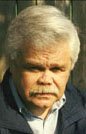
Sam Peckinpah on the set of The Wild Bunch


Inside the head of Sam Peckinpah

So the great director's films are about violence? Not really. Are they about honour? Hardly. In fact, says Rick Moody, Sam Peckinpah offered us realism - albeit of a very particular kind
            Rick Moody
           
            The Guardian, Thursday 8 January 2009

'Undisputed poet of alcoholic cinema' ... Sam Peckinpah on the set of The Wild Bunch. Photograph: Ronald Grant Archive
"Now, most funeral orations, Lord, lie about a man," - so says David Warner, in his memorable turn as Joshua, the fraudulent preacher in Sam Peckinpah's The Ballad of Cable Hogue, from 1970. The same can be said of most film criticism - that it dissimulates or exaggerates about the film, about the director, about the movement, about the art. So let's aspire in this revisionist essay on Peckinpah to tell the truth. Although it's worth noting that when you believe what characters say in a Peckinpah film, you play right into the director's malevolent hands.
.         
Nevertheless, the first point that must be made, here in the 21st century, is that Peckinpah's films are not terribly violent. That's how he made his reputation: as "Bloody Sam", the man who never met a bucket of theatrical blood he wasn't willing to splash around, and who always made certain you knew when the blood was about to flow, by means of slow motion. Still, by today's standards, the better part of the Peckinpah canon is not terribly violent - not when judged against today's rivers of gore. There are, in Peckinpah, no fountaining bodies, no bits of brain tissue splattered about. Anything released in the last 20 years is quite a bit more repellent. Seen any of those Saw movies?
Ride the High Country is a good place to start for the uninitiated. Released in 1962, it scarcely departs from the western as we understand it. There's the good guy, Steve Judd, and the bad guy, Gil Westrum, and they behave according to type for the first reel, at least until they get into the business of saving a young, impetuous romantic (the very first film role of Mariette Hartley) from her up-country fiance. Then the good guys and bad guys get curiously admixed, till it is hard to tell which is which. Indeed, Hartley's impetuous tomboy and Randolph Scott's old cowpoke have, toward the end, an exchange on the ubiquity of gray areas between right and wrong.
This exchange could serve as a template for the morality of the entire Peckinpah oeuvre. Still, the threatened gang rape in High Country happens mainly by implication, and there is little here of Peckinpah, master of the high-noon showdown. Even in the midst of the climactic shootout, the camaraderie between the "bad" Westrum and the "good" Scott, as they pick off a posse of far worse mountain men, is anything but removed from the western genre. The shootout involves a lot of grimacing, and there is ample time, despite perforations, for Scott's last pronouncements. After which the orchestra swells!
for the rest go here:
http://www.theguardian.com/film/2009/jan/09/sam-peckinpah-retrospective

Thursday, December 05, 2013

Steve McQueen's really bad decision; The Career of John Sturges


THOSE GLORIOUS OLD MOVIE PHOTOS: JOHN STURGES AND STEVE MCQUEEN ON THE SET OF "LE MANS" (1971)

From Cinema Retro

The feud between John Sturges and McQueen was tragic...he had made McQueen a star in Magnificent Seven and The Great Escape. However, McQueen's long-delayed plans to bring a racing movie to the screen culminated in the ill-conceived Le Mans. The two old friends feuded over the film's concept. After Sturges quit the project, "B" movie director Lee H. Katzen took over. The film was one of the few outright bombs of McQueen's career, consisting mostly of footage of speeding cars and virtually no plot. (Thanks to Cinema Retro contributing writer Steve Saragossi for sharing this rare photo). 


From Suspense Movies.com

The Career of John Sturges  by Steve Badger


Perhaps due to the blue-collar workmanship of his films, no director ever made as many enduringly popular movies as John Sturges while being largely forgotten himself. Rarely has an artist ever made such popular body of work while making himself as anonymous as possible. No "look at me, I'm a director" touches. The movies occur. Stories of beauty and substance are told well. Just for that accomplishment alone, John Sturges deserves to be remembered as one of America's greatest filmmakers.

The Great Escape (1963). Simply THE World War II prison camp movie, which says a lot. Several stars Sturges' uses time and again are here, including Steve McQueen. First Sturges made McQueen a star. Then he made him a superstar. Finally, in The Great Escape, Sturges made McQueen a film icon. Based on the true story of the largest escape from a German prison camp during the war, Sturges conveys the triumph of the human spirit in the meticulous escape planning, the ingenious details, the courageous escapees, the ultimate tragedy -- and even the disillusionment of the non-Nazi Germans. It has equals, but you can't make a better movie.


The Magnificent Seven (1960). While this is a remake of Kurosawa's Seven Samurai and is set in Mexico, in many ways it is the archetype American film. The near-perfect mix of story, music, personalities, pacing and visuals hits on every cylinder. When the peasants offer gunman-for-hire Yul Brynner the combined fortune of everything in the village, Brynner replies: "I've been offered a lot when I work... but never everything." Likewise, this film has everything. While some elements may seem cliched today, this is the film that made those cliches. James Coburn and Robert Vaughn became movie stars, and Steve McQueen became a superstar: "I never rode shotgun on a hearse before."


for the rest go here:
http://www.suspense-movies.com/directors/john-sturges/

Wednesday, December 04, 2013

The Falcon and The Co-Eds


Picture
Ed here: When I got back from Mayo this spring my friend Max Allan Collins had a great gift waiting for me--a DVD of Falcon movies. Here's an fine review of one of the best of them from The Stalking Moon. Go here for the whole  article.
http://thestalkingmoon.weebly.com/5/post/2013/11/the-falcon-and-the-co-eds-1943-the-falcon-out-west-1944.html

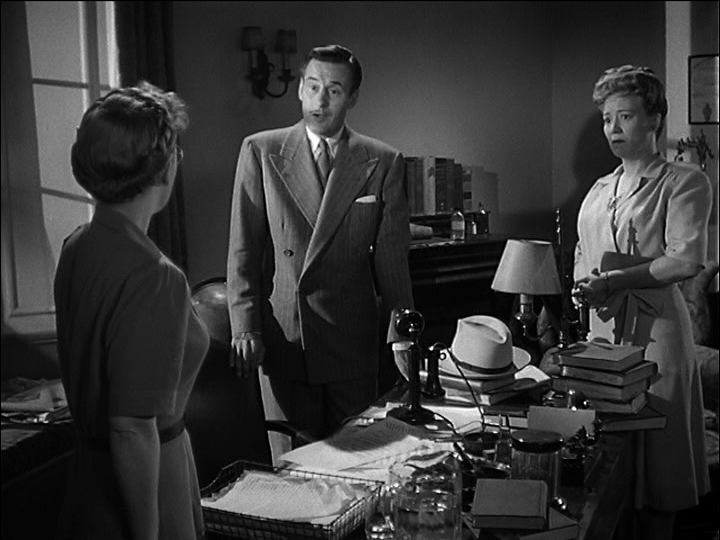
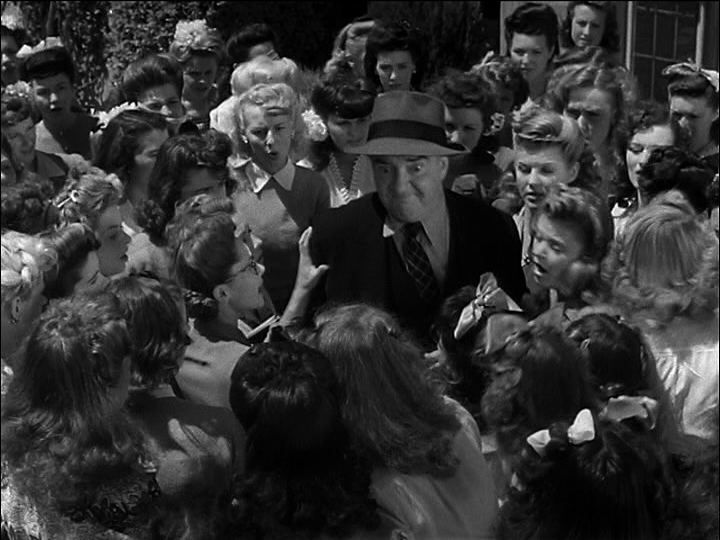
More moody and atmospheric than the series' norm, The Falcon and the Co-Eds mixes a pinch of Daphne Du Maurier-esque melodrama into the formula, as Lawrence finds himself posing as an insurance investigator looking into the suspicious death of a popular male teacher at the all-girls Bluecliff Academy. The local coroner's verdict was death by suicide, but the Falcon soon susses out that the man was deliberately poisoned. Several members of the staff at the school, and even a few students, find themselves on the suspect list, including the sultry, hard-boiled Ms. Gaines (Jean Brooks); her sometime paramour, Dr. Anatole Graelich (George Givot), a psychologist with a shady past; Marguerita (Rita Corday), a troubled young student who claims clairvoyance; the flighty Mary Phoebus (Isabel Jewell); and the school's headmistress, Miss Keyes (Barbara Brown), who seems intent on covering up any trace of scandal that might damage the Academy's reputation. The Falcon follows his usual M.O., poking around looking for clues and motives, looking suave and bemused whilst flirting with any attractive woman who crosses his path (though he's fairly decorous with the adoring throng of schoolgirls who trail after him) and having fun one-upping homicide cops (and series' regulars) Inspector Donovan (Cliff Clark) and Detective Bates (Edward Gargan).

On the night of a benefit performance by the school's drama and music club, another murder occurs, this time implicating Marguerita. Eventually, and with the help of three precocious little daughters of one of the school's patrons, nicknamed the "Ughs", Lawrence gets to the bottom of the case. The Falcon and the Co-Eds benefits from its wind-swept, seaside location and the customary interest inherent in any murder mystery set in academic surroundings. There's still plenty of cute comedy moments throughout, such as when Donovan and Bates chase a suspect into the girls' dormitory and get angrily tossed out on their ear by the elderly den mothers ("The very idea! Two grown men frightening young girls! Aren't you ashamed of yourselves?"
 Gates: "We didn't do nuthin', lady. We just walked through a door. We're police officers!") The supporting cast is good value, including Amelita Ward and Patti Brill as older students making goo-goo eyes at the Falcon, as well as familiar faces Olin Howland (as the Bluecliff driver) and Ian Wolfe (as a duplicitous undertaker).

Picture
The Falcon confronts Ms. Gaines (Jean Brooks).


Tuesday, December 03, 2013

AMAZING BOOK BARGAIN OF THE DAY


Just too dagnabbed sleazy not to post


Texas cop shoots man after women refuse his ‘wife-swapping’ plan

By David Edwards
Tuesday, December 3, 2013 12:08 EST
Olmos Park Officer Frankie Salazar (KENS)
 
  • 2157
     
  • Print Friendly and PDF
  • Email this page
A police officer in Texas has been accused of shooting another man multiple times after two women reportedly refused to go along with a plan to swap sexual partners for the night.
According to the San Antonio Express-News, 29-year-old Olmos Park Officer Frankie Salazar and 33-year-old Jesus Edward Guitron had talked about swapping partners for several months.
But when Guitron showed up at Salazar’s apartment on Saturday night, things did not go as planned.
A woman who apparently came to the apartment with Guitron told police that they all had a few drinks, but she “didn’t feel right” and pushed Salazar away when he started kissing her in the bedroom.
The police report indicated that a second 29-year-old woman — presumably Salazar’s partner — became upset when she came in the bedroom because she had not been told about the plan to swap partners.
The first woman urged Guitron to leave, but he began to fight with Salazar. Police documents alleged that the Olmos Park officer then told the 29-year-old woman to get his .45-caliber Springfield XDS pistol. She told police that she fired a shot at Guitron “just to scare him,” but then later said she couldn’t remember firing the shot.
As Guitron and the first woman were making their way out the door, Salazar fired three more shots, the first woman told police.
Guitron suffered gunshot wounds to his chest, right hand and his left pinky may have also been hit. He was listed in critical but stable condition after being taken to San Antonio Military Medical Center.
Salazar was charged with aggravated assault with a deadly weapon and released on $50,000 bail. He has been placed on leave without pay by the Olmos Park Police Department.
“We have an officer that made a mistake, made a bad judgement,” Olmos Park Police Chief Fritz Bohne told WOAI. “And as I tried to tell kids that want to get into law enforcement, be careful about your decisions cause decisions have long-term consequences.”
Watch the video below from WOAI, broadcast Dec. 3, 2013.

Monday, December 02, 2013

Ken Levine's Great Chistmas story - hilarious and all too true


A
Ken LevKEN
KENime: 
NaVote    VVmed one of the BEST 25 BLOGS OF 2011 by TIME Magazine. Ken Levine is an Emmy winning writer/director/producer/major league baseball announcer. In a career that has spanned over 30 years Ken has worked on MASH, CHEERS, FRASIER, THE SIMPSONS, WINGS, EVERYBODY LOVES RAYMOND, BECKER, DHARMA & GREG, and has co-created his own series including ALMOST PERFECT starring Nancy Travis. He and his partner wrote the feature VOLUNTEERS. Ken has also been the radio/TV play-by-play voice of the Baltimore Orioles, Seattle Mariners, San Diego Padres. and has hosted Dodger Talk on the Dodger Radio Network.

A holiday tradition is A CHARLIE BROWN CHRISTMAS and we pretty much have a Mad Man to thank for it. John Allen was a Don Draper at McCann-Erickson in the mid '60s. On behalf of Coca-Cola he was lobbying for Charlie Brown. It would be the first animated adaptation of Charles M. Schultz’s classic PEANUTS comic strip. But Allen had to really twist arms because in typical fashion, CBS hated it.

They thought the animation was awful, the story too thin and depressing, the jazz score inappropriate for kids, and of course wanted a laugh-track. I'm surprised they didn't require a laugh-track on THE TWILIGHT ZONE.

And CBS was especially opposed to Linus reciting the story of the birth of Christ from the Bible. What the hell is that doing in a Christmas Special?

Oh, and they didn’t like that children were doing the voices of the…uh, children. In other words, all the things that made it distinctive; all the things that made it great. One high-ranking CBS program executive/visionary said it was a “piece of shit”.

And CBS had a lot riding on this. It was going to pre-empt THE MUNSTERS and follow GILLIGAN’S ISLAND. The quality had to be top notch to join that pantheon of excellence.

But John Allen pushed and pushed and finally persuaded the reluctant program chief to air the special. A CHARLIE BROWN CHRISTMAS premiered 48 years ago this month.

And got a 50 share.


It won an Emmy and a Peabody and became an instant holiday classic. I guess children doing the voices of children did not result in a viewer revolt.

CBS began running the special every year (taking credit for it of course). And it achieved the almost unheard of feat of getting higher ratings year after year. By 1969 it was scoring a 53 share.

CBS continued to air the special until 2000. ABC then took over. and has aired it ever since.  They'll show it again tomorrow night at 8:00/7:00 Central.  

MERRY CHRISTMAS AND HAPPY ANNIVERSARY CHARLIE BROWN.

And thanks to John Allen.