Friday, March 07, 2014

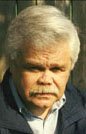
Walter Hill remembers Robert Aldrich (and Kiss Me Deadly)


Kiss Me Deadly


Kiss Me Deadly
As I began to write about Robert Aldrich I’d just received word that his son Bill had died. Bill was a friend and a good soul who gracefully bore the difficult task of being the child of a prominent film director—a director who possessed a personality that was as legendary as the work.
William Aldrich, R.I.P.
I first met Robert Aldrich some 35 years ago. Not that they ever changed much, but I have total recall of my initial impressions of Bob: physically vital, brusque, massive, seething, darkly funny, explosive, direct, and very smart. I loved the permanent offices he kept over on Larchmont near his home in Hancock Park. Bob had a penthouse suite with a sunken floor-sofa configuration set off by a massive desk at one end that looked down on the conversational area. The lights were kept very dim, the windows blacked out—the whole effect being straight out of some film noir classic. I’m told the offices were modeled on those of Columbia’s Harry Cohn, a man Bob Aldrich both respected and despised.
Lukas Heller, my good and much-missed friend, was the favored writer for the latter period of Aldrich’s career. Although Aldrich was enormously loyal to his co-workers, this was a tricky job. Bob liked a lot of rewriting and didn’t appreciate a lot of debate. But when he got the script where he wanted it to be, that was it. Peter Falk told me that when he suggested a series of dialogue changes to Bob, he got an icy smile and then: “Let’s stop. Because if we continue this conversation I’m going to fucking throw you right out the window.”
Bob Aldrich and I met rarely, but through Lukas I got constant reports on the great man’s activities and attitudes as well as his greetings and good wishes. Wearing his producer hat, Bob proposed several projects to me but, sad to say, they never worked out. As to why I should direct the movie under consideration rather than him, the answer was always the same. The project needed X as the perfect casting to properly realize the film and Bob “couldn’t stand the son of a bitch and didn’t want to spend months talking to the bastard.” Nowadays, it is fashionable to valorize the idea that one is, or should be, “non-judgmental.” Robert Aldrich was judgmental and unapologetic about it.
As directors, we are obviously evaluated by the work, the results, not the excuses as to why things didn’t go better or weren’t more completely realized. But in years past, under the old studio system, many times the final results reflected the taste of others without the director being given a reasonable chance to demonstrate his/her point of view. No one resented this hard truth more than Bob—but he did something about it. I don’t think any director of the first rank has ever done more to improve the working conditions for those of us who do the job. As president and, earlier, as chairman of various committees for the Directors Guild, he was unsparing in his devotion of time, energy, and intellect to the task. It made him a lot of enemies. It hurt his career. And it should earn him our enduring gratitude.
After all these years, Kiss Me Deadly is still probably the masterpiece. At the very least, a director who goes out to a Malibu beach house and then blows up the whole world is someone to be reckoned with. At the boldly imaginative level I don’t believe this apocalyptic vision of the consequences of human avarice has ever been quite equaled.

Thursday, March 06, 2014

Forgotten Books: Scandal on The Sand by John Trinian;


Coming in May from Stark House


Forgotten Books: Scandal on The Sand by John Trinian; 


*****************************************************************
Forgotten Books: SCANDAL ON THE SAND by John Trinian

John Trinian was a working name of Zekial Marko. He was a former
convicted criminal who started publishing when he got out of jail
in the early sixties. His first novel was under his real name
(Scratch a Thief, Fawcett Gold Medal 1961, also as Once a Thief),
after which he started using the pseudonym. As Trinian, he
published five or six novels with various paperback houses, such
as Pyramid. Scratch a Thief is an excellent novel, you should try it. That's
the only book I've read by him, sadly, so I can't comment on the
others. -- Juri Nummelin (on Rara-Avis)

Ed here:

Further information on Trinian has him writing for The Rockford Files and other TV shows. While I don't think he was as good as Malcolm Braly, another Gold Medal author who served hard time, I do think his novels had both a lyrical and sexual aspect that we don't find in most of Braly.

I just finished Trinian's SCANDAL ON THE SAND (1964) and I have to say that it offers just about everything I ask for from a novel. A unique story, a strong voice, a definite worldview and several compelling characters, most notably the rich young woman at the book's center, Karen Fornier.

A dying killer whale washes up on a stretch of deserted Southern California beach. Karen, hungover and dismal that she finally gave into the childish wanna-be macho man Hobart, the one her parents would like her to marry...she leaves their beach motel hoping to lose him. Wandering along the beach she finds the whale and for her its appearance is almost religious. The way she bonds with it is moving and is a credit to Trinian's skill.

Hobart insists that the whale is dead and should be cut up for cat food. He finds a sinister, arrogant young cop, Mulford, who agrees with him. Mulford orders a tow truck to come in and drag it away. He then orders Hobart and Karen to leave the area. Hobart sees in the harsh machismo of Mulford everything he's secretly wanted to be, that not even his considerable inheritance could buy him. He sides with Mulford and tries to drag Karen away. But she defies them both and stays. Not even when the whale proves to be alive will Mulford stop the tow truck. He says he'll shoot the whale.

All this is being observed from close-by a hood named Bonniano who is to meet a runner who will give him enough money to escape to Mexico. Bonniano is in the news for being a hit man who last night iced a prominent mob figure. Everybody's looking for him.

These and others play into the story of whale on the beach. The character sketches show the influences of Sherwood Anderson and John O'Hara and the cutaways to life on the beach bring the 1964 era alive. Boys wearing white clam digger pants--girls lying about in pink bikinis with transistor radios stuck to their ears--and just about everybody managing to grab themselves a little marijuana whenever the opportunity comes up...all this being the lull before the flower power storm that was less than two years away.

A cunning little book. Trinian was the real deal.

Wednesday, March 05, 2014

You Say It’s Your Birthday March 4th, 2014 by Max Allan Collins A GREAT POST


You Say It’s Your Birthday

March 4th, 2014 by Max Allan Collins

Today (March 3rd, as I write this) is my 66th birthday. I am not looking for congratulatory e-mails or Facebook postings, but I do have a Paypal account for those wondering exactly how to help me celebrate.
Any birthday past forty inclines a person toward reflection, and I’m no exception. I am incredibly lucky. I haven’t had a real job since I taught college half-time in the early ‘70s, and my previous job had been sacking groceries. Yes, I’ve made money playing rock music, and obviously I bring in enough to keep the lights on around here by my writing. But both of those began as my hobbies, and having them turn into something more has been a blessing.
Career goals, many of them, have been reached or are nicely in progress. Nate Heller has worked the JFK case, the entire opus is back in print, and anything further is a lagniappe. I’ve written something that generated a major motion picture (ROAD TO PERDITION), which gives me a shot at being read after the writing has stopped. Nolan and Mallory and the Disaster series are completed. Quarry has made a rather remarkable comeback. There are other series that have decent shapes, should I never write another entry – four Eliot Ness in Cleveland, three Jack and Maggie Starr’s. I have completed the six substantial Mike Hammer novels from Mickey’s files, and two other non-Hammers. As with Heller, developing further Hammer and Spillane projects falls into the bonus area. I wrote my father’s wartime story (RED SKY IN MORNING) and a book about Wyatt Earp (BLACK HATS), and some thrillers, too, like the forthcoming SUPREME JUSTICE. I’ve written movies and directed a few – here I wish I’d done more and am still striving.
I have a respectable shelf of non-fiction works covering pin-ups, the history of mystery, men’s adventure mags and two (so far) Spillane critical/biographical titles. Goals remaining in that area include a full-length critical bio of Mickey (with my Spillane collaborator Jim Traylor) and of Eliot Ness (with writers/researchers Brad Schwartz and George Hagenauer) – those are already in early stages. A successful series continues with Barb on the ANTIQUES novels, which will number at least eleven, by current contract – very rewarding to do something in collaboration with Barb and that is so overtly funny.
I can look back on comics work that includes fifteen years on DICK TRACY, the longest run of a private eye comic book in comics history (MS. TREE – thanks, Terry!), and of course ROAD TO PERDITION (thanks, Richard!) and its prose and graphic-novel sequels. Thanks to movie and TV tie-ins, I got on the New York Times and USA Today’s bestseller lists, and was able to work in genres otherwise unavailable to me. I have won a number of awards and had quite a few nominations, though the Edgar remains elusive (up again this year, though), and that ugly little statue stays a career goal – Jon Breen has been nice enough to suggest in print that I should receive a career Edgar, which is more than a goal…more like a dream.
But I am in a position to look back and say I’ve earned my keep on the planet. I came here to write stories and play a little rock ‘n’ roll. So far it’s going very well.
And my personal goals achieved make my career accomplishments look like nothing at all. In my shallow way, I decided to marry a beautiful nineteen-year-old blonde. Now, all these years later, I remain married to her, and she is still stunningly beautiful, but along the way has proven to be funny, smarter than me, loving, talented and just about every other positive adjective you can think of. I have a son who is so smart and talented and such a great writer that I should be jealous…but he’s the one writer who I don’t mind being better than me. No grandkids yet, but a wonderful daughter-in-law. I had great, supportive parents who made all this possible.
Lots of friends, but it’s sad to think of how many are gone. A week doesn’t go by that I don’t think of actor Mike Cornelison and rockers Paul Thomas, Bruce Peters, Chuck Bunn and Terry Beckey. The only upside is realizing that such good friends as my writing partner Matt Clemens, researcher George Hagenauer, the guys in Crusin’, cartoonist Terry Beatty, writer pals like Ed Gorman and Bob Randisi, and filmmaking partner Phil Dingeldein, are all alive and well (and in some cases fat and happy).
For a guy who mostly lives in his converted-bedroom office in a little town in Iowa, I have so many friends! My agent Dominick Abel, Jane Spillane, Carl Amari, are just a few of my rich work-related relationships. Mickey Spillane was my son’s godfather! I am friendly with Stacy Keach, Patty McCormack, the Seduction of the Innocent guys, and on and on. Dangerous starting this list, but if you’re not on it, you are very much in my heart. Especially the editors out there buying my stuff.
Here’s a birthday card of sorts I received.
That’s it for now. I’m taking the rest of the day off.

Tuesday, March 04, 2014

While The City Sleeps:Hell, Yeah! by David Kalat

while_the_city_sleeps_ver21


WHILE THE CITY SLEEPS: HELL, YEAH!

Last week’s post on Jean Renoir’s The Elusive Corporal brought to light a pocket of fans of Fritz Lang’sWhile the City Sleeps—and so in honor of that long-suffering cohort, this week I figured I’d properly pay tribute to one of Lang’s unsung classics.

One of the reasons that While the City Sleeps doesn’t get its due has less to do with its actual quality than it does with the sprawling nature of Lang’s absurdly prolific career.  He started off as one of the brand names in German silent cinema, and capped that off with a pair of ground-breaking experiments in early talkie cinema, before emigrating to the US and starting over in Hollywood—where he discarded the stylistic panache of his German films in favor of a stripped down aesthetic.  He went from being an icon of German film to being a journeyman director of American genre films—Westerns, film noir, wartime thrillers.  Then he abruptly quit Hollywood, burned all his professional bridges, and went back to Germany to make some nostalgic updates of his silent films… it’s hard to summarize all that succinctly.
And While the City Sleeps sits awkwardly within that history—it isn’t his last Hollywood film, it’s his next-to-last.  It may seem elegiac and backward-looking, but he made three more films after it—four, if you countThe Indian Tomb films separately.
Furthermore, Lang’s Hollywood work coincided with the so-called “Golden Age,” when most stars were engaged to specific studios in long-term contracts.  Many directors had the advantage within this system to isolate a given performer or groups of performers with whom they had a good working relationship and common creative vision.  But Lang bounced around from studio to studio, never staying anywhere long enough to settle into that kind of relationship with any of his stars.
jpg00011
While the City Sleeps has one of the most impressive casts of any of Lang’s American films—and each of these storied performers are working at the top of their game here: Dana Andrews, Ida Lupino, Vincent Price, George Sanders, Thomas Mitchell, Howard Duff… and they in turn are backed up by some outstanding supporting players like Rhonda Fleming, James Craig, John Drew Barrymore…
And part of what makes this film sing is the way that Casey Robinson’s screenplay gives such quirky, realistic life to each of these characters.  There’s a tendency, even in the best written and best acted films, to let the dialog serve a utilitarian function—the words are meant to convey exposition, or backstory, or character details.  In real life, people talk in messy ways, without regard to whether they’re “in character.”

Monday, March 03, 2014

Cribbing from Crider:The Year I Died Seven Times Book #2 eBook: Eric Beetner: Kindle Store:


Free for Kindle For a Limited Time


Sunday, March 02, 2014

Richard Wheeler Western Master Interview with western novelist Juia Robb


Richard Wheeler
Richard Wheeler
Mr. Wheeler, I’ve been reading your books forever, and seeing them in libraries and bookstores.
Q. Don’t you have a new book being published? What’s the title and what’s it about?
A. Julia, thanks for your interest. The 2015 Forge historical novel follows an early vaudeville company through Montana and Idaho. People in isolated mining towns in the far west swiftly erected opera houses and invited entertainers. It was their contact with the outside world. The novel is called The Beausoleil Brothers Follies, and it follows a 1890s vaudeville company through the mining towns, including Helena and Butte.
Q.  You’ve written an amazing number of novels; more than 70. How long does it take to write one of your novels and where do you get your ideas?masterson-cover
A. My ideas arose from a close study of regional history. I began writing traditional westerns, but soon switched to historical and biographical novels, which were richer and more satisfying because I was dealing with people in real circumstance, and not gunfighter mythology. The West is so rich in great material, much of it well documented in histories, that I was permanently seduced into writing about the real west.
I used to be able to write a traditional story in two or three months; historical novels took longer, because in those pre-Internet days there was site research, stacks of books, and sometimes interviews with knowledgeable people. The internet has vastly shortened the research. I can get onto Google maps and look at a  place. I can access tons of material. I spend six or more months doing a big historical novel.
9781432825140_p0_v1_s260x420-2Q.  Why did you begin writing mysteries, such as The Dead Genius and The Saboteur, two of the Lt. Joe Sonntag novels? (The Sonntag novels were written under the name Axel Brand).
A. For the challenge. Mysteries are harder. You have to have a clear idea what happened, and then lead your protagonist and readers toward that. For me, it was like wanting to climb Mount Everest. I should say that I never plot or outline; I put a character in an initial dilemma and let the story unfold on its own, usually drawn from the character’s nature and decisions. It’s a rare mystery writer who does it that way, because you find yourself in blind alleys, and maddening traps. I just can’t plot, so completing my first mystery was like landing on the moon.
Q.  I find I experience the place I’m writing about. Do you do the same thing? What’s it like writing about Milwaukee in the 1940s, for the Sonntag series.
Milwaukee police examine evidence from a gambling raid, photo taken in the 1940s.
Milwaukee police examine evidence from a 1940s’ gambling raid.
A. I grew up in Milwaukee, a big industrial city with numerous ethnic neighborhoods, mostly Eastern European. I absorbed all that as a child in the 40s, and decided to set a series there featuring Sonntag, a Milwaukee police detective of the period (yes, a little like Joe Friday).
Milwaukee seethed with tensions. It had a Socialist mayor, and Communist-led unions, and sprawling companies such as Allis-Chalmers. At the same time, there were Catholic and Lutheran churches everywhere, and Orthodox ones too, and they exercised vast authority, far beyond what is seen today. The city was proletarian, richly traditional, and prime material for a mystery series set there.
The more I wrote, the more those old memories flooded back. I spent a teen summer working on an assembly line at Cutler-Hammer, taking my lunch bucket to work on a streetcar, transferring twice each way, surrounded by worn out people in work clothing, women in babushkas, or head scarves.
Q. What initially inspired you to write about the American $(KGrHqVHJBMFHbbuIhdPBS!(VRYP,g~~60_35West?
A. The land. I was a newsman in Arizona, Nevada, and Montana (and before that, California). In Arizona, my first news job, I became enthralled with the desert, with its arid and unsettled beauty, its mystery, the fragile cattle industry that tried to make a living from the desert. Much the same thing happened in Montana and Nevada. The land captured me, the land fevered my imagination, the land set me to exploring ghost towns, and wondering what sort of people once occupied them.
Q. You’re very successful, in terms of books written and, I’m assuming, sales. What can you tell new writers to help them?
A. My vocation as a novelist largely took place before the Internet and social media, and I fear I’d only mislead readers who must make headway in a new world. I started late in life, after a failed news career and a stint of book editing. So my advice is going to seem nuts to young people.
I loved literature. I loved the history of American literature. My favorite book is a biography, Max Perkins, Editor of Genius, by A. Scott Berg. It’s about the legendary Scribners editor who found and helped Ernest Hemingway, Scott Fitzgerald, Thomas Wolfe,  James Jones, Marjorie Kinnan Rawlings, and a host of others. I blotted up the anecdotes, absorbed the lore. I would say the first step is to confront yourself and ask what you want: Money? Literary recognition? Avant garde recognition? A Pulitzer Prize? Best-seller status? Each of these things requires a different approach, and you will need to master the lore.
Q. The self-publishing revolution has changed everything in the publishing world. Do you have thoughts on that?
A. My early publishing life was humbling. Editors cut9780765361745favorite scenes, condensed, sent material back for rewrites, turned lame sentences into better ones, even asked me to start over. They asked me for a more compelling opening, told me that a character didn’t seem to work, wanted better endings, asked me to make chapters more coherent, asked me to make points of view clearer, asked me to get rid of excessive attribution in dialogue, asked me to create more empathy for my protagonist, and sometimes flat-out rejected a novel, or turned down my favorite idea for a new one. One of them reduced me to tears.
I am not a natural storyteller, and the editors and copyeditors and sometimes the publicists had plenty of advice they wished for me to heed. But out of all that harsh, but also kind, disciplining came a new self: I was a professional. There are a few self-published authors who have all those innate skills and qualities, and need no instruction. But most of them need the struggle and torment of a hundred revisions, and the attention of some savvy, kind, and thoughtful editors.19622824
Q. John C. Fremont (who you wrote about in Snowbound) is often viewed as an egotistical incompetent, but I’m assuming you have a different view of him.
A. John Charles Fremont was a man of great skill and ruinous weakness. I ended up my extensive research thinking I’d not like him much if I were to meet him. That colored my novel. I wrote about his most tragic and foolish venture, after he had been booted out of the army, and let him hang himself. His narcissism cost ten or eleven men their lives.9780451213709_p0_v1_s260x420-2
Q. People interested in the West have different views of what is now named The Gunfight at the OK Corral. Some, like me, defend the Earps, and some attack the Earps, accusing them of many things; dishonesty, being pimps and gamblers, shooting disarmed men. But I assume you feel differently as you wrote about the Earps in Trouble in Tombstone.
A. My intent was to humanize Wyatt and remove him from the fierce controversy surrounding him. In my story, he is neither a positive nor negative icon. He’s a man who turns suddenly shy when he meets his future wife, Josie; a man filled with grief and anger about the loss or wounding of his brothers, a man who can feel remorse.
I chose to present him as an old man reminiscing, so I could defuse preconceptions and let him tell his story his own way. In recent years, newly uncovered sources tend to support the proposition that the Earps were lawmen of some integrity. Researchers have uncovered valuable material published in San Diego, sent by a stringer from Tombstone.
And they’ve uncovered a contemporary reprint of The Nugget’s first account of the fight, which powerfully supports the Earps’ version of it. The Nugget was hostile to the Earps and later changed its tune as to what happened, which is why the discovery is so important.
Q. You must have extensively researched in order to write your books. Were you ever surprised at what you found? What’s the most interesting thing you ever researched?
9780765346353_p0_v1_s260x420-3A. I think my research about Major Marcus Reno, the scapegoat of the Little Big Horn fight, (An Obituary for Major Reno) was as moving as anything I’d done. At the battlefield cemetery, his grave is always decorated, winter and summer, plastic flowers, real flowers. That began a quest to understand a deeply flawed man and his role in the fight.
A novel ought to be written about the Butte, Montana, labor wars, pitting the radical Industrial Workers of the World against the ruthless Anaconda Copper Mining Company. Some industry thugs, probably Pinkerton men, dragged the IWW organizer Frank Little behind a car to a railroad trestle and hanged him there. His grave, even now, winter and summer, is usually decorated. And Dashiell Hammett, a Pinkerton man in Butte at the time, was so repelled he changed his political views and wrote Red Harvest.
51K1-ShVm3L._SS500_
If you want to write a fine novel, find a grave that is decorated in all seasons, and start asking about it.
Julia, thanks for all this. I hope your own writing career prospers. I believe it will. Those are splendid reviews and notices.
Share Button

Saturday, March 01, 2014

DEATH GROUND by Ed Gorman now only $3.99 on Kindle


DEATH GROUND by Ed Gorman,
By Benjamin Boulden
This review is from: Death Ground (Mass Market Paperback)
$3.99 on Kindle
Leo Guild is an aging bounty hunter. He is a former lawman, father and
husband, but that is all behind him. Now he rides alone. He is
melancholy, intelligent and violent; when he needs to be. He also has a
past that sticks with him. He killed a little girl. The courts forgave
him, but he can't find the heart to forgive himself.

DEATH GROUND opens on the evening of Guild's 54th birthday. In lonely
celebration he makes a date at the local brothel with a young
"straw-haired" girl. Things don't go as expected with the girl and his
birthday truly turns for the worse when he is summoned to the Sheriff's
office.

Two men are dead. One--Merle Rig--hired Guild as a bodyguard and the
other--Kenny Tolliver--was technically Guild's employee. He hired Kenny
to protect Rig while he paid a visit to the "straw-haired" girl. As he
looks at the cadavers on the heavy mortician's tables he figures his
job is gone and it is time to ride on, but first he pays a visit to
Kenny's mother. A scene that unsettles Guild and also piques his
interest; Kenny's mother knew Rig and Kenny palled around with a couple
local deputies.

Leo Guild decides he can't leave town until he figures who really
killed the pair and why. He has a feeling it is not the violent
mountain man being blamed by the Sheriff, but he doesn't have many
suspects. He doesn't have anything but a hunch, really.

DEATH GROUND isn't a traditional Western. It, like all of Gorman's
Westerns,  a noir mystery wrapped in the trappings of the Old West.
That is not to say that the historical element isn't accurate or
interesting, because it is. It is also central to the story, but an Ed
Gorman Western is more of a historical mystery than anything else. A
hardboiled historical mystery at that.

The prose is tough and tender in varying shades. It defines the story,
action, and protagonist with a lean, smart and melancholy and literate
style:

"Then he started digging snow up with both hands, and he covered them
good, the two of them, and then he stood up and looked out on the
unfurling white land. There was blue sky and a full yellow sun. Warmer
now, there was even that kind of sweetness that comes on sunny winter
days. It made him think of pretty women on ice skates, their cheeks
touched perfect red by the cold, their eyes daring and blue."

Leo Guild is an everyman. He is the man who does what needs to be done.
He isn't a hero, or a villain, but rather he is simply a man; a man who
has seen much, done much, and lost much. Guild is an example of what
makes Ed Gorman's fiction so damn good: characters that are measured
and three-dimensional; characters that act, feel and sound real. His
male characters are strong and pitiful, lustful and scared, vain and
dangerous, lonely and weak--generally all at the same time--and more
importantly they are recognizable. And his female characters exhibit
the same steady qualities. Neither wholly good nor bad, just human.

DEATH GROUND is a Western that should have wide appeal. It will please
the traditionalist with its rugged description of frontier life and the
people who settled it. It will also introduce readers of hardboiled
crime fiction to a new genre, but mostly it will please any reader who
wants something tangible and meaningful mixed into a well-told,
excellently plotted and immensely entertaining novel.

-Gravetapping