Friday, October 09, 2009

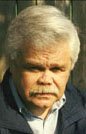
MAX ALLAN COLLINS TALKS ABOUT HIS HIT MAN QUARRY


The Max All Collins website and blog new and updated by Max and his son Nathan http://www.maxallancollins.com/blog/

THE INTERVIEW:

Before we start discussing the history of Quarry how about you telling us how the noted novelist Richard Yates helped you get your MFA at the University of Iowa's Writer's Workshop?

I lived in Muscatine, Iowa -- still do, as you know -- with a real sense of this famous writing school being in my back yard. In high school I was really into what was then called "black comedy," notably Joseph Heller's CATCH-22 and everything of Vonnegut's. And Vonnegut was teaching up there, so I just naively figured I'd have no trouble getting in. In my high school, I was the writing guy -- had won all sorts of contests, and written plays and so on.

Anyway, to my disappointment, Vonnegut left just before I enrolled at the University of Iowa, as a junior (I went to community college in Muscatine). I'd written three or four crime and spy novels in high school, and now finally had a novel written that I thought was publishable -- MOURN THE LIVING. I had applied for the undergrad workshop, and drove up there and tracked down Yates in his office at the English Philosopy Building. I went in bubbling, intense and enthusiastic, telling him how much I looked forward to being in the class. And I handed him the novel.

He gave me his sorrowful look and said something like, "I'm afraid you're out of luck. This isn't the kind of writing we believe in here."

Deflated beyond words, I slunk back to Muscatine, fairly crushed. Then something wonderful happened: Sunday night, he called me and apologized.

"I've just read your book," he said. "You are very serious about what you do, and more professional than any other applicant, and I owe you an apology for being a snob. I would love to have you in my class."

I hadn't realized had hard it was to get in -- there was just one undergraduate workshop section.

So he became my mentor, reading and working with me on everything I did. He got me my first agent, Knox Burger, who he pitched me to as the next Dashiell Hammett or Raymond Chandler. Burger, in his typically crusty way, said, "More like W.R. Burnett, but I'll take him on, anyway." I wrote BAIT MONEY, NO CURE FOR DEATH and began QUARRY under Yates' guiding hand. What he taught me was to write from experience, not from other books I'd read, and to view all my characters as "victims" (which was my original title for NO CURE FOR DEATH). Once you realize that everyone is justified from their own point of view, your writing opens up into something more real, even working a pulp vein.

He wrote me and congratulated me when BAIT MONEY sold, and I wish I still had that letter. I do remember he said, "I'm not surprised you've sold it," saying that he still remembered a minor character from MOURN THE LIVING and by name (Sid Tisor), and said that of the thousands of student manuscripts he'd read, that was one of the few things that had stuck with him. He was a fine writer and, to me, a wise, nuturing teacher.


The first novel you sold was about your other series character Nolan,
Bait Money. Were you also thinking about Quarry at the time?

The first novel I sold was BAIT MONEY, the Nolan. Right away I sold NO CURE FOR DEATH after that, though it wound up not being published for a number of years. So Quarry, in a book I called QUARRY (published as THE BROKER), was third to bat, and reflected a lot of thinking on my part about finding something of my own. Nolan was a Richard Stark pastiche, so much so that I got Don Westlake's permission before agreeing to write sequels. And the Mallory character was really a reworking of the standard private eye hero out of Chandler, even if he wasn't literally a P.I.

What inspired Quarry?

I grew up wanting to be a private eye writer, specifically wanting to be Mickey Spillane, but by the late '60s, the P.I. seemed played out and anarchronistic. So my enthusiasm shifted to so-called "crook books."

I was very interested in Westlake's Parker novels but also Jim Thompson, who I started reading in high school around '64, and also W.R. Burnett's ASPHALT JUNGLE and HIGH SIERRA and Horace McCoy's KISS TOMORROW GOODBYE. I think Yates got me thinking about crime fiction as potential literature, and I was aware, early on, of the movement toward taking the genre more seriously. A particular influence was James M. Cain and his first-person criminal heroes, who (as Yates had always said) had less than a full grasp on who and what they really were.

Specifically, as much as I liked the Richard Stark novels, and my own Nolan and Jon characters, I felt the Parker sort of novel had an element of cop out. You are identifying with a bad guy, yes, but Westlake used an almost Hammett-like stingy third-person, which cushioned the reader, and Parker really only killed other criminals. Parker and Stark never really went over a certain line, despite threatening to all the time. I thought, "What if it's not a bank robber? What if it's a hired killer? And what if we are in the first-person, locked in his point of view with nowhere else to go, and no one else to root for?"

My strategy has always been to have Quarry do something fairly terrible very early on, giving the reader the chance to bail. Then the trick is to have Quarry (a) behave at least vaguely like a noir anti-hero thereafter, and (b) encounter a woman who rekindles his humanity. Finally, toward the end of the book, Quarry does something else fairly terrible, and reminds me you just who the hell you've been identifying with.


Did you have a difficult time selling a series about a hit-man?


It was a one-shot. The ending implied Quarry would probably be tracked down and killed. But, of course, when they asked for more, I gave them more -- three more, in the mid-'70s. And it became the first hitman as protagonist series.

Did you have an agent at the time?


Yeah, Burger sold that novel, and that series.

What did you think of the Berkley packaging of the first group of
Quarrys?

Lousy. They changed my titles without asking me, the first two anyway. My title QUARRY became THE BROKER, and HIT LIST became THE BROKER'S WIFE, a title that betrayed the book's major surprise. It's like re-titling PSYCHO as THE BOY WHO DRESSED AS HIS MOTHER AND KILLED PEOPLE.

Did you get a lot of letters from readers about Quarry?

Quarry has always generated a fair amount of fan mail. My decision to do another one in the '80s was influenced by how many readers had expressed an interest in the series. I have to say at the time, I thought I'd really come up with something unique. I was disappointed that no one except Jon Breen noticed, and I actually stopped writing for a year or so, if I recall. Just played music professionally.


You must have been happy when Foul Play Press reissued all the Berkley
titles in very slick paperback editions.


The late great and very gracious Louis Wilder was responsible for those. They're lovely. I wish I had a box of them, though -- they go for more than the original printings.

After the Berkley series and the novel Primary Target, Quarry
disappeared for awhile. Did you get tired of him?

I didn't get tired of Quarry, Berkley just didn't ask for more; but I never really pursued doing him again. The problem was that I felt like I had to keep topping myself with the nasty things Quarry did. By the fourth one, THE SLASHER, the series had become primarily black comedy. That element was always there, and quite intentional, but it should be secondary.

Still, Quarry was always one of my favorite characters, probably second only to Nate Heller, and I wrote the occasional short story. One of those, "A Matter of Principal," has been anthogized more than any other story of mine, and led to a short film, a novel and a feature film.


You and Hard Case Crime brought Quarry back in a big way. I'm not alone
in thinking that The First Quarry is not only the finest of the series
but also one of your own finest novel period. You obviously have a good
relationship with Charles Ardai at Hard Case.

Charles is terrific. Sharp and smart and unfailingly pleasant and professional. I can be a problem child and he doesn't mind at all. He understands that Quarry is a labor of love for me, at this point, and appreciates that my fussiness is for a reason.


And now Quarry, under an assumed name, is starring in a motion picture.
Tell us about that.

A young filmmaker, Jeffrey Goodman, discovered the short story, "A Matter of Principal," and for several years hounded me about making a short film out of it, for the festival circuit. I was getting involved in indie film at the same time, and finally said yes to him, if I could write the screenplay and be a producer. The film, which I like very much, did extremely well at festivals, and Jeffrey hired me to write a feature-length version.

I did, and he set about raising the money, while I turned it into a novel for Charles Ardai, who had requested a Quarry. I never have faith that movies will get made, so I figured, "At least it will be a book." That was THE LAST QUARRY. The book reflects my screenplay, the first draft anyway. At the insistence of a producer, who raised a lot of the money, Jeffrey brought in another writer after I'd done two drafts of the screenplay, though I was brought back in to do a polish. The film is very, very good, and Tom Sizemore an excellent Quarry, called Price in the film -- for the same reason Parker is Walker in POINT BLANK -- as as not to grant sequel rights, which is partly why the film is called THE LAST LULLABY.

Jeffrey has done extremely well on the festival circuit, lots of awards and attention, and it had a limited but successful theatrical run, mostly in cities where it had won festivals. A limited edition DVD has just become available. Anybody who likes my stuff at all will like THE LAST LULLABY.


There's a new Quarry on the way. Where does this one find Quarry?

QUARRY IN THE MIDDLE is about to come out. Let me back up -- I did THE LAST QUARRY, fully intending it to be literally the last one. But the reviews were excellent, and it sold well. Many a critic and reader said, "It's a shame Collins can never write another Quarry, having written the final story." I thought -- nobody tells me what I can and can't write. So I came up with THE FIRST QUARRY. What we call in comics an "origin" story.

QUARRY IN THE MIDDLE is a pun title, puns being an obvious weakness of mine, as it takes place midstream in his life and career. In the last two Berkley published Quarrys, I set up a clever premise -- Quarry kills hit men with his clients being their potential victims -- that I didn't get to fully explore. As for the other meaning of the title, let me tell you how I pitched it to Charles (and sold it) in a single word; that word was YOJIMBO. Charles bought it with one word, too: "Cool!"


Has Quarry ever made any comic book appearances?


No. I've been approached. As of now, I don't believe I've ever adapted any of my prose characters to comics. The opposite, however, is the case -- ROAD TO PERDITION led to two prose novels, ROAD TO PURGATORY and ROAD TO PARADISE, and the Ms. Tree comic books became DEADLY BELOVED for Hard Case.


What does the future hold for Quarry? The good news is that you've
contracted for two new Nathan Heller novels. Will you have time for
more Quarrys?


I will soon write QUARRY'S EX, another mid-stream novel in which we meet Quarry's ex-wife. That's all I know about the story at present. I have at least one more I want to do, called THE WRONG QUARRY. And that might be it. I love doing these, I have way too much being that character...but it's a limited concept, so I should probably cap it.

Of course, if I write that final novel, and somebody says, "It's too bad Collins can't write another," then all bets are off.

Thursday, October 08, 2009

Paranormal Activity

Hero's Complex (LA Times) ran a very interesting article on how carefully the movie Paranormal Activity (The next "Blair Witch Project") is being marketed. I like stuff like this. Once an ad man always a...


'Paranormal Activity,' a study in careful execution
October 8, 2009 | 9:17 am
John Horn, who covers film for the Los Angeles Times, has been mapping the curious path of "Paranormal Activity," the dirt-cheap horror film that may shape up as one of the unexpected success stories of 2009. Here's his analysis of the movie's marketing -- and the secret message conveyed by long lines at movie theaters.

The positive buzz about this micro-budget spectral thriller started building at a Park City, Utah, film festival, word of mouth spread quickly via the Internet, early nationwide college-town screenings sparked even more interest, and a slowly expanding theatrical release fed the flames.

It's the model that made "The Blair Witch Project" a cultural phenomenon and box-office blockbuster exactly a decade ago, and it's a carefully crafted plan that Paramount Pictures is following nearly to the letter with “Paranormal Activity.”

While there are minor differences between the releases -- "Blair Witch" premiered at the Sundance Film Festival, "Paranormal Activity" played at the smaller Slamdance Film Festival -- the similarities are striking. What's also noticeable is how well both films performed in the initial weeks of their theatrical premieres.

For the rest go here:

http://latimesblogs.latimes.com/herocomplex/

Wednesday, October 07, 2009

Forgotten Books: In Dubious Battle

It's bracing to remember, in this time when mega-corporations control our lives, to recall a time when people fought back against those who enslaved them.

In Dubious Battle by John Steinbeck, a novel I prefer to the preachy and over-calculated Grapes of Wrath, is set in a tiny California town where apple pickers are angry at the growers' association for cutting wages by fifteen cents. The year is 1936 and the forces of the rich and powerful are at war with the powerless workers. Mac and Jim are the lead characters and it is Mac who takes Jim to a meeting of the Communist Party, which wants to convince the workers to strike. They are joined by Doc Burton, a medical man who keeps the worker camp clean so that the cops can't close the place down because of sanitation violations.

Steinbeck's passion can be found on every page, in every detail. The camp and its people are depicted realistically. Steinbeck is not writing a tract. Some of the workers are here just to make trouble; others are stalking horses for the Communists. Others for the growers' association. The poverty, the despair and above all the rage are palpable. As is the sorrow.

For me Jim is the most interesting character in the book because he changes over the course of his experiences. He begins to see that the concept of "the working man's friend" is a lie. The Communists exploit the workers just as the Capitalists do. Doc has his vision of how things should be; Mac believes in political movements; but Jim finds no comfort. The misery he has seen in his years seems a brutal and irrefutable fact of life.

Steinbeck was long ago judged as second-tier to his enemy Hemingway. I never quite knew why. Good as he was, Hemingway could not have painted on a canvas this large and done it with such grace and power. You'll never forget the people you meet here.

Tuesday, October 06, 2009

A fine writer and a great guy

Tim Powers is well known in science fiction and fantasy circles but it appears that a much wider audience awaits him. As I said in the title Tim is a fine writer and a great guy. Congratulations, Tim.

Here's from the LA Times' Hero's Complex today:


Surprised author Tim Powers finds himself setting sail with 'Pirates of the Caribbean'
October 6, 2009 | 7:28 am

Last month, Johnny Depp walked on stage at the Anaheim Convention Center in his Jack Sparrow costume and delighted a surprised audience of Disney fans with his rummy buccaneer's trademark mutter. Within an hour, in San Bernadino, an award-winning fantasy author named Tim Powers found a flurry of emails from surprised friends and fans filling his inbox.

The reason for the e-mail barrage: Depp's theatrical appearance at Disney's D23 Expo included the announcement that the fourth Sparrow film will be entitled "Pirates of the Caribbean: On Stranger Tides," which echoes the name of a 1987 fantasy novel by Powers about pirates and the Fountain of Youth. Everyone wanted to know if Powers had hit the Hollywood jackpot -- or if he needed to be in touch with his attorney.

Powers was in a tricky spot -- he wanted to publicly celebrate a career windfall but the folks at Disney had made it clear that he was supposed to keep everything under wraps. He was more surprised than anyone that the title had been trumpeted at Disney's new promotional convention.

"I was still -- as far as I understood -- not free to talk about it," the author told me Monday. "Then about a week ago my agent wrote and said, 'You're now able to say that in fact Disney did option the book.' That happened a while ago, it'll be three years in April."

The novelist, with a dozen books to his credit, is still a bit dazed by the fact that a book he published during the Reagan administration will setting sail in May 2011 as new edition of a Disney franchise that has racked up $1.78 billion in worldwide box office since hoisting its flag in 2003. "Yes, I'm thrilled," Power said, "I think it's great."

For the rest go here:

http://latimesblogs.latimes.com/herocomplex/

Monday, October 05, 2009

The Night of The Hunter


Cinema Retro linked to a fine Roger Ebert tribute to Charles Laughton's The Night of The Hunter. Here's the opening:

It's a thin line between LOVE and HATE.
The Night of the Hunter (1955)
by Roger Ebert / November 24, 1996
cast & credits
Rev. Harry Powell: Robert Mitchum
Willa Harper: Shelley Winters
Rachel: Lillian Gish
John: Billy Chapin
Pearl: Sally Jane Bruce
Birdie: James Gleason
Icey: Evelyn Varden
Ben Harper: Peter Graves
Walt: Don Beddoe

Directed by Charles Laughton and produced by Paul Gregory. Screenplay by James Agee and Charles Laughton, based on the novel by Davis Grubb. Running time: 93 minutes. No MPAA rating. (Recommended for mature audiences).

Charles Laughton's "The Night of the Hunter'' (1955) is one of the greatest of all American films, but has never received the attention it deserves because of its lack of the proper trappings. Many ``great movies'' are by great directors, but Laughton directed only this one film, which was a critical and commercial failure long overshadowed by his acting career. Many great movies use actors who come draped in respectability and prestige, but Robert Mitchum has always been a raffish outsider. And many great movies are realistic, but ``Night of the Hunter'' is an expressionistic oddity, telling its chilling story through visual fantasy. People don't know how to categorize it, so they leave it off their lists.

Yet what a compelling, frightening and beautiful film it is! And how well it has survived its period. Many films from the mid-1950s, even the good ones, seem somewhat dated now, but by setting his story in an invented movie world outside conventional realism, Laughton gave it a timelessness. Yes, the movie takes place in a small town on the banks of a river. But the town looks as artificial as a Christmas card scene, the family's house with its strange angles inside and out looks too small to live in, and the river becomes a set so obviously artificial it could have been built for a completely stylized studio film like "Kwaidan" (1964).

For the rest go here:

http://rogerebert.suntimes.com/apps/pbcs.dll/article?AID=/19961124/REVIEWS08/401010344/1023

Sunday, October 04, 2009

Bloom County


I was a loyal reader of Bloom County for a long time but somehow I lost touch with Breathed and what he was doing. Turns out he was doing quite a lot. Here's an excerpt from Hero Complex, LA Times.s


Berkeley Breathed, drawn back to 'Bloom County' but looking forward
October 3, 2009 | 8:38 am
TODAY: Berkeley Breathed is appearing at the Long Beach Comic Con.

Berkeley Breathed, the creator of the comic strips “Bloom County,” "Outland" and “Opus,” lives on a high hilltop in Santa Barbara — yes, the money from all those Bill the Cat T-shirts has added up nicely — but on a recent afternoon when he looked down at the churn of the blue-gray ocean, he seemed to feel the undertow of nagging regret.

“When you’re young, you miss things, you just don’t see them,” said the 52-year-old Breathed, who walked away from comic strips last year because the Digital Age had eroded his newsprint audience and, worse, his artistic vigor and sense of whimsy. There are other pursuits now: Breathed has written and illustrated an entire shelf of bestselling children’s books, including last month’s “Flawed Dogs: The Novel,” and he has some promising Hollywood ventures in play. But a lavish new collection of his past work, “Bloom County: The Complete Library,” stirred up some bittersweet reflection as he gave a tour of his home studio.

“Not to sound like someone swinging their cane, but in the 1980s there weren’t a thousand other voices screaming to be heard at the same time,” Breathed said of the decade when his “Bloom County” was featured in more than 1,200 newspapers and he won the Pulitzer Prize for editorial cartooning. “There was a quiet in the room that made being a commentator very exciting. There was no Web, there was barely any cable TV. If you were looking for humorous topical commentary, you would go to the Johnny Carson monologue, ‘Saturday Night Live’ and ‘Doonesbury.’ That was it. After you have the silence of that room, you get really weary with the screaming it takes today. There’s also this bitterness in the public square now that is difficult to avoid. I never did an angry strip, but in recent years I saw that sneaking in.”

for the rest go here:
http://latimesblogs.latimes.com/herocomplex/2009/10/berkeley-breathed-drawn-back-to-bloom-county-but-looking-forward.html

Saturday, October 03, 2009

Scandals

Polanski seems to be fighting Letterman for newspaper space this morning.

We know everything about the Polanski story but not very much about the Letterman. I have a feeling much more is to come. I also have a feeling that somewhere there's one of Letterman's old lovers who's been contacted by a lawyer (or who has contacted a lawyer) and is thinking of both payback and payday. I wouldn't be surprised (seriously) if she's already called Gloria Allred.

Then there's the question of the public's response. I haven't seen any general polls of Americans about Polanski but I think he was ill-served by Debra Winger calling those who thinks he should be jailed "philistines." He may even be ill-served by having so many Hwood people come out for him.

Letterman's another matter for two reasons. One the public hasn't had time to form an opinion and since he's on five nights a week their final decision make take weeks if not months to form. I've never liked Letterman much as a person. His arrogance rivals Carson's and for years he was always late night's numero uno homophobe. And his interviews with people of a darker hue always made me squirm. He might have been talking to Martians. And I never thought he was half as bright as he obviously thinks he is. That said he's the most gifted all of late night hosts, to me much better than even Carson ever was. He can be brilliant. And he's turned into an excellent interviewer, comfortable, informed, almost never stepping on the interviewee's moment. His recent interest in political has made him water-cooler fodder again.

I can't seem him losing much of his audience. NBC managed a two-fer when they went with Leno in prime. They killed Leno and they killed Conan behind him. I've seen Leno three times and I feel sorry for him. He's on the Titanic of gigs with a very bad show and stupid time slot.

Friday, October 02, 2009

Forgotten writers

I was glad to see that two of Patti Abbott's Forgotten Books today were John D. MacDonalds. Bill Cameron reviewed The Last One Left while Randy Johnson discussed Wine of The Dreamers.

We've been talking about how quickly writers fade after their deaths. I still can't believe how John D. went from best seller and exemplar of the commercial American story to near obscurity (not to mention ignominy) in just a few years. As Bill Crider noted yesterday the same thing seems to be happening to Evan Hunter/Ed McBain. I suppose writers my age have an ego stake in these two men particularly. Not only did we enjoy them, they taught us so much. Everybody from Tony Hillerman to Charles Willeford acknowledged their debt to John D. And you had to stand in line to praise Evan Hunter. When I read writers my age I can spot his influence all over the place. So their fading is sad for us both as readers and acolytes.

Of course the generation coming to prominence will face the same thing in twenty years or so. Literature of every kind is a continuum. The sweet Harlequin of yesterday has passed through many stages and can be found today in paranormal romance with frank sex and a fair amount of violence. The western has all but disappeared. And thoughtful political novels such as Fail-Safe have given way to screeds from both the left and right.

As I've said before, that's why I appreciate the democratic nature of the internet. John D. will never be truly forgotten nor will Evan Hunter.

Wednesday, September 30, 2009

Which is better?; The Ugly File

From my buddy Dave Zeltserman-

Ed, here’s a question regarding your post today, especially about your comments about George Higgins. What’s better as a writer—to writer 4-5 books that are considered great, and 20 books that are mediocre, or 25 books all of which are highly entertaining but none of them considered great? And then you had Hammett, who wrote 5 great books, but then the well ran dry.

Of course, with Stout, I’d argue that he wrote 5-6 great books, with the rest being mostly highly entertaining.

(in a later e mail he mentioned Harper Lee as an example of a one book author. She certainly had enormous and lasting impact.

--Dave

Ed here: I've always been fascinated by the big producers. Westlake, Silverberg, John D. MacDonald. That said, I think that time judges writers on their very best work. Hard to imagine Harper Lee ever going out of print. Or Bellow or Roth or Kerouac. Not all their books but one or two deemed their best. But who knows. When you consider Gertrude Stein's "The Lost Generation" you have to wonder. No generation of Americans before or since has produced so many excellent writers. But today Fitzgerald stands alone with Hemingway a distant second.

So what do you think? In mystery fiction, as Dave says, Stout wrote a handful of great ones but that doesn't lessen the pleasure (for me) of his slightly lesser efforts. And I do consider him a seminal figure in mystery.

---------------------------THE UGLY FILE

In the late seventies I worked on a documentary about children born with severe birth defects. I'd never really thought about the subject. But in the course of putting it together, I spent a long afternoon talking with a lovely woman whose one year old was terribly deformed. She talked about what lay ahead for the child and for herself. The conversation came back to me in the early nineties and I wrote The Ugly File.

I sent it out to my usual markets. All the editors said they thought it was a fine story but they couldn't publish it because it didn't fit what they did. Was it mystery? No. Suspense? No. Horror? No.

Well I sold it to an anthology finally but when the book was turned in the NYC editor said they couldn't publish it. So it was cut. It finally ended up in a horror anthology. It's now been reprinted six or seven times so somebody must like it.

Mark Steensland and Rick Hautala asked me if they could film it and my first reaction was to laugh. I could not imagine how anybody could make a short film out of the story. But they did very good job. It's now played at something like twenty-three festivals here and in Europe.

The estimable Ben Boulden of Gravetapping announced last night that it would soon be on-line. I thought some of you might like to read the story. It's not very long. I would've used an attached file if I knew how to do it. Instead I've just printed it out.


WEDNESDAY, SEPTEMBER 30, 2009

Short Film: Lovecraft's Pillow
This is an interesting short film directed by Mark Steensland and written by Rick Hautala. It is credited to an idea from Stephen King. The pair--Steensland and Hautala--have collaborated on several short films including Peekers, and The Ugly File. Peekers is a terrific short, and I am anxiously awaiting the Internet release of The Ugly File. It is currently making the film festival rounds.

The Ugly File is based on a masterful short story by Ed Gorman and it would make a terrific film. It's too bad Masters of Horror didn't produce it.

Anyway...here is Lovecraft's Pillow.

http://gravetapping.blogspot.com/

POSTED BY BEN BOULDEN AT 9:49 AM 0 COMMENTS
LABELS: MARK STEENSLAND, RICK HAUTALA


THE UGLY FILE


The cold rain didn’t improve the looks of the housing development, one of those sprawling valleys of pastel-colored tract houses that had sprung from the loins of greedy contractors right at the end of WW II, fresh as flowers during that exultant time but now dead and faded.
I spent fifteen minutes trying to find the right address. Houses and streets formed a blinding maze of sameness.
I got lucky by taking what I feared was a wrong turn. A few minutes later I pulled my new station wagon up to the curb, got out, tugged my hat and raincoat on snugly, and then started unloading.
Usually, Merle, my assistant, is on most shoots. He unloads and sets up all the lighting, unloads and sets up all the photographic umbrellas, and unloads and sets up all the electric sensors that trip the strobe lights. But Merle went on this kind of shoot once before and he said never again, “not even if you fire my ass.” He was too good an assistant to give up so now I did these particular jobs alone.
My name is Roy Hubbard. I picked up my profession of photography in Nam, where I was on the staff of a captain whose greatest thrill was taking photos of bloody and dismembered bodies. He didn’t care if the bodies belonged to us or them just as long as they had been somehow disfigured or dismembered.
In an odd way, I suppose, being the captain’s assistant prepared me for the client I was working for today, and had been working for, on and off, for the past two months. The best-paying client I’ve ever had, I should mention here. I don’t want you to think that I take any special pleasure, or get any special kick, out of gigs like this. I don’t. But when you’ve got a family to feed, and you live in a city with as many competing photography firms as this one has, you pretty much take what’s offered you.
The air smelled of wet dark earth turning from winter to spring. Another four or five weeks and you’d see cardinals and jays sitting on the blooming green branches of trees.
The house was shabby even by the standards of the neighborhood, the brown grass littered with bright cheap forgotten plastic toys and empty Diet Pepsi cans and wild rain-sodden scraps of newspaper inserts. The small picture window to the right of the front door was taped lengthwise from some long ago crack, and the white siding ran with rust from the drain spouts. The front door was missing its top glass panel. Cardboard had been set in there.
I knocked, ducking beneath the slight overhang of the roof to escape the rain.
The woman who answered was probably no older than twenty-five but her eyes and the sag of her shoulders said that her age should not be measured by calendar years alone.
“Mrs. Cunningham?”
“Hi,” she said, and her tiny white hands fluttered about like doves. “I didn’t get to clean the place up very good.”
“That’s fine.”
“And the two older kids have the flu so they’re still in their pajamas and—”
“Everything’ll be fine, Mrs. Cunningham.” When you’re a photographer who deals a lot with mothers and children, you have to learn a certain calm, doctorly manner.
She opened the door and I went inside.
The living room, and what I could see of the dining room, was basically a continuation of the front yard—a mine field of cheap toys scattered everywhere, and inexpensive furniture of the sort you buy by the room instead of the piece strewn with magazines and pieces of newspaper and the odd piece of children’s clothing.
Over all was a sour smell, one part the rain-sodden wood of the exterior house, one part the lunch she had just fixed, one part the house cleaning this place hadn’t had in a good long while.
The two kids with the flu, boy and girl respectively, were parked in a corner of the long, stained couch. Even from here I knew that one of them had diapers in need of changing. They showed no interest in me or my equipment. Out of dirty faces and dead blue eyes they watched one cartoon character beat another with a hammer on a TV whose sound dial was turned very near the top.
“Cindy’s in her room,” Mrs. Cunningham explained.
Her dark hair was in a pert little pony tail. The rest of her chunky self was packed into a faded blue sweat shirt and sweat pants. In high school she had probably been nice and trim. But high school was an eternity behind her now.
I carried my gear and followed her down a short hallway. We passed two messy bedrooms and a bathroom and finally we came to a door that was closed.
“Have you ever seen anybody like Cindy before?”
“I guess not, Mrs. Cunningham.”
“Well, it’s kind of shocking. Some people can’t really look at her at all. They just sort of glance at her and look away real quick. You know?”
“I’ll be fine.”
“I mean, it doesn’t offend me when people don’t want to look at her. If she wasn’t my daughter, I probably wouldn’t want to look at her, either. Being perfectly honest, I mean.”
“I’m ready, Mrs. Cunningham.”
She watched me a moment and said, “You have kids?”
“Two little girls.”
“And they’re both fine?”
“We were lucky.”
For a moment, I thought she might cry. “You don’t know how lucky, Mr. Hubbard.”
She opened the door and we went into the bedroom.
It was a small room, painted a fresh, lively pink. The furnishings in here—the bassinet, the bureau, the rocking horse in the corner—were more expensive than the stuff in the rest of the house. And the smell was better. Johnson’s Baby Oil and Johnson’s Baby Powder are always pleasant on the nose. There was a reverence in the appointments of this room, as if the Cunninghams had consciously decided to let the yard and the rest of the house go to hell. But this room—
Mrs. Cunningham led me over to the bassinet and then said, “Are you ready?”
“I’ll be fine, Mrs. Cunningham. Really.”
“Well,” she said, “here you are then.”
I went over and peered into the bassinet. The first look is always rough. But I didn’t want to upset the lady so I smiled down at her baby as if Cindy looked just like every other baby girl I’d ever seen.
I even touched my finger to the baby’s belly and tickled her a little. “Hi, Cindy.”
After I had finished my first three or four assignments for this particular client, I went to the library one day and spent an hour or so reading about birth defects. The ones most of us are familiar with are clubfoots and cleft palates and harelips and things like that. The treatable problems, that is. From there you work up to spina bifida and cretinism. And from there—
What I didn’t know until that day in the library is that there are literally hundreds of ways in which infants can be deformed, right up to and including the genetic curse of The Elephant Man. As soon as I started running into words such as achondroplastic dwarfism and supernumerary chromosomes, I quit reading. I had no idea what those words meant.
Nor did I have any idea of what exactly you would call Cindy’s malformation. She had only one tiny arm and that was so short that her three fingers did not quite reach her rib cage. It put me in mind of a flipper on an otter. She had two legs but only one foot and only three digits on that. But her face was the most terrible part of it all, a tiny little slit of a mouth and virtually no nose and only one good eye. The other was almond-shaped and in the right position but the eyeball itself was the deep, startling color of blood.
“We been tryin’ to keep her at home here,” Mrs. Cunningham said, “but she can be a lot of trouble. The other two kids make fun of her all the time and my husband can’t sleep right because he keeps havin’ these dreams of her smotherin’ because she don’t have much of a nose. And the neighbor kids are always tryin’ to sneak in and get a look at her.”
All the time she talked, I kept staring down at poor Cindy. My reaction was always the same when I saw these children. I wanted to find out who was in charge of a universe that would permit something like this and then tear his fucking throat out.
“You ready to start now?”
“Ready,” I said.
She was nice enough to help me get my equipment set up. The pictures went quickly. I shot Cindy from several angles, including several straight-on. For some reason, that’s the one the client seems to like best. Straight-on. So you can see everything.
I used VPS large format professional film and a Pentax camera because what I was doing here was essentially making many portraits of Cindy, just the way I do when I make a portrait of an important community leader.
Half an hour later, I was packed up and moving through Mrs. Cunningham’s front door.
“You tell that man—that Mr. Byerly who called—that we sure do appreciate that $2000 check he sent.”
“I’ll be sure to tell him,” I said, walking out into the rain.
“You’re gonna get wet.”
“I’ll be fine. Goodbye, Mrs. Cunningham.”
* * *
Back at the shop, I asked Merle if there had been any calls and he said nothing important. Then, “How’d it go?”
“No problems,” I said.
“Another addition to the ugly file, huh?” Then he nodded to the three filing cabinets I’d bought years back at a government auction. The top drawer of the center cabinet contained the photos and negatives of all the deformed children I’d been shooting for Byerly.
“I still don’t think that’s funny, Merle.”
“‘The ugly file?’” He’d been calling it that for a couple weeks now and I’d warned him that I wasn’t amused. I have one of those tempers that it’s not smart to push on too hard or too long.
“Uh-huh,” I said.
“If you can’t laugh about it then you have to cry about it.”
“That’s a cop-out. People always say that when they want to say something nasty and get away with it. I don’t want you to call it that any more, you fucking understand me, Merle?”
I could feel the anger coming. I guess I’ve got more of it than I know what to do with, especially after I’ve been around some poor god damned kid like Cindy.
“Hey, boss, lighten up. Shit, man, I won’t say it any more, OK?”
“I’m going to hold you to that.”
I took the film of Cindy into the dark room. It took six hours to process it all through the chemicals and get the good, clear proofs I wanted.
At some point during the process, Merle knocked on the door and said, “I’m goin’ home now, all right?”
“See you tomorrow,” I said through the closed door.
“Hey, I’m sorry I pissed you off. You know, about those pictures.”
“Forget about it, Merle. It’s over. Everything’s fine.”
“Thanks. See you tomorrow.”
“Right.”
When I came out of the dark room, the windows were filled with night. I put the proofs in a manila envelope with my logo and return address on it and then went out the door and down the stairs to the parking lot and my station wagon.
The night was like October now, raw and windy. I drove over to the freeway and took it straight out to Mannion Springs, the wealthiest of all the wealthy local suburbs.
On sunny afternoons, Mary and I pack up the girls sometimes and drive through Mannion Springs and look at all the houses and daydream aloud of what it would be like to live in a place where you had honest-to-God maids and honest-to-God butlers the way some of these places do.
I thought of Mary now, and how much I loved her, more the longer we were married, and suddenly I felt this terrible, almost oppressive loneliness, and then I thought of little Cindy in that bassinet this afternoon and I just wanted to start crying and I couldn’t even tell you why for sure.
The Byerly place is what they call a shingle Victorian. It has dormers of every kind and description—hipped, eyebrow and gabled. The place is huge but has far fewer windows than you’d expect to find in a house this size. You wonder if sunlight can ever get into it.
I’d called Byerly before leaving the office. He was expecting me.
I parked in the wide asphalt drive that swept around the grounds. By the time I reached the front porch, Byerly was in the arched doorway, dressed in a good dark suit.
I walked right up to him and handed him the envelope with the photos in it.
“Thank you,” he said. “You’ll send me a bill?”
“Sure,” I said. I was going to add, “That’s my favorite part of the job, sending out the bill,” but he wasn’t the kind of guy you joke with. And if you ever saw him, you’d know why.
Everything about him tells you he’s one of those men who used to be called aristocratic. He’s handsome, he’s slim, he’s athletic, and he seems to be very, very confident in everything he does—until you look at his eyes, at the sorrow and weariness of them, at the trapped gaze of a small and broken boy hiding in there.
Of course, on my last trip out here I learned why he looks this way. Byerly was out and the maid answered the door and we started talking and then she told me all about it, in whispers of course, because Byerly’s wife was upstairs and would not have appreciated being discussed this way.
Four years ago, Mrs. Byerly gave birth to their only child, a son. The family physician said that he had never seen a deformity of this magnitude. The child had a head only slightly larger than an apple and no eyes and no arms whatsoever. And it made noises that sickened even the most doctorly of doctors…
The physician even hinted that the baby might be destroyed, for the sake of the entire family…
Mrs. Byerly had a nervous breakdown and went into a mental hospital for nearly a year. She refused to let her baby be taken to a state institution. Mr. Byerly and three shifts of nurses took care of the boy.
When Mrs. Byerly got out of the hospital everybody pretended that she was doing just fine and wasn’t really crazy at all. But then Mrs. Byerly got her husband to hire me to take pictures of deformed babies for her. She seemed to draw courage from knowing that she and her son were not alone in their terrible grief…
All I could think of was those signals we send deep into outer space to see if some other species will hear them and let us know that we’re not alone, that this isn’t just some frigging joke, this nowhere planet spinning in the darkness…
When the maid told me all this, it broke my heart for Mrs. Byerly and then I didn’t feel so awkward about taking the pictures any more. Her husband had his personal physician check out the area for the kind of babies we were looking for and Byerly would call the mother and offer to pay her a lot of money…and then I’d go over there and take the pictures of the kid…
Now, just as I was about to turn around and walk off the porch, Byerly said, “I understand that you spent some time here two weeks ago talking to one of the maids.”
“Yes.”
“I’d prefer that you never do that again. My wife is very uncomfortable about our personal affairs being made public.”
He sounded as I had sounded with Merle earlier today. Right on the verge of being very angry. The thing was, I didn’t blame him. I wouldn’t want people whispering about me and my wife, either.
“I apologize, Mr. Byerly. I shouldn’t have done that.”
“My wife has suffered enough.” The anger had left him. He sounded drained. “She’s suffered way too much, in fact.”
And with that, I heard a child cry out from upstairs.
A child—yet not a child—a strangled, mournful cry that shook me to hear.
“Good night,” he said.
He shut the door very quickly, leaving me to the wind and rain and night.
After a while, I walked down the wide steps to my car and got inside and drove straight home.
As soon as I was inside, I kissed my wife and then took her by the hand and led her upstairs to the room our two little girls share.
We stood in the doorway, looking at Jenny and Sara. They were asleep.
Each was possessed of two eyes, two arms, two legs; and each was possessed of song and delight and wonderment and tenderness and glee.
And I held my wife tighter than I ever had, and felt an almost giddy gratitude for the health of our little family.
Not until much later, near midnight it was, my wife asleep next to me in the warmth of our bed—not until much later did I think again of Mrs. Byerly and her photos in the upstairs bedroom of that dark and shunned Victorian house, up there with her child trying to make frantic sense of the silent and eternal universe that makes no sense at all.

Mysteries versus crime novels

Following up on last night's post Jeff Pierce wrote:

I guess I don't understand the difference between crime fiction and mysteries. Are mysteries defined by the fact that the reader doesn't know who did it, while readers of crime fiction do?

Just wondering.

Jeff P.

Ed here: I guess my so-called friend had two parts to his agenda. One was to tell me without telling me that he thought that I wrote trash. And two that he felt that crime novels were superior because they were "serious." He mentioned George V. Higgins as his exemplar.

To me Higgins was brilliant--none better--for four or five books but then he started taking his reviews seriously and gave up telling stories. His last books may have been "serious" but they were boring as hell. I believe he even wrote a piece disdaining "plot."

I further guess what he was talking about were the books his group finds "acceptable." Crime fiction is just as trendy as any other kind of fiction. You show your worth by waving a copy of a crime novel that the hoitiest and toitiest of Acceptable Critics have praised. I'm not sure that he understood that crime fiction--the street fiction popular today--can also contain a mystery. Look at Walter Mosley's novels about LA in the Fifties.

So I'm assuming here that he just misspoke and was confused about mystery vs. crime. He apparently sees all mysteries as the sort lending libraries dispensed in the Twenties, Thirties and Forties. You now, the novels no major publisher would touch. He wants books that are taken more seriously than most mysteries.

As I said last night you read what gives you pleasure.

And I still have a shelf-full of Rex Stouts and A.A. Fairs so there.

Tuesday, September 29, 2009

Cinema Retro; Mystery Reader


One of the finest movie genre magazines being published. The cover tells you just HOW good it really is. ON SALE NOW.


-----------------------Mystery Reader

A while back I heard from a guy I knew at college. He wrote to tell me that he thought crime novels were great but that mystery novels were trash. I'm not exaggerating when I say that he was always a snob. His taste in cars/suits/girls/pubs/music etc. were always indisputably the best and if you disagreed he would go a long way at hinting you were stupid. We were never friends, in fact I dimly recall getting into it with him one night and telling him just how much we weren't friends.

But time goes on and most of us are forced to grow up a little even if we don't want to so I replied that yes, there are indeed many fine crime novels currently being written and published but that I didn't agree that mystery novels were trash. In fact, I said, here's a list of mystery writers I think are excellent writers in all respects.

Well he responded by saying yes, but none of these people are writing lasting literature. I responded by saying who knows what will last. To quote Joni Mitchell, I've seen a lot of hard hard places (fall?) to smoke and ash. I can't give you a figure but I doubt more than 2% of any generation's fiction writers last. And I mean genre writers as well as literary writers.

I snarled enough in the letter to insure I wouldn't hear back from him.

But he raises a point I hear more and more these days, that the mystery is inferior to crime novels. Maybe so. As I've said many times you read what gives you pleasure. Mysteries inferior? I don't know and I don't really give a damn. I still read a lot of mysteries, even a number of cozies, and I plan to continue on, blissful in my stupidity.

Monday, September 28, 2009

Forgotten Books: Danger Is My Business by Lee Server

I'm feeling a little better so I thought I'd start inflicting myself on you folks again. But first I want to get a plug in for my old buddy John McCarty novelist and writer extraordinary on genre movies of all kinds. Friday night Turner will be running a documentary called Thrillers and John will be one of the people interviewed. Should be great.


DANGER IS MY BUSINESS by Lee Server

Before he became known for his excellent biographies of Robert Mitchum, Ava Gardner and Samuel Fuller, Server wrote and co-edited several books about noir. I collaborated with him on two of them. His knowledge of noir films made me feel like the tourist I am.

He also wrote one of the finest books on pulp fiction I've ever read, Danger is My Business. It's filled with full colors of cover from every genre of pulps and stories about the writers and artists and editors who made them so successful for two decades. Just one example--do you know how Myrna Loy got her last name? I didn't. It turns out the mysterious Peter Ruric, author of Fast One and several classic hardboiled Black Mask stories, gave it to her when she was still a dancer in a nightclub. Very little is known about Ruric who's real name was George Sims and who was born not far from Cedar Rapids.

Each genre gets it own chapter-horror, adventure-western, private eye, romance and sex, hero pulps and science fiction as well as a chapter on the so-called Fiction Factories that ruled pulp land.

The romance and sex chapter surprised me. These pulps took real risks given the prevailing morality of the era. Robert Leslie Bellems set the tone for the naughty hardboiled male writers while women turned in the real erotica.

Same with the horror pulps. Looking at the covers I'm struck by how many of them depicted female bondage. The scantily clad (and usually great looking) heroines were always tied up by some fiend.

We all know how a lot of blurbs work. One writer wants to help another writer so he praises the book. You can usually tell when the blurb writer is log rolling. "I don't think I've ever read a novel as stupendously suspenseful or as monumentally wonderful or as Nobel-worthy as Sure I Killed, I Killed Him Good. And there's print on every page! Honest!"

But here are two blurbs that ring true for sure.

"Danger is My Business Takes me back forty years to my beginnings. Thank God for the pulps!" Elmore Leonard

"Danger is My Business is pure gold. It is so much fun to read. Lee Server's enthusiasm is well-matched to a writing style so witty and a knowledge of the subject so wide-ranging that Danger I My Business is a total page-tuner, as involving as any of the magazines he's opened for us." Donald E. Westlake

This is a book that belongs in your library.

Friday, September 25, 2009

Cachoo

I've somehow managed to get pneumonia.

A very weird day yesterday. I woke up with 101 fever. Even before I called my own doc another doc called me and basically apologized for jumping to the wrong conclusion on a heart scan he gave me, one I was worried about because he'd raised the possibility of surgery because of the way my right ventricle worked. So then I went to see my doc and she checked me out and then sent me to the hospital for blood tests and x rays. I spent four hours there during which via cell phone I got the results of my latest psa test which were not good. Then my doc finished with her day and came over to the hospital to see how I was doing. She went over my x-rays and said you have pneumonia. So now I'm on anti-biotoics. I was supposed to stay in bed today but I couldn't stay away from Half Price and the small library nearest me. Now I'm exhausted again. Hopefully Bill Maher's rage tonight will get me feeling human again. If I'm not better by Monday I go into the hospital for a brief stay. Wouldn't this crap make a great talk show? "And you think YOU feel crummy?" With Ed Gorman!

I won't be blogging for awhile but stay tuned.

Wednesday, September 23, 2009

The Godfather: 'Nobody enjoyed one day of it’

I was talking about mob fiction the other night and, as a few readers pointed out, forgot to comment on The Godfather. What can I say? One and three are masterpieces. There's an excellent article about it in the London Telegraph this morning:


The Godfather: 'Nobody enjoyed one day of it’
Just like the film, the making of 'The Godfather’ was an ugly story of fear and dysfunction.

By Philip Horne
Published: 4:29PM BST 22 Sep 2009

At war: fallouts during filming almost ruined 'The Godfather'
'Make him an offer he can't refuse' - memorable lines in The Godfather
What was the formula that made The Godfather one of the most successful films of all time? Surely it would take an unusually harmonious combination of talents working in concert, a rare balance of commercial entertainment and artistic challenge, a run of luck those involved couldn’t miss.

But all wasn’t plain sailing on Francis Ford Coppola’s film in 1972. It was nominated for 11 Oscars, winning three, and on its $6 million budget grossed $101million for Paramount within 18 weeks of release. As the film gets a welcome cinematic re-release in a beautiful restoration, it is timely to dive into the swirling mists of legend and recall how far it was from a sure thing.

“It was the most miserable film I can think of to make,” declares its producer, Al Ruddy. “Nobody enjoyed one day of it.” Coppola agrees: “It was just non-stop anxiety and wondering when I was going to get fired.” The novel by Mario Puzo could easily not have been written: eight publishers passed on the outline for a would-be best-seller pitched by a middle-ranking, mid-forties writer with a bad gambling habit and big debts. Only bumping into a friend had led to his actually writing The Godfather. Its 67 weeks topping the New York Times best-seller list surprised everyone.

Paramount bought an option when Puzo had only written 100 pages, for a mere $12,500, rising to $50,000 if the novel was filmed. But maybe – if we’re to credit Paramount’s head of production Robert Evans – Paramount very nearly didn’t acquire it. There was a bidding war: they were “one day away from Burt Lancaster buying The Godfather, and Burt wanted to play the Don”.

For the rest go here:
http://www.telegraph.co.uk/culture/film/starsandstories/6189162/The-Godfather-Nobody-enjoyed-one-day-of-it.html

Tuesday, September 22, 2009

Forgotten Books: The Man With The Iron-On Badge Lee Goldberg

The Man With The Iron-On Badge isn't Forgotten, it's just been neglected because so far the only edition has been a small hardcover printing with a large print version coming soon after. This is a book that deserves a trade paperback. With all the small presses so active I'm surprised that it isn't available in a new edition.

Iron-On is a book that will keep you laughing and smiling all the way through. If you have any affection for the private eye novel, this book should be required reading because in addition to gently spoofing the form it is a story so rich in character and story twists it's truly masterful.

Say you were a lonely and somewhat overweight security guard who works the night shift at an exclusive gated community. Say that your idea of dining out was Denny's. Say that the only girl who'll have sex with you--and then only occasionally--always makes it clear that she's looking for somebody a whole lot better than you. Say that your fantasy life springs from all the private novels and TV shows you spend time with in your apartment. And say that suddenly Cyril Parkus who lives in the gated community gives you a chance to perform one of the classic jobs of a real private eye--following his beautiful wife.

This is the life of Harvey Mapes, one of my all-time favorite characters in private eye fiction. Of course Harvey takes the job and the money. Of course Harvey enjoys following a woman as beautiful and worldly as Lauren. Of course Harvey has thoughts of finally getting his life in order.

But fate--or somebody--has different ideas for Harvey.

The novel is seeded with references to private eye shows and novels. In addition it gives us a realistic look at the trapped lives of millions of working Americans who live just above the poverty line. And it also goes the standard Los Angeles crime novel one better by taking us places and showing us people we don't usually see in the LA novel.

But more than the comedy, the beautifully designed plot and the snapshots of La La Land--more than any other element in the book, it's Harvey's voice you'll remember. There's a workaday universality to it that gives the novel its wit and insight and truth.

Before a publisher comes to his senses and reprints Lee Goldberg's fine novel, you can find inexpensive copies on on line.

-----------------HELP- I need to hear from somebody who really understands how both AOL and Yahoo work. I'm having real problems. If you only understand one of them hat's fine. But I'd really appreciate some advice. Thanks ejgorman1129@yahoo.com

Monday, September 21, 2009

TV Stuff

Last week I read at least a dozen articles touting this new TV season. Community got the most kudos, Glee running a distant second.

As I always say, and mean, maybe it's me. All I'm doing is giving you my reactions. Believe it or not, it's possible I'm full of beans.

I gave up on Community halfway through. It wasn't bad but it didn't have enough going to keep me interested. Joe McHale is good but his constant choice of responses is the smirk and that can get deadly; the Chevy Chase character is a cartoon and not a good one; John Oliver, a likable Brit, seems miscast here; Gillian Jacobs, on the other hand, gives the show energy and dry humor. She's funny and sexy and just the right degree of cynical. I'm reacting to a single episode. The show has a lot of interesting elements. I'm sure I'll catch at least a few more episodes.

I'll probably even try Bored To Death at least once more though I'm not sure why. The closest equivalent to this show was Stephen Cannell's Richie Brockelman, Private Eye. He was the naive but cunning sidekick that Cannell introduced in the last season of The Rockford Files. The series was a spoof of all the weariest tropes and was a lot of fun to watch. It went something like five episodes.

Bored To Death on the other hand struck me as being about nothing more than two not-especially interesting narcissists played, respectively, by Jason Schwartzman and Ted Danson. Schwartzman and Zach Galifianakis are struggling artists (novels and comic strips) and Danson a world-weary owner of a trendy art gallery. My first problem is that I do not believe that anybody would hire Schwartzman's character as a private eye. Ever. Under any circumstances. And having never been much of a Danson fan, his attempts to convey Continental ennui were to me pretty embarrassing. Galifianakis saved the episode for me. The whole thing comes alive when he's on screen. His bitching, his self-pity, his paranoia--he should be the private eye. For one thing he looks a lot more competent than Schwartzman or Danson at just about anything you care to name. And he's a hell of a lot more fun. It's worth a second look but I'm not sure where it can go for here. The way it's set up I sense it'll be repeating itself endlessly.

The book HBO should adapt for a series is Lee Goldberg's The Man With The Iron-On Badge. It has a voice and world unlike any other p.i. novel I've ever read. And if you put Galifanakis in the lead you'd win Emmys for sure. Lee''s novel will be my Forgotten Book for this week.

Sunday, September 20, 2009

I hope Elmore Leonard sees this

Ed here: Salon has been running a series of articles about various injustices in our system of criminal justices. This one staggered me. This is straight out of an Elmore Leonard novel.


Ardor in the court, Part 3

A Texas court affirms the right of a judge and a prosecutor who slept together to condemn a man to death
By Alan Berlow

Editor's note: Read Part 1 and Part 2 of "Ardor in the Court."

Sep. 21, 2009 |

If anyone had any doubt that the Texas justice system operates in a parallel universe, look no further than the latest decision by the state's highest court in the case of death-row inmate Charles Dean Hood. On Wednesday the Court of Criminal Appeals (CCA) said it wasn't interested in examining whether there was a conflict of interest in Hood's 1990 trial simply because District Attorney Thomas S. O'Connell Jr., Hood's prosecutor, had had a long-term sexual relationship with presiding Judge Verla Sue Holland, an affair the two tried to hide for 20 years.

In 1989, Hood was convicted of murdering Ronald Williamson and Tracie Lynn Wallace. The Holland-O'Connell affair was first reported by Salon in 2005, quoting anonymous sources. Judge Holland refused to either confirm or deny the affair at the time. A year ago this month, Holland and D.A. O'Connell, both since retired, acknowledged under oath that they had had a long-term sexual relationship, which was never revealed during more than a decade of appeals by Hood's lawyers. In her defense, Judge Holland said the affair ended more than two years before Hood's trial. But O'Connell also testified that the two had discussed marriage, and recalled that the affair continued as late as mid-1989 -- just before Hood's trial. He said the two continued to have a "good relationship," sans sex, during and after the trial. He said the two took a trip together in 1991.

Rather than address the affair directly, the CCA ruled 6-3 on a technical question, concluding that Hood should have raised the issue at his original trial. But Hood's lawyers couldn't prove the widespread rumors of the affair before Hood's trial. The CCA had earlier criticized Hood for failing to present any "personal knowledge" of the affair, a virtually impossible hurdle given that, as far as we know, there were no witnesses to the lovemaking other than the two principals, no Paris Hilton-style video, and the judge and her boyfriend weren't talking. The CCA also said Hood's claims were based on "rumor," not fact. But when Hood's lawyers were able to present the detailed facts of the affair, based on the confessions of the principals, the CCA said it was not interested in these facts.

Needless to say, some people have found the behavior of the since-retired judge and prosecutor, and that of the CCA, since Judge Holland was once a member of the very panel weighing her actions, more than a little unsavory. A score of legal ethicists concluded that the participation of the two at Hood's trial was unethical, unprofessional and unconstitutional, and the legal basis for a new trial self-evident. Hood's lawyers insist the affair rendered the conviction and death sentence invalid. Now they will have to convince a federal court that Hood has a right to a new trial.

Andrea Keilen, executive director of the Texas Defender Service, which represents Hood, said, "No one would want to be prosecuted for a parking violation -- let alone for capital murder -- by a district attorney who is sleeping with the judge. Yet the Court of Criminal Appeals is unmoved. We are outraged by this breakdown in the integrity of the justice system." John Rolater, an assistant district attorney for Collin County, which is pursuing the case against Hood, called the CCA ruling "a significant procedural victory."

for the rest go here:
http://www.salon.com/news/feature/2009/09/21/hood_case/print.html

Casino

I watched Casino for the third or fourth time last night. This is remarkable for me because I'm not much for mob movies or mob fiction. As an audience member I usually want to see everybody in the movie die in the slowest and most savage way possible. The romance of the mob--of whatever configuration or ethnic persuasion--misses me. To me they're parasites and thugs and as such not interesting as human beings, even the new kind with Harvard MBAs.

But Casino and The Cooler cut through my prejudices precisely because they didn't romance their subject matter. Though I have no way of knowing for sure, they seem to realistically depict one big aspect of mob life in Vegas.

The most amazing aspect of Casino for me has always been Sharon Stone's performance. Never before and never since has she been even close to this kind of range and depth and power. She is so terrifying in her addiction all you can do is watch her. You can't quite even sympathise with her. Coke has made her Other. DeNiro does a riff on Irving Thalberg from The Last Tycoon. Except here he's not a poetic man working in an industry that despises poetic men, he's a mobster with aspirations to be a celebrity, as expressed in those awkward scenes of his "TV show." The cigarette holder he uses is a great symbol of ersatz sophistication. And Joe Pecsi. Few characters have ever died so viciously and few have ever deserved it more. But again he's like Stone's character. His violence has made him Other. You can neither sympathise nor understand him. All you can do is want to see him die in some terrible prolonged way. And the same with all the thugs around him. (The Cooler does a better job of giving the people around Alec Baldwin personalities. You don't like them but at least you have some understanding of them.)

I'd say that if Scorcese had only done this one picture in his life he'd be remembered as a great director. It has flaws but it has the heft and feel of real life, of time passing, of people changing. Now he should do the Nathan Heller Books by Max Allan Collins, the only mob novels I've ever liked. Like Scorcese, Collins has found his own way into the mob world and the novels are masterful.

Addenda: There are obviously several other writers whose mob books I enjoy. Charlie Stella is a true original, a serio-comic street poet who can turn turds into flowers. I also like Richard Condon's Prizzi's Honor. The books I don't like celebrate mob life--Italian, Jewish, Irish--with a blind eye to the predatory nature of the characters. I know this is a priggish way to look at it but bullies--which is what they are--just don't interest much. If mobsters had any gumption they'd go into something that really paid big--Wall Street or banking or politics.

Saturday, September 19, 2009

Walter Hill Interview

Think Walter Hill and you likely think of his enormous hit 48 Hours or Brewster's Millions or Streets of Fire. Crowd pleasers for sure. But for me his more interesting work can be found in the more personal films he's done in the action genres. Southern Comfort, The Driver and Hard Times re a few of them. He's not always successful. I remember how disappointed I was sitting through Johnny Handsome. Most writers have had projects like that, where you just can't make the thing work the way you want it to. In the case of Johnny Handsome Hill resorted to heavy violence every time he seemed to run out of good ideas. Once in awhile the violence even got to be funny. Ellen Barkin and Lance Henriksen were SO tough they were parodies of tough. On the other hand Hill managed to take the Charles Bronson of Death Wish 9,10, 11 and 74 and turn him into an actual person. To me it's a small masterpiece, bitter, brutal but not without a certain elegaic quality as well, particularly in the closing scenes. All this said Hill is an extremely intelligent, articulate and engagingly modest guy. And this is one hell of a good interview.

From the interview:

Q I’m a big Anthony Mann fan, and there are a lot of parallels between your bodies of work. Mann said his movies were about “the use of violence by thoughtful men.”

H The kinds of stories I like to tell are part of a tradition—and I’m not comparing myself to, or placing myself as the equal of some of the great storytellers I’m going to mention; I’m artistically modest, as everyone ought to be—but it’s the tradition practiced by Robert Aldrich, Anthony Mann, Don Siegel, Howard Hawks, Sam Fuller.

I think there’s less room in the marketplace now for the kinds of stories I enjoy telling, and which I tend to think of as my strength; action movies today are more fantasy, exaggerated, comic book… That sounds pejorative… but tastes change. Audiences change. I think the older tradition was more intellectually rigorous, and the newer tradition is more pure sensation… and that’s not necessarily bad. It’s the old Apollonian vs. Dionysian controversy… Nietzsche might very well have liked the newer films more than the older ones… (laughs)

Q I was thinking about why things have changed. Do you think in the time of Ford, Hawks, Mann—when these kinds of films were being made regularly—the audience, the studio bosses, and those directors all shared a more common sense of morality?

H Sure. I talked to Lindsay Anderson about this once; he’d made the remark about what a lucky director John Ford was… that in addition to his great talent, his sensibility was by and large in step with that of the mass audience. An obvious contrary example would be Orson Welles, who did not come along at the perfect time to find an audience for his vision, an audience that would have made his work commercially sustainable.

for the rest go here:
http://thehollywoodinterview.blogspot.com/2009/09/walter-hill-hollywood-interview.html

Friday, September 18, 2009

Alleys; Wolf Moon

I was writing a scene set in an alley of the kind most of us over fifty are probably familiar with when I realized that there are millions of people who probably won't have any real feel for what I'm describing. Most of the alleys I played in had weathered garages and dirt surfaces and an infinite number of places perfect for playing cowboys and Indians or war or even, if your mind was particularly inventive that day, buccaneers. Alleys were the preferred meeting place for my group of friends. Sometimes we had to suffer older bullies who invaded from other alleys; and sometimes we bullied invaders not as old as we were. Your alley--or at least your part of it, if it was long--was your territory dammit. There were always girls and much as they were denied, crushes bloomed and proved distracting. Even for a nine year old it was hard to keep your mind on being a cowboy when a glimpse of your secret love had just devastated you. Garages were the shrines of secrecy. In the ancient sunbeams through dusty windows, the air rich with the scents of car oil and rubber tires and mower blades smelling of new mown grass...here was where forbidden cigarettes could be smoked or nudist magazines could be passed around or plots against bullies hatched. That era has passed. No garages in most housing developments, nor certainly in McMansion-land. I'm not a sentimentalist about the old days. For all its failings this is a fine splendid time to be alive. But I do miss alleys. They were like theaters and you got to play anybody you chose to.


---------------WOLF MOON

Science fiction writer Kenneth Mark Hoover was kind enough to review my novel Wolf Moon so being the immodest bastard I am, here his take on it:


Western Noir Masterpiece

As a professional writer it is a rare occurrence when I come across a book which envelops me so completely I'm able to doff my critical/authorial/editorial/writer cap and just ENJOY the story within.

Wolf Moon by Ed Gorman enabled me to do that.

This is Western Noir at its very best. Everything clicks here. The writing is as good as anything I've ever seen, particularly when you're talking about an overall genre that is known for its embarrassing hackery, stiff characterization and hoary themes.

Not so Wolf Moon. This is a literate and terse novel that hits you hard. Gorman presents the West as it was and not as Hollywood wishes, or as we hoped it might be. No riding off into the rosy-hued sunset here. There is violence, and love and duty and honor among all the characters, even the more repellent ones in this story. Even better, Gorman knows the West and presents it, warts and all. He is unapologetic when we learn through the protagonist, Chase, that we will not see a happy ending to his life and the woman and child he loves. But even amid all the raw humanity that Gorman writes about in Wolf Moon there is still room for tenderness and love and human passion. Gorman weaves it all together and makes this one of the most memorable novels I have read this year.

I highly recommend this book. Seriously, it's extremely good. Give it a peek.