Sunday, March 27, 2016

Malcolm Braly False Starts: A Memoir of San Quentin and Other Prisons


Rick Ollerman's intro to False Starts by Malcolm Braly, our February release:


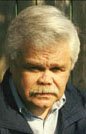
Malcolm Braly
False Starts: A Memoir of San Quentin and Other Prisons
978-1-933586-94-x  $17.95

“Each morning you know where evening will find you. There is no way to avoid your cell. When everyone marched into the block you would be left alone in the empty yard. Each Monday describes every Friday. Holidays in prison are only another mark of passing time and for many they are the most difficult days.”
—from False Starts, by Malcolm Braly

Following in the footsteps of men such as Jack Black and Jim Tully, prisoners and writers both, Malcolm Braly started out free but quickly fell into a sort of trap. He was born in Portland, Oregon in 1925. Like Black and Tully, Braly was cut adrift by his parents, in his case by a father who ran out on him and a mother that eventually simply gave him up. All three of these men grew up in the system, all three of them left it, and all three of them took up various degrees of the criminal life. Most importantly, all three of them grew up to write about their lives and experiences. They’ve given us the words that summon their ghosts.
Black was born in 1871, Tully in 1886. All three came from the same sort of broken families, all three took to the road early in life. But out of them all, only Tully avoided becoming the hard-core sort of criminal embraced by Black and later by Braly. They began their vagabond careers by taking to the road and falling in with the characters who rode the rails, both the bums and the hoboes, and had turned their backs on conventional life. Tully likes to tell us the difference between hoboes and bums is that hoboes, or ’boes, will work, and bums will not. However close a distinction this may be, it is the bums that turn to heavier lives of crime. Begging, burglary, theft, holdups, safecracking—these are ways not only to make money, but serve as training to become true vocations. And once taken hold, all too often they become the young vagabond’s only picture of life.
Tully found his love of books and literature early and this is perhaps what saved him from following the same path as Black before him and Braly afterward. He is often credited with founding the “hard-boiled” school of writing, which brought him notice by such men as H. L. Mencken, founder of Smart Set magazine, and later of that immortal pulp, Black Mask.
In his autobiography, False Starts (1976), Braly wrote, “The frontier is gone and the moon is a dead rock, but the dream of our old freedom dies hard.” This echoes Jim Tully, who in his first volume of memoir, Circus of Life (1924), said, “He sees the moon, yellow ghost of a dead planet, haunting the earth.” The difference between the two statements is that by the time Braly had written those words, he had spent nearly twenty years in various prisons.


   ...
It wasn’t until 1967 that On the Yard came out, bringing to Braly a certain amount of celebrity, including television and magazine appearances. The longshot he had long ago decided to take in prison had well and truly paid off. Felony Tank was published in 1961, Shake Him Till He Rattles in 1963, and then It’s Cold Out There in 1966. In 1976 his autobiography, False Starts, was published, sandwiched by novelizations of a pair of movie scripts (The Master in 1973 and The Protector in 1979).
Aside from a short story called “An Outline of History” (about a sort of prison experiment gone wrong) that appeared in Thomas M. Disch’s 1973 anthology Bad Moon Rising, Braly’s writing career was over. In April of 1980, Braly was involved in a traffic accident in Baltimore, Maryland. He was dead at the age of 54.

“I had served more time for a handful of inept burglaries than most men would have served for killing a police officer, and the prison, which I had hated so deeply and scored so bitterly for its every failing, was only my chosen instrument in the willful destruction of my own life.”
—from False Starts, by Malcolm Braly

Both the novel On the Yard as well as his memoir False Starts will live on as classic examples of both the “prison novel” as well as the memoir. Braly’s relatively small body of work will last because it is real. The characters are based on real people, their actions based on real actions, their consequences based on real consequences. One can’t help but wonder what Braly would have written as an entirely free man, a writer who may have finally been able to shed all of his ghosts.


For Jim Tully, writing was quite possibly his pass away from being more than the occasional jailbird. He moved to his literary career much earlier in his life than either Jack Black or Malcolm Braly. Jack Black reflected on why he hadn’t been able to go straight. In You Can’t Win, he wrote:

I was wrong. I knew I was wrong, and yet I persisted. If that is possible of any explanation it is this: From the day I left my father my lines had been cast, or I cast them myself, among crooked people. I had not spent one hour in the company of an honest person. I had lived in an atmosphere of larceny, theft, crime. I thought in terms of theft. Houses were built to be burglarized, citizens were to be robbed, police to be avoided and hated, stool pigeons to be chastised, and thieves to be cultivated and protected. That was my code; the code of my companions. That was the atmosphere I breathed. “If you live with wolves, you will learn to howl.”

It is almost as though he was saying once started in the wrong direction, he couldn’t manage to turn. Braly put it this way in False Starts:

My problem is I can’t get up in the morning. I want, but can’t believe I deserve. My problem is I’m a rational and good-hearted man who does irrational and harmful things. My problem is there is no one out there in the wilderness who can tell me what my problem is. My problem is my life is already half over and I haven’t allowed myself to begin living it. My problem is I’m terribly afraid I can’t solve my problem. I feel I can, though I tremble for myself, and I live in this hope, but I have felt so, hoped so before and I have been wrong. My problem is that I don’t know what to say to you to explain myself. I meant no harm. I mean no harm. Please let me go now before it is too late for me.

Tragedy unfolded in the lives of all these men, and no less so for many of their victims. It is instructive to be able to read the words these men have left behind, to understand the truths they have to tell us, not only about the characters in their novels but about themselves. These works live on precisely because they contain the grains of that thing that all of us, throughout most of our lives, strive to understand: what is it that makes us do what we do?

I no longer brood over the right or the wrong of what was done to me—it happened—and I wonder if it isn’t the effort to contain our lives in a morality so simple which leads some of us into such terrible trouble. I can’t answer my own question. At the end of his long life, Jung wrote that the individual was the only reality. If I sense this truth precisely, it says my life, as all lives are, is unique. For myself, I would change nothing because it has all led me to become the man I hoped to be.
—from False Starts, by Malcolm Braly


… my life passed as a dream that never quite came true
—from “The Road,” an unpublished poem by Malcolm Braly, 1946

Beyond his books, Braly eventually proved a very important thing to himself. Though his life may have been cut too tragically short for him to realize it in full, his writings show that all of us, even the worst of us, can learn to live with our ghosts.

[Excerpts from the Introduction to False Starts:
CITY OF CLOSED DOORS
DO YOUR OWN TIME: Malcolm Braly
by Rick Ollerman]


New works from Dean Wesley Smith!

A dead alien ship appears close to human space. But in millions of years, no alien race managed to leave its own galaxy.
The alien ship originated in a galaxy over two hundred thousand years of travel away. But the Seeders need to know about the alien race, in case they are a threat.
Star Mist takes on the vast scale of the Seeders Universe and expands it even more.
- See more at: http://www.deanwesleysmith.com/series-reading-order/seeders-universe/#sthash.1zpNCVQv.dpuf

A dead alien ship appears close to human space. But in millions of years, no alien race managed to leave its own galaxy.

The alien ship originated in a galaxy over two hundred thousand years of travel away. But the Seeders need to know about the alien race, in case they are a threat.

Star Mist takes on the vast scale of the Seeders Universe and expands it even more.

Learn more about the Seeders Universe!

http://www.deanwesleysmith.com/series-reading-order/ghost-of-a-chance/


Learn more about the Ghost of a Chance series!

http://www.deanwesleysmith.com/nonfiction-books/


In this WMG Writer’s Guide, Dean takes you step-by-step through Heinlein’s Rules and shows how following those rules can change your writing—and career—for the better.


Simple rules, yet deceptively hard to follow. Do you have the courage to take a hard look at your writing process and follow Heinlein’s Rules? Dean shows you how.
 
Get valuable tips on fiction writing and fiction sales writing!


http://www.deanwesleysmith.com/series-reading-order/cold-poker-gang/


The Cold Poker Gang consists of a group of retired Las Vegas Police detectives getting together once a week to play cards and work to solve cold cases.


Retired Detectives Bayard Lott and Julia Rogers stand at an unmarked grave in the desert, about ready to close a thirty-year-old cold case of a missing woman.


But what appears from that grave keeps their case very much open, and shines a light on many other cold cases.


Another twisted mystery that only the Cold Poker Gang can solve.

Find out more about the Cold Poker Gang!

Visit the official Dean Wesley Smith website for more information about these and other works!

Friday, March 25, 2016

Gravetapping DOUBLE FAULT by Jack M. Bickham

Gravetapping


Posted: 23 Mar 2016 03:25 PM PDT


Ben Boulden: 


Double Fault
 is the fifth novel featuring Brad Smith. It was published in 1993 by Tor. It is Brad’s most personal adventure, focusing on his, and America’s, experience with Vietnam. It is less espionage and more suspense than the other titles and it is the best of the Brad Smith novels.

Arnie Tubb is a head case. He has been in and out of military mental hospitals since leaving Vietnam. After his transfer to the cancer ward of Walter Reed hospital, Arnie takes advantage of its lax security and escapes. During the war Arnie was involved in the massacre of a Vietnamese village, very much like My Lai, which the Army wants to keep secret and Arnie wants to avenge. His vengeance is focused on a group of soldiers who refused to participate in the slaughter and his final target is a helicopter pilot named Kevin Green. Kevin was Brad’s mentor on his college tennis team and he is officially listed as missing in action. His name appeared on a manifest of returning prisoners at the conclusion of the war, but he never came home. 

Brad unknowingly gets involved when a member of Tubb’s group, disguised as an Army official, contacts him looking for Kevin and his copilot, Dave Wentworth. Brad insists, sincerely, Kevin Green is dead and he is unaware of Wentworth’s location. After the imposter leaves, Brad telephones Wentworth at his Kansas home and gets an odd reaction. Dave is frightened and abruptly ends the call. A few days and several dozen unanswered telephone calls later, Brad travels to Kansas where he finds Dave dead, his throat slashed, in his apartment. Brad, feeling responsible for Dave’s death, decides to start an amateur investigation and finds himself Arnie’s primary target and a useful tool of the U.S. Army.

Double Fault is a nicely developed suspense novel. The pacing creates something of a funnel. The early scenes rolling along the top, progressing deeper and deeper, narrower and faster until its climactic finale. Mr. Bickham expertly stalls the details of the Vietnam massacre, particularly Kevin Green’s role, until the final scenes, which keeps both Brad and the reader off balance. The unknown factors, Arnie’s motive, Kevin Green’s role, generate believable tension and allow Brad to be played by all sides—Tubb’s group and the government (Army, F.B.I. and to a lesser extent C.I.A.) But what separates this novel from the others is its rendering of Vietnam’s long term impact on the soldiers who fought, in a larger than life manner, and the consequence, or responsibility, of friendship. Brad’s friendship with Kevin Green and his C.I.A. pal Collie Davis at its center.

Thursday, March 24, 2016

Forgotten Books: HIS NAME WAS DEATH by Fredric Brown

HIS NAME WAS DEATH by Fredric Brown


After the big war American lives were in flux. Millions trekked to the suburbs to begin an entirely new way of life. And many of the prohibitions that had been common before the war were now relaxed.

Kurt Vonnegut once remarked that the novels of John D. MacDonald charted the Fifties and early Sixties so well that students of sociology would be able to read them decades later and get a true feel for the era.

I feel the same thing is true of several of Fredric Brown’s novels, including His Name Was Death, a novel so cunningly crafted that Anthony Boucher in the New York Times said on publication, “You’ll be compelled to read through in one sitting to one of the very few endings that have genuinely surprised me in a long time.”

In addition to the stunning story there’s also Brown’s take on mid-Fifties. His mid-Fifties. While suburban mysteries came into fashion Brown frequently wrote about life in small cities, in this case a Midwestern burg where a series of murders has baffled police and terrified the citizenry. The city resembles aspects of Brown’s Milwaukee. The characters likely resemble the people he knew in his earlier life.

Fredric William Brown was born into the working class, educated in public schools and night school as well as a year at college. Brown spent nearly twelve years working as an office worker during the Depression. From there he became a proofreader at the Milwaukee Journal. Given his penchant for drinking and his fondness for bars, Brown certainly encountered the types—if not the actual people—he uses in His Name Was Death.

The prototype for Darius Conn, small-time businessman, might well have been one of Brown’s drinking buddies. Successful but not as much as he lets on; likes his nights out with the boys because frankly his marriage has gone stale; and talks a lot about the same kind of useless dreams/fantasies heavy drinkers always talk about.

That’s the façade Conn presents anyway. In truth he murdered his wife over a year ago. The police accepted it as an accident. And his plan for becoming an important businessman is being financed by his turning his printing business into a forgery operation.

But then one afternoon the fetching Joyce Dugan, his trusted Girl Friday, talks to a man who stops in to see Conn so he can pick up some money Conn owes him. Dugan calls around and finally locates Conn who tells her, yes, use the desk fund to pay him. And then have a nice weekend. Well, turns out the desk fund doesn’t have enough so she opens the safe and takes the extra money from there. Not knowing of course that it’s counterfeit.

Brown was clearly one of those writers who enjoyed amusing himself. This story could have been told in a straight-forward fashion but it wouldn’t have near the power it does. Brown tells his tale from nine different points of view. And with a dark chuckle up his sleeve, he shows how each one of them meets his or her fate because of Joyce Dugan giving the man (an old high school boy friend, as it turns out; and a far more preferable mate than the bullying gambler she married) just a few counterfeit bills. A remarkable narrative structure that Brown used at lest twice again.

In true page-turner fashion, Brown sets up his story in an intricate set of inter-locking cliff hangers. His depictions of raw fear, terror, rage, betrayl are played off against moments of black humor and even sweet romance.

This is one of Brown’s true crowd-pleasers and should have been one of his biggest sellers. But Brown, who was often referred to as a “writer’s writer,” was never a big seller. I once talked to the man who’d been the sales manager of Bantam Books during the Fifties. His favorite writer bar none was Fred Brown. He said he did everything he could to break him out but it never happened.

So I go back to my thesis at the top. Brown did the realistic every day of the working class so well it may have limited his appeal. The time was dominated by private detectives and the romance of the mean streets. Brown’s streets were mean all right but they were filled with many of life’s losers, the kind of in-laws most of us dread having. Philip Marlowe was handsome, brave and witty. Brown’s good guys were sixty dollar a week salesmen whose ambition was to move out of their sleeping rooms into real apartments. Getting laid in a sleeping room ain’t easy.

But time has been kind to the best of Fredric Brown’s novels and stories. He has yet to develop the cult he deserves but at least his name and discussions of his work are appearing with more and more frequency on websites of film and noir.

This is one of the finest crime novels of the Fifties, a decade rich with many true masterpieces.

--Ed Gorman

Wednesday, March 23, 2016

Early reviews of the Warner Bros. release claim Zack Snyder tries to do too much in establishing cinematic universe

Early reviews of the Warner Bros. release claim Zack Snyder tries to do too much in establishing cinematic universe

“Batman v Superman: Dawn of Justice” better hope that bad reviews are not as dangerous as kryptonite.
The first in a planned series of DC Comics cinematic universe films currently holds a mere 40 percent approval rating on Rotten Tomatoes. Of the 65 reviews counted at the time of this publishing, 39 are “Rotten” and 26 are “Fresh.”
Early reviews for the film, which opens this Friday, rip director Zack Snyder for cramming in as much story as possible, while also overdoing it with the visual effects.


TheWrap‘s Alonso Duralde wrote, “That face-off between two comics legends becomes but one in a series of big things bashing into other big things, which is what Snyder and writers Chris Terrio and David S. Goyer mistake for storytelling.”

Here are five more disappointing reviews.


Michael Phillips of the Chicago Tribune:
“‘You don’t owe this world a thing,’ [Diane] Lane tells Superman at one point. Maybe so. But at this point in the twinned mythologies of two extremely hardy DC heroes, humankind deserves a better blockbuster.”

Adam Graham of Detroit News:
“The movie crams together a Batman story, a Superman story and lays the groundwork for several side tales, all in the space of a cluttered two-and-a-half hour collision that aims to bludgeon viewers into submission.”


Mike Ryan of Uproxx:
“Honestly, I can’t remember the last time I was legitimately looking this forward to a movie that I found this dull. About halfway through this over two-and-a-half hour movie, I had to stop my brain from thinking about other things, like what groceries I needed to pick up at some point.”


Fionnuala Halligan of Screen Daily:
“Gorging on bombast and self-importance, swamped by its own mythology, ‘Batman v Superman’ is loud, sprawling, and distracted. The action jumps around almost as fast as a man can fly, but nowhere near as smoothly.”

Lou Lumenick of the New York Post:
“While ‘300’ maestro Snyder puts together some very striking scenes — which may be enough for many fanboys — they never really cohere into a whole. He literally throws in the kitchen sink in a film that frantically introduces characters and concepts while never clearly establishing the rules of the DC Comics universe.”


But chances are, bad reviews will do nothing to deter audiences from flocking to the tentpole feature. The film will skyrocket to north of $150 million in its much-anticipated opening in the U.S. and Canada this weekend, industry analysts projected on Tuesday.

PRE ORDER SHADOWS GAMES

"Shadow Games is a page-turning, gut-wrenching barnburner of a book."—Robert Bloch


Ed here: My first cousin Bobby Driscoll was a major child movie star of the late 1940s and early 1950s. He died at thirty of drugs. While I don't use any of Bobby's life in this novel I do look at child stardom here. This is a slightly revised edition of Shadow Games (1992) which I wrote at the time when I was writing scripts for two different directors and learning a little about the ways of Hwood. 
BTW Bobby is the star of the great film noir "The Window."


Cover art © by JT Lindroos

"Shadow Games unflinchingly examines the dark side of humanity and reaches a finale that is both moving and terrifying."
—Ramsey Campbell

"What keeps you reading is not the traditional question of whodunit but the slick and artful ease with which Gorman portrays the alienated, uncaring world of his creations."
--The London Sunday Times

Cobey Daniels had it all. He was rich, he was young and he was the hottest star in the country. Then there was all that messy business with the teenage girl . . . and it all went to hell for Cobey.

But that was a few years ago. Now Cobey's pulled his life together again they're letting him out of the mental hospital and he's ready for his big comeback, but the past is still out there, waiting for him. Waiting to show Cobey a hell much more terrible than he could ever have imagined.


The American 90s come brutally alive: "Gorman knows how to shunt electricity into the raw nerve endings buried far below the reader's already clammy skin."
—Locus
 

© Ed Gorman


PRAISE FOR SHADOW GAMES


"Ed Gorman's is a strong and unique voice."
—Richard Matheson


"Gorman is the poet of dark suspense."
—The Bloomsbury Review


"John D. MacDonald meets Jim Thompson in a maelstrom of malicious evil and perverse maipulation that doesn't let up until the final few pages...thoughtful, tightly knit and elegantly structured."
—Million (UK)


"This is a bleak moral tale but written with such hot feeling and such cool style that it entertains even as it keens."
—Morning Star (UK)


Title Details:


RRP Price: £11.95
Publisher: Short, Scary Tales Publications
Release Date: May 1, 2016

ISBN: 978-1-909640-52-8 (6" x 9" Trade Paperback)
First Edition
Pages: 354

This brand new edition is available for pre-order from the Short, Scary Tales website. The first 100 copies sold direct from the site will be signed by me and the cover artist, JT Lindroos!