Tuesday, February 19, 2013

ODDS AGAINST TOMORROW


Odds Against Tomorrow

Three men - an embittered ex-con (Robert Ryan), a former cop (Ed Begley) who was fired from the force for illegal activities, and a chronic gambler (Harry Belafonte) - try to change their lousy lot in life by forming a partnership in crime. But a plan to heist a payroll from a small-town bank in upstate New York is doomed from the start because of the racial tensions within the group.

Odds Against Tomorrow (1959) is often acknowledged as one of the last films to appear in the film noir cycle which reached its height in the post-World War II era. However, this crime thriller is much more complex than the standard genre entry. While it's certainly gritty and downbeat in the best noir tradition, it also works as an allegory about greed as well as a cautionary tale about man's propensity for self-destruction. Financed by Harry Belafonte's own company, Harbel Productions, Odds Against Tomorrow allowed Belafonte to exercise complete creative control over the film's conception and to handpick an expert cast and crew to bring his project to the screen. In an article in the New York Times, Belafonte said, "The character I play is not thrown in for a racial thesis, but because the bank robbers - played by Ed Begley and Robert Ryan - need a Negro who can enter the bank as a colored delivery man. While Robert Ryan hates the Negro, it is not merely a racial antagonism. He hates everybody, and the Negro is no stereotype of sweetness and light either. No brotherly love saves everyone here. Their hatred destroys them both."

Robert Ryan gives one of his finest performances here as the pathetic, venom-spewing racist Earle Slater. Off screen, Ryan was a compassionate activist who was committed to such liberal causes as SANE and the ACLU but on-screen he was often cast as angry, misanthropic characters who occasionally expressed themselves through violence. Crossfire (1947), Beware, My Lovely, and On Dangerous Ground (both 1952) are probably the best examples of this typecasting. Shelley Winters and Gloria Grahame also have minor supporting roles in Odds Against Tomorrow but while their scenes are brief, they both make indelible impressions. You can also spot Cicely Tyson, Wayne Rogers, and Zohra Zampert in tiny roles.

Odds Against Tomorrow was filmed on location in a small town in the Hudson River Valley, New York City, and at the Gold Medal Studios in the Bronx. Director Robert Wise completed the film between his Oscar-winning productions of I Want to Live! (1958) and West Side Story (1961). The screenplay was written by Nelson Giddens, blacklisted writer Abraham Polonsky (who wasn't allowed to accept an onscreen credit until 1968), and black novelist John O. Killens, who later penned the revisionist antebellum drama Slaves (1969). The latter film also provided work for former blacklist victims, director Herbert J. Biberman and his wife, actress Gale Sondergaard. The moody, evocative jazz score is by John Lewis, the pianist for the Modern Jazz Quartet.

Director: Robert Wise
Producer: Robert Wise, Phil Stein (associate)
Screenplay: Abraham Polonsky, Nelson Gidding, John O. Killens, William McGivern (novel)
Cinematography: Joseph C. Brun
Music: John Lewis
Art Direction: Leo Kertz
Principle Cast: Harry Belafonte (Johnny Ingram), Robert Ryan (Earl Slater), Shelley Winters (Lorry), Ed Begley (Dave Burke), Gloria Grahame (Helen), Will Kuluva (Bacco), Kim Hamilton (Ruth Ingram)
BW-97m.

Monday, February 18, 2013

"Lee Marvin: Point Blank" - Dwayne Epstein's New Biography of The Merchant of Menace


 18, 2013


"Lee Marvin: Point Blank" - Dwayne Epstein's New Biography of The Merchant of Menace

fromm Classic Film n TV Cafe

In Lee Marvin: Point Blank, author Dwayne Epstein puts together a convincing portrait of the enigmatic actor that New York Times film critic Vincent Canby once called "The Master of Menace." Epstein augments Marvin's insightful letters and colorful quotes with anecdotes from family, friends, and especially former wife Betty Ebeling Marvin. The result is a lively biography of a dedicated, hard-drinking actor whose detached, violent "heroes" came alive vividly in films such as The Dirty Dozen, The Killers (1964), and Point Blank.

Born in New York in 1924, Lee Marvin--like his brother Robert--was named after Robert E. Lee. Their mother, Courtenay, was an ancestor of the famous Confederate general. Author Epstein speculates that Lee Marvin suffered from Attention Deficit Disorder as a youth as well as dyslexia. The young Marvin displayed a rebellious nature at home--he and his mother never got along--and in school. Later in life, he boasted of being expelled from fifteen schools.

He eventually played authority figures
in war films like The Dirty Dozen.
For a young man who often defied authority, it's ironic that Marvin not only enlisted in the armed services in 1942, but chose the Marines. However, as Epstein points out, "it was a time of extreme patriotism" following Pearl Harbor; Marvin's brother and father, a World War I veteran,  also enlisted. Undoubtedly, his years as a Marine shaped the rest of Marvin's life. Excerpts from his early letters show a young man at conflict. He proudly discusses his test scores and marksmanship, but also writes "sometimes I wonder what I joined up for." Marvin participated in many bloody battles following his deployment to the Pacific in 1944. When a wound ended his military career in 1945, Marvin "could not shake off the intense feeling he was experiencing: anger, frustration and worst of all, survivor guilt as the war stubbornly wore on."

Following the end of the war, Marvin contemplated working as a forest ranger and car salesman before becoming a plumber's apprentice. However, Marvin's career took a different path when he became involved in a Red Cross benefit called "Ten Nights in a Barroom" in Woodstock, New York, in 1946. That eventually led to a summer stock gig with the Maverick Theater in 1947. Epstein notes that acting provided an "outlet to express his inner demons that had been frustrating him since the war." Marvin used his G.I. bill money to attend the American Theater Wing, which led to small parts. However, he later said that Broadway "was a damn bore...the New York stage is a hustle." When colleague James Doohan (Star Trek's Scotty) recommended Marvin move to the West Coast, Marvin took the advice.

for the rest go here:
http://www.classicfilmtvcafe.com/2013/02/lee-marvin-point-blank-dwayne-epsteins.html

Sunday, February 17, 2013

bill gaines explains the origins of alfred e. neuman

http://www.newsfromme.com/2013/02/17/todays-video-link-1335/

"MR. LUCKY: THE COMPLETE SERIES" ON DVD FROM TIMELESS MEDIA GROUP


By Harvey Chartrand
MR. LUCKY: THE COMPLETE SERIES is now available for the first time ever as a 4-DVD box set from Timeless Media Group… all 34 episodes, with a running time of about 840 minutes. MR. LUCKY– created by writer/director Blake Edwards (PETER GUNN) – ran for only one season (from 1959 to 1960), even though it was a hit with viewers.
This adventure/crime drama is a sort of PETER GUNN Lite, featuring a lush, organ-powered theme song by Henry Mancini (a bonus CD of MR. LUCKY’s soundtrack is included in the set), an assortment of shady characters aboard a floating casino, and competent acting by series regulars John Vivyan (as suave professional gambler Mr. Lucky), Ross Martin (as his sidekick and business partner Andamo), Pippa Scott (as Mr. Lucky’s girlfriend Maggie Shank-Rutherford) and Tom Brown (as Lieutenant Rovacs, Mr. Lucky’s cop buddy).
Edwards directed and co-wrote the first episode of MR. LUCKY, and the credits of the first 18 episodes include “Entire production supervised by Blake Edwards.” Jack Arnold (director of THE CREATURE FROM THE BLACK LAGOON, THE INCREDIBLE SHRINKING MAN and IT CAME FROM OUTER SPACE) produced the show and directed 15 episodes. The end credits include “Series based on an original story: Bundles for Freedom by Milton Holmes,” which was published in Cosmopolitan in June 1942. This story was also the basis of the 1943 motion picture MR. LUCKY, starring Cary Grant as a gambling-ship owner out to fleece a beautiful society woman (Laraine Day), but who falls in love with her instead. The film and television series have little in common, except for the title and the suave nature of the leading man.
According to a March 1942 news item in The Hollywood Reporter, RKO bought Holmes’ story at the request of Cary Grant, who wanted to star in it. In a 1969 Hollywood Reporter news item, Holmes claimed that his story was inspired by Edward G. Nealis, the owner of the Clover Club on the Sunset Strip, a venue for drinking and illegal gambling in the early 1930s. In 1936, Nealis rigged a one-night gambling benefit at the Beverly Hills Hotel to raise $40,000 for a church.

Image quality on the 4-pack DVD varies from fair to very good. Audio quality is excellent throughout. 

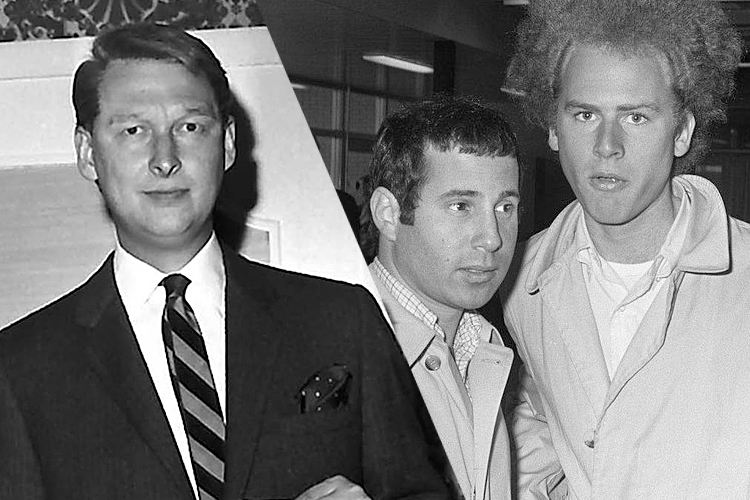
Forty years later, Garfunkel is still bitter after all these years

FROM SALON

Forty years later, Garfunkel is still bitter after all these years

He blames director Mike Nichols for the breakup of Simon & Garfunkel

  •      
  •      
  •      
  •      
  •      
  •      
  •    
  •      
  • more
  •      
  •      
  •            

Art Garfunkel, now 71 years old and still reeling decades later from the breakup of the musical act that made him a household name, is now saying that one of the reasons Simon & Garfunkel broke up was because of Mike Nichols’ 1970 film adaptation of Joseph Heller’s “Catch-22.” In the late 1960s, he says, the two were cast in the film, and while Garfunkel managed to hold on to his fourth-billing role, Simon ended up on the cutting room floor, reports the Guardian.
Garfunkel was speaking at the Paley Center for Media in New York last Wednesday, as part of a screening of Charles Grodin’s 1969 Simon & Garfunkel documentary “Songs of America.” According to the Hollywood Reporter, both the singer and Grodin implicated Nichols. Recall that Nichols featured Simon & Garfunkel’s “Mrs. Robinson” and “Scarborough Fair” in “The Graduate,” his now-iconic 1967 film that won him an Oscar for best director.
“That was the beginning of their split-up,” said Grodin. “You don’t take Simon & Garfunkel and ask them to be in a movie and then drop one of their roles on them.”
Garfunkel agreed, saying, “Chuck [Grodin]‘s gone right to the heart of the difficulty in Simon & Garfunkel when he says, ‘Artie and Paul were cast for ‘Catch-22,’ and Paul’s part was dropped.’ I had Paul sort of waiting: ‘All right, I can take this for three months. I’ll write the songs, but what’s the fourth month? And why is Artie in Rome a fifth month?’” He added, “What’s Mike doing to Simon & Garfunkel?’”
“Catch-22″ was, as it happens, Garfunkel’s feature film debut — the following year he’d appear in a more prominent role, in another Mike Nichols film, “Carnal Knowledge,” starring Jack Nicholson, Candice Bergen, and Ann-Margrek,,,,,,,,,,,,,,,,,,,,,,,,,,,,,,,,,,,

for the rest go here:
http://www.salon.com/2013/02/12/forty_years_later_garfunkel_explains_troubled_waters_with_simon/