Saturday, January 23, 2016

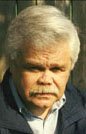
Director JOHN FLYNN: OUT FOR ACTION

JOHN FLYNN: OUT FOR ACTION (Shock Cinema nº 29, fall 2005, pp. 26-29+46)
by Harvey F. Chartrand

Veteran director John Flynn is known for his taut, economical and well-scripted action pictures. He is certainly one of the most underrated directors in crime cinema today.

A protégé of Hollywood legends Robert Wise and J. Lee Thompson, Flynn learned his craft well by observing these masters at work, before tackling his first solo directing assignment in 1967 - The Sergeant, in which Rod Steiger gave an anguished performance as a macho Army sergeant who is horrified by his own feelings of attraction to another man (John Phillip Law). Sadly, this dark and courageous drama has yet to be released on VHS, let alone DVD!

Flynn’s second film, the suspense story The Jerusalem File (1972), is equally obscure. Perhaps for political reasons, this exotic thriller about an idealistic American archaeology student (Bruce Davison) caught in the Arab-Israeli crossfire, is rarely seen on TV. Nor has The Jerusalem File been issued on VHS or DVD, despite the presence in supporting roles of Nicol Williamson, Donald Pleasence and Ian Hendry. (Zabriskie Point’s Daria Halprin also appears here in her final film role.) Set in the Holy City after the Six Day War, the film is one of the few Hollywood productions to have been shot entirely on location in and around Jerusalem.

Flynn went on to direct 15 more pictures, including the hardboiled The Outfit (1973), praised as one of the best films based on a Richard Stark “Parker novel” by the author himself, and the grim revenge saga Rolling Thunder (1977), which so impressed the young director Quentin Tarantino that he named his short-lived film release company (Rolling Thunder Pictures) after it. Rolling Thunder also made Tarantino’s list of his top 25 favorite movies.

Since 1990, Flynn has kept busy making excellent low-budgeters for U.S. cable networks or the direct-to-video market. His last film to date is 2001’s Protection, a witness relocation drama with a twist, starring Stephen Baldwin, Peter Gallagher and a cast of Canadian supporting players.

According to film writer Matthew Wilder, John Flynn could give today’s neo-noir directors seminars in the beauties of haiku-like plainspokenness. Shock Cinema agrees. We talked to John Flynn in May.

Shock Cinema: How did you get started in the film business?

John Flynn: I was Robert Wise’s assistant. He hired me to do research on The Robert Capa Story. (This planned biopic of the famous photographer was never filmed. - Ed.) Later, Bob let me watch him work on the set. I was an apprentice on Odds Against Tomorrow, script supervisor on West Side Story, and second assistant director on Kid Galahad and Two for the Seesaw. Later, I worked as an assistant director on The Great Escape. I was also a second unit director on J. Lee Thompson’s What a Way to Go!

In 1966, Bob Wise set up a company to produce low-budget films that others would direct. The first property that Bob found was Dennis Murphy’s critically acclaimed novel The Sergeant. Bob asked me to direct. So I owe my directing career to Bob Wise - and to J. Lee Thompson, who mentored me on What a Way to Go!, Kings of the Sun and John Goldfarb, Please Come Home!

SC: Discuss your involvement in Kid Galahad (1962), a “boxing musical” starring Elvis Presley, Charles Bronson, Gig Young and Lola Albright.

JF: This was my first credit as an assistant director. One of my jobs was to make sure Elvis was happy, but he was easy to work with then, a really sweet guy. Charles Bronson always tried to act like a tough guy. You had to stand up to him and then he’d back off. Gig Young was a dream, one of the funniest human beings I ever met. He was always coming out with these great one-liners. Lola Albright was a very sweet, beautiful, professional woman, on the cusp of middle age, nearing the end of her career, as it turned out.

SC: You were an assistant director on The Great Escape (1963) - the best prisoner-of-war movie ever made. What did you learn from your seven-month association with action director John Sturges?

JF: I learned simplicity. John Sturges was one of the simplest shooters you’d ever want to see. He knew exactly where to place the cameras. Sturges was a very efficient, no-nonsense shooter and he was working without a script half the time. Writers would be flown in to Munich for rewrites every other week. Since we had no script, assistant directors had a hell of a time, because we had to call in all the actors, not knowing if we were going to use them or not.

It was a wonderful time in a Hollywood that no longer exists. The Mirisch Corporation sent over the same crew I worked with on Kid Galahad and Two for the Seesaw - everyone from grips to art directors to stunt guys. We were like a family. I can’t tell you how many times I hung out with Steve McQueen and James Coburn, all those guys… James Garner had a poker game every week at his house. I also got to know the English contingent: Donald Pleasence, Richard Attenborough, James Donald, and the Germans too - like Hannes Messemer, who gave an incredibly poignant performance as the German commandant. We worked together six days a week for seven months in Bavaria. Off the set, we dined together and we partied together.

for the rest go here: http://www.focorevistadecinema.com.br/FOCO2/chartrand-johneng.htm

Friday, January 22, 2016

Harry Whittington: The King of Pulp Originals by Jason Starr


Harry Whittington: The King of Pulp Originals
by Jason Starr


from Pulp Originals
Harry Whittington was one of the most prolific writers in the history of fiction. From 1946 to 1984 he produced over 150 novels. At his peak he was, for twenty years (in the 50s and 60s), writing on average about seven novels a year. In today's era, where novelists, aided by computers, struggle to compete one book a year, Whittington's achievement was truly superhuman, never to be surpassed, the literary equivalent of DiMaggio's 52-game hitting streak.
One of the true work-horse writers of the pulp era, Whittington wrote in multiple genres and published additional books under such pseudonyms as Whit Harrison, Ashley Carter, Blaine Stevens, Tabor Evans and Robert Hart Davis. He also wrote screenplays and had a long relationship with Hollywood. While Whittington must have written very quickly to maintain his output, this wasn't a case of quantity over quality. While some of his books were more successful than others and some of his titles began to sound alike--they often contained the words "sin," "murder," and "hell"--he maintained an astounding integrity to his work throughout his career, spinning imaginative plots with crisp dialogue and clearly drawn, unforgettable characters. Maybe his writing wasn't as stylized as Thompson's, Goodis's or Cain's, but his plotting and dialogue was as great, or better.
Born in 1915 in Ocala, Florida, Whittington worked in government jobs before he started writing. He sold his first novel, Vengeance Valley, a western, in 1945. In the fifties, he turned his attention primarily to crime fiction, producing books for Fawcett. Crowned "the king of the paperback originals" by Bill Pronzini, he was the major pioneer of the pulp novel of the fifties, forging a path for writers such as Jim Thompson, Gil Brewer, Lionel White, Vin Packer, James McKimmey, John D. MacDonald and Lawrence Block.
Sadly, only seven of Whittington's novels are in print today, and several of these are as parts of expensive anthologies. Compared to other pulp writers from his era, Whittington's doing well. The overwhelming majority of novels written during "the golden age of the crime novel" are out of print and all but forgotten. While everyone has heard of Cain, Thompson, Goodis, and Willeford, many devoted fans of pulp fiction know nothing about the other great crime writers of the fifties and sixties. Of course not all of these out-of-print books are forgotten classics--some were written quickly for fast paychecks and read that way--but there are hundreds of thrilling crime novels by great authors that have been undeservedly ignored.

for the rest go here: http://pulporiginals.com/Contents-pulp/whittington-intro.html

Thursday, January 21, 2016

-Pro-File Richard Chizmar


Ed here: Richard Chizmar is the publisher of the legendary horror-dark suspense magazine "Cemetery Dance" as well the entire line of popular and award-winning novels and collection bearing the Cemetery Dance logo. He is also one of the finest writers of his generation.
 1. Tell us about (your new book). 

It's called A LONG DECEMBER, and it's coming soon from Subterranean Press. 520 pages, 35 stories, 8,000 words of Story Notes; my first collection in nearly 20 years. The earliest published story in the book is from 1990. The most recent was written a few months ago. Hopefully, readers will enjoy it.


2. Can you give a sense of what you're working on now?

A bunch of new short stories for anthologies and a couple of novellas for Paul Fry and Pete Crowther. Then, on to a suspense novel I have been wanting to write.

3. What is the greatest pleasure of a writing career?

I honestly feel as though I am just beginning the writing part of my career. I've spent the majority of the past 27 years focused on Cemetery Dance Publications as an editor and publisher. In fact, I took about a decade off from writing prose and focused on the publishing side of the business and writing screenplays. Not one published short story in all that time. But I missed it, a lot, and I'm thrilled to be back in the game. I plan to devote the majority of my time in the coming years to writing stories and novels. I'm not getting any younger. 


4. What is the greatest DISpleasure?


Probably the same displeasures most writers have…the lack of markets out there (both for stories and novel length work), the sorry state of NY publishing, the disappearing bookstore scene…all that fun stuff.


5. If you have one piece of advice for the publishing world, what is it?


My advice for writers and publishers is pretty similar: expect tough times; learn to embrace hardship and failure as part of the process; don't be afraid to fail; most of all -- and, yes, I know it sounds like a cliche -- don't give up; it's a long road to success in the publishing industry.


Wednesday, January 20, 2016

Forgotten Books: A Hidden Place by Robert Charles Wilson


Forgotten Books: A Hidden Place by Robert Charles Wilson


Forgotten Books: A Hidden Place by Robert Charles Wilson

In the course of a year I usually read twenty or twenty five novels that impress me. Some for characterization, some for story, some for milieu. But I rarely read a novel that astonishes me.

When Robert Charles Wilson's first novel A Hidden Place appeared as a Bantam paperback original in 1986, I wasn't sure what to make of it. I received it along with three or four other science fiction Bantams. I think I put it on the bottom of the stack. The other novels were by writers I knew. Whatever reluctance I felt vanished when I read the first page.

The story here concerns a young man named Travis Fisher who is sent to live with his aunt because his mother, a troubled woman, has died. What he finds in his aunt's house is an intolerable uncle who demands that Travis lives by steely rules he himself frequently breaks. He also finds Anna, the strange beautiful woman who boards upstairs. Travis is so stunned by her he can barely form sentences. He also takes up Nancy Wilcox, a smart, witty girl who is bursting to escape the brutal social order of this small town.

Parallel to this story line is the one of the odd hobo Bone. Because the novel is set in the worst years of the Depression, Bone becomes our tour guide, showing us exactly how people of various kinds behaved during this time. Bone is a transfixing figure, as mysterious as Anna and perhaps linked to her in some way.

I don't want to start listing plot twists here. All I'll say is that each is cleverly set up and magnificently sprung on the reader. What I'd rather talk about is the writing. In the course of reading A Hidden Place, I heard many voices--among them Sherwood Anderson, William Faulkner and the Theodore Dreiser who wrote An American Tragedy. The irony is that Wilson is a Canadian. He may or may not have read any of these writers. But except for John Steinbeck, I've never read place description to equal the power and poetry of Wilson's shantytowns or railroad goons; nor have I encountered a better picture of the small towns of that era.

But most of all the book is about people. Wilson's characters will take up permanent residence in your memory. So many of them ache for things they can't have, for things they don't even understand. Wilson writes with a razor.

Twenty years later we find that Robert Charles Wilson is a highly regarded science fiction writer, winner of many awards and several lengthy studies. I believe I've read every novel he's published. But much as I love them I always go back to this one. In its sorrows and its griefs and the beauties of its writing, we find a rare kind of truth, a statement about what it means to be human.

Tuesday, January 19, 2016

Heart-Felt Pt. 3 January 19th, 2016 by Max Allan Collins

Heart-Felt Pt. 3

January 19th, 2016 by Max Allan Collins
I know, I know – those of you kind enough to be following the saga of my heart surgery must be saying, “Enough already! Get it over with!”
That’s roughly my own sentiment, as Barb and I have been dealing with this since late May 2015, and have been told seemingly countless times that the surgery was two weeks away, or even days away. I would estimate at least half a dozen postponements.
On the other hand, the doctors have always had good reasons for doing so, and I certainly want to undergo this procedure at the optimal moment. This postponement, as I mentioned on Facebook, has to do with the need for me to recuperate more fully from the initial carotid surgery. I am doing much better and feel confident that I’ll be ready for the scheduled Jan. 26 (a week from the day I’m posting this) surgery.
Recovery time is hard to judge, but I won’t be able to attend the Iowa Democratic caucus, although Barb probably will. We are, not that it matters, Hillary supporters. Bernie is a one-note candidate (mean evil nasty billionaires) and a self-avowed socialist (and the Republicans are salivating to have that to go after in a Democratic nominee). Either way, I am almost convinced we will have Donald Trump as a President (it’s a lock if Bernie gets the nomination). If Bernie thinks Americans hate billionaires, he’s just not paying attention – many of them love money-bags Trump, and just look at the recent Powerball mania. We don’t hate billionaires. We want to be one!
My apologies for the mini-political rant. But whichever, whatever political views you hold, the more rabid among you will understand my frustration at being benched on the night of the big game.
I continue to be grateful to my friends and readers (again, lots of crossover there) for the show of support and even love. Barb had discouraged me from posting here and at Facebook about my medical follies, having been through all of these postponements and fearing more. She was, not surprisingly, right about the postponements. But I don’t mind the support and love one little bit. It’s encouraging. Those of you who want to read more books by me are in line with my desire to write them for you.
If all goes as planned, a week from now – when the next update is posted – I will be in the operating room, getting fixed (not in the veterinarian way, one would hope). I may write another update prior to that, but as things stand, my son Nate has four updates I’ve provided, each looking at a different upcoming book. I may add to some of these, depending on how my recovery goes. The first week will be in the hospital and I’ll definitely be out of pocket, and I’m told the second (first at home) will be rough, and I’ll likely be even more goofed up than usual, on pain meds. At some point I may be able to report in and add to these written-in-advance updates.
And in the meantime – particularly the day and day after the surgery – Nate will post updates here and on Facebook.
Good thoughts and vibes, prayers and positivity, all appreciated. Speaking for the entire gang – Nate Heller, Quarry, Brandi and Vivian Borne, Mike Hammer, Dick Tracy, Mommy and Jessica Ann, Ms. Tree, Nolan, Mallory, Eliot Ness, Jack and Maggie Starr, Joe Reeder and Patti Rogers, and all the rest – we love the lot of you.
M.A.C.

Monday, January 18, 2016

W.R. Burnett and The Crime Writers of Hollywood by BRETT YATES


Update: Boy did I screw up. A man named Brett Yates wrote the following piece IN RESPONSE TO to a piece written by Pauline Kael.

W.R. Burnett and The Crime Writers of Hollywood
by BRETT YATES
(excellent long piece; this is an excerpt)
The writers behind these movies wrote dime novels as early as the late 1920s; others debuted at the beginning of the '40s. Some worked in Hollywood in the '30s, but John Huston opened the door for them as screenwriters in 1941 with The Maltese Falcon, which was gritty, mean, and successful; it exposed a market for gritty, mean pictures. Raymond Chandler, James M. Cain, Horace McCoy, Jonathan Latimer, Frank Gruber, A.I. Bezzerides, Daniel Mainwaring, and, eventually, Jim Thompson supplied this market with what it wanted. In the '40s, they wrote screenplays for movies such as The Glass Key, The Blue Dahlia, Out of the Past, and The Big Clock; some of the writers worked successfully well into the '50s and gave us Kiss Me Deadly and The Killing. And when these guys weren't writing movies, their novels were being adapted into movies by other writers; the results were classics like Murder, My Sweet, The Big Sleep, and The Postman Always Rings Twice. The greatest illustration of this strain of movies was Double Indemnity (1944), which came from a script that Raymond Chandler wrote with director Billy Wilder, based on a novel by James M. Cain. Set in a desolate Los Angeles, it communicates a fatalistic sense of doom more powerfully than any other movie in its genre or any other.
Even more important to the development of the crime picture than Cain or Chandler, however, was writer named W.R. Burnett, now mostly forgotten. His first novel, Little Caesar, appeared in 1929; Hollywood bought it, and it made Edward G. Robinson, now best known for his role in Double Indemnity, a star in 1931. Burnett parlayed the movie's success into a gig as a screenwriter, and in 1932, he contributed to Ben Hecht's script for Scarface, which would, of course, inspire the 1983 movie of the same name. In the early '30s, Hollywood was still a long way from film noir. The gangsters of Little Caesarand Scarface, though destined for death, were much more heroic than the protagonists of the noir era. The gangsters murdered with skill; they built criminal empires and became wealthy. In the noir era, the typical protagonist was, at best, a small-time crook; usually, he was an ordinary guy lured into a half-baked heist or scam, not a gangster. And the detectives of the genre didn't bust Al Capone; they caught grubby degenerates from the seedy side of the city. Still, the gangster movies of the '30s paved the way for the likes of the The Postman Always Rings Twice by exposing viewers to violence and nastiness that the silent movies hadn't shown.
In 1941, Burnett bridged the gap between the two eras with High Sierra. It premiered eight and a half months before The Maltese Falcon, and like The Maltese Falcon, it starred Humphrey Bogart, a supporting actor for stars like James Cagney (Angels with Dirty Faces, The Roaring Twenties) in the gangster era who became a star in the noir era. It was directed by Raoul Walsh, and it was based on a novel by Burnett, which Burnett adapted for the screen with John Huston, The Maltese Falcon's screenwriter and director. Bosley Crowther reviewed it in the New York Times: "We wouldn't know for certain whether the twilight of the American gangster is here. But Warner Brothers, who should know if anybody does, have apparently taken it for granted and, in a solemn, Wagnerian mood, are giving that titanic figure a send-off befitting a first-string god in the film called High Sierra, which arrived yesterday at the Strand." Bogart's character, Roy Earle, "the last of the great gunmen," recently sprung from jail, is past his prime and lonely; his friends are "all either dead or doing time in Alcatraz." He falls in love with a lame girl and pays for an operation to fix her clubfoot; afterward, the girl promptly ditches him. He collaborates in a heist, which goes wrong; he hides from the police in the mountains until he's killed. He may go out in a blaze of glory, but we see here the transition from the heroic, ambitious gangster of the '30s to the pathetic, melancholy small-timer of the '40s.
for the rest go here:http://theworstever.typepad.com/blog/2007/11/wr-burnett.html

Sunday, January 17, 2016

Donald Trump is a Mediocre Businessman —By Kevin Drum

Ed here: I rarely get political on this blog but since bully boy and fascist Trump has been in Ioway for the past month I can't resist. It's clear he's not very bright and there's mounting evidence that his vaunted ten billion is, as Forbes says, highly unlikely.  He got rich because of his daddy and he's undeniably made money but his business associates have had to bail him out --to save their own money. He's cunning as hell, yes, but he knows nothing about history, economics or world affairs. He cannot answer a single question about foreign policy. Not one. He is a pestilence and I hope he's brought down soon. Certainly there's enough in his seedy background to put him league with Bill Clinton. The other day he basically said that there are jobs that are only worth three or four dollars an hour. I grew up in the working class so I can't believe how many of my old friends support him. His rallies have started to look Hitlarian. Kicking black guys in the head when they're down...that's Trump's America. 

Donald Trump is a Mediocre Businessman

| Sun Jan. 17, 2016 1:16 AM EST
I know I've beaten this dead horse before, but I continue to be a little surprised that no one has seriously attacked Donald Trump on his business acumen. After all, it's his big calling card: he knows how to negotiate great deals and he's made a ton of money from them.
But this doesn't seem to be true.1 In fact, he seems to be a pretty mediocre businessman. Today, for example, the New York Times tells the story of Trump's 1988 purchase of the Plaza Hotel. As even Trump admits, he was so enamored of owning it that he overpaid significantly and managed it poorly, something which contributed to his eventual financial downfall:
Once he owned the hotel, Mr. Trump put his wife, Ivana, in charge of renovating it....By 1990, the Plaza needed an operating profit of $40 million a year to break even, according to financial records that Mr. Trump disclosed at the time. The hotel had fallen well short of that goal, and with renovating expenses, in one year it burned through $74 million more than it brought in.
But Mr. Trump didn’t spend a lot of time sweating over the Plaza’s finances. He was too busy with new challenges. A few months after the Plaza deal closed, he purchased the Eastern Air Shuttle for $365 million, and in 1990, he opened the Trump Taj Mahal casino in Atlantic City, which cost $1 billion to build. Some of the loans he took out to pay for deals were personally guaranteed.
....Mr. Trump’s brief ownership of the Plaza...marked the beginning of his transition from an owner of major assets to a manager of major assets. An increasing share of his wealth would come in the future from licensing his name, not just to builders but sellers of suits, cologne, chandeliers, mattresses and more. In professional parlance, he went from “asset heavy” to “asset light.”
The Plaza was a huge money loser. The shuttle was a disaster. Trump never understood the casino business, and his Atlantic City properties started hemorrhaging cash almost as soon as they were completed. All of this pushed him to the edge of personal bankruptcy, which he avoided solely because his banks decided Trump's holdings could be liquidated at a higher price if they allowed him to stay solvent. In the aftermath of this bloodbath, he raised money by taking the remains of his casino and resort properties public. And since this was a public company, we know exactly how well it did: it lost money every single year and went into bankruptcy proceedings in 2004 (and again in 2009 for good measure). Since then, he's mostly bought and managed golf resorts, which has been a good but not great business for him.
Bottom line: When it comes to building and managing tangible assets, there's really not much evidence that Trump has much talent. He inherited a huge amount of money and nearly lost it all during his first couple of decades in the development business. However, before the money ran out he was able to use it to create the "Trump show" (his words), and in the couple of decades since then his income has come not from building things, but primarily from licensing and entertainment.
Trump seems to have two genuine talents. The first is that he's apparently a masterful reader of people. The second is that he's a hypnotic blowhard, which accounts for his success at both branding and TV, as well as his success at scams like Trump University.
Needless to say, we've seen both of these talents at work on the campaign trail. The first allows him to zero in unerringly on his opponents' most sensitive spots—weaknesses that others frequently don't even see, let alone exploit. The second allows him to mesmerize the media and the public while pulling off the greatest scam of his life.
But as a businessman, he's so-so. He lets his decisions be guided by his gut, and his gut isn't really very good. That's where Trump Plaza, Trump Air, Trump football, Trump City, the Trump Taj Mahal, Trump Steaks, and Trump University come from. That's not much of a recommendation for the presidency.
1Needless to say, he can prove his business mettle anytime he wants to. He just has to open up his books. Show us revenues and GAAP earnings over the past 20 years. Show us return on equity and return on assets. Break it all down by business line so we can see how much is from TV and branding vs. tangible projects. There's nothing hard about it.

Saturday, January 16, 2016

WALTER HILL DIRECTOR


Ed here:  At his best Walter Hill is one of the true pure dark poets of American film.
This interview captures the essence of a major career that has had its troubles.

SATURDAY, SEPTEMBER 19, 2009


Walter Hill Interview  FROM THE HOLLYWOOD INTERVIEW

Think Walter Hill and you likely think of his enormous hit 48 Hours or Brewster's Millions or Streets of Fire. Crowd pleasers for sure. But for me his more interesting work can be found in the more personal films he's done in the action genres. Southern Comfort, The Driver and Hard Times re a few of them. He's not always successful. I remember how disappointed I was sitting through Johnny Handsome. Most writers have had projects like that, where you just can't make the thing work the way you want it to. In the case of Johnny Handsome Hill resorted to heavy violence every time he seemed to run out of good ideas. Once in awhile the violence even got to be funny. Ellen Barkin and Lance Henriksen were SO tough they were parodies of tough. On the other hand Hill managed to take the Charles Bronson of Death Wish 9,10, 11 and 74 and turn him into an actual person. To me it's a small masterpiece, bitter, brutal but not without a certain elegaic quality as well, particularly in the closing scenes. All this said Hill is an extremely intelligent, articulate and engagingly modest guy. And this is one hell of a good interview.

From the interview:

Q I’m a big Anthony Mann fan, and there are a lot of parallels between your bodies of work. Mann said his movies were about “the use of violence by thoughtful men.”

H The kinds of stories I like to tell are part of a tradition—and I’m not comparing myself to, or placing myself as the equal of some of the great storytellers I’m going to mention; I’m artistically modest, as everyone ought to be—but it’s the tradition practiced by Robert Aldrich, Anthony Mann, Don Siegel, Howard Hawks, Sam Fuller.

I think there’s less room in the marketplace now for the kinds of stories I enjoy telling, and which I tend to think of as my strength; action movies today are more fantasy, exaggerated, comic book… That sounds pejorative… but tastes change. Audiences change. I think the older tradition was more intellectually rigorous, and the newer tradition is more pure sensation… and that’s not necessarily bad. It’s the old Apollonian vs. Dionysian controversy… Nietzsche might very well have liked the newer films more than the older ones… (laughs)

Q I was thinking about why things have changed. Do you think in the time of Ford, Hawks, Mann—when these kinds of films were being made regularly—the audience, the studio bosses, and those directors all shared a more common sense of morality?

H Sure. I talked to Lindsay Anderson about this once; he’d made the remark about what a lucky director John Ford was… that in addition to his great talent, his sensibility was by and large in step with that of the mass audience. An obvious contrary example would be Orson Welles, who did not come along at the perfect time to find an audience for his vision, an audience that would have made his work commercially sustainable.

for the rest go here:
http://thehollywoodinterview.blogspot.com/2009/09/walter-hill-hollywood-interview.html

Shell Scott and Richard Prather by Ed Gorman

Shell Scott and Richard Prather by Ed Gorman
prather_circa_67
“Man, she had a shape to make corpses kick open caskets—and she was dead set on giving me rigor mortis.”
—Shell Scott, Dig That Crazy Grave
Graham Greene once said that he wouldn't dream of re-reading the favorite books of his youth. Re-reading them would only spoil their memory.
While that’s generally true, I think, I can still pick up some of the golden oldies and enjoy the hell out of them. Richard Prather came to mind recently as I was looking through the gorgeous Robert McGinnis book of paperback cover paintings edited by Art Scott last year. (THE PAPERBACK COVERS OF ROBERT MCGINNIS,Pond Press, 2001.)
Couple days later I found myself starting my third Shell Scott adventure. And loving it. While the books are funny, the humor sometimes conceals the solid craft of the storytelling. Prather knows all about narrative—color, pace, surprise. His take on women is politically incorrect, of course—not many women today would like to be thought of as “tomatoes”—but it’s an innocent pleasure because he clearly likes and admires women. No rape, no rough stuff, no belittling. Some of his heroines have brains as well as bodies. Shell is clearly a “wolf” in the parlance of the time.
So naturally I started wondering what Richard Prather was doing these days. I gave him a call, the last time I’d spoken to him being in the late 1980s.
Prather_Strip_for_MurderThese days he lives in Arizona and spends a good deal of his time gardening. At 81 he says he’s had a very lucky and enjoyable life. He sounds like it, too. A softspoken man who is as wry as Shell.
He still recalls his first sale. This was 1950—he’s pretty sure it was July 7—when he was down to his last $100. His wife handed him a telegram they’d just received. It was from literary agent Scott Meredith. While Prather’s first novel hadn’t sold as yet, his second one had just been picked up by Gold Medal. The one with Shell Scott in it. Gold Medal liked it so much they offered him a four-book contract. The Case of the Vanishing Beauty appeared soon after and set sales records immediately.
Prather sees the Gold Medal years as the best of his publishing career. They knew how to package and promote the Scott novels. As any aficionado of paperback originals knows, the books went through so many printings over the years that virtually every major cover artist of the era had a chance to do a take on the white-haired hero who was rarely out of his trench coat. (The private eye’s code, you know.)
prather_find_this_womanIn my Catholic junior high school, I met kids who’d never finished reading a book before buying every Shell Scott mystery they could find. We’d swap favorite scenes, favorite lines, favorite sexual moments. Shell naked but for his gun belt in a hot-air balloon seemed to be the all-time favorite. You see, he had to go into this nudist colony looking for a killer and, well, one thing led to another and....
When paperbacks were still a quarter, and I still had a paper route, I could buy eight books a month, most of them Gold Medals. I also read Cavalier, published by Gold Medal’s owner Fawcett Publications. The magazine always announced a couple of months in advance when Shell would have a new adventure on the stands.
Prather says that the worst point in his career was when he got into various legal battles with publishers, battles that became nasty, public, and legendary. He said that Fawcett Gold Medal was honest in reporting not only how many they’d sold but how many they’d printed. They paid royalties upfront on print order. No waiting for returns. Roscoe Fawcett, the CEO, became a good friend.
Prather_Alw_Leave_em_DyingEventually, Prather was lured away from Gold Medal. I can still remember the shock—true shock—when I saw the first cover from the new publisher. A photograph of some dorky male model in a white trench coat with his hair spray-painted white. My Lord. What was going on here?
Not much, apparently. In my opinion the new publisher completely misjudged Prather’s audience by trying to take the Shellster to a higher social level. John D. MacDonald once said that he wrote his books “for men who carry their lunches in buckets.” MacDonald’s audience, until Travis McGee hit big, included a whole lot of working men. A dour guy with spray-painted white hair wasn’t likely to attract the same audience as the happy, smiling, virile ex-Marine who appeared on the Gold Medal editions.
Another high point in Prather’s career was being awarded the Life Achievement Award from the Private Eye Writers of America. It demonstrated that Shell Scott still had an active reader base and that Prather’s peers held him in the greatest regard.
For those of you who want to catch up on your Richard Prather reading, innumerable stores stock his books in the used section. Or if you prefer ebooks, you can get all 40 online. Try ’em, you’ll like ’em. They bring back the 1950s in a good-natured and rather innocent way. For more information log on to DEAN DAVIS’ RICHARD S. PRATHER WEBSITE.
Recommended Shell Scott Mysteries by Richard Prather
This article first appeared in Mystery Scene SUMMER ISSUE #80.

Thursday, January 14, 2016

Forgotten Books-The novels of Edward Mathis


Mathis was the real thing--a fine writer with a slant and style all his own. He brought us a dusty tapped-out Texas I'd never encountered before.If he reminded me of anybody it was the proletariat novelists of the Forties and Fifties such as Harvey Swados and Clancy Sigal.

I'm looking forward to rereading him. He was a serious contender for the big prize.

Here are some comments from Kevin Burton Smith's excellent profile of him on Thrilling Detective:

Dan Roman
Created by Edward Mathis (1927-1988)

"... life was nothing more than a complicated mosaic of personal triumphs and tragedies, of chance encounters and random couplings and... we no more controlled our fate than the rabbit ruled the hound. The road was already there, the course charted; about the best we could do was give it a nudge once in a while, try our best to keep from crossing the center line."
(Dark Streaks)

Texas private eye DAN ROMAN was a little bit country, and a little bit Lew Archer, although he tends to lean toward the shitkicker side, referred to at one point as "mean enough to bite and tough enough to hold on." Still, he can also display plenty of compassion when the occasion warrants it.

Middle-aged, Dan favors cowboy boots, pickup trucks and deer hunting (although he no longer enjoys it quite as much as he used to). Besides his hunting rifles he owns a Smith and Wesson .38 airweight and a small .22 automatic.He also likes to read, smoke, and enjoy an occasional Jack Daniels or Scotch. He also drinks a lot of beer , particularly Miller, although he claims he doesn't really like it all that much since, as he declares in Dark Streets and Empty Places, "it all tastes like bear piss anyway."

Hmmm... maybe he should switch brands...

There's a dark quality to the series, helped along considerably by the ongoing tragedy that seems to follow Dan along. An only child, he was born to strict religious parents who weren't particularly loving. So perhaps it's no surprise that he spent a lot of time with the cowboys on the working ranch he grew up on rather than his own parents. Still, he spent the summer he turned fourteen (the "best summer of his life") helping his father build a hunting cabin. It was then he discovered that his father was a secret drinker -- a secret that was revealed to one and all a few years later, during Dan's last year of high school, when his mother passed away and his father hit the bottle hard.

for the rest go here http://www.thrillingdetective.com/eyes/roman.html

Wednesday, January 13, 2016

David Thomson on Altman's Long Goodbye


'Ed here: The following is an excerpt from a piece critic David Thomson wrote about Robert Altman in 2000. You'll have to scroll down to get to the piece on The Long Goodbye. Even if you disagree with Thomson this is bracing piece on Chandler and Altman alike.

David Thomson:

"The Long Goodbye" was mauled to bits by Raymond Chandler connoisseurs and critics alike. The film opened once, took a beating, and tried again. But no large body of people could stomach its drastic, tender transcendence of Raymond Chandler and Philip Marlowe. After all, it was in the late 60's and 70's that the world really caught up with Bogart doing Marlowe in Howard Hawks's "The Big Sleep." Film buffs rejoiced in and repeated the nearly screwball dialogue from that classic, and they cherished Bogart's insouciant, insolent mastery of the impossible plot, verbal rallies at the net with Bacall, teaching her how to kiss (that lifelong study in the Hawks world) and being so damn cool no one noticed the clouds of fantasy. You could read elegies to Hawks and his empiricism, as well as tributes to Chandler's noir gaze on Los Angeles. In that romantic moment of Bogeyism, many people felt that Altman's satiric treatment was nearly indecent.

Is it possible, Mr. Altman asks demurely, that that black-and-white Marlowe was a touch far-fetched? Instead, he gives us a 70's man, a hipster in a black suit, Elliott Gould, cooler than Bogart ever dreamed of, muttering to himself, bemused by the naked girls across the way, unable to outwit a cat who wants curry-flavored cat food -- a sleepy, languid ramrod of inconsequence who sidles or side-steps through a life he has no hopes of being superior to.

LA DIES and gentlemen, here is something new in the world -- a sweet, decent chump for a movie hero. With nothing but Mr. Altman's fondness to keep him standing up. You almost hear Mr. Altman rhapsodizing over Gould -- look at him move, look at those bowed legs, the face scrunched up in the sun, logic turned crooked by L. A., and all that "It's all right with me" stuff. Is he beautiful, or what?

for the rest go here:
http://www.nytimes.com/library/film/061100altman-films.html