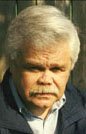
When Ben Schutz died at fifty-eight of a heart attack, he was still enjoying the well-deserved praise he'd received for what was likely his finest novel, The Mongol Reply, a savage look at the human debris resulting from a custody battle. Ben had been a forensic psychologist by trade and knew all too well what he was writing about.
The Mongol Reply had been rejected by virtually if not literally every major house in New York. One day his agent called me and asked if I'd give it a read for our library line Five Star. Ben Schutz? Are you kidding? Of course. We made a deal straight on. I felt then and feel now that it was one of the most important books we've ever published.
Kevin Burton Smith certainly agreed: "This is not a comfortable novel, and many a reader might squirm with an unpleasant shock of self-recognition. But I think that Schutz, a forensic psychologist himself and the author, in the 1980s and early 90s, of a Shamus Award-winning hard-boiled series starring Washington, D.C., private eye Leo Haggerty, has returned to fiction after an absence of more than a decade with arguably his most angry and potent work yet. The Mongol Reply is an unrepentant, take-no-prisoners assault on the twisted and selfish games people play in the name of love, and the sometimes very brutal price that children (and ultimately, all of us) have to pay for their parent’s sins."
Following this we were lucky enough to do a collection with Ben. And then he was dead.
I happened to read one of his short stories this weekend and it was so good I had to pick up a Schutz novel. I decided to reread my favorite, A Fistful of Empty. I like to say that I read for character and that plot is secondary. That's generally true. If the characters don't work for me, the story bores me. Empty tells one of the most lacerating tales I've ever read and shows me a dozen characters I've never met before. And in the course of it all it details the end of a relationship with such force that it's difficult to read at certain points. He gets the pain and bitterness and confusion down with surgical precision.
D.C. private eye Leo Haggerty is working on a case that results in his girl friend being raped and his best friend being murdered. I'm not a fan of revenge novels. Most of them are predictable and too many of them are bogus. Vigilantes are often worse than the person they're chasing. But Schutz uses Empty to show us how revenge is as deadly psychologically for the pursuer as it is for the pursued. ,
The mystery element is classically composed. Haggerty must figure out what a group of skinheads (and his depiction of an obscenely overweight skinhead fascist is guaranteed to make you squirm) and a group of medical researchers in in a very swank pharmaceutical firm have to do with each other.
While the pace is relentless (it's a book you really do want to read in a single setting), it is rich in detailing the D.C. area and the real wold of private investigators. Schutz did his homework.
Ben Schutz deserves rediscovery and A Fistful of Empty is a perfect place to start.
Tuesday, June 30, 2009

Monday, June 29, 2009
Bad Apple; Michael Jackson
BAD APPLE
You don't read many mystery novels where the protagonist is a combination livestock broker and private investigator but that's just what Cletus Parr happens to be. The title refers to the most celebrated cutting horse on the planet. The case starts with the murder of Bad Apple.
I suppose the closest equivalent here would be early Dick Francis. Wheeler takes us into a sub culture few of us are familiar with, that of the moneyed, ruthless world of cutting horses. If you think think this is hayseed stuff, you're wrong. Enormous sums change hands with the buying and selling of these horses. And where there is enormous money there is enormous temptation. Wheeler gives us a world just as shadowy as any major sport with plenty of bad guys and and more than a little violence.
I recommend this book both for its unique setting and for the wry way Wheeler tells his story. Early on we hear of cutting horses named Herpes and Clap. If you've read anything by Richard Wheeler you know that he is a fine writer with his own style and own take on this vale of tears. This is not only a very good mystery it's also an introduction to yet another form of competition that has been corrupted by greed and egotism.
MORE MICHAEL JACKSON
From Jack O'Connell
St. Ed:
Just read your words on jackson's death and they made me feel a little less nuts and out-of-touch. Here's what I jotted in the notebook on Friday night:
The only thing he ever sold that I liked was the song, “Ben.” And I was 12 years old. And the song was about a pet rat. I accept the seemingly unanimous public opinion that he was a world-class entertainer. (Berry Gordy, who knows something about talent, called him, “one of the greatest entertainers that ever lived.” Quincy Jones called him, “the consummate entertainer” and “a genius” and said his songs will live forever.) I accept that there was likely something deficient in me that simply couldn’t see it. I found his voice annoying. His dance moves contrived and repetitious. His videos ridiculous. Yes, it appears he had a tortured childhood that likely determined much of his bizarre adult life. But to me, he was always just a hyped-up, vapid, glitzy lounge singer.
O'Connell
You don't read many mystery novels where the protagonist is a combination livestock broker and private investigator but that's just what Cletus Parr happens to be. The title refers to the most celebrated cutting horse on the planet. The case starts with the murder of Bad Apple.
I suppose the closest equivalent here would be early Dick Francis. Wheeler takes us into a sub culture few of us are familiar with, that of the moneyed, ruthless world of cutting horses. If you think think this is hayseed stuff, you're wrong. Enormous sums change hands with the buying and selling of these horses. And where there is enormous money there is enormous temptation. Wheeler gives us a world just as shadowy as any major sport with plenty of bad guys and and more than a little violence.
I recommend this book both for its unique setting and for the wry way Wheeler tells his story. Early on we hear of cutting horses named Herpes and Clap. If you've read anything by Richard Wheeler you know that he is a fine writer with his own style and own take on this vale of tears. This is not only a very good mystery it's also an introduction to yet another form of competition that has been corrupted by greed and egotism.
MORE MICHAEL JACKSON
From Jack O'Connell
St. Ed:
Just read your words on jackson's death and they made me feel a little less nuts and out-of-touch. Here's what I jotted in the notebook on Friday night:
The only thing he ever sold that I liked was the song, “Ben.” And I was 12 years old. And the song was about a pet rat. I accept the seemingly unanimous public opinion that he was a world-class entertainer. (Berry Gordy, who knows something about talent, called him, “one of the greatest entertainers that ever lived.” Quincy Jones called him, “the consummate entertainer” and “a genius” and said his songs will live forever.) I accept that there was likely something deficient in me that simply couldn’t see it. I found his voice annoying. His dance moves contrived and repetitious. His videos ridiculous. Yes, it appears he had a tortured childhood that likely determined much of his bizarre adult life. But to me, he was always just a hyped-up, vapid, glitzy lounge singer.
O'Connell
Sunday, June 28, 2009
More sex tapes; more Michael jackson
From the Daily News:
Former presidential candidate John Edwards is out of luck if he hoped that the extramarital affairs of Gov. Mark Sanford and Sen. John Ensign would take people’s minds off his own cheating scandal.
Former Edwards aide Andrew Young says the ex-senator and his former mistress, Rielle Hunter, once made a sex tape, according to someone who has seen Young’s book proposal.
St. Martin’s Press just inked a deal with Young, who also says in his proposal that, contrary to his public statement last year, he is not the father of Hunter’s infant daughter — Edwards is. Edwards has denied that.
Ed here: Let's see--you're married, you're running for president, you're cheating on your wife and you decide to make a sex tape with your mistress. Wow. And he's a big time trial lawyer? He ever hear of blackmail? With those kind of decision-making chops, this isn't the guy you want deciding when to use nukes or not. If this is true Edwards did the entire planet a favor by running such a lousy campaign and being pushed out of history.
Read more: http://www.nydailynews.com/gossip/2009/06/28/2009-06-28_aides_tale_of_john_edwards_sex_tape.html#ixzz0Jl4sr4Kz&C
THE HERD MENTALITY: MICHAEL JACKSON DEATH SPAWNS ...
By Lee Pfeiffer
(This is an excerpt from a much longer (an excellent) piece on Jackson in Cinema Retro)
Although he still maintained an enormous world-wide following, for most of the general public, he was a punch line on a late night comedy show. Yet, the beatification process has already begun. It's one thing to acknowledge Jackson's well-earned reputation as a master performer and musical genius, but the news media is making Jackson sound like Mother Theresa. The immediate aftermath of a man's death is not the time to assault his reputation. Jackson's scandalous behavior in many aspects of his life has been amply chronicled elsewhere. However, one has to question the emotional stability of anyone who is now indulging in the world-wide mania for Jackson memorabilia. It stands to reason that virtually none of these people could have been induced to purchase this junk just two days ago. What comfort does it give someone to jump on a bandwagon and become an instant loyalist to a man they had virtually no interest in up until his death? It's a curious phenomenon, but one we should be used to by now. The Times of London reports that sales of Jackson's music and memorabilia is skyrocketing around the world. Why? Most of us probably already own the good songs he made (and Thriller is as standard as furniture in most households) So what motivates a person to go out and buy the second-rung music? Does one really get a sense of personal worth from wearing a cheesy T shirt commemorating Jackson, even though it was ground out by an opportunist within minutes of his death? Given Jackson's propensity for the outlandish, he would probably be complimented by all this - after all, in his world, any attention was better than being ignored. However, for many of these people, as of a few days ago, Jackson was as relevant to the contemporary music scene as Liberace. The international news media predictably deemed that there was no other story in the world worth covering than Jackson's life and career. Iran on the brink? Who cares? The health care debate in America? Big news a few days ago, now irrelevant. Violent eruptions in Iraq on the verge of the U.S withdrawal from urban centers? Yawn... The only one grateful for this is South Carolina Governor Mark Sanford, the Amelia Earhart of politicians, whose bizarre disappearance and related sex scandal pushed him off the front pages.
http://www.cinemaretro.com/index.php?/archives/3399-HERD-MENTALITY-MICHAEL-JACKSON-DEATH-SPAWNS-MANIA-AMONG-FANS.html#extended
Former presidential candidate John Edwards is out of luck if he hoped that the extramarital affairs of Gov. Mark Sanford and Sen. John Ensign would take people’s minds off his own cheating scandal.
Former Edwards aide Andrew Young says the ex-senator and his former mistress, Rielle Hunter, once made a sex tape, according to someone who has seen Young’s book proposal.
St. Martin’s Press just inked a deal with Young, who also says in his proposal that, contrary to his public statement last year, he is not the father of Hunter’s infant daughter — Edwards is. Edwards has denied that.
Ed here: Let's see--you're married, you're running for president, you're cheating on your wife and you decide to make a sex tape with your mistress. Wow. And he's a big time trial lawyer? He ever hear of blackmail? With those kind of decision-making chops, this isn't the guy you want deciding when to use nukes or not. If this is true Edwards did the entire planet a favor by running such a lousy campaign and being pushed out of history.
Read more: http://www.nydailynews.com/gossip/2009/06/28/2009-06-28_aides_tale_of_john_edwards_sex_tape.html#ixzz0Jl4sr4Kz&C
THE HERD MENTALITY: MICHAEL JACKSON DEATH SPAWNS ...
By Lee Pfeiffer
(This is an excerpt from a much longer (an excellent) piece on Jackson in Cinema Retro)
Although he still maintained an enormous world-wide following, for most of the general public, he was a punch line on a late night comedy show. Yet, the beatification process has already begun. It's one thing to acknowledge Jackson's well-earned reputation as a master performer and musical genius, but the news media is making Jackson sound like Mother Theresa. The immediate aftermath of a man's death is not the time to assault his reputation. Jackson's scandalous behavior in many aspects of his life has been amply chronicled elsewhere. However, one has to question the emotional stability of anyone who is now indulging in the world-wide mania for Jackson memorabilia. It stands to reason that virtually none of these people could have been induced to purchase this junk just two days ago. What comfort does it give someone to jump on a bandwagon and become an instant loyalist to a man they had virtually no interest in up until his death? It's a curious phenomenon, but one we should be used to by now. The Times of London reports that sales of Jackson's music and memorabilia is skyrocketing around the world. Why? Most of us probably already own the good songs he made (and Thriller is as standard as furniture in most households) So what motivates a person to go out and buy the second-rung music? Does one really get a sense of personal worth from wearing a cheesy T shirt commemorating Jackson, even though it was ground out by an opportunist within minutes of his death? Given Jackson's propensity for the outlandish, he would probably be complimented by all this - after all, in his world, any attention was better than being ignored. However, for many of these people, as of a few days ago, Jackson was as relevant to the contemporary music scene as Liberace. The international news media predictably deemed that there was no other story in the world worth covering than Jackson's life and career. Iran on the brink? Who cares? The health care debate in America? Big news a few days ago, now irrelevant. Violent eruptions in Iraq on the verge of the U.S withdrawal from urban centers? Yawn... The only one grateful for this is South Carolina Governor Mark Sanford, the Amelia Earhart of politicians, whose bizarre disappearance and related sex scandal pushed him off the front pages.
http://www.cinemaretro.com/index.php?/archives/3399-HERD-MENTALITY-MICHAEL-JACKSON-DEATH-SPAWNS-MANIA-AMONG-FANS.html#extended
Saturday, June 27, 2009
Men, Women, Writing, and Getting Laid; Correction
Writer Holly Lisle has one of the great websites. I check it out three or four times a week. Her subjects range from serious discussions of writing (she writers shrewdly and well both about the writing and the writing business) and apparently whatever else comes to mind on a given day. She also blogs.
Here's one of her more notable blog whimsies--or is it? If this is true we'll have to rewrite all the history books to serve this dictum:
Men, Women, Writing, and Getting Laid
by HOLLY LISLE on JUNE 25, 2009 · 39 COMMENTS
in ARTICLES ON WRITING, MIND/BODY, PERSONAL, WRITING LIFE, WRITING NEEP
Matt has assured me on more than one occasion that the reason men choose to do anything is, first and foremost, because they think doing it will get them laid.
Design the Eiffel Tower? Compose a magnificent concerto? Do a hundred pushups a day? Write a novel?
The man thinks “This will get me laid.” And he’s right. For a man, the secret to getting laid is to stand apart from other men—to be really good at something valuable, or admirable, or cool, to be competent, to be different than every other man a woman knows. Men don’t have to be young or gorgeous, to have great hair or a square jaw or a perfect body to get a woman or women. They have to stand apart.
If you’re a woman, on the other hand, breathing will get you laid, and sometimes even that’s setting the bar too high.
Doubt me? Think you aren’t pretty enough, young enough, whatever enough?
for the rest go here:
http://hollylisle.com/writingdiary2/
CORRECTION----
In writing about Michael Jackson last night I said that a dentist wanted MJ to get his screenplay produced as part of a deal in which nothing public would ever be revealed about events at Neverland. I'm told off-line that the allegation was never proved and was dismissed. I was wrong and apologize for the misinformation.
Here's one of her more notable blog whimsies--or is it? If this is true we'll have to rewrite all the history books to serve this dictum:
Men, Women, Writing, and Getting Laid
by HOLLY LISLE on JUNE 25, 2009 · 39 COMMENTS
in ARTICLES ON WRITING, MIND/BODY, PERSONAL, WRITING LIFE, WRITING NEEP
Matt has assured me on more than one occasion that the reason men choose to do anything is, first and foremost, because they think doing it will get them laid.
Design the Eiffel Tower? Compose a magnificent concerto? Do a hundred pushups a day? Write a novel?
The man thinks “This will get me laid.” And he’s right. For a man, the secret to getting laid is to stand apart from other men—to be really good at something valuable, or admirable, or cool, to be competent, to be different than every other man a woman knows. Men don’t have to be young or gorgeous, to have great hair or a square jaw or a perfect body to get a woman or women. They have to stand apart.
If you’re a woman, on the other hand, breathing will get you laid, and sometimes even that’s setting the bar too high.
Doubt me? Think you aren’t pretty enough, young enough, whatever enough?
for the rest go here:
http://hollylisle.com/writingdiary2/
CORRECTION----
In writing about Michael Jackson last night I said that a dentist wanted MJ to get his screenplay produced as part of a deal in which nothing public would ever be revealed about events at Neverland. I'm told off-line that the allegation was never proved and was dismissed. I was wrong and apologize for the misinformation.
Friday, June 26, 2009
Musical fanboys; Michael Jackson
I finally caught up with the Elvis Costello show on Sundance. The episode I caught featured guest Elton John. Now I'm not a fan of John's. I liked Tumbleweed Connection very much but after that it was a race to the bottom--the bottom being songs of interminable length and cringe-worthy lyrics.
But last night John and Costello spent the night talking about the music that had influenced them and it was like hearing Crider, Reasoner, Randisi and Gorman sitting around discussing vintage paperbacks. Reference after reference to singers dating at far back as 1946. They even sang a few of the songs they cited. The big surprise for me was their reverence (and nothing less) for Laura Nyro. They discussed at length how she'd not only influenced them but influenced the songwriting of our entire generation. Elton John even sat down and played piano on one of his songs. He said he hadn't cribbed this but it was certainly (time changes etc) very much a Nyro.
I don't know diddly about music so I was fascinated by their talk about hooks and bridges and choruses etc. They also had an interesting discussion about some of the great songwriters they'd known who just never, for a variety of reasons, got any radio play and thus never had any hits.
I'm sure all the episodes are still in rotation. Fine fine program.
MICHAEL JACKSON
NBC News gave Michael Jackson seventeen minutes tonight. One of the segments showed people all over the world sobbing. In London there was a mass impromptu rally with people dancing and singing his songs. Despite myself I was moved by it. Pretty damned cool all the races as one grooving in this wide avenue.
I say despite myself because I never quite caught the fever. The music was ok but the videos always struck me as overwrought. His final videos were so wantonly narcissistic I was (seriously) embarrassed for him.
I remember Sony wanting to curb his budgets. He was coming off a flop CD and yet he wanted enormous money for a lavish video so he could break the new CD. I guess they couldn't say no. The people around him couldn't say no to his insane spending or to the little boys who came to Neverland or to his drinking or his drugging. But they sure could leech his money and largesse. They didn't have any trouble with that at all.
I felt sorry for him because he was a creature apart from the vast human tribe. His self-hatred--trying to become feminine and white--was saddest of all. The writer Michael Kinsley wonders if was even minimally educated. The Jackson crowd would never address the question of his education. He likely didn't have any. He was touring when he was five.
Vanity Fair's Maureen Orth covered Jackson and came to thunderously moral conclusions. She was quoted today, the same day that her husband was cited by Dan Froomkin of the Washington Post (he was fired Monday for being too left wing) for being one of George Bush's enablers in selling the lies that led us to the Iraq war. Mary Matalin said that whenever they wanted to get "their" message out all they did was call Russert. He had the number one rated show on Sunday morning and his influence was unquestioned. So if I was Maureen baby I'd be worrying about glass houses. At least a hundred thousand people have died in the war so far.
I blame Joe Jackson for his son's freakiness. He's a despicable human being, a sleazebag in a league of his own. His children were his employees and what a sorry lot they've turned out to be. I blame the parents who went along with Michael Jackson's wishes and I blame Michael Jackson. Whether it was arrogance or a simple inability to face himself, he should have asked for help before his dark side took hold.
Because the music never touched me, I'm having a difficult time understanding how this story has taken over TV world wide. But today I feel what I've always felt for Michael Jackson--a sadness that he was a tormented freak in an unforgiving world.
But last night John and Costello spent the night talking about the music that had influenced them and it was like hearing Crider, Reasoner, Randisi and Gorman sitting around discussing vintage paperbacks. Reference after reference to singers dating at far back as 1946. They even sang a few of the songs they cited. The big surprise for me was their reverence (and nothing less) for Laura Nyro. They discussed at length how she'd not only influenced them but influenced the songwriting of our entire generation. Elton John even sat down and played piano on one of his songs. He said he hadn't cribbed this but it was certainly (time changes etc) very much a Nyro.
I don't know diddly about music so I was fascinated by their talk about hooks and bridges and choruses etc. They also had an interesting discussion about some of the great songwriters they'd known who just never, for a variety of reasons, got any radio play and thus never had any hits.
I'm sure all the episodes are still in rotation. Fine fine program.
MICHAEL JACKSON
NBC News gave Michael Jackson seventeen minutes tonight. One of the segments showed people all over the world sobbing. In London there was a mass impromptu rally with people dancing and singing his songs. Despite myself I was moved by it. Pretty damned cool all the races as one grooving in this wide avenue.
I say despite myself because I never quite caught the fever. The music was ok but the videos always struck me as overwrought. His final videos were so wantonly narcissistic I was (seriously) embarrassed for him.
I remember Sony wanting to curb his budgets. He was coming off a flop CD and yet he wanted enormous money for a lavish video so he could break the new CD. I guess they couldn't say no. The people around him couldn't say no to his insane spending or to the little boys who came to Neverland or to his drinking or his drugging. But they sure could leech his money and largesse. They didn't have any trouble with that at all.
I felt sorry for him because he was a creature apart from the vast human tribe. His self-hatred--trying to become feminine and white--was saddest of all. The writer Michael Kinsley wonders if was even minimally educated. The Jackson crowd would never address the question of his education. He likely didn't have any. He was touring when he was five.
Vanity Fair's Maureen Orth covered Jackson and came to thunderously moral conclusions. She was quoted today, the same day that her husband was cited by Dan Froomkin of the Washington Post (he was fired Monday for being too left wing) for being one of George Bush's enablers in selling the lies that led us to the Iraq war. Mary Matalin said that whenever they wanted to get "their" message out all they did was call Russert. He had the number one rated show on Sunday morning and his influence was unquestioned. So if I was Maureen baby I'd be worrying about glass houses. At least a hundred thousand people have died in the war so far.
I blame Joe Jackson for his son's freakiness. He's a despicable human being, a sleazebag in a league of his own. His children were his employees and what a sorry lot they've turned out to be. I blame the parents who went along with Michael Jackson's wishes and I blame Michael Jackson. Whether it was arrogance or a simple inability to face himself, he should have asked for help before his dark side took hold.
Because the music never touched me, I'm having a difficult time understanding how this story has taken over TV world wide. But today I feel what I've always felt for Michael Jackson--a sadness that he was a tormented freak in an unforgiving world.
Thursday, June 25, 2009
Forgotten Books: The Lodger
The other night on his fine blog British novelist Martin Edwards wrote a piece about The Lodger by Marie Belloc Lowndes. Among the book's admirers was Ernest Hemingway. The book was the basis for the the first "true Hitchcock" film as Hitch himself called it. I guess he looked at the previous ones as warm-up acts.
The set-up for the Lodger is standard stuff by now. In Victorian London a serial killer is loose. An impoverished couple takes in a lodger. Soon enough the wife begins to wonder if the lodger is the killer. Here's what I wrote Martin:
"The Lodger still works for me. The atmospherics are as compelling as the characters, this impoverished world of eternal and foggy night while an unknown killer stalks the London streets. I haven't read anything else by her but your mention of her letters containing few references to mystery writing doesn't surprise me. For all the chiller-diller stuff--as Ruth Rendell would call it--the book escapes the familiar by giving us a rich look at the lives of the husband and wife and their sad lives in poverty. This, to me, drives the book as much as The Lodger himself."
The Lodger gives the readers a visceral sense of Victorian London. The homely details of everyday life make the cunning and cruelty of the killer all the more real. In a few places the horror of the streets remind me of Jack London's mental collapse while spending time in and around Whitechapel (he later wrote about his time there). And yet this is played off beautifully against the placid, quietly desperate home lives of the married couple. It is rich true portraiture.
As Martin and a few of his respondents pointed out, Lowndes is frequently overlooked in histories of mystery fiction. I've never been sure why. She was certainly a far better writer, as someone pointed out, than Mary Roberts Rinehart and her imitators. In fact, though I claim no expertise, she was to me the most exciting chiller-diller writer until the great Elizabeth Sanxay Holding came along a quarter century later. And I'm sure that Holding, with her unnerving mixture of the homely and the phantasmagoric, doubtless read and studied Lowndes.
For me The Lodger is timeless, a true classic.
The set-up for the Lodger is standard stuff by now. In Victorian London a serial killer is loose. An impoverished couple takes in a lodger. Soon enough the wife begins to wonder if the lodger is the killer. Here's what I wrote Martin:
"The Lodger still works for me. The atmospherics are as compelling as the characters, this impoverished world of eternal and foggy night while an unknown killer stalks the London streets. I haven't read anything else by her but your mention of her letters containing few references to mystery writing doesn't surprise me. For all the chiller-diller stuff--as Ruth Rendell would call it--the book escapes the familiar by giving us a rich look at the lives of the husband and wife and their sad lives in poverty. This, to me, drives the book as much as The Lodger himself."
The Lodger gives the readers a visceral sense of Victorian London. The homely details of everyday life make the cunning and cruelty of the killer all the more real. In a few places the horror of the streets remind me of Jack London's mental collapse while spending time in and around Whitechapel (he later wrote about his time there). And yet this is played off beautifully against the placid, quietly desperate home lives of the married couple. It is rich true portraiture.
As Martin and a few of his respondents pointed out, Lowndes is frequently overlooked in histories of mystery fiction. I've never been sure why. She was certainly a far better writer, as someone pointed out, than Mary Roberts Rinehart and her imitators. In fact, though I claim no expertise, she was to me the most exciting chiller-diller writer until the great Elizabeth Sanxay Holding came along a quarter century later. And I'm sure that Holding, with her unnerving mixture of the homely and the phantasmagoric, doubtless read and studied Lowndes.
For me The Lodger is timeless, a true classic.
Wednesday, June 24, 2009
NOW APPEARING...THE MIDNIGHT ROOM

THE MIDNIGHT ROOM by Ed Gorman
Leisure Books
Cindy Baines is a cute girl. She is the daughter of less than accomplished parents—her mother is a drinker, and her dad is a fundamentalist whack. They live in a trailer on the wrong side of town, but despite everything she seems to have a bright future. She is intelligent, beautiful, and very well liked. Unfortunately she is also the target of a demented serial killer.
When Cindy disappears the community is in near panic; Cindy isn’t the first girl to disappear and everyone is afraid she won’t be the last. There is a heavy load of pressure placed on the police department—particularly its small detective bureau—to find the girl and stop the killer. The detectives assigned to the case all have their own problems. Two of them are former lovers, and the third drinks too much and is a little crazy.
The Midnight Room isn’t a typical serial killer novel. The killer is revealed early in the story—the second chapter—and its focus is less on the killer and more on the drama that plays between the detectives, their work, and their families. It’s important to stress that it isn’t a drama. It’s very much in the crime noir form and Mr Gorman uses the tropes and expectations to develop the dark, sharp and poignant struggle of good and evil that rages in his characters, just as it rages in us all.
The characters are varied and well created—none are completely good and none are completely bad. Two of the detectives are brothers—Steve and Michael Scanlon. The older is their father’s favorite, but he has never been quite right. He wants everything fast and easy, while the younger is the more dependable, but underappreciated, son and detective. The story whirls around the two in a frenzy of misfortune, bad choices, and plain bad luck.
There is also a street tough ex-con named Leo Rice who is out for revenge. Steve Scanlon killed his brother while on the beat a few years back and now Leo wants his pound. Rice is the perfect street tough. He is hard, violent and stupid, all in one pure mixture. Add to that the serial killer, an aging father, a tough female detective and a missing girl who are all starkly vivid in Gorman’s deceptively simple prose, and you have a story that is vibrant and true.
The Midnight Room is a terrific lean and hard crime thriller. Its roots are deep in the hardboiled and noir genres, but it is nothing less than original. The characters and its dark vision of an unfair world raise it well beyond the expected, and in the end it’s the very bitter dark that offers redemption for both the characters and the reader.
POSTED BY BEN BOULDEN AT 6:30 AM
LABELS: ED GORMAN, MYSTERY
I'll show you mine if you'll...
I have to say upfront that I see nothing wrong with people videotaping their sexual activities. It's obviously their private choice and nobody can dispute that. I say this because my words have nothing to do with morality.
But so far this week there have been three different stories about media figures getting in various kinds of difficulties because of them taping themselves with lovers.
The practice would seem to be much more widespread than we've heard about out here in Iowa. Now when I go to the video store and see people stocking up on fresh tape I no longer think...isn't that sweet, they're probably going to film their grandkid's birthday party.
This has obviously been going on for some time. There was a B-movie star who got into a bind as far back as the seventies. I guess you have to be careful who your bedroom co-star is because a) you're handing him/her a device blackmail or b) you'll someday be a star on the internet.
It's filming YOURSELF than I don't get. Even when I was young and trim I wouldn't have done it. Who wants to see HIM/HERSELF on film?
I know this isn't my usual subject here but they're so much in the news I wonder what what some of you think.
But so far this week there have been three different stories about media figures getting in various kinds of difficulties because of them taping themselves with lovers.
The practice would seem to be much more widespread than we've heard about out here in Iowa. Now when I go to the video store and see people stocking up on fresh tape I no longer think...isn't that sweet, they're probably going to film their grandkid's birthday party.
This has obviously been going on for some time. There was a B-movie star who got into a bind as far back as the seventies. I guess you have to be careful who your bedroom co-star is because a) you're handing him/her a device blackmail or b) you'll someday be a star on the internet.
It's filming YOURSELF than I don't get. Even when I was young and trim I wouldn't have done it. Who wants to see HIM/HERSELF on film?
I know this isn't my usual subject here but they're so much in the news I wonder what what some of you think.
Tuesday, June 23, 2009
The Michelle Bachmann comic book (seriously)

Josh Marshall just posted this on Talking Points memo. Here's a link to some samples pages.
http://www.talkingpointsmemo.com/documents/2009/06/bachmann-comic-book----sample-pages.php?page=1
A Touch of Death
Ed here: I've been reading Charles Williams novels three past few days. Thought I re-post this. I'll have a new one tomorrow or the next day.
THURSDAY, JANUARY 10, 2008
A TOUCH OF DEATH
I spent a good share of last night reading Hard Case Crime's snappy edition of A Touch of Death by Charles Williams and I'll say what I've said before about this book. It likely has more plot turns than just about any suspense novel I can ever recall reading.
One of Charles Williams' amoral failed men narrate. He was briefly a football star. Now he's a busted real estate agent. No wonder he gets interested, after initial reluctance, in stealing an one hundred twenty thousand dollars that a bank president took from his own bank. The woman who convinces him to help her makes it sound simple. It's probably in this mansion. All you have to do is get in there and find it. The bank president's wife won't be home for two days. You'll have plenty of time.
Right. Well, we know better than that, don't we? Yes, he gets in but he finds he's not alone. The woman is there, beautiful beyond description, and drunk beyond belief. But so is a killer. After saving her life, failed star takes her to a cabin in the woods where he plans to persuade her to tell him where the money is.
That's the beginning. Everybody in this book is a professional liar. And the bank president's wife is the most fatale of femmes. She lies on virtually every page and occasionally almost gets them killed. That she knows where the money is is obvious. That she killed her husband is also obvious. But who is trying to kill her and why?
As always with the Williams protagonist there is that sense of bitter melancholy. He is a prisoner of his failed past but naive about sex and money healing his loneliness. The sea novels contrast conspicuously with the small town novels. The sea gives the Williams protagonist purpose and the hope of spiritual redemption. But in the small towns, trapped in the vagaries of hypocrisy and constant judgement, he is always crushed by the forces he helped to set loose.
THURSDAY, JANUARY 10, 2008
A TOUCH OF DEATH
I spent a good share of last night reading Hard Case Crime's snappy edition of A Touch of Death by Charles Williams and I'll say what I've said before about this book. It likely has more plot turns than just about any suspense novel I can ever recall reading.
One of Charles Williams' amoral failed men narrate. He was briefly a football star. Now he's a busted real estate agent. No wonder he gets interested, after initial reluctance, in stealing an one hundred twenty thousand dollars that a bank president took from his own bank. The woman who convinces him to help her makes it sound simple. It's probably in this mansion. All you have to do is get in there and find it. The bank president's wife won't be home for two days. You'll have plenty of time.
Right. Well, we know better than that, don't we? Yes, he gets in but he finds he's not alone. The woman is there, beautiful beyond description, and drunk beyond belief. But so is a killer. After saving her life, failed star takes her to a cabin in the woods where he plans to persuade her to tell him where the money is.
That's the beginning. Everybody in this book is a professional liar. And the bank president's wife is the most fatale of femmes. She lies on virtually every page and occasionally almost gets them killed. That she knows where the money is is obvious. That she killed her husband is also obvious. But who is trying to kill her and why?
As always with the Williams protagonist there is that sense of bitter melancholy. He is a prisoner of his failed past but naive about sex and money healing his loneliness. The sea novels contrast conspicuously with the small town novels. The sea gives the Williams protagonist purpose and the hope of spiritual redemption. But in the small towns, trapped in the vagaries of hypocrisy and constant judgement, he is always crushed by the forces he helped to set loose.
Monday, June 22, 2009
Centipede Press

Ramsey Campbell's The Influence
Campbell is one of those rare writers who is probably too hip for the room, by which I mean that horror readers looking for the usual schlock will be disapointed because nobody is disemboweled on the first page. Nor does a hunky vampire put the ole plank to a swooning maiden.
Campbell is first and always a serious novelist. That he sometimes uses supernatural elements to enhance his impressions of this vale of tears we all share does not limit him to the familiar tropes.
The Influence is a rather sweeping story that deals with love, loneliness, loss and finally what it means to confront death. Campbell also takes us beyond death into a realm that as frightening as anything he's ever written. There are a number of scenes that build slowly to shrieking climaxes. There is also prose that imbues the entire book with an otherworldly quality even though Campbell takes care to make his people and their surroundings all too real.
This new edition from Centipede Press gives permanence to one of the eeriest and most elegantly told novels of fear I've ever read.
Sunday, June 21, 2009
Solomon Kane

Long, serious, excellent piece on Robert E. Howard and Solomon Kane in the Los Angeles Times this morning. Are you listening James Reasoner?
Solomon Kane © 2009Solomon Kane Inc. (“SKI”). SOLOMON KANE, and related logos, characters, names, and distinctive likenesses thereof are trademarks or registered trademarks of SKI. All rights reserved.
THE SIREN'S CALL
Man in black: Robert E. Howard's Solomon Kane
Before Conan, there was Kane, a Puritan swordsman on a restless search for justice.
By Nick Owchar Copyright 2009 Los Angeles Times
May 24, 2009
Considering the many horror films featuring heroes in black who take out ghoulish enemies with crossbows or holy water bullets -- think of the "Underworld" or "Hellboy" movies, or "Van Helsing," whose titular hero seems inspired by the subject of this month's column -- Robert E. Howard's Solomon Kane, a vengeance-seeking Puritan swordsman, is long overdue for the screen.
(Until now, that is. There's a movie featuring Solomon Kane that's reportedly finished, although it's unclear when/if we will see it: Word is that the director is seeking a major distributor, according to various blogs that follow the progress.)
Conan the Barbarian is almost certainly the one fictional creation of Howard's that most people know. But in recent years, publishers have also brought back Kane, whom the author created earlier than Conan, with the publication of "The Savage Tales of Solomon Kane" (Del Rey: 414 pp. $15.95 paper) and "The Horror Stories of Robert E. Howard" (Del Rey: 560 pp., $18 paper).
Kane is a superb creation. He is the mysterious figure in a roadside tavern no one notices until there's a problem. Then he rises up, barely distinguishable from the shadows, and metes God's justice with his sword and pistols.
for the rest go here:
http://www.latimes.com/entertainment/news/arts/la-caw-sirens-call24-2009may24,1,7472340,full.story
Saturday, June 20, 2009
Thank God for Ray Bradbury

One afternoon years ago Carol and I were sitting at the kitchen table drinking coffee and talking when the phone rang. I got up and answered it and said, "Oh, yes, hi, Ray." And Carol started grinning and pointing and saying sotto voce "Is it Ray Bradbury?" When I nodded yes she became demonically possessed, up out of her chair and walking around in little circles. (I mean writers called all the time for Mystery Scene and I'd never seen her act this way.) I'd been working on an anthology that Ray was in. This was the second time he'd called. I'd already gone through my own fan boy vapors the first time through. Carol taught three of Ray's stories in her seventh grade English class and felt that reading him so carefully really helped her own writing. Plus he was RAY BRADBURY! I couldn't help it. I said to Ray "There's a grown woman here who's making a total fool of herself over you." He laughed and said he was glad to hear that. Of all my memories of Carol that's one of the sweetest.
Now here's an excerpt from a NY Times piece about how Ray is still the same wonderful guy he's always been:
VENTURA, Calif. — When you are pushing 90, have written scores of famous novels, short stories and screenplays, and have fulfilled the goal of taking a simulated ride to Mars, what’s left?
(more)
This is a lucky thing for the Ventura County Public Libraries — because among Mr. Bradbury’s passions, none burn quite as hot as his lifelong enthusiasm for halls of books. His most famous novel, “Fahrenheit 451,” which concerns book burning, was written on a pay typewriter in the basement of the University of California, Los Angeles, library; his novel “Something Wicked This Way Comes” contains a seminal library scene.
Mr. Bradbury frequently speaks at libraries across the state, and on Saturday he will make his way here for a benefit for the H. P. Wright Library, which like many others in the state’s public system is in danger of shutting its doors because of budget cuts.
“Libraries raised me,” Mr. Bradbury said. “I don’t believe in colleges and universities. I believe in libraries because most students don’t have any money. When I graduated from high school, it was during the Depression and we had no money. I couldn’t go to college, so I went to the library three days a week for 10 years.”
Property tax dollars, which provide most of the financing for libraries in Ventura County, have fallen precipitously, putting the library system roughly $650,000 in the hole. Almost half of that amount is attributed to the H. P. Wright Library, which serves roughly two-thirds of this coastal city about 50 miles northwest of Los Angeles.
Friday, June 19, 2009
Cages
Thanks to the flood of 96 I don't have a copy of my collection Cages. I needed to see if one of the local libraries had one so I could copy story of it. I'd either forgotten or never saw the PW review of it. It was on line with info about the availability of the book. Actually the reviewer does a good job of pointing out my influences here. The sense of shock however predicted what was to come. (BTW I consider the PW notice a pretty good review; it was considered and even-handed.) I thought a few of the later reviewers would show up up out here with a lynch mob. I'd never thought of myself as a shocking writer though I do remember that with the title story Cages a prominent magazine editor told me that if he published it he'd lose ten thousand subscribers. I didn't make any friends with this book. One newspaper reviewer called it "The most disgusting book I've read in years."
Cages : a collection of stories
Gorman, Edward.
In this mixed bag of 20 stories and one novella, most of which have appeared in hardcover collections or SF and mystery magazines, Gorman (Prisoners and Other Stories), who describes himself as inhabiting ``the lower depths of American paperback publishing,'' shows off his range in an array of tales with admitted debts to, among others, Dean Koontz, Stephen King, John D. MacDonald and even Vladimir Nabokov (the noirish, Lolita-derived ``The End of It All''). Leading off the collection is the novella ``Moonchasers,'' a work reminiscent of King's heartfelt boyhood idyll ``The Body.'' Further along, wisely wedged into the middle of the collection, is the title story, the most original-and most ghastly-story here, a deeply unpleasant tale of genetic mutants arising from our pollution of nature. Gorman's stories often glow bizarrely, even his semi-surreal westerns, but he has a knack for writing tales that offend mainstream sensibilities-which is perhaps why his work sometimes appears in limited editions like this one. Limited edition of 500 signed copies. Copyright 1995 Cahners Business Information, Inc. From: Reed Elsevier Inc. Copyright Reed Business Information
Cages : a collection of stories
Gorman, Edward.
In this mixed bag of 20 stories and one novella, most of which have appeared in hardcover collections or SF and mystery magazines, Gorman (Prisoners and Other Stories), who describes himself as inhabiting ``the lower depths of American paperback publishing,'' shows off his range in an array of tales with admitted debts to, among others, Dean Koontz, Stephen King, John D. MacDonald and even Vladimir Nabokov (the noirish, Lolita-derived ``The End of It All''). Leading off the collection is the novella ``Moonchasers,'' a work reminiscent of King's heartfelt boyhood idyll ``The Body.'' Further along, wisely wedged into the middle of the collection, is the title story, the most original-and most ghastly-story here, a deeply unpleasant tale of genetic mutants arising from our pollution of nature. Gorman's stories often glow bizarrely, even his semi-surreal westerns, but he has a knack for writing tales that offend mainstream sensibilities-which is perhaps why his work sometimes appears in limited editions like this one. Limited edition of 500 signed copies. Copyright 1995 Cahners Business Information, Inc. From: Reed Elsevier Inc. Copyright Reed Business Information
Thursday, June 18, 2009
Cop pulls gun on Ronald McDonald-for Bill Crider
A Denver police officer has been suspended after allegedly brandishing his gun at a McDonald's restaurant in Aurora after his order took too long to fill.
Aurora police confirmed the CBS4 investigation saying the incident occurred May 21 at the McDonald's at 18181 East Hampden Avenue.
A spokesperson for the Aurora Police Department said they plan to present the case -- now classified as a felony menacing incident -- to the Arapahoe County District Attorney's Office Thursday for possible filing of criminal charges.
Sources familiar with the case, and the fast food worker's account of what happened, say two off-duty Denver police officers placed an order from their car in the early morning hours of May 21. But once at the drive through window, the employee said the men became agitated and angry at how long their food was taking. The men thought they were being ignored, according to contacts familiar with the worker's account. The male clerk then said one of the officer's flashed his police badge and pointed a pistol through the drive through window in a threatening manner, before driving off without paying.
Both officers are assigned to Denver International Airport although only one has been placed on administrative leave with pay, pending the outcome of the case.
(© MMIX CBS Television Stations, Inc. All Rights Reserved. This material may not be published, broadcast, rewritten, or redistributed.)
Aurora police confirmed the CBS4 investigation saying the incident occurred May 21 at the McDonald's at 18181 East Hampden Avenue.
A spokesperson for the Aurora Police Department said they plan to present the case -- now classified as a felony menacing incident -- to the Arapahoe County District Attorney's Office Thursday for possible filing of criminal charges.
Sources familiar with the case, and the fast food worker's account of what happened, say two off-duty Denver police officers placed an order from their car in the early morning hours of May 21. But once at the drive through window, the employee said the men became agitated and angry at how long their food was taking. The men thought they were being ignored, according to contacts familiar with the worker's account. The male clerk then said one of the officer's flashed his police badge and pointed a pistol through the drive through window in a threatening manner, before driving off without paying.
Both officers are assigned to Denver International Airport although only one has been placed on administrative leave with pay, pending the outcome of the case.
(© MMIX CBS Television Stations, Inc. All Rights Reserved. This material may not be published, broadcast, rewritten, or redistributed.)
Directions and directors in Television

I've mentioned The American Vein: Directors and Directions in Television Christopher Wicking and Tise Vahimagi many times before. This is an important book for people who are interested in the history of American television. It is laid out much the same way Andrew Sarris laid out his book about film directors. The first chapter deals with those directors the authors think are most talented. By the last chapter you're pretty much in hackdom.
But what stories and quotes along the way. Wicking and Vahimagi manage to to fill their pages with the real lives of working directors. Don Siegel speaks bitterly about his TV work. Jacques Tourneur (I don't exaggerate) sounds downright despondent about his. William Freidkin, Andre DeToth and Sam Peckinpah also worked in TV and their careers are assessed here.
The book was respected by some but reviled by many. Those who hated it complained that Wicking and Vahimagi were dealing with hacks and hackwork--TV directors? C'mon! Vast wasteland, dude. But the writers make their case in snappy and readable fashion. I don't know if I agree with them because I haven't seen most of the episodes they reference. But it strikes me that given the hundreds of thousands of TV hours, some directors have given us striking and memorable work. Even when the show is a sit-com it can be evaluated in a serious way. For instance you could write full length books about the differences between Three's Company and Seinfeld.
From the Independent 2008:
Christopher Wicking: Screenwriter and critic who wrote for Hammer and worked on the adaptation of 'Absolute Beginners'
By John Jeremy (October 2008)
In contemporary cinema, cult directors have become almost commonplace but screenwriters are rarely accorded that ambiguous accolade.
It was the unenviable lot of the British screenwriter Christopher Wicking, who has died of a heart attack at the age of 65, to be swiftly promoted to that dubious pantheon while still in his early thirties.
His scripts for the British branch of American-International, a company specialising in horror and exploitation pictures, were quirkily arresting. He understood how to grab an audience by the lapels and hold them for the ride, even if the material to pass across his desk may have seemed, at first glance, unpromising. He created additional dialogue for The Oblong Box (1969) and then, consolidating his association with Vincent Price and director Gordon Hessler, wrote the screenplay for Scream and Scream Again (1969), perhaps his best known credit. There were several others, and later on a long association with Hammer Films which yielded productive collaborations with the former Ealing editor and director Seth Holt (Blood from the Mummy's Tomb, 1971), and, with the producer Frank Godwin, Demons of the Mind (1972). Godwin helped to inculcate discipline into Wicking's wayward working methods and they were to collaborate for over 40 years.
for the rest of a very interesting obituary go here:
http://www.independent.co.uk/news/obituaries/christopher-wicking-screenwriter-and-critic-who-wrote-for-hammer-and-worked-on-the-adaptation-of-absolute-beginners-972804.html
Wednesday, June 17, 2009
Forgotten Books: Live Girls
Live Girls isn't exactly forgotten but given the enormous popularity of erotic vampire fiction today it is terribly overlooked. It's my fourth favorite vampire novel in fact, right behind Dracula, I Am Legend and Salem's Lot. And it is as original and startling as any of the first three.
This is a two-track story for a portion of the book. Walter Benedek finds his sister and brother-in-law ripped apart in their apartment. Hard to believe a human could have done this. He begins to look into the background of his brother-in-law and discovers that the man spent a lot of time at a strange sex joint called Live Girls.
At the same time Davey Owen, a young man working for a trashy magazine, gets fired and loses his girl. He begins to come to apart, ultimately drifting into a peep show at Live Girl's. Garton creates some of the most powerfully erotic and threatening images of sex I've ever read. The sex is so compelling you almost forget the sinister atmosphere of the place. The book was originally published in 1987 and the plague of AIDs that killed so many permeates the atmosphere.
Davey's life begins to change after a single visit to the club. He will return many, many times.
The novel is by turns witty (Garton's take on low-brow publishing is very funny), creepy (Garton really puts you in the narrow filthy hallways and basement of Live Girls) and moving because Garton has made you care about his characters and their fate really matters to you.
This is urban horror at its nastiest and pulp fiction at its best.
This is a two-track story for a portion of the book. Walter Benedek finds his sister and brother-in-law ripped apart in their apartment. Hard to believe a human could have done this. He begins to look into the background of his brother-in-law and discovers that the man spent a lot of time at a strange sex joint called Live Girls.
At the same time Davey Owen, a young man working for a trashy magazine, gets fired and loses his girl. He begins to come to apart, ultimately drifting into a peep show at Live Girl's. Garton creates some of the most powerfully erotic and threatening images of sex I've ever read. The sex is so compelling you almost forget the sinister atmosphere of the place. The book was originally published in 1987 and the plague of AIDs that killed so many permeates the atmosphere.
Davey's life begins to change after a single visit to the club. He will return many, many times.
The novel is by turns witty (Garton's take on low-brow publishing is very funny), creepy (Garton really puts you in the narrow filthy hallways and basement of Live Girls) and moving because Garton has made you care about his characters and their fate really matters to you.
This is urban horror at its nastiest and pulp fiction at its best.
Tuesday, June 16, 2009
Twittering
I have zero interest in Twitter. Hell I'm not even sure what a Blackberry does. But given the last three days in Iran I sure see the value of the Twitter as a means of communication when a government tries to shut everything down. Here's an excerpt from a Galleycat story today.
Douglas Rushkoff on Twitter and Totalitarianism
In a new essay, author Douglas Rushkoff praised the power of Twitter and Facebook in Iran--arguing these tools will lead to "the end of totalitarianism."
At the Daily Beast, the author of "Life Inc." details how Iranian hackers have subverted a government crack-down on the Internet through proxy servers and the Twitter hash-tag "#Iranelection" to sneak around the censorship.
Douglas Rushkoff on Twitter and Totalitarianism
In a new essay, author Douglas Rushkoff praised the power of Twitter and Facebook in Iran--arguing these tools will lead to "the end of totalitarianism."
At the Daily Beast, the author of "Life Inc." details how Iranian hackers have subverted a government crack-down on the Internet through proxy servers and the Twitter hash-tag "#Iranelection" to sneak around the censorship.
Monday, June 15, 2009
Duchess of Death, the new Agatha Christie biography

Duchess of Death: The Biography of Agatha Christie by Richard Hack was sent to me in galley. I gave it the usual fifteen page test and found that I couldn't stop reading it. Richard Hack has done a fine and substantial job with his new book on Christie. He was kind enough to answer some questions.
You've written books about Ted Turner, Michael Jackson, J. Edgar Hoover and Howard Hughes. Agatha Christie doesn't seem to fit on the same shelf. What attracted her to you as a subject?
1. It is true that I have written quite a few biographies including those on Ted Turner, Rupert Murdoch, Howard Hughes, J. Edgar Hoover, Michael Jackson, Ron Perelman (Revlon), and Sumner Redstone (CBS/Viacom). In each case, these men were and are inspired geniuses driven by a determination to succeed in their chosen professions. Agatha Christie is among good company on that bookshelf. She was as unique and successful as any of the men I’ve researched, and complimented her God-given talent with a insatiably curious mind that produced some of the most original and clever mysteries ever written.
Given all the biographical material available on Agatha Christie, why did you think your book would offer anything new?
2. While it is true that there are a number of previously published books on Christie, all except two are limited in their scope, selecting either to concentrate on her literary output while dissecting their contents, or postulating on what happened to the author during the eleven day period in 1926 when she disappeared from sight. The two complete biographies on her life (the first by Janet P. Morgan; the second by Laura Thompson) were endorsed by the Christie estate who controlled access to diaries and handwritten letters. Both books comply with her estate’s wishes to protect Christie’s legacy at the expense of the complete truth. “Duchess of Death,” an unauthorized biography, had no such constraints. The book reads like a novel, opening up her life for her fans with all the color, drama and intrigue such style allows, while including subjects overlooked by the authorized versions.
Were you able to talk to anybody who'd known her or worked with her?
3. In the course of my research for “Duchess of Death,” I traveled to each of the towns and villages she called home, including Torquay where she was born, speaking with neighbors and friends who passed along stories about the famous writer. In the course of my career as a journalist, I had the opportunity to interview Sir Peter Saunders multiple times about his involvement with Christie, and her behavior as both a business associate and friend. Christie’s grandson, Mathew Prichard, ignored all requests for interviews.
Christie's eleven day disappearance has become an obsession among some of her fans. Given all your research, what conclusions have you come to about why she chose to disappear?
4. Christie’s eleven day disappearance is recounted from two perspectives in “Duchess of Death”—her own and that of her first husband. All evidence points to a deliberate and rather cunning manipulation of her husband for whose benefit the disappearance took place. She wanted her husband to notice her, to rekindle their romance and with it their marriage. When it became obvious that was not going to happen, Christie made certain that all of England, and much of the world, became aware of her husband’s infidelity in their marriage. While many Christie fans obsess about the days and their impact on her life, it is only one of a number of fascinating events that colored and shaped Christie’s life. In each, Christie was the manipulator, not the pawn. As with her mysteries, she was completely in control.
Christie produced a large number of books and plays. What did you learn about Christie's work methods?
5. Agatha Christie’s work ethic was driven less by a desire to write than it was by a need to earn money. While she found pleasure in crafting stories that would perplex and mislead her readers (while laying out every clue needed to solve her ever-expanding collection of short stories and novels), her primary motivation was generating a continuing source of income to pay for the purchase and maintenance of multiple houses and estates as well as a variety of servants and assistants. Christie ventured into writing plays as a faster way of generating income, since the writing of plays was a quicker process for the novelist than composing full-length books. Christie generated her original story concepts from the observation of life in the various villages and towns she called home. It was a seemingly endless source of material for the writer found abundant plots and well as red herrings among England’s seaside villages and metropolitan areas. Her plots were carefully worked out completely in advance in a series of notebooks that served as a private storehouse of material for future work. Many plots were developed over a period of years and saved for later use.
Christie was lauded world-wide as the finest writer of whodunits. Were there critics who disagreed with this asssessment and how did Christie deal with bad reviews?
6. Christie tended to ignore reviews from critics—both positive and negative—feeling that reviews had little impact on her sales. For the most part she was correct. Since her death, her writing has been analyzed and dissected, with literary critics questioning her writing and talents. Such academic treatment of your books and plays would have greatly perplexed Christie, who thought of herself less as a writer than as a storyteller out to entertain.
Were Christie's relationships with her publishers always friendly?
7. Christie had great faith in the ability of Edmund Cork, her agent with Hughes Massie & Co. Ltd. for nearly her entire career. It was to Cork that she routinely deferred in her affairs, content to allow her representatives control over her contracts and tax advice, as well as handling her travel, theater seats, and restaurant reservations. Cork had entered her life after Christie had signed with her first publisher, Bodley Head. The terms of her contract with Bodley Head allowed for little in the way of royalties or other compensation, setting the tone for her lifelong distrust of publishing houses. Even when Cork arranged to sign a lucrative contract with new publishers--Williams Collins & Sons in England and Dodd, Mead in America—Christie was extremely cautious and distrustful. She found both companies to be careless in its proofing and strangely lacking in creativity during the preparation for cover art. Christie, herself, had little direct contact with the publishing houses, preferring to complain to Cork who in turn made her feelings known to her book companies. As the years progressed and Christie’s output diminished, she was under constant pressure to produce. Collins Publishing had made “A Christie for Christmas” a marketing pitch—a device that remained in place right through the end of her life.
Was she generous with other writers, providing advice and quotes?
8. Christie was neither generous nor gracious to struggling writers, having forgotten the help and encouragement she herself received from a well-known Devon author, Eden Phillpotts, at the start of her career. Requests to read manuscripts were always turned down through her agent at her request, without compassion or consideration, often accompanied by a mocking note suggesting how far she had distanced herself from her origins.
What facts did you learn about her that most surprised you?
9. Christie had a reputation for being shy and highly protective of her privacy. It was therefore surprising to discover how outgoing and charming she could be in small groups or at private functions. It was large crowds that made her uncomfortable. And while much has been written about her lack of ego, the writer actually had a rather healthy sense of her own importance, particularly when dealing with her agents. Letters reveal a woman who demanded respect for her talent, and expected to be paid a premium for it. She was a enormous romantic, searching for love and attention, and delighting in the spotlight when she received it.
Christie loved interior decorating, devoting months to furnishing a new home, or redecorating an established one. She also enjoyed traveling, particularly at a discount, and took great pride in discovering an out-of-the way hotel with reasonable rates and comfortable beds.
Agatha Christie was a complex woman who was most comfortable when surrounded by family. She was neither sentimental nor particularly compassionate, looking at most things as black and white, with little tolerance for human failing or inefficiency. Her relationship with her only daughter was civil though not overly loving, while she doted over her only grandson Mathew and delighted in exposing him to opera, art, and foreign countries.
Sunday, June 14, 2009
Sunday clips
Here are some excerpts from the Sunday newspapers.
1. I have to say I don’t know what Wald is talking about. The Beatles always struck me as pretty bland and very white (exceptions for me: Revolver and Rubber Soul) but the Stones? The Animals? Eric Clapton? They couldn’t exist without black music.
Elijah Wald: How The Beatles Destroyed Rock `n Roll reviewed by Erik Himmelsbach in the Los Angeles Times
Wald explains that the Beatles did in fact destroy rock 'n' roll by creating a schism between white and black music that's only grown farther apart in the decades since the dawn of Beatlemania (see: disco, soul, hip-hop). Like many early rock bands, the Beatles were rooted in the music of Chuck Berry and Little Richard. As the band found its creative voice, its members abandoned their early influences. The results included "the effetely sentimental ballad" "Yesterday," a song that Wald claims "diffused" rock's energy and opened the door for milquetoasts such as Simon and Garfunkel, Crosby, Stills and Nash, Billy Joel and Elton John. With the "Sgt. Pepper" album, the band draped their music "in a robe of arty mystification, opening the way for the Velvet Underground, Pink Floyd, Yes, and Emerson, Lake and Palmer."
"Rather than being a high point of rock," he continues, "the Beatles destroyed rock 'n' roll, turning it from a vibrant (or integrated) dance music into a vehicle for white pap and pretension." And what, again, was so revolutionary about Pat Boone?
http://www.latimes.com/entertainment/news/arts/la-et-book11-2009jun11,0,6306516.story
2. The sad last days of Scott Fitzgerald have never seemed sadder than here.
Francis Kroll Ring: The Typist of F. Scott Fitzgerald’s The Last Tycoon
By David L. Ulin in The Los Angeles Times
From the start, Fitzgerald was frail, if focused. He had just returned from a disastrous trip to Cuba with Zelda -- the last time they would see each other -- and was recovering from the bender the voyage had become. "He was lying in bed," Ring says of their first meeting, "and he asked me all kinds of questions. Then he gave me some money and asked me to wire it to his daughter -- and to call him when I was done. That was his way of testing my honesty. He was only in his 40s, but he was fragile. The kind you wanted to help. He was very pale and had very blue eyes, and he was a charmer."
Toward the end of the interview, Fitzgerald asked Ring to open a drawer in his bedroom; "Instead of shirts or underwear or whatever one might expect to find in a bureau drawer, there were gin bottles," she writes in her book.
(more)
Fitzgerald wasn't, at first, able to work. "He wasn't organized yet," Ring says. "We did letters. I could type, I could do letters, I could do bookkeeping because I used to take care of my father's stuff. And at the beginning, he wanted to sit and talk. He was in bed most of the time, or he'd get up and pace around. He'd talk about books, and I was well-read, which intrigued him, because a lot of the secretaries were not well-read. There were other functions for them at the time and I wasn't that kind of girl."
"What's fascinating," muses Berg over the telephone, "is that in the end, here is Scott Fitzgerald, his wife in the asylum, his daughter at school on the East Coast, and he falls in love with another blond and in many ways adopts another girl named Frances -- like his daughter -- and replicates the family. It's spooky to me, eerie, almost like a parallel universe."
http://www.latimes.com/entertainment/news/la-et-frances-ring8-2009jun08,0,3318381.story
Stand By Them reviewed by Jim Windolf
The New York Times
(Ed here: This is the story of Leiber and Stoller, the great black-oriented white songwriters. They teamed up with David Ritz to write the book and to their credit talk about accusations that they cribbed this song or that from others. These accusations seem to be endemic in the music business. My favorite line in the review is the one about Norman Mailer. Not long ago I read another book review in which Mailer put in a brief appearance. The book’s writer was having a drink in a bar one night in NYC when Mailer walked in with his dog. You know how it goes with long nights of boozing and bitching. Ultimately Mailer gets into with some guy. The reason (only if you’re on eleventh drink does this make sense) ? ”The guy called Mailer’s dog a fag.” )
Windolf: I love autobiographies that chart a slow, difficult rise. This isn’t one of them. The boys score a songwriting contract soon after meeting each other at 17, and the book chugs through encounters with Elvis Presley, the wreck of the Andrea Doria (Stoller was a passenger) and a night when Norman Mailer puts Leiber in a chokehold at Elaine’s restaurant on the Upper East Side of Manhattan.
http://www.nytimes.com/2009/06/14/books/review/Windolf-t.html?ref=books
The Screen’s Seduction of Graham Greene
By TERRENCE RAFFERTY
Published: June 12, 2009
This is an excellent overview of Greene’s career in movies. My favorite line here is what would have happened if Greene had become a priest.
THE British novelist Graham Greene was a connoisseur of human frailty: he savored the bouquet of sin. He was, unlike most of his countrymen, Roman Catholic, and unlike most practitioners of the literary arts, entirely comfortable with the movies. His religious affiliation was well known, to the point where, at the height of his fame, he bristled at being labeled a “Catholic writer.” His relationship to film was pretty visible too; almost all his 25 novels and many of his short stories were turned into movies or television shows (several of them more than once), and for some of the best of them, like Carol Reed’s classic “Third Man” (1949), he was also the screenwriter.
Both his Catholicism and his movie-friendliness are in full cry in John Boulting’s terrific 1947 gangster picture, “Brighton Rock,” which Greene adapted from his own novel... The movie shows, as clearly as anything he ever did, his very Catholic preoccupation with the allure of sin. And it suggests too why filmmaking might have appealed to him so strongly. In what other activity could he so reliably enjoy the dashed hopes, the queasy compromises and the nagging knowledge of failure, which for him were the staples of life in this fallen world.
(more)
But for the last 30-plus years of his life (he died in 1991) he railed against Joseph P. Mankiewicz, who brought “The Quiet American” to the screen in 1957 and turned Greene’s dangerous idealist into a sympathetic one.
That was unpardonable. (It’s a lucky thing Greene wasn’t a priest; you’d never get absolution.)
http://www.nytimes.com/2009/06/14/movies/14raff.html?ref=movies
1. I have to say I don’t know what Wald is talking about. The Beatles always struck me as pretty bland and very white (exceptions for me: Revolver and Rubber Soul) but the Stones? The Animals? Eric Clapton? They couldn’t exist without black music.
Elijah Wald: How The Beatles Destroyed Rock `n Roll reviewed by Erik Himmelsbach in the Los Angeles Times
Wald explains that the Beatles did in fact destroy rock 'n' roll by creating a schism between white and black music that's only grown farther apart in the decades since the dawn of Beatlemania (see: disco, soul, hip-hop). Like many early rock bands, the Beatles were rooted in the music of Chuck Berry and Little Richard. As the band found its creative voice, its members abandoned their early influences. The results included "the effetely sentimental ballad" "Yesterday," a song that Wald claims "diffused" rock's energy and opened the door for milquetoasts such as Simon and Garfunkel, Crosby, Stills and Nash, Billy Joel and Elton John. With the "Sgt. Pepper" album, the band draped their music "in a robe of arty mystification, opening the way for the Velvet Underground, Pink Floyd, Yes, and Emerson, Lake and Palmer."
"Rather than being a high point of rock," he continues, "the Beatles destroyed rock 'n' roll, turning it from a vibrant (or integrated) dance music into a vehicle for white pap and pretension." And what, again, was so revolutionary about Pat Boone?
http://www.latimes.com/entertainment/news/arts/la-et-book11-2009jun11,0,6306516.story
2. The sad last days of Scott Fitzgerald have never seemed sadder than here.
Francis Kroll Ring: The Typist of F. Scott Fitzgerald’s The Last Tycoon
By David L. Ulin in The Los Angeles Times
From the start, Fitzgerald was frail, if focused. He had just returned from a disastrous trip to Cuba with Zelda -- the last time they would see each other -- and was recovering from the bender the voyage had become. "He was lying in bed," Ring says of their first meeting, "and he asked me all kinds of questions. Then he gave me some money and asked me to wire it to his daughter -- and to call him when I was done. That was his way of testing my honesty. He was only in his 40s, but he was fragile. The kind you wanted to help. He was very pale and had very blue eyes, and he was a charmer."
Toward the end of the interview, Fitzgerald asked Ring to open a drawer in his bedroom; "Instead of shirts or underwear or whatever one might expect to find in a bureau drawer, there were gin bottles," she writes in her book.
(more)
Fitzgerald wasn't, at first, able to work. "He wasn't organized yet," Ring says. "We did letters. I could type, I could do letters, I could do bookkeeping because I used to take care of my father's stuff. And at the beginning, he wanted to sit and talk. He was in bed most of the time, or he'd get up and pace around. He'd talk about books, and I was well-read, which intrigued him, because a lot of the secretaries were not well-read. There were other functions for them at the time and I wasn't that kind of girl."
"What's fascinating," muses Berg over the telephone, "is that in the end, here is Scott Fitzgerald, his wife in the asylum, his daughter at school on the East Coast, and he falls in love with another blond and in many ways adopts another girl named Frances -- like his daughter -- and replicates the family. It's spooky to me, eerie, almost like a parallel universe."
http://www.latimes.com/entertainment/news/la-et-frances-ring8-2009jun08,0,3318381.story
Stand By Them reviewed by Jim Windolf
The New York Times
(Ed here: This is the story of Leiber and Stoller, the great black-oriented white songwriters. They teamed up with David Ritz to write the book and to their credit talk about accusations that they cribbed this song or that from others. These accusations seem to be endemic in the music business. My favorite line in the review is the one about Norman Mailer. Not long ago I read another book review in which Mailer put in a brief appearance. The book’s writer was having a drink in a bar one night in NYC when Mailer walked in with his dog. You know how it goes with long nights of boozing and bitching. Ultimately Mailer gets into with some guy. The reason (only if you’re on eleventh drink does this make sense) ? ”The guy called Mailer’s dog a fag.” )
Windolf: I love autobiographies that chart a slow, difficult rise. This isn’t one of them. The boys score a songwriting contract soon after meeting each other at 17, and the book chugs through encounters with Elvis Presley, the wreck of the Andrea Doria (Stoller was a passenger) and a night when Norman Mailer puts Leiber in a chokehold at Elaine’s restaurant on the Upper East Side of Manhattan.
http://www.nytimes.com/2009/06/14/books/review/Windolf-t.html?ref=books
The Screen’s Seduction of Graham Greene
By TERRENCE RAFFERTY
Published: June 12, 2009
This is an excellent overview of Greene’s career in movies. My favorite line here is what would have happened if Greene had become a priest.
THE British novelist Graham Greene was a connoisseur of human frailty: he savored the bouquet of sin. He was, unlike most of his countrymen, Roman Catholic, and unlike most practitioners of the literary arts, entirely comfortable with the movies. His religious affiliation was well known, to the point where, at the height of his fame, he bristled at being labeled a “Catholic writer.” His relationship to film was pretty visible too; almost all his 25 novels and many of his short stories were turned into movies or television shows (several of them more than once), and for some of the best of them, like Carol Reed’s classic “Third Man” (1949), he was also the screenwriter.
Both his Catholicism and his movie-friendliness are in full cry in John Boulting’s terrific 1947 gangster picture, “Brighton Rock,” which Greene adapted from his own novel... The movie shows, as clearly as anything he ever did, his very Catholic preoccupation with the allure of sin. And it suggests too why filmmaking might have appealed to him so strongly. In what other activity could he so reliably enjoy the dashed hopes, the queasy compromises and the nagging knowledge of failure, which for him were the staples of life in this fallen world.
(more)
But for the last 30-plus years of his life (he died in 1991) he railed against Joseph P. Mankiewicz, who brought “The Quiet American” to the screen in 1957 and turned Greene’s dangerous idealist into a sympathetic one.
That was unpardonable. (It’s a lucky thing Greene wasn’t a priest; you’d never get absolution.)
http://www.nytimes.com/2009/06/14/movies/14raff.html?ref=movies
Saturday, June 13, 2009
Funny people
Thanks to everybody who responded to my list of funny/unfunny comic stars. As I suspected the people we like and dislike varies widely except for an unlucky few who include Robin Williams and Sasha Baron Cohen.
Bob Levinson mentioned Shelly Berman, a man I considered a true artist probably because we seemed to have a matched set of neuroses. Berman was a performance artist as much as comedian, holding the stage as a man for whom every hour was a battleground of frustration, grief and rage. These weren't just funny lines, they were pieces of serious writing.
People my age may remember that Berman's extraordinary success ended when he allowed CBS to film a documentary about him. No puff piece this. As I recall it was shot cinema verite and it showed Berman to be a troubled, angry man who wasn't always fun to work for. People were shocked. I felt sorry for Berman. A lot of performers aren't pleasant bosses. But then not many performers would expose themselves the way he did. He never quite recovered from the documentary. Filmfax did a long and very insightful interview with him a few years ago. He seemed as baffled now as he was then over why the public turned on him.
Another comic who has had a long and very funny run is Robert Klein. He's never been at Berman's level but his sarcastic sardonic take on middle class life is truly witty. He frames everything in slightly absurdist terms so he can show us the true nature of what he's attacking. His version of the O.J. Simpson trial still makes me laugh out loud. His take on Judge Ito, the prosecution team and the LA cops was the most savage routine I ever saw him do. As you can imagine, his portrait of OJ was particularly nasty--and hilarious.
Bob Levinson mentioned Shelly Berman, a man I considered a true artist probably because we seemed to have a matched set of neuroses. Berman was a performance artist as much as comedian, holding the stage as a man for whom every hour was a battleground of frustration, grief and rage. These weren't just funny lines, they were pieces of serious writing.
People my age may remember that Berman's extraordinary success ended when he allowed CBS to film a documentary about him. No puff piece this. As I recall it was shot cinema verite and it showed Berman to be a troubled, angry man who wasn't always fun to work for. People were shocked. I felt sorry for Berman. A lot of performers aren't pleasant bosses. But then not many performers would expose themselves the way he did. He never quite recovered from the documentary. Filmfax did a long and very insightful interview with him a few years ago. He seemed as baffled now as he was then over why the public turned on him.
Another comic who has had a long and very funny run is Robert Klein. He's never been at Berman's level but his sarcastic sardonic take on middle class life is truly witty. He frames everything in slightly absurdist terms so he can show us the true nature of what he's attacking. His version of the O.J. Simpson trial still makes me laugh out loud. His take on Judge Ito, the prosecution team and the LA cops was the most savage routine I ever saw him do. As you can imagine, his portrait of OJ was particularly nasty--and hilarious.
Friday, June 12, 2009
Five Unfunny Funny People
I heard a radio piece about comedians of various kinds and in the course of it realized that some of the most celebrated don't strike me as funny at all. My opinion only of course.
Don Rickles. A pathetic hack whose act has existed on hype since day one ("He insulted Sinatra!"). He's not very bright and his insults are witless and the bathos he uses at the end of his show--I'm just kidding folks, God I love ya!--is stomach-turning.
Dave Barry. Bland, obvious, with no real sense of people or everyday lives. A very, very lucky guy.
Sacha Baron Cohen. An annoying, juvenile narcissist who will likely get punched out one of these days. The emperor has no clothes.
Garrison Keillor. Maybe it's because I once heard him pontificate about The Great Gatsby and realized that this man can't read English. Woebegone had a certain predictable charm for awhile but the later stuff would be rejected by the Grand Ole Opry comedians.
Jay Leno. When he first came on the national scene he took sharp aim at our foibles and delusions. But fame and riches turned him into a joke juke box. Plus he's the single worst interviewer on TV. It's during his give and take with guests that you realize there's no there there, a totally incurious man.
How about you? Anybody funny you think is unfunny?
Don Rickles. A pathetic hack whose act has existed on hype since day one ("He insulted Sinatra!"). He's not very bright and his insults are witless and the bathos he uses at the end of his show--I'm just kidding folks, God I love ya!--is stomach-turning.
Dave Barry. Bland, obvious, with no real sense of people or everyday lives. A very, very lucky guy.
Sacha Baron Cohen. An annoying, juvenile narcissist who will likely get punched out one of these days. The emperor has no clothes.
Garrison Keillor. Maybe it's because I once heard him pontificate about The Great Gatsby and realized that this man can't read English. Woebegone had a certain predictable charm for awhile but the later stuff would be rejected by the Grand Ole Opry comedians.
Jay Leno. When he first came on the national scene he took sharp aim at our foibles and delusions. But fame and riches turned him into a joke juke box. Plus he's the single worst interviewer on TV. It's during his give and take with guests that you realize there's no there there, a totally incurious man.
How about you? Anybody funny you think is unfunny?
Thursday, June 11, 2009
Raymond Chandler's movie appearance

Chandler's double identity
Adrian Wootton on a writer's secret cameo
Bit part ... Raymond Chandler (sitting) in cameo in Double Indemnity
This year marks the 50th anniversary of the death of legendary American crime scribe Raymond Chandler, whose seven completed novels, including The Big Sleep, Farewell My Lovely and The Long Goodbye profoundly changed crime fiction and crime movies. The success of his novels - The Big Sleep was first to be published in 1939 - led Chandler to try his hand at screenwriting, notably with his debut screenplay, adapting James M Cain's sultry pulp thriller Double Indemnity with Billy Wilder, who also directed. Their collaboration was fertile and productive but also fractious. Chandler learned a lot from Wilder and Wilder managed to draw the very best out of Chandler. But they never worked together again and neither ever spoke fondly of the experience.
Now, however, more than 60 years after its release, a French cinema historian and two US crime-writers almost simultaneously happened on the same bizarre discovery - that Raymond Chandler, uncredited and previously unnoticed, has a tiny cameo in Double Indemnity. On 14 January, the American mystery writer Mark Coggins, tipped off by another writer, John Billheimer, posted the news on his website, Riordan's desk (tinyurl.com/raymondchandler), while the French journalist Olivier Eyquem, wrote about on his blog (tinyurl.com/chandlerfrench) on March 30.
for the rest go here:
http://www.guardian.co.uk/film/2009/jun/05/raymond-chandler-double-indemnity-cameo
Wednesday, June 10, 2009
Four
Bob Randisi Tagged me
4 movies you would watch over and over again:
The Third Man
Madame Bovary (Chabrol version)
Sunset Boulevard
The Apartment
4 places you have lived:
Minneapolis
Chicago
Des Moines
Cedar Rapids
4 TV shows you love to watch:
Seinfeld
The Office
30 Rock
The Rockford Files
4 places you have been on vacation: (I hate to travel)
Jackson Hole, Wyoming
Door County, Wisconsin
Lake Michigan
My back yard
4 of your favorite foods:
Tuna fish
Spinach salads
Pancakes
Cooked asparagus
4 Web sites you visit daily:
The Rap Sheet
Bill Crider’s Pop Culture Magazine
James Reasoner's Rough Edges
Gravetapping
4 movies you would watch over and over again:
The Third Man
Madame Bovary (Chabrol version)
Sunset Boulevard
The Apartment
4 places you have lived:
Minneapolis
Chicago
Des Moines
Cedar Rapids
4 TV shows you love to watch:
Seinfeld
The Office
30 Rock
The Rockford Files
4 places you have been on vacation: (I hate to travel)
Jackson Hole, Wyoming
Door County, Wisconsin
Lake Michigan
My back yard
4 of your favorite foods:
Tuna fish
Spinach salads
Pancakes
Cooked asparagus
4 Web sites you visit daily:
The Rap Sheet
Bill Crider’s Pop Culture Magazine
James Reasoner's Rough Edges
Gravetapping
Monday, June 08, 2009
Mr. Monk and The Dirty Cop; Gorman

Any novel that can make me laugh out loud six or seven times in the first chapter is one I'd recommend without qualification. And good as that first chapter is, MONK AND THE DIRTY COP only gets better partly because of the central idea's ingenuity and partly because of the wit with which it's used.
The set-up here is that Monk is forced out of the police department because the city's finances are in such bad shape. But maybe Captain Stottlemeyer is also a little tired of sharing the credit for solving murder cases with everybody's favorite neurotic. Now most people when they get laid off look for other work or indulge in a bit of relaxation. But this, after all, is Monk. Despite not getting paid he continues to work on cases to the great displeasure of his assistant Natalie who feels that he shouldn't work for nothing. The arguments with Natalie and his fanatical need to solve crimes show both Monk and Lee Goldberg at their finest. Really funny writing.
Then there's another slick twist when Captain Stottlemeyer himself gets framed for a murder and needs the kind of detective work only Monk came bring to a case.
I've enjoyed all the Monk novels. Monk is my all-time favorite comic detective and Lee Goldberg has honored him by writing some of the finest tie-novels ever conceived. These have a richness of incident and backstory and place that give them real depth. And for me MR. MONK AND THE DIRTY COP is the best one yet.
---------------
Pulp Serenade runs a long review of my forthcoming novel The Midnight Room.
http://pulpserenade.blogspot.com/
There's a lengthy interview with me tonight on Western Fiction Review
http://westernfictionreview.blogspot.com/
Sunday, June 07, 2009
Dick Lochte
Dick Lochte brought posted an interesting response to the blurb debate on Rara-Avis:
One of the more important benefits of blurbs (and reviews) is that they
impress publishers, which means that your book will get a bigger, better
push. Several seasons ago, an unpublished writer submitted a crime fiction
manuscript and included "endorsements" from several "gold standard," usually
non-blurbing authors, including, AIR, John le Carre and Joe Wambaugh. The
book was purchased for a lot of loot. Then it was discovered that the blurbs
were fakes. Contract broken. No loot. No debut. The conclusion: blurbs trump
content. A few glowing words from even a frequent, one might say compulsive
blurber like Stephen King can do wonders in getting a career launched
properly in this country. King's Entertainment Weekly essay a few years ago,
in which he praised the "undiscovered" Lisa Gardner, is a striking case in
point.
One of the more important benefits of blurbs (and reviews) is that they
impress publishers, which means that your book will get a bigger, better
push. Several seasons ago, an unpublished writer submitted a crime fiction
manuscript and included "endorsements" from several "gold standard," usually
non-blurbing authors, including, AIR, John le Carre and Joe Wambaugh. The
book was purchased for a lot of loot. Then it was discovered that the blurbs
were fakes. Contract broken. No loot. No debut. The conclusion: blurbs trump
content. A few glowing words from even a frequent, one might say compulsive
blurber like Stephen King can do wonders in getting a career launched
properly in this country. King's Entertainment Weekly essay a few years ago,
in which he praised the "undiscovered" Lisa Gardner, is a striking case in
point.
Saturday, June 06, 2009
Blurb and Blurbers
On Jun 3, 2009, at 5:22 PM, rara-avis-l@yahoogroups.com wrote:
> Regretting a blurb is like regretting that cigarette you gave to a
> guy in the street. In other words, it's cheap.
Must be why I distrust blurbs -- they're cheap. Don't inhale.
I put more value in words, I guess.
When I see a blurb, I always hope it's from a legit review or other
source. But too often, it's just a premixed, premeasured endorsement
from one brown noser to another; a circle jerk of thumbs-up. A recent
book I've read featured some pretty nice blurbs from some writers I
respect -- or at least I used to. The book was horrible.
A blurbs B, B blurbs A, and neither seems to have read the other's
book. So why trust the opinion of either A or B?
Kevin Burton Smith
Thrilling Detective Web Site
Spring 2009 Issue Now Online
"Love Rears Its Ugly Head"
From Dave Zeltserman:
Don't tell me you're only discovering this now. This has been going on for a long 'frickin time, with some of the biggest names as guilty as anyone else. Although maybe it's become more blatant of late as publishers and writers are becoming more desperate.
--Dave
There's been a lively discussion on the value of blurbs on Rara-Avis. I agree with most of Kevin Smith's points. A newspaper or magazine quote influences me more than an author quote simply because I know how the game is played.
However why can't one author blurb another if he truly likes the book? Writers have favorite writers, too. Kevin's certainly right about the Blurb-O-Matic nature of the process but again this is often publisher dictate. They start by saying Do you know any NY Times bestseller who might look at your book and possibly give you a quote? Well, as we know, there are the bestsellers and then there are the unbathed, uncouth urchins of street, alley and bordello known as the mid-listers. I may not buy a book because of an author blurb but I'll tell you, a book without a few quotes of some kind looks awfully naked. And I've seen a few.
One more point: less is more. If I see a Dean Koontz quote on a book I buy it and not just because Dean and I are friends. Dean rarely gives quotes so when he tells me a book is good I believe him.
How does everybody else feel about this?
> Regretting a blurb is like regretting that cigarette you gave to a
> guy in the street. In other words, it's cheap.
Must be why I distrust blurbs -- they're cheap. Don't inhale.
I put more value in words, I guess.
When I see a blurb, I always hope it's from a legit review or other
source. But too often, it's just a premixed, premeasured endorsement
from one brown noser to another; a circle jerk of thumbs-up. A recent
book I've read featured some pretty nice blurbs from some writers I
respect -- or at least I used to. The book was horrible.
A blurbs B, B blurbs A, and neither seems to have read the other's
book. So why trust the opinion of either A or B?
Kevin Burton Smith
Thrilling Detective Web Site
Spring 2009 Issue Now Online
"Love Rears Its Ugly Head"
From Dave Zeltserman:
Don't tell me you're only discovering this now. This has been going on for a long 'frickin time, with some of the biggest names as guilty as anyone else. Although maybe it's become more blatant of late as publishers and writers are becoming more desperate.
--Dave
There's been a lively discussion on the value of blurbs on Rara-Avis. I agree with most of Kevin Smith's points. A newspaper or magazine quote influences me more than an author quote simply because I know how the game is played.
However why can't one author blurb another if he truly likes the book? Writers have favorite writers, too. Kevin's certainly right about the Blurb-O-Matic nature of the process but again this is often publisher dictate. They start by saying Do you know any NY Times bestseller who might look at your book and possibly give you a quote? Well, as we know, there are the bestsellers and then there are the unbathed, uncouth urchins of street, alley and bordello known as the mid-listers. I may not buy a book because of an author blurb but I'll tell you, a book without a few quotes of some kind looks awfully naked. And I've seen a few.
One more point: less is more. If I see a Dean Koontz quote on a book I buy it and not just because Dean and I are friends. Dean rarely gives quotes so when he tells me a book is good I believe him.
How does everybody else feel about this?
Friday, June 05, 2009
Thanks to Thrilling Days of Yesterday-i

As Max Collins once said to me, Shemp is the only one of the Stooges who even dimly realizes that life shouldn't be this way. There's a vulnerability--and dim intelligence--in Shemp that I liked even when I was seven years old.
How Quatermass Saved England, Hammer Films and British SF Cinema
For many of us over fifty-five the first two Quartermass films (especially the first one for me) brought a darkness and realism I'd never seen in science fiction movies before. The scenes with the infected escapee are vivid in my mind fifty years later. I'd never seen suffering and panic portrayed so violently. None of the Quartermass films can be reviewed without the obligatory dissing of Brian Donlevy, something I've never understood. Donlevy was a solid actor and did a good job as a bully-boy American. For the whole article on the Internet Review of Science Fiction site go here:http://www.irosf.com/q/zine/article/10543
The Greatest Terror Lurks Just Outside Our Door
How Quatermass Saved England, Hammer Films and British SF Cinema
by Mark Cole
The other is always out there. It lurks in orbit, in the English countryside, in the deepest, most alien recesses of our psyche. Or at least that's the way it was in the England of the 1950s, when Bernard Quatermass ran the British Experimental Rocketry Group.
To most American lovers of SF and horror films, Quatermass is at best a footnote—a name, perhaps, that suggests some vague late-night memories, or an entry in a reference book. But the brief career of Britain's first TV hero (as the BBC once called him) deserves far more attention. Quatermass (and his imitators) formed a unique strand in the history of SF film; they inspired several generations of British SF filmmakers; and, more than this, the Quatermass serials and their progeny represented the only real challenge to the dominant American archetypes of 1950s SF.
(more)
Part of the serial's success undoubtedly came from its horror elements. At the time, any horror film—even those we would consider quite innocuous today, such as the classic Universal Horror films like Dracula and Frankenstein—received the equivalent of our "R" rating, the "X certificate." Thus, for much of the audience, this was something they had never experienced.
But it was the quality of the writing that kept them coming back: the interesting characters, the building suspense, the methodical scientific attempt to understand what had happened.
The first serial proved so successful that Hammer Films quickly turned out a film version, 1955's The Quatermass Xperiment (a change made to emphasize the film's "X" certificate). Hammer cast American star Brian Donlevy as Quatermass, much to Kneale's indignation. Donlevy's Quatermass was a driven, obsessed man who cared only about his work, and lacked the human warmth of the original. Most British fans hate Donlevy but, without the shadow of the original hanging over him, his portrayal is undeniably interesting: brash, arrogant and undeterred by his failures. The Quatermass Xperiment made more money than any film Hammer had made before: so much that they realized that they could make a lot of money with horror films. It was The Quatermass Xperiment's success that persuaded them to risk making their first color horror films (although their SF films remained black and white until they made their final Quatermass film in 1967).
The Greatest Terror Lurks Just Outside Our Door
How Quatermass Saved England, Hammer Films and British SF Cinema
by Mark Cole
The other is always out there. It lurks in orbit, in the English countryside, in the deepest, most alien recesses of our psyche. Or at least that's the way it was in the England of the 1950s, when Bernard Quatermass ran the British Experimental Rocketry Group.
To most American lovers of SF and horror films, Quatermass is at best a footnote—a name, perhaps, that suggests some vague late-night memories, or an entry in a reference book. But the brief career of Britain's first TV hero (as the BBC once called him) deserves far more attention. Quatermass (and his imitators) formed a unique strand in the history of SF film; they inspired several generations of British SF filmmakers; and, more than this, the Quatermass serials and their progeny represented the only real challenge to the dominant American archetypes of 1950s SF.
(more)
Part of the serial's success undoubtedly came from its horror elements. At the time, any horror film—even those we would consider quite innocuous today, such as the classic Universal Horror films like Dracula and Frankenstein—received the equivalent of our "R" rating, the "X certificate." Thus, for much of the audience, this was something they had never experienced.
But it was the quality of the writing that kept them coming back: the interesting characters, the building suspense, the methodical scientific attempt to understand what had happened.
The first serial proved so successful that Hammer Films quickly turned out a film version, 1955's The Quatermass Xperiment (a change made to emphasize the film's "X" certificate). Hammer cast American star Brian Donlevy as Quatermass, much to Kneale's indignation. Donlevy's Quatermass was a driven, obsessed man who cared only about his work, and lacked the human warmth of the original. Most British fans hate Donlevy but, without the shadow of the original hanging over him, his portrayal is undeniably interesting: brash, arrogant and undeterred by his failures. The Quatermass Xperiment made more money than any film Hammer had made before: so much that they realized that they could make a lot of money with horror films. It was The Quatermass Xperiment's success that persuaded them to risk making their first color horror films (although their SF films remained black and white until they made their final Quatermass film in 1967).
Thursday, June 04, 2009
Davd Carradine; Charlie Stella
By coincidence I happened to spend half an hour last night going through Christopher Wicking's book on TV directors from the inception of network TV up through the eighties. One of his points is that visually TV quickly became static. For reasons of budget and laziness, there was a corporate style used by most TV directors. The best men and women found ways to do good work within those confines but too much "product" was dull and unimaginative.
Wicking credits Jerry Thorp and his Kung-Fu show with breaking all the rules and thereby freeing at least two generations of directors from the drudgery of television inanity. I happened to catch a Kung Fu episode a few weeks ago and even though Thorpe's approach has been imitated literally hundreds of times the visual style is still remarkable. It makes the story and the acting all the more interesting.
David Carradine was spot on in the lead. I generally liked his performances, though you could always see when he was phoning them in. There was a mystery in the face and the laconic voice that served him well. I always wonder what brings people to that moment in a hotel or bathtub or automobile when they finish it off. A year or so ago saw him interviewed at some length and he looked both weary and troubled. A fair share of his work will be remembered in the annals of popular culture.
----------------
Charlie Stella has a very cool blog. Go here:
http://temporaryknucksline.blogspot.com/
Wicking credits Jerry Thorp and his Kung-Fu show with breaking all the rules and thereby freeing at least two generations of directors from the drudgery of television inanity. I happened to catch a Kung Fu episode a few weeks ago and even though Thorpe's approach has been imitated literally hundreds of times the visual style is still remarkable. It makes the story and the acting all the more interesting.
David Carradine was spot on in the lead. I generally liked his performances, though you could always see when he was phoning them in. There was a mystery in the face and the laconic voice that served him well. I always wonder what brings people to that moment in a hotel or bathtub or automobile when they finish it off. A year or so ago saw him interviewed at some length and he looked both weary and troubled. A fair share of his work will be remembered in the annals of popular culture.
----------------
Charlie Stella has a very cool blog. Go here:
http://temporaryknucksline.blogspot.com/
Wednesday, June 03, 2009
The Not-So-Magnificent-Seven
Please God say it ain't so:
From Cinema Retro:
Irvine Welsh, the author of Trainspotting, has another unique story that's being developed for a film. The Magnificent Eleven is a contemporary British football spoof of the classic 1960 western The Magnificent Seven, which itself was a remake of Seven Samurai. The new film will deal with an amateur football team, a Tandoori restaurant and a gang of thugs. Even more intriguingly, it's rumored Robert Vaughn will be approached to appear in the film. Vaughn is the last surviving member of the actors who comprised The Magnificent Seven.
For the whole story go here:
http://www.cinemaretro.com/index.php
From Cinema Retro:
Irvine Welsh, the author of Trainspotting, has another unique story that's being developed for a film. The Magnificent Eleven is a contemporary British football spoof of the classic 1960 western The Magnificent Seven, which itself was a remake of Seven Samurai. The new film will deal with an amateur football team, a Tandoori restaurant and a gang of thugs. Even more intriguingly, it's rumored Robert Vaughn will be approached to appear in the film. Vaughn is the last surviving member of the actors who comprised The Magnificent Seven.
For the whole story go here:
http://www.cinemaretro.com/index.php
Tuesday, June 02, 2009
NIGHT ROAD by A.M. Jenkins
A friend of mine who writes YAs suggested I read NIGHT ROAD by A.M. Jenkins. Two chapters in I saw what he was so excited about.
This is one of the most unique vampire novels I've ever read. If it doesn't have the power and range of I AM LEGEND it does offer the reader a freshly constructed underground world in which "hemovores" (though they drink blood they do not consider themselves vampires because there is a scientific explanation for their condition) function on the edge of contemporary society. The main character Cole is hundreds of years old but looks eighteen as do many of the "hemes."
While there are various groups of "hemes" around the world, Cole is part of one that is housed in New York City and operated by the legendary Johnny on whom everybody relies for guidance and help when in trouble. The book opens with Cole staying a night in Johnny's house. He immediately feels claustrophobic. He is used to wandering. He also dislikes the hangers-on, the non-"heme" girls who allow themselves to be fed on ("hemes" can feed safely is they're careful) and the goth wanna-bes who are ludicrous to watch and listen to.
There's a young man named Gordon who's just been turned. He doesn't want to face what he's become. He mourns the memories of his girl friend and his town and the future for himself. He also refuses to to learn how to feed properly and how to live without normal people recognizing him for what he is. For this reason Johnny asks Cole and Cole's best friend Sandor to take Gordon on a long road trip. By the end of it Gordon will become an acclimated "heme."
This is a picaresque novel, one adventure after another. It is also a novel of character. The three central people become fully realized by novel's end. Jenkins gives us the world of night in eloquent detail. There are several startling scenes of violence and three long set-pieces that are especially suspenseful. Jenkins is a literary writer and settles for none of the genre's cliches. The writing is fresh, stark and burnished with the secrets of a shadow world.
One of the most accomplished YAs I've read in a long, long time.
This is one of the most unique vampire novels I've ever read. If it doesn't have the power and range of I AM LEGEND it does offer the reader a freshly constructed underground world in which "hemovores" (though they drink blood they do not consider themselves vampires because there is a scientific explanation for their condition) function on the edge of contemporary society. The main character Cole is hundreds of years old but looks eighteen as do many of the "hemes."
While there are various groups of "hemes" around the world, Cole is part of one that is housed in New York City and operated by the legendary Johnny on whom everybody relies for guidance and help when in trouble. The book opens with Cole staying a night in Johnny's house. He immediately feels claustrophobic. He is used to wandering. He also dislikes the hangers-on, the non-"heme" girls who allow themselves to be fed on ("hemes" can feed safely is they're careful) and the goth wanna-bes who are ludicrous to watch and listen to.
There's a young man named Gordon who's just been turned. He doesn't want to face what he's become. He mourns the memories of his girl friend and his town and the future for himself. He also refuses to to learn how to feed properly and how to live without normal people recognizing him for what he is. For this reason Johnny asks Cole and Cole's best friend Sandor to take Gordon on a long road trip. By the end of it Gordon will become an acclimated "heme."
This is a picaresque novel, one adventure after another. It is also a novel of character. The three central people become fully realized by novel's end. Jenkins gives us the world of night in eloquent detail. There are several startling scenes of violence and three long set-pieces that are especially suspenseful. Jenkins is a literary writer and settles for none of the genre's cliches. The writing is fresh, stark and burnished with the secrets of a shadow world.
One of the most accomplished YAs I've read in a long, long time.
Monday, June 01, 2009
Eliot Ness; The Last Quarry; Wild West Monday

I've reviewed both ELIOT NESS: AN UNTOUCHABLE LIFE and THE LAST LULLABY BEFORE. Ness is a brilliant recreation of the famous lawman's life. A true dramatic blockbuster. THE LAST LULLABY is one of the three or four finest crime films I've seen in the last two years. Tom Sizemore was never stronger. And the direction is superb. Here's news from Max Allan Collins on both these projects.
MESSAGE FROM M.A.C. — May 26, 2009
Iowa Public Television (IPTV) will air the two-part mini-series, "Eliot Ness: An Untouchable Life," on Sunday, May 31, at 9:30 p.m. and 10:30 p.m.
My longtime filmmaking cohort Phil Dingeldein and I recently went to Des Moines to the HQ of Iowa Public Television, where we edited our feature ELIOT NESS: AN UNTOUCHABLE LIFE into a two-part mini-series. The episodes cover Chicago ("Capone's City") and Cleveland ("Butcher's Town") with only minor changes to the material as presented on the currently available DVD from VCI Home Entertainment.
What is really exciting, however, is that we were able to do HD masters. The feature (starring my frequent accomplice Michael Cornelison) was shot in Hi-Def, but our limited budget did not allow us to master it that way. Thanks to IPTV, we now have both the feature and the mini-series in HD format...and it looks wonderful.
Soon IPTV will be offering the new two-part version of NESS to PBS stations nationally. I'll have more details later, but when the time comes, I will encourage you to approach your local PBS stations and request airings of the mini-series version.
MESSAGE FROM M.A.C. — June 1, 2009
The Last Lullaby showings: Des Moines (June 5 - 11), Brooklyn (June 7 - 8), San Jose (June 12 - 18)
THE LAST LULLABY — the film based on the Quarry short story "A Matter of Principal," and co-written by me — will be showing at the Fleur Cinema in Des Moines from June 5 till June 11. Director Jeffrey Goodman and I will be there for the two evening showings on Friday June 5, and probably on Saturday June 6, as well, doing intros before and Q and A after. This is our last scheduled appearance together in support of the film, and marks the final of the three Des Moines bookings.
Jeffrey continues to roll it out slowly and carefully. The film will show at the 6/5-6/14 Brooklyn International Film Festival. Tickets are now on sale at this link. We screen Sunday, June 7th at 9PM and Monday, June 8th at 8PM. Jeffrey will be there for both of our screenings.
The film also plays 6/12-6/18 in San Jose, CA at the Camera Cinemas 3.
The film continues to rack up great reviews. Here's two of them:
Stark Silvercreek: "A movie that gives the movie industry hope." (Includes an interview with Jeffrey.)
Steve Rhodes: "New filmmakers should look at it as a paradigm on how movies should be made."
There's been some confusion about where the novel THE LAST QUARRY fits in. It was based on my draft of the screenplay and written prior to the shooting of the film, which reflects a draft by another writer plus a polish by me. Call it the Writer's Cut.
Quarry is continuing to make a remarkable comeback for a character who appeared in an obscure four-paperback series in the mid-'70s. I was always proud of this character, and he remains one of my two favorite characters (Nate Heller being the other).
THE FIRST QUARRY has been nominated for the Best Paperback Novel "Anthony," presented at the Bouchercon. It's voted on by con attendees, so go to the con and remember what Al Capone said: vote early and vote often.
Also, THE LAST QUARRY's magnificent Robert McGinnis cover has been chosen as one of the handful of images adorning a new group of Hard Case Crime t-shirts.
And later this year, look for a new Quarry novel, QUARRY IN THE MIDDLE.
M.A.C.
WILD WEST MONDAY
As a reader and writer of westerns I urge to participate in Wild West Monday by signing the petition below.
The western as a literary genre is popular worldwide and although there was a time, not so long back, when most bookshops had a western section these days are sadly gone. However together we can all show our support for the genre. Sign the petition get all your friends to do likewise and we'll send it to every publisher we can.
Please sign and tell others http://www.ipetitions.com/petition/wildwestmonday/index.html
Subscribe to:
Posts (Atom)