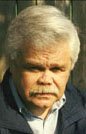
I was never much of a Jean-Claude Van Damme fan. Action movies tend to put me to sleep and the only one I saw Van Damme in didn't do much for me (as I recall).
But I have to say he's come up with an interesting comeback vehicle--much more interesting than just grinding out another predictable `splosion movie.
From USA Today's Pop Candy:
"What's it like to be Van Damme?
"Have you heard about the new Jean-Claude Van Damme movie? It looks really good.
"I write that without a hint of sarcasm or irony. Van Damme's latest flick, JCVD, is a bit different than the typical bloody, shoot-'em-up fare he's associated with. For starters, the action star plays himself -- and it's a pretty worn-down version of Van Damme at that.
"In the movie, the 47-year-old actor is hounded by fans and has just lost a role to Steven Seagal. He returns to Brussels and faces a (fictional) custody battle for his daughter and mounting financial problems."
Ed here: This sounds worth a look.
Friday, October 31, 2008

Thursday, October 30, 2008
Worst sidekicks
If Bill Crider and James Reasoner and I were to sit down and discuss sidekicks we'd likely bring up the great Gabby Hayes and work our way down to Fuzzy St. John (I always felt sorry for him; even as a kid I knew he was lame) and the aggravating Smiley Burnette. (My opinions only--Bill and James may disgaree.)
But for younger folks here's a funny piece I ran across from Empire magazine online--10 Worst Sidekicks. I have to admit they make ole Fuzzy and Smiley look positively Oscar-worthy.
http://www.empireonline.com/features/top10/worst_sidekicks.asp?NID=23032
But for younger folks here's a funny piece I ran across from Empire magazine online--10 Worst Sidekicks. I have to admit they make ole Fuzzy and Smiley look positively Oscar-worthy.
http://www.empireonline.com/features/top10/worst_sidekicks.asp?NID=23032
Wednesday, October 29, 2008
LU DOULOS; A.A. Fair; John Updike
From Fred Blosser
Ed, I see that Criterion has just released Jean-Pierre Melville's LE
DOULOS (1963) on DVD. My capsule review from MYSTERY SCENE #70, based
on the 2001 VHS edition, might be of interest for those who may not have
seen the movie:
"Silien (Jean Paul Belmondo) is a Parisian 'finger man' who steers
robbers and safecrackers toward potential jobs. Some of his associates
suspect that he's also in the gendarmes' pay as an informant. Therese
doesn't like it that this slippery character is pals with her boyfriend
Maurice, a thief preparing for a big score. 'He plays cozy, and you
tell him everything,' she frowns. Responds Maurice, 'Silien's my friend
until I know different.' Maybe his trust is unwisely placed. While
Maurice is out on his heist, Silien comes calling on Therese and roughs
her up until she tells him where Maurice is operating. Moments later,
the cops interrupt the score, gun down Maurice's partner as the thieves
flee, and nearly nab Maurice himself. Did Silien double-cross his
friend? Jean-Pierre Melville's LE DOULOS, newly reissued on home video
by Kino, loops through 50 or so twists and turns until Melville finally
reveals the answer. This hardboiled noir from 1963 is one of
Melville's best, served up in a style so cool that it's beyond cool.
The videocassette's visual quality isn't up to Kino's usual high
standards, but if it's a choice between less than perfectly packaged
Melville or no Melville, I'll still put my money down."
I haven't seen the Criterion disc yet -- but given Criterion's high
standards, the fact that a new 35mm print of LE DOULOS was struck a
couple of years ago, and my guess that the DVD was burned from the new
print, I anticipate that the disc will have much sharper detail and much
richer blacks, whites, and grays than the old VHS tape, even above and
beyond the basic superiority of DVD to VHS. I may be one of the few
fans who think that LE DOULOS surpasses LE SAMOURAI, which most critics
seem to feel was Melville's masterpiece.
By the way, looking for the LE DOULOS review, I glanced through MYSTERY
SCENE #61 and noticed my review of Robert Benton's TWILIGHT (1997), not
to be confused with the later Stephanie Meyer teen vampire novel. When
Paul Newman died recently, I remembered that while TWILIGHT had received
generally good notices, I wasn't greatly impressed. My review reminded
me of a key weakness: "... the script ... never gets a good fix on
Harry Ross' character [Ross was the retired private eye played by
Newman] except to the extent that it tries to make him an object of the
audience's pity. Bad mistake. In the performances that we remember him
for, Newman never had to beg for sympathy, never wanted to." William F.
Nolan once said he enjoyed Ross Macdonald's earliest Lew Archer novels
more than the later ones, because the later, older Archer was like the
younger Archer's grandfather. Even so, it's a pity that the aging but
persistently hard-nosed Archer of THE INSTANT ENEMY or THE BLUE HAMMER
couldn't have been Newman's PI swan song.
Fred
-----------------------------------A.A. FAIR
Bruce Grossman posted one of his nifty oldies review columns on Bookgasm this morning.
As I've said here many times my favorite Erle Stanley Gardner series ifsthe A.A. Fair books, especially those written in the Forties. A number of prominent writers showed their influence down the years but nobody did them quite las well as Gardner--screwball comedy-mysteries filled with Gardner's cynical take on American business and businessmen.
Here's Bruce:
BATS FLY AT DUSK by Erle Stanley Gardner — This is not your typical Cool & Lam mystery, since Donald Lam is nowhere to be found. We’re told he signed up for the Navy, which is fitting since this book was written in 1942. He makes somewhat of an appearance through a few telegrams, but that’s all. This one is all about Bertha Cool taking center stage.
The story deals with a blind man who sells ties on the street, trying to find a woman he knows got hurt in an accident. But what Bertha gets herself into is more trouble than she expects, becoming the prime suspect in a case that develops. All the blind man wanted was a name and to make sure the girl was okay, but this story takes a turn that keeps readers guessing until a great reveal toward the end.
for the rest go here:
http://www.bookgasm.com/reviews/thrillers/bullets-broads-blackmail-bombs-halloween-decorations/#more-5085
-------------------------------JOHN UPDIKE
An excellent NPR interview with John Updike (yes I still read and admire him). His almost mournful defense of realism ("the beauty of the everday") certainly rang true with me. He wasn't bitter; he simply wished there was still a place for fiction that didn't include "heroism" or melodrama.
Ed, I see that Criterion has just released Jean-Pierre Melville's LE
DOULOS (1963) on DVD. My capsule review from MYSTERY SCENE #70, based
on the 2001 VHS edition, might be of interest for those who may not have
seen the movie:
"Silien (Jean Paul Belmondo) is a Parisian 'finger man' who steers
robbers and safecrackers toward potential jobs. Some of his associates
suspect that he's also in the gendarmes' pay as an informant. Therese
doesn't like it that this slippery character is pals with her boyfriend
Maurice, a thief preparing for a big score. 'He plays cozy, and you
tell him everything,' she frowns. Responds Maurice, 'Silien's my friend
until I know different.' Maybe his trust is unwisely placed. While
Maurice is out on his heist, Silien comes calling on Therese and roughs
her up until she tells him where Maurice is operating. Moments later,
the cops interrupt the score, gun down Maurice's partner as the thieves
flee, and nearly nab Maurice himself. Did Silien double-cross his
friend? Jean-Pierre Melville's LE DOULOS, newly reissued on home video
by Kino, loops through 50 or so twists and turns until Melville finally
reveals the answer. This hardboiled noir from 1963 is one of
Melville's best, served up in a style so cool that it's beyond cool.
The videocassette's visual quality isn't up to Kino's usual high
standards, but if it's a choice between less than perfectly packaged
Melville or no Melville, I'll still put my money down."
I haven't seen the Criterion disc yet -- but given Criterion's high
standards, the fact that a new 35mm print of LE DOULOS was struck a
couple of years ago, and my guess that the DVD was burned from the new
print, I anticipate that the disc will have much sharper detail and much
richer blacks, whites, and grays than the old VHS tape, even above and
beyond the basic superiority of DVD to VHS. I may be one of the few
fans who think that LE DOULOS surpasses LE SAMOURAI, which most critics
seem to feel was Melville's masterpiece.
By the way, looking for the LE DOULOS review, I glanced through MYSTERY
SCENE #61 and noticed my review of Robert Benton's TWILIGHT (1997), not
to be confused with the later Stephanie Meyer teen vampire novel. When
Paul Newman died recently, I remembered that while TWILIGHT had received
generally good notices, I wasn't greatly impressed. My review reminded
me of a key weakness: "... the script ... never gets a good fix on
Harry Ross' character [Ross was the retired private eye played by
Newman] except to the extent that it tries to make him an object of the
audience's pity. Bad mistake. In the performances that we remember him
for, Newman never had to beg for sympathy, never wanted to." William F.
Nolan once said he enjoyed Ross Macdonald's earliest Lew Archer novels
more than the later ones, because the later, older Archer was like the
younger Archer's grandfather. Even so, it's a pity that the aging but
persistently hard-nosed Archer of THE INSTANT ENEMY or THE BLUE HAMMER
couldn't have been Newman's PI swan song.
Fred
-----------------------------------A.A. FAIR
Bruce Grossman posted one of his nifty oldies review columns on Bookgasm this morning.
As I've said here many times my favorite Erle Stanley Gardner series ifsthe A.A. Fair books, especially those written in the Forties. A number of prominent writers showed their influence down the years but nobody did them quite las well as Gardner--screwball comedy-mysteries filled with Gardner's cynical take on American business and businessmen.
Here's Bruce:
BATS FLY AT DUSK by Erle Stanley Gardner — This is not your typical Cool & Lam mystery, since Donald Lam is nowhere to be found. We’re told he signed up for the Navy, which is fitting since this book was written in 1942. He makes somewhat of an appearance through a few telegrams, but that’s all. This one is all about Bertha Cool taking center stage.
The story deals with a blind man who sells ties on the street, trying to find a woman he knows got hurt in an accident. But what Bertha gets herself into is more trouble than she expects, becoming the prime suspect in a case that develops. All the blind man wanted was a name and to make sure the girl was okay, but this story takes a turn that keeps readers guessing until a great reveal toward the end.
for the rest go here:
http://www.bookgasm.com/reviews/thrillers/bullets-broads-blackmail-bombs-halloween-decorations/#more-5085
-------------------------------JOHN UPDIKE
An excellent NPR interview with John Updike (yes I still read and admire him). His almost mournful defense of realism ("the beauty of the everday") certainly rang true with me. He wasn't bitter; he simply wished there was still a place for fiction that didn't include "heroism" or melodrama.
Tuesday, October 28, 2008
Lunch
We had a three hour lunch with Barb and Al (Max) Collins and Marthayn Peligrimas and Bob Randisi. One of the highlights of my year, no kidding. We laughed about everything except the publishing business. Not much to laugh about there. We're among the lucky ones with work. Many of our friends who started out in the late seventies and early eighties have long left the writing field. The Private Eye Writers of America did a roast of Bob, I got to hear many of the stories told about him. I kicked in a few of my own. Bob has just finished the screenplay based on his first (and very popular) Rat Pack novel about Sinatra and the boys in `60s Vegas. Barb brought the new hardcover she'd done with Al, a really sly wry traditional about the antiques business. Carol talked about the novel she's working on--her best (I've read a big chunk of it). I'm hoping Marthayn has a story for m to read when and if we sell the next Year's Best. I say what I always say about Al--the funniest guy I've ever known. He talked about writing the The Goliath Bone, his collaboration with Mickey Spillane. In my review here I mentioned how it managed to be compelling in a modern way but also nostalgic for people who grew up on Mickey. Wish I had a day like this once a week.
Monday, October 27, 2008
Tony Hillerman; Sleeping Dogs
What there's to say? Tony Hillerman was one of the great writers and great gentlemen of mystery fiction. Sarah Weinman has an excellent round-up of respones to his death. http://www.sarahweinman.com/
I thought the Christian Science Monitor's was especially good.
In appreciation of Tony Hillerman
By Marjorie Kehe | 10.27.08
E-mail a friend
“Tony Hillerman’s place alongside such great mystery writers as Agatha Christie and Sir Arthur Conan Doyle is certain,” wrote Monitor Book editor Jim Bencivenga in 1997. Today, as readers worldwide mourn Hillerman’s death at the age of 83, there are many who would agree.
Hillerman wrote “lyrical, authentic and compelling mystery novels set among the Navajos of the Southwest,” books that “blazed innovative trails in the American detective story,” writes Marilyn Stasio in an obituary in today’s International Herald Tribune. “Hillerman’s evocative novels, which describe people struggling to maintain ancient traditions in the modern world, touched millions of readers, who made them best sellers.”
Hillerman’s childhood prepared him well for the books that would eventually make him famous. Born in Sacred Heart, Okla., in 1925, he grew up surrounded by native Americans and their culture. Eventually he landed in New Mexico, where he worked as a journalist till the age of 40 when, restless, he decided to try his hand at writing fiction.
for the rest go here
http://features.csmonitor.com/books/2008/10/27/in-appreciation-of-tony-hillerman/
--------------SLEEPING DOGS
My novel Sleeping Dogs will soon be available on audio. Here are the details:
http://speakingvolumes.us/detail.asp?pid=95
I thought the Christian Science Monitor's was especially good.
In appreciation of Tony Hillerman
By Marjorie Kehe | 10.27.08
E-mail a friend
“Tony Hillerman’s place alongside such great mystery writers as Agatha Christie and Sir Arthur Conan Doyle is certain,” wrote Monitor Book editor Jim Bencivenga in 1997. Today, as readers worldwide mourn Hillerman’s death at the age of 83, there are many who would agree.
Hillerman wrote “lyrical, authentic and compelling mystery novels set among the Navajos of the Southwest,” books that “blazed innovative trails in the American detective story,” writes Marilyn Stasio in an obituary in today’s International Herald Tribune. “Hillerman’s evocative novels, which describe people struggling to maintain ancient traditions in the modern world, touched millions of readers, who made them best sellers.”
Hillerman’s childhood prepared him well for the books that would eventually make him famous. Born in Sacred Heart, Okla., in 1925, he grew up surrounded by native Americans and their culture. Eventually he landed in New Mexico, where he worked as a journalist till the age of 40 when, restless, he decided to try his hand at writing fiction.
for the rest go here
http://features.csmonitor.com/books/2008/10/27/in-appreciation-of-tony-hillerman/
--------------SLEEPING DOGS
My novel Sleeping Dogs will soon be available on audio. Here are the details:
http://speakingvolumes.us/detail.asp?pid=95
Sunday, October 26, 2008
David L. Ulin; Todd Mason
David L. Ulin Book editor of The Los Angeles Times wrote an interesting piece on what our national ecoonomic catastrophe may mean for the publishing business. He's more optomistic than I am but it's a different take.
"(Neyfakh's) piece went on to suggest that, with money getting tight, publishers might start to consider only books or writers they see as sure things, and that for lesser-known talent -- the so-called mid-list authors -- "the advances are going to be lower and it will be that much harder to sell them."
"Maybe so, although this is hardly a new argument; I've been listening to it for 20 years.
"What's more likely, I think, is that publishers will scale back some of their higher-end advances, especially in regard to certain risky properties: books blown out of magazine stories, over-hyped first novels, multi-platform "synergies." At least, I hope that's what happens, because one of the worst trends in publishing -- in culture in general -- over the last decade or so has been its air of desperate frenzy, which far more than falling numbers tells you that an industry is in decline."
for the rest go here
http://www.latimes.com/features/books/la-ca-ulin26-2008oct26,0,5551013.story
----------TODD MASON
Where has Todd been lately? Haven't heard from him in a couple of months.
"(Neyfakh's) piece went on to suggest that, with money getting tight, publishers might start to consider only books or writers they see as sure things, and that for lesser-known talent -- the so-called mid-list authors -- "the advances are going to be lower and it will be that much harder to sell them."
"Maybe so, although this is hardly a new argument; I've been listening to it for 20 years.
"What's more likely, I think, is that publishers will scale back some of their higher-end advances, especially in regard to certain risky properties: books blown out of magazine stories, over-hyped first novels, multi-platform "synergies." At least, I hope that's what happens, because one of the worst trends in publishing -- in culture in general -- over the last decade or so has been its air of desperate frenzy, which far more than falling numbers tells you that an industry is in decline."
for the rest go here
http://www.latimes.com/features/books/la-ca-ulin26-2008oct26,0,5551013.story
----------TODD MASON
Where has Todd been lately? Haven't heard from him in a couple of months.
Saturday, October 25, 2008
Norm Partridge on movies
Further comments on Touch of Evil:
Norm Partridge:
It really amazes me all the stuff Hollywood threw out. Of course, I wouldn't have expected anyone to anticipate DVDs with all those extra features, but jeeze. It would have been nice to see some of this stuff uncut, as the director originally intended it. But it seems like (mostly) the studios just buried all the footage that wasn't in the final release print in landfills. Maybe that's what's under Burbank.
And, for my money, Universal was the worst. I love those old monster movies especially. Have heard about missing scenes/test color footage for SON OF FRANKENSTEIN/Lugosi's screen test as the monster for the original FRANK/alternate cut of FRANKENSTEIN MEETS THE WOLFMAN in which Lugosi's monster talks.... all that stuff FOR YEARS. And Universal keeps releasing different editons, and wait a sec--this time even a specialer edition--but they don't seem to have a single frame of that stuff. It's just a crying shame that they tossed EVERYTHING. I get upset just clicking over to the special features on their discs. I know that all I'm going to get is a half hour of talking heads (their A&C MEETS FRANK disc doesn't even have the outtakes that you can find on Youtube, fer chrissakes!).
The Warner Brothers discs are almost uniformly fun, though. Even if they don't have a lot of extra material that ties into the movie, I always get a kick out of the Warner Night at the Movies features. Great to see those old short subjects and cartoons, and they really help get me in the mood for the main feature.
What surprised me is that TOUCH OF EVIL also got really bad press when it was released. I love that movie to pieces (even with Fritz Weaver's character being so annoyingly nervous and wacky). Also really dig THE STRANGER even though Welles thought it was his least important film (it was apparently his only truly successful one too). CITIZEN CANE helped to establish a lot of the noir mood that crime pics eventually became known for. If the man had stuck to crime early on out of the gate and actually embraced the genre, I wonder if he would've been truly embraced by the public.
I love TOUCH OF EVIL, too. Even Chuck Heston as a Mexican. In a twisted way, it's fun to check out first-round reviews like that. I came across one for Charles Beaumont's THE HUNGER AND OTHER STORIES awhile back that pretty much carved it up. I'm sure a lot of the fifties guys had reviews like that (if they got reviewed at all). One book I've always been curious about is I AM LEGEND. I'd like to go back and see what folks made of that when it first came out. I think it was a pb original, so I'll bet it didn't get too much coverage, but it would be fun to investigate.
Norm
Norm Partridge:
It really amazes me all the stuff Hollywood threw out. Of course, I wouldn't have expected anyone to anticipate DVDs with all those extra features, but jeeze. It would have been nice to see some of this stuff uncut, as the director originally intended it. But it seems like (mostly) the studios just buried all the footage that wasn't in the final release print in landfills. Maybe that's what's under Burbank.
And, for my money, Universal was the worst. I love those old monster movies especially. Have heard about missing scenes/test color footage for SON OF FRANKENSTEIN/Lugosi's screen test as the monster for the original FRANK/alternate cut of FRANKENSTEIN MEETS THE WOLFMAN in which Lugosi's monster talks.... all that stuff FOR YEARS. And Universal keeps releasing different editons, and wait a sec--this time even a specialer edition--but they don't seem to have a single frame of that stuff. It's just a crying shame that they tossed EVERYTHING. I get upset just clicking over to the special features on their discs. I know that all I'm going to get is a half hour of talking heads (their A&C MEETS FRANK disc doesn't even have the outtakes that you can find on Youtube, fer chrissakes!).
The Warner Brothers discs are almost uniformly fun, though. Even if they don't have a lot of extra material that ties into the movie, I always get a kick out of the Warner Night at the Movies features. Great to see those old short subjects and cartoons, and they really help get me in the mood for the main feature.
What surprised me is that TOUCH OF EVIL also got really bad press when it was released. I love that movie to pieces (even with Fritz Weaver's character being so annoyingly nervous and wacky). Also really dig THE STRANGER even though Welles thought it was his least important film (it was apparently his only truly successful one too). CITIZEN CANE helped to establish a lot of the noir mood that crime pics eventually became known for. If the man had stuck to crime early on out of the gate and actually embraced the genre, I wonder if he would've been truly embraced by the public.
I love TOUCH OF EVIL, too. Even Chuck Heston as a Mexican. In a twisted way, it's fun to check out first-round reviews like that. I came across one for Charles Beaumont's THE HUNGER AND OTHER STORIES awhile back that pretty much carved it up. I'm sure a lot of the fifties guys had reviews like that (if they got reviewed at all). One book I've always been curious about is I AM LEGEND. I'd like to go back and see what folks made of that when it first came out. I think it was a pb original, so I'll bet it didn't get too much coverage, but it would be fun to investigate.
Norm
Friday, October 24, 2008
Sarah Weinman; Tom Piccirilli
Sarah Weinman's Sunday LA Times review discusses a man few if any of us have heard of previously. A fascinating and important piece.
Rediscovering early fictional America detective James Brampton
By Sarah Weinman
October 26, 2008
It is a truth universally acknowledged that after Edgar Allan Poe's mysterious death in 1849, detective fiction did not make another splash on these shores until a pipe-smoking Englishman with remarkable powers of deduction became a transatlantic sensation...
(more)
.. but mystery readers looking for immediate literary successors to Poe's dark tales of detection would have to resign themselves to a vacuum of time until Arthur Conan Doyle and Wilkie Collins' gothic-tinged detective novels showed up on the scene.
(more)
Acknowledged truths, however, have a funny way of being flouted. The recent reissue of a series of detective tales published more than 20 years before "A Study in Scarlet" (Doyle's first Holmes tale) appeared in 1887 adds a welcome link to the chain connecting the early masters of detective fiction. "
for the rest go here
times.com/features/books/la-caw-dark-passages26-2008oct26,0,3963325.story
-----Tom Piccirilli
Ed here: I our recent exchange of letters about Robert Ryan (previous post) Norm Partridge and I recommended that Tom watch Day of The Outlaw. Tom wrote us today:
Watched DAY OF THE OUTLAW last night and man, you guys were right. What a damn nihilistic piece of filmmaking. That opening speech Robert Ryan says about why he'll fight anyone trying to box him in is amazing. Nobody spits dialogue like RR! When you get down to it, the film was as noir, if not more so, than most film noir. Everybody's a heavy in some capacity, everybody's marching off to death whether they know it or not, some folks find redemption along the way, and in the end you've got nothing but a freezing hell waiting. The film also uses very little music, just letting that frozen wasteland do it's singing for it. Good call!
Rediscovering early fictional America detective James Brampton
By Sarah Weinman
October 26, 2008
It is a truth universally acknowledged that after Edgar Allan Poe's mysterious death in 1849, detective fiction did not make another splash on these shores until a pipe-smoking Englishman with remarkable powers of deduction became a transatlantic sensation...
(more)
.. but mystery readers looking for immediate literary successors to Poe's dark tales of detection would have to resign themselves to a vacuum of time until Arthur Conan Doyle and Wilkie Collins' gothic-tinged detective novels showed up on the scene.
(more)
Acknowledged truths, however, have a funny way of being flouted. The recent reissue of a series of detective tales published more than 20 years before "A Study in Scarlet" (Doyle's first Holmes tale) appeared in 1887 adds a welcome link to the chain connecting the early masters of detective fiction. "
for the rest go here
times.com/features/books/la-caw-dark-passages26-2008oct26,0,3963325.story
-----Tom Piccirilli
Ed here: I our recent exchange of letters about Robert Ryan (previous post) Norm Partridge and I recommended that Tom watch Day of The Outlaw. Tom wrote us today:
Watched DAY OF THE OUTLAW last night and man, you guys were right. What a damn nihilistic piece of filmmaking. That opening speech Robert Ryan says about why he'll fight anyone trying to box him in is amazing. Nobody spits dialogue like RR! When you get down to it, the film was as noir, if not more so, than most film noir. Everybody's a heavy in some capacity, everybody's marching off to death whether they know it or not, some folks find redemption along the way, and in the end you've got nothing but a freezing hell waiting. The film also uses very little music, just letting that frozen wasteland do it's singing for it. Good call!
Thursday, October 23, 2008
Opie speaks
Ron Howard has put together one of the best campaing spots of the election. With Andy Griffith and Henry Winkler joining him to promote Obama. http://www.funnyordie.com/videos/cc65ed650d
Tuesday, October 21, 2008
Norm Patridge and Tom Piccirilii
My two buddies Norm Partridge and Tom Piccirilli and I have been trading letters. One of the subjects Orson Welles' the Lady From Shanghai. In the course of my letter I said "I saw Lady From Last week. I know Welles ditched because she was "boring" but how boring could Rita Hayworth be?"
From Norm Patridge:
There was a great story about her in a Mitchum bio Pic recommended to me. They were on location somewhere in the Pacific, bored to tears, and the mail came in. Mitchum came across Hayworth on deck with a big canvas sack full of mail. She was ripping the envelopes in half without opening them, then tossing them into the water.
"What are you doing?" Mitchum said. "There might be checks in there!"
"Sure," said Rita. "But they'll be more bad news than good."
Welles and Hayworth had a house down in Big Sur when nothing was there but pine cones and Wm. Randolph Hearst's own personal Xanadu. The old Welles/Hayworth place is now a restaurant. Hamburgers there cost more than ten bucks (welcome to California), but the place overlooks the ocean from a cliff and makes you think of guys taking a pass on the forties to drink beer and look at the water. I was talking to one of the publishers from Night Shade Books about it, and he'd been there too. This was several years ago. He spotted an actor having lunch, and when the waitress showed up to take the order, he told her: "I'll have whatever Lee Marvin is having." To which the waitress replied: "That's not Lee Marvin. He's dead. That's James Coburn."
Hearing the story, I said: "Man, you're kidding me! You couldn't tell the difference between Lee Marvin and James Coburn?"
"Well, they both have that white hair, and they're both kind of cool, and--"
"Yeah," I said, "but if you got in a fight with Coburn, you'd probably end up lighting incense, discussing the Buddha, and concentrating on your third eye. Lee Marvin, man.. he'd just bite your ear off and be done with it."
Anyway, I'm a big fan of LADY FROM SHANGHAI, too. If Welles would have done more stuff like that and TOUCH OF EVIL, he would have been a lot better off. He had the knack for it.
Norm
From Tom Piccirilli
I just listened to the commentary on LADY. Apparently, Welles' original cut was two and a half hours long, while the finished product, edited by the studio, isn't even nintey minutes. Never before have I been so aware of the edits made in a film. The whole opening seems to nearly be a montage with Welles' voice-over trying to clarify what the hell the scene is supposed to be about. It's full of what will eventually be known as that flash-cut MTV style editing. It really bothered me. Later on there seem to be entire scenes missing. One in particular has Rita and her hubby lying side by side and she stands up and starts zipping down the streets looking for Welles. When she stands her hubby yells, "Lover!" and then she's off. It feels like there's a whole argument and tons of dialogue that has been cut just to get Rita moving along. So much of the backstory is apparently missing. Hell, who the hell knew or even suspected that the butler was actually a former PI until they actually tell us that he is. Until then, he's just some wormy dude who's hardly even around and doesn't say a damn thing. Then there's Welles' buddy who also works for Rita who just kind of comes in and out every so often to lay down a line and then off he goes again.
What's there is really intriguing and there's a strong sense of noir, but man, the editing actually got on my nerves and made me grimace at times even before I listened to Bogdonovich talking about how they chopped half the movie out.
What surprised me is that TOUCH OF EVIL also got really bad press when it was released. I love that movie to pieces (even with Fritz Weaver's character being so annoyingly nervous and wacky). Also really dig THE STRANGER even though Welles thought it was his least important film (it was apparently his only truly successful one too). CITIZEN CANE helped to establish a lot of the noir mood that crime pics eventually became known for. If the man had stuck to crime early on out of the gate and actually embraced the genre, I wonder if he would've been truly embraced by the public.
T
From Norm Patridge:
There was a great story about her in a Mitchum bio Pic recommended to me. They were on location somewhere in the Pacific, bored to tears, and the mail came in. Mitchum came across Hayworth on deck with a big canvas sack full of mail. She was ripping the envelopes in half without opening them, then tossing them into the water.
"What are you doing?" Mitchum said. "There might be checks in there!"
"Sure," said Rita. "But they'll be more bad news than good."
Welles and Hayworth had a house down in Big Sur when nothing was there but pine cones and Wm. Randolph Hearst's own personal Xanadu. The old Welles/Hayworth place is now a restaurant. Hamburgers there cost more than ten bucks (welcome to California), but the place overlooks the ocean from a cliff and makes you think of guys taking a pass on the forties to drink beer and look at the water. I was talking to one of the publishers from Night Shade Books about it, and he'd been there too. This was several years ago. He spotted an actor having lunch, and when the waitress showed up to take the order, he told her: "I'll have whatever Lee Marvin is having." To which the waitress replied: "That's not Lee Marvin. He's dead. That's James Coburn."
Hearing the story, I said: "Man, you're kidding me! You couldn't tell the difference between Lee Marvin and James Coburn?"
"Well, they both have that white hair, and they're both kind of cool, and--"
"Yeah," I said, "but if you got in a fight with Coburn, you'd probably end up lighting incense, discussing the Buddha, and concentrating on your third eye. Lee Marvin, man.. he'd just bite your ear off and be done with it."
Anyway, I'm a big fan of LADY FROM SHANGHAI, too. If Welles would have done more stuff like that and TOUCH OF EVIL, he would have been a lot better off. He had the knack for it.
Norm
From Tom Piccirilli
I just listened to the commentary on LADY. Apparently, Welles' original cut was two and a half hours long, while the finished product, edited by the studio, isn't even nintey minutes. Never before have I been so aware of the edits made in a film. The whole opening seems to nearly be a montage with Welles' voice-over trying to clarify what the hell the scene is supposed to be about. It's full of what will eventually be known as that flash-cut MTV style editing. It really bothered me. Later on there seem to be entire scenes missing. One in particular has Rita and her hubby lying side by side and she stands up and starts zipping down the streets looking for Welles. When she stands her hubby yells, "Lover!" and then she's off. It feels like there's a whole argument and tons of dialogue that has been cut just to get Rita moving along. So much of the backstory is apparently missing. Hell, who the hell knew or even suspected that the butler was actually a former PI until they actually tell us that he is. Until then, he's just some wormy dude who's hardly even around and doesn't say a damn thing. Then there's Welles' buddy who also works for Rita who just kind of comes in and out every so often to lay down a line and then off he goes again.
What's there is really intriguing and there's a strong sense of noir, but man, the editing actually got on my nerves and made me grimace at times even before I listened to Bogdonovich talking about how they chopped half the movie out.
What surprised me is that TOUCH OF EVIL also got really bad press when it was released. I love that movie to pieces (even with Fritz Weaver's character being so annoyingly nervous and wacky). Also really dig THE STRANGER even though Welles thought it was his least important film (it was apparently his only truly successful one too). CITIZEN CANE helped to establish a lot of the noir mood that crime pics eventually became known for. If the man had stuck to crime early on out of the gate and actually embraced the genre, I wonder if he would've been truly embraced by the public.
T
Monday, October 20, 2008
So THAT's how it works
From Galleycat
Posted by Ron | 07:00 AM | Party Hopping | Email this post | 0 Comments
Why Didn't Borders Want Your Book?
Andrew Wheeler, a marketing manager at Wiley, has a long, thoughtful essay about why the national chain bookstores don't order every book published, including some books by imprints at the biggest conglomerates. "I market books for a living, so I can tell you an unpleasant truth: the order for any book, from any account, starts at zero," Wheeler warns. "The publisher's sales rep walks in the door with tipsheets and covers, past sales figures and promotional plans, to convince that bookseller's buyer to buy that book... Sometimes, that buyer is not convinced, and the order stays at zero."
"Generally, for a hardcover or trade paperback that's not being pitched for something promotional... you're talking about whether the order is one, two, or maybe three copies per store," he explains—but there's also the possibility that they'll only order inventory for the stores that sell that book's category best. And it goes without saying that an author's past performance will factor into the store buyer's consideration—looking at the two prominent Borders "skips" of books in the science fiction genre that prompted Wheeler's explanation, the decisions appear purely numbers-based, brutal but economically sound from the store's standpoint. "
For the rest go here
http://www.mediabistro.com/galleycat/
Posted by Ron | 07:00 AM | Party Hopping | Email this post | 0 Comments
Why Didn't Borders Want Your Book?
Andrew Wheeler, a marketing manager at Wiley, has a long, thoughtful essay about why the national chain bookstores don't order every book published, including some books by imprints at the biggest conglomerates. "I market books for a living, so I can tell you an unpleasant truth: the order for any book, from any account, starts at zero," Wheeler warns. "The publisher's sales rep walks in the door with tipsheets and covers, past sales figures and promotional plans, to convince that bookseller's buyer to buy that book... Sometimes, that buyer is not convinced, and the order stays at zero."
"Generally, for a hardcover or trade paperback that's not being pitched for something promotional... you're talking about whether the order is one, two, or maybe three copies per store," he explains—but there's also the possibility that they'll only order inventory for the stores that sell that book's category best. And it goes without saying that an author's past performance will factor into the store buyer's consideration—looking at the two prominent Borders "skips" of books in the science fiction genre that prompted Wheeler's explanation, the decisions appear purely numbers-based, brutal but economically sound from the store's standpoint. "
For the rest go here
http://www.mediabistro.com/galleycat/
Saturday, October 18, 2008
Richard Jessup
As I've mentioned before the careers of writers well known and not interest me. As I read The Cincinatti Kid by Richard Jessup last night I thought of what a fairly long and spotty career his was.
We first see Jessup in the early `50s when Gold Medal was promoting him as their own angry young man. The books were thick and dealt with social themes such as race and juveVile delinquency. I haven't read them in years but I remember liking them. And somewhere in here he wrote radio and live Tv including the science fiction series Tom Corbett. Two of his long Gold Medals became movies.
His next incarnation, after the angry young man phase ended, comes in the middle to late period of that decade. Jessup, under at least two pen-names, writes crime novels and westerns. After the James Bond boom he creates a spy series that people seem to love or despise.
Then came the massive hit. The popularity of the movie version of The Cincinatti Kid made Jessup a star. Reading it last night I found it to be even richer than the movie. A small tight masterpiece.
But then...
Jessup wasn't a one-hit wonder because he wrote three or four moderately successful novels after Kid. His publishers were careful to disassociate him from his genre work. I recall seeing an edition of Kid that gave the impression this was a first novel.
But he never came close to achieving another huge seller or one as culturally important as Kid. So what if he took The Hustler as his template and used poker instead of pool? Kid was indeibly Jessup just as Hustler was indeliby Walter Tevis.
It's difficult to learn what he did exactly after the success of Kid. There were the books I mentioned but as an old paperback original writer he seemed to have a lot of time on his hands. I checked IMDB and his Hollywood career seems to have been limited mostly to a few minor movies television and even there he didn't get many credits..
In the early eighties he wrote two door-stopper size suspense novels both of which I liked but neither of which seemed to do very well, at least in comparison to Kid.
I think what we're looking at here is the career of a working writer who got awfully lucky with the best book of his life. We should all have such luck,
But most of his books gave me so much pleasure--he was a hell of a good western writer; and his Gold Medal Wolfcop is a fine hardboiled novel--I wish he was remembered for more than just Kid. He brought a precise, evocative style to all his books and at least once a novel he fried your brain. I'm thinking here of Wyoming Jones when Jones is caught with a young Indian woman who is betrothed to the Chief. Jones is tied to a post and prepared for being burned at the stake if the young woman doesn't prove to still be a virgin. An old Indian woman is to examine her. Chandler always said that you needed to work inside the formula, give it touches that only you could bring. Jssup did that frequetly.
He died way too young of lung cancer. It made me remember all those dramatic author photographs of him with a cigarette between his fingers.
We first see Jessup in the early `50s when Gold Medal was promoting him as their own angry young man. The books were thick and dealt with social themes such as race and juveVile delinquency. I haven't read them in years but I remember liking them. And somewhere in here he wrote radio and live Tv including the science fiction series Tom Corbett. Two of his long Gold Medals became movies.
His next incarnation, after the angry young man phase ended, comes in the middle to late period of that decade. Jessup, under at least two pen-names, writes crime novels and westerns. After the James Bond boom he creates a spy series that people seem to love or despise.
Then came the massive hit. The popularity of the movie version of The Cincinatti Kid made Jessup a star. Reading it last night I found it to be even richer than the movie. A small tight masterpiece.
But then...
Jessup wasn't a one-hit wonder because he wrote three or four moderately successful novels after Kid. His publishers were careful to disassociate him from his genre work. I recall seeing an edition of Kid that gave the impression this was a first novel.
But he never came close to achieving another huge seller or one as culturally important as Kid. So what if he took The Hustler as his template and used poker instead of pool? Kid was indeibly Jessup just as Hustler was indeliby Walter Tevis.
It's difficult to learn what he did exactly after the success of Kid. There were the books I mentioned but as an old paperback original writer he seemed to have a lot of time on his hands. I checked IMDB and his Hollywood career seems to have been limited mostly to a few minor movies television and even there he didn't get many credits..
In the early eighties he wrote two door-stopper size suspense novels both of which I liked but neither of which seemed to do very well, at least in comparison to Kid.
I think what we're looking at here is the career of a working writer who got awfully lucky with the best book of his life. We should all have such luck,
But most of his books gave me so much pleasure--he was a hell of a good western writer; and his Gold Medal Wolfcop is a fine hardboiled novel--I wish he was remembered for more than just Kid. He brought a precise, evocative style to all his books and at least once a novel he fried your brain. I'm thinking here of Wyoming Jones when Jones is caught with a young Indian woman who is betrothed to the Chief. Jones is tied to a post and prepared for being burned at the stake if the young woman doesn't prove to still be a virgin. An old Indian woman is to examine her. Chandler always said that you needed to work inside the formula, give it touches that only you could bring. Jssup did that frequetly.
He died way too young of lung cancer. It made me remember all those dramatic author photographs of him with a cigarette between his fingers.
Friday, October 17, 2008
Hardboiled Sentimentality
Dorothy Parker once said that "Hemingway talks sentimental out of the side of his mouth." Meaning that Two-Gun Ernie for all his hardboiled nihilism was as full of sentimentality as most of us.
In the LA Times today Sarah Weinman reviews a book called 'Hard-Boiled Sentimentality' by Leonard Cassuto
The connection between crime fiction and 19th century sentimental novels.
Here are a few quotes form the review:
"DEVOTED readers of crime fiction can recite the tropes of hard-boiled novels by heart. Tough-talking detectives. Femmes fatales. Prose harder than diamonds. And lots of violence, preferably by someone holding a gun.
"Dashiell Hammett and Raymond Chandler are the standards, giving rise to the idea that the darker the crime novel, the better -- and more respected by the literati and academia.
(more)
"The book's title comes from a letter by John D. MacDonald's publisher at Gold Medal, Knox Burger, praising the early Travis McGee novels' "hard-boiled sentimentality . . . as enormously successful and attractive."
(more)
"One can always play the equivalent of fantasy baseball with a book like "Hard-Boiled Sentimentality," quibbling with what's included (forgettable, out-of-print work by Robert Finnegan and Harold Browne), or with what's left out. Mickey Spillane's Mike Hammer novels merit just a few sentences; James Crumley's P.I. protagonists, Milo Milodragovitch and C.W. Sughrue, are not mentioned at all."
I have to say that I disagree with Sarah on Robert Finnegan, a serious writer Maxim Jakubowski and I have been pushing for years. To me he was a leftist radical whose crime novels on post-war San Francisco work as both mysteries and fascinating snapshots of SF of that time. As for "Harold Brown" if Howard Browne is meant I'd argue that A Taste of Ashes is one of the finest private eye novels ever written.
These things aside, I'd say that there isn't a more elegant, graceful, adenturesome reviewer in our field today. If I ever had to teach a course in writing reviews I'd copy this one and hand it out to my students.
Read the entire review here:
http://www.latimes.com/features/books/la-et-book17-2008oct17,0,298939.story
In the LA Times today Sarah Weinman reviews a book called 'Hard-Boiled Sentimentality' by Leonard Cassuto
The connection between crime fiction and 19th century sentimental novels.
Here are a few quotes form the review:
"DEVOTED readers of crime fiction can recite the tropes of hard-boiled novels by heart. Tough-talking detectives. Femmes fatales. Prose harder than diamonds. And lots of violence, preferably by someone holding a gun.
"Dashiell Hammett and Raymond Chandler are the standards, giving rise to the idea that the darker the crime novel, the better -- and more respected by the literati and academia.
(more)
"The book's title comes from a letter by John D. MacDonald's publisher at Gold Medal, Knox Burger, praising the early Travis McGee novels' "hard-boiled sentimentality . . . as enormously successful and attractive."
(more)
"One can always play the equivalent of fantasy baseball with a book like "Hard-Boiled Sentimentality," quibbling with what's included (forgettable, out-of-print work by Robert Finnegan and Harold Browne), or with what's left out. Mickey Spillane's Mike Hammer novels merit just a few sentences; James Crumley's P.I. protagonists, Milo Milodragovitch and C.W. Sughrue, are not mentioned at all."
I have to say that I disagree with Sarah on Robert Finnegan, a serious writer Maxim Jakubowski and I have been pushing for years. To me he was a leftist radical whose crime novels on post-war San Francisco work as both mysteries and fascinating snapshots of SF of that time. As for "Harold Brown" if Howard Browne is meant I'd argue that A Taste of Ashes is one of the finest private eye novels ever written.
These things aside, I'd say that there isn't a more elegant, graceful, adenturesome reviewer in our field today. If I ever had to teach a course in writing reviews I'd copy this one and hand it out to my students.
Read the entire review here:
http://www.latimes.com/features/books/la-et-book17-2008oct17,0,298939.story
Thursday, October 16, 2008
Capricorn One
Cinema Retro ran a piece (in its usual fine intresting style) on a new DVD of Capricorn One. I have a special interest in that film because one night when Carol and I were driving back from Chicago we decided to listen to loopy late night radio. In those days (not sure how its goes these days) late night was rarely political. It was, instead, about conspiracy theories of all kinds.
Here's a piece of the Cinema Retro review:
"Capricorn Onewas the first major release to center on a clearly crackpot theory and present it as a plausible thesis. In this case, the notion is that corrupt NASA executives concoct an audacious plot to fake the first landing on Mars. They gain the co-operation of the three astronauts involved using a combination of appeals to their patriotism coupled with implied threats against their families. As crazy as the scenario sounds, Hal Holbrook, as the plot's mastermind, delivers a speech to the men that makes it sound sensible (they have to have a triumph or public apathy for NASA will result in cancelation of the space program). Things quickly go awry when technical glitches make it appear the capsule was destroyed en route back to earth. In order to maintain the facade, Holbrook has to order the assassination of the astronauts, played by James Brolin, Sam Waterston and O.J. Simpson. The men realize they are expendable and make a daring break for freedom across the desert."
The show we heard had listeners calling in from the US and Canada claiming that this was in fact what happened when we claimed to have landed on the moon. It was all staged in a TV studio by the US government.
I'm pretty sure this theory still has credence among the full-mooners. In fact I heard Sarah Palin promise to look into it if she and that nasty old bastard she's running with ever happen to take the White House.
Here's a piece of the Cinema Retro review:
"Capricorn Onewas the first major release to center on a clearly crackpot theory and present it as a plausible thesis. In this case, the notion is that corrupt NASA executives concoct an audacious plot to fake the first landing on Mars. They gain the co-operation of the three astronauts involved using a combination of appeals to their patriotism coupled with implied threats against their families. As crazy as the scenario sounds, Hal Holbrook, as the plot's mastermind, delivers a speech to the men that makes it sound sensible (they have to have a triumph or public apathy for NASA will result in cancelation of the space program). Things quickly go awry when technical glitches make it appear the capsule was destroyed en route back to earth. In order to maintain the facade, Holbrook has to order the assassination of the astronauts, played by James Brolin, Sam Waterston and O.J. Simpson. The men realize they are expendable and make a daring break for freedom across the desert."
The show we heard had listeners calling in from the US and Canada claiming that this was in fact what happened when we claimed to have landed on the moon. It was all staged in a TV studio by the US government.
I'm pretty sure this theory still has credence among the full-mooners. In fact I heard Sarah Palin promise to look into it if she and that nasty old bastard she's running with ever happen to take the White House.
Wednesday, October 15, 2008
Bob Randisi; Tm Piccirilli
Ed here: I hope this doesn't mean that Bob will make me start mowing his lawn again. This just might go to his head.
From Variety
Randisi solves 'Rat Pack Mysteries'
Hackett options first novel 'Everybody Kills'
By MIKE FLAHERTY
The Rat Pack lives -- sort of.
In a move that features life and art imitating each other like a dog chasing its tail, Sandy Hackett has optioned Robert Randisi’s novel, “Everybody Kills Somebody Sometime,” the first of Randisi’s “Rat Pack Mysteries” featuring the eponymous Hollywood bad boys.
Hackett, son of late comedian Buddy Hackett, created “The Rat Pack Is Back” tribute revue at Las Vegas’ Plaza Hotel. He met Randisi when the author was researching the Pack in 2007, and the two struck a pact this summer.
“Everybody” is set in 1960 when the storied showbiz gang (Frank Sinatra, Dean Martin, Sammy Davis Jr., Peter Lawford and Bishop) was shooting “Ocean’s 11” during the day and headlining the Sands’ Copa Room at night.
The tale finds Randisi’s protagonist, pit-boss Eddie Gianelli, summoned to look into a series of death threats against Martin.
“The Rat Pack were drinking before there was alcoholism, smoking before cancer, and having sex before AIDS,” says Hackett. Still, he adds, “There is a romanticism about them.”
With Randisi set to deliver the screenplay —his first — by year’s end, Hackett, who also co-exec-produced the 2007 horror film “Portal,” hopes to roll cameras by the first quarter of 2010.
It’s not too early, however, for Randisi to muse on who might make a good bigscreen Sinatra: “If Michael Buble or Harry Connick Jr. read Variety, I’d like them to get in touch with me.”
More than one option
* (Person) Dean Martin
Actor, Music, Song
* (Person) Dean Martin
Driver, Key Grip, Production
--------Tom Piccirilli's Blog Spot
Tom just announced that his new blog is open for business. I;m sure it'll be as cool as his fiction.
http://thecoldspot.blogspot.com/
From Variety
Randisi solves 'Rat Pack Mysteries'
Hackett options first novel 'Everybody Kills'
By MIKE FLAHERTY
The Rat Pack lives -- sort of.
In a move that features life and art imitating each other like a dog chasing its tail, Sandy Hackett has optioned Robert Randisi’s novel, “Everybody Kills Somebody Sometime,” the first of Randisi’s “Rat Pack Mysteries” featuring the eponymous Hollywood bad boys.
Hackett, son of late comedian Buddy Hackett, created “The Rat Pack Is Back” tribute revue at Las Vegas’ Plaza Hotel. He met Randisi when the author was researching the Pack in 2007, and the two struck a pact this summer.
“Everybody” is set in 1960 when the storied showbiz gang (Frank Sinatra, Dean Martin, Sammy Davis Jr., Peter Lawford and Bishop) was shooting “Ocean’s 11” during the day and headlining the Sands’ Copa Room at night.
The tale finds Randisi’s protagonist, pit-boss Eddie Gianelli, summoned to look into a series of death threats against Martin.
“The Rat Pack were drinking before there was alcoholism, smoking before cancer, and having sex before AIDS,” says Hackett. Still, he adds, “There is a romanticism about them.”
With Randisi set to deliver the screenplay —his first — by year’s end, Hackett, who also co-exec-produced the 2007 horror film “Portal,” hopes to roll cameras by the first quarter of 2010.
It’s not too early, however, for Randisi to muse on who might make a good bigscreen Sinatra: “If Michael Buble or Harry Connick Jr. read Variety, I’d like them to get in touch with me.”
More than one option
* (Person) Dean Martin
Actor, Music, Song
* (Person) Dean Martin
Driver, Key Grip, Production
--------Tom Piccirilli's Blog Spot
Tom just announced that his new blog is open for business. I;m sure it'll be as cool as his fiction.
http://thecoldspot.blogspot.com/
Tuesday, October 14, 2008
Say it ain't so!
Maybe Kathy Griffin was right when she joked years ago that Dakota Fanning had been in rehab when she was five or six (Griffin lost her Red Carpet job for repeating the gag over and over).
From DeFamer today:
Young divas
Dakota Fanning A Diva From Hell, Claims Her Latest Director
Rowan Woods, the director of Fanning's upcoming film Winged Creatures, just gave an interview branding the young star as a "diva" whose scenes he had to cut:
Woods said his high profile cast was a pleasure to work with except for teenage starlet Dakota Fanning, who could be a diva on the set.
She initially refused to come out of her trailer on day one of shooting because her scene wasn't filmed first, and was "intensely jealous" of her young co-star Josh Hutcherson.
"Everyone was on their best behaviour on this film because they have got a `really serious Australian director who is known for his ensemble work'," Woods laughed.
"(Fanning) was the only one who was naughty."
Woods said while he thinks Fanning is a fine actor, on this film she didn't hit the mark.
"She is a gorgeous girl ... but she was the disaster," he said.
"There was something about her presence that wasn't ringing true.
"Most of our work was cutting her scenes and a lot of her scenes were cut."
Ed here: Is there anything left to believe in? If you can think of anything please let me know.
From DeFamer today:
Young divas
Dakota Fanning A Diva From Hell, Claims Her Latest Director
Rowan Woods, the director of Fanning's upcoming film Winged Creatures, just gave an interview branding the young star as a "diva" whose scenes he had to cut:
Woods said his high profile cast was a pleasure to work with except for teenage starlet Dakota Fanning, who could be a diva on the set.
She initially refused to come out of her trailer on day one of shooting because her scene wasn't filmed first, and was "intensely jealous" of her young co-star Josh Hutcherson.
"Everyone was on their best behaviour on this film because they have got a `really serious Australian director who is known for his ensemble work'," Woods laughed.
"(Fanning) was the only one who was naughty."
Woods said while he thinks Fanning is a fine actor, on this film she didn't hit the mark.
"She is a gorgeous girl ... but she was the disaster," he said.
"There was something about her presence that wasn't ringing true.
"Most of our work was cutting her scenes and a lot of her scenes were cut."
Ed here: Is there anything left to believe in? If you can think of anything please let me know.
Monday, October 13, 2008
Forgotten Books: Margaret Millar
In my effort to get people to read Margaret Millar I'm reprinting some comments that the late Tom Piccirilli and I exchanged in e mails via his site The Big Adios.
Tom:
Finished up Margaret Millar's THE CANNIBAL HEART today and really dug it. Man, she's got such a gothic underpining to her fiction, her writing is just drenched in atmosphere. This was a solid tale of a family renting a beach house from a woman whose husband has recently committed suicide and whose retarded son has recently also died. A touch slow in the opening but soon you get the snaky feeling that all is not right (and don't we all love that?) A lot of flavor and style reminiscent of Shirley Jackson.
Ed
Tom, you nailed it with the "gothic" angle. Millar like Shirley Jackson was much enamored of gothic elements the difference being (my theory) is that Jackson and early Capote (his early stuff was pure gothic) etc came out of Faulkner as did so many other Southern writers. Where Millar came out of a very white Northern and mostly middle-class environment. But the results were similar occasionally. Millar, like Jackson, was a tart and sometimes droll social observer though in her later novels I think Millar surpassed Jackson at this.
Tom:
Ed, I agree about how Millar's sense of the gothic doesn't have that sweaty southern sensibility to it, although I think she early on left behind the white north and gave her gothic a dark southern California feel. Man, southern Cali at the time must've just had such a hook. Both she and (her huisband Ross) Macdonald came out of Canada and just seemed to leave it completely behind. That black Cali mood is reflected in Macdonald's work as well. He gives you the weird gothic families underscored by a hipster PI narrative, whereas Millar focuses on the "un-hip" elements and just pours out the atmosphere. You're right that the droll social commentary comes through, usually where underlying and hidden tension in marriage and family is concerned. I know that Jackson's marriage was rough-going, and her husband had a number of flings. I wonder if all the disatisfied married characters in Millar's work parallel her own marriage. Damn, just more reason to read the bio.
Ed:
Tom Nolan's biograph of Ross Macdonald (Millar) is a masterpiece.
Sunday, October 12, 2008
The Wrath of God
I'm rereading The Wrath of God by Jack Higgins (originally published as by James Graham and some of those editions are still around) one of my favorite adventure novels by one of my favorite adventure writers.
The early Higgins novels hold up extremely well mixing, as they do, protagonists bitter over the Irish troubles, ready to fight even kill if necessary and and always aware of how corrupt political systems are.
Wrath is set in Mexico during the time of the Revolution at the start of the last century. It is a frightening book in its take on humanity and political beliefs. The murderous priest who is not a priest, the obscene mobster-type, the devious officers of the regular Army...and of course the slaughter of innocents. If the book wasn't so page-turning exciting and filled with numrous switch-backs in the plotting you'd realize how despairing it really is.
A fine harsh believable novel about political systems then and--alas--now.
I found an interesting Australian interview with Higgins, a part of which I'm quoting here:
Which writers have inspired you?
"There are writers I've read, at a literary level, who write different kinds of books than me. I suppose that when I was trying to hone my skills, I very much admired Graham Greene. I admired classic writers, like F. Scott Fitzgerald. I was never a Hemingway fan. But, in terms of thriller writers I always admired Alistair Maclean at his best – HMS Ulysses, The Guns of Navarone, Where Eagles Dare. Years later when his health wasn't good, a few of the novels became shorter and thinner, but that was because at that stage he found it more convenient to write them as film scripts.
"He was very good to me because once I was coming out of the Collins offices and my name was shouted; I turned around and it was Maclean, and he'd been in the building and he'd asked the receptionist who I was. So he came out and called to me and insisted that we had a drink, and we sat in the pub. He simply said, "I've read your book and you've really got big potential. I think you're going to make it in a big way". Then we had a general chat about life and publishing, where he made a few points that I'll always remember: that he'd given up reading reviews, that people will put you down because you're not writing a Booker Prize book, you're writing a thriller.
And he said, "after all I have an MA in English Literature from Glasgow University." So he said, "I'm hardly a fool." He said to me, "What about you?" "Well yes, in fact, I'm a Senior Lecturer at a university." I saw him again quite a long time later, and he liked The Eagle Has Landed so much he gave us a great puff, which stayed on the cover for years. Nice man. His work at his best was definitely an inspiration."
The early Higgins novels hold up extremely well mixing, as they do, protagonists bitter over the Irish troubles, ready to fight even kill if necessary and and always aware of how corrupt political systems are.
Wrath is set in Mexico during the time of the Revolution at the start of the last century. It is a frightening book in its take on humanity and political beliefs. The murderous priest who is not a priest, the obscene mobster-type, the devious officers of the regular Army...and of course the slaughter of innocents. If the book wasn't so page-turning exciting and filled with numrous switch-backs in the plotting you'd realize how despairing it really is.
A fine harsh believable novel about political systems then and--alas--now.
I found an interesting Australian interview with Higgins, a part of which I'm quoting here:
Which writers have inspired you?
"There are writers I've read, at a literary level, who write different kinds of books than me. I suppose that when I was trying to hone my skills, I very much admired Graham Greene. I admired classic writers, like F. Scott Fitzgerald. I was never a Hemingway fan. But, in terms of thriller writers I always admired Alistair Maclean at his best – HMS Ulysses, The Guns of Navarone, Where Eagles Dare. Years later when his health wasn't good, a few of the novels became shorter and thinner, but that was because at that stage he found it more convenient to write them as film scripts.
"He was very good to me because once I was coming out of the Collins offices and my name was shouted; I turned around and it was Maclean, and he'd been in the building and he'd asked the receptionist who I was. So he came out and called to me and insisted that we had a drink, and we sat in the pub. He simply said, "I've read your book and you've really got big potential. I think you're going to make it in a big way". Then we had a general chat about life and publishing, where he made a few points that I'll always remember: that he'd given up reading reviews, that people will put you down because you're not writing a Booker Prize book, you're writing a thriller.
And he said, "after all I have an MA in English Literature from Glasgow University." So he said, "I'm hardly a fool." He said to me, "What about you?" "Well yes, in fact, I'm a Senior Lecturer at a university." I saw him again quite a long time later, and he liked The Eagle Has Landed so much he gave us a great puff, which stayed on the cover for years. Nice man. His work at his best was definitely an inspiration."
Saturday, October 11, 2008
The Goliath Bone
For crime writers my age reading Mickey Spillane was a right of passage. While my cousin had shown me underlined passages in I, The Jury, I didn't read a Spillane novel until I was fourteen. One Lonely Night remains one of my favorite mysteries and greatest influences. I've spent a fair share of my writing career trying to duplicate the opening of that novel, the hellish fog that entombs the bridge Hammer is walking across.
Few writers have been as reviled or misunderstood as Spillane in his early years. Lost in the controversy was the fact that he was a master storyteller whose take on post war America was, politics aside, not only dark and bitter but also true.
From the publishe on The Goliath Bone::
"In the midst of a Manhattan snowstorm, Hammer halts the violent robbery of a pair of college sweethearts who have stumbled onto a remarkable archaeological find in the Valley of Elah: the perfectly preserved femur of what may have been the biblical giant Goliath. Hammer postpones his marriage to his faithful girl Friday, Velda, to fight a foe deadlier than the mobsters and KGB agents of his past—Islamic terrorists and Israeli extremists bent upon recovering the relic for their own agendas.
"A week before his death, Mickey Spillane entrusted a substantial portion of this manuscript and extensive notes to his frequent collaborator, Max Allan Collins, to complete. The result is a thriller as classic as Spillane’s own I, the Jury, as compelling as Collins’s Road to Perdition, and as contemporary as The Da Vinci Code."
Collins is especially adroit as using the Hammer persona but carefully, persuaively bringing it into this century. No easy trick. What could have been little more than a stunt becomes here a rich, gripping updating of the Hammer persona, making the Goliath Bone a compelling and clever adventure that honors the best of both Mickey and Max Allan Collins.
There's another colaboration on itsway and I can't wait to read it.
Few writers have been as reviled or misunderstood as Spillane in his early years. Lost in the controversy was the fact that he was a master storyteller whose take on post war America was, politics aside, not only dark and bitter but also true.
From the publishe on The Goliath Bone::
"In the midst of a Manhattan snowstorm, Hammer halts the violent robbery of a pair of college sweethearts who have stumbled onto a remarkable archaeological find in the Valley of Elah: the perfectly preserved femur of what may have been the biblical giant Goliath. Hammer postpones his marriage to his faithful girl Friday, Velda, to fight a foe deadlier than the mobsters and KGB agents of his past—Islamic terrorists and Israeli extremists bent upon recovering the relic for their own agendas.
"A week before his death, Mickey Spillane entrusted a substantial portion of this manuscript and extensive notes to his frequent collaborator, Max Allan Collins, to complete. The result is a thriller as classic as Spillane’s own I, the Jury, as compelling as Collins’s Road to Perdition, and as contemporary as The Da Vinci Code."
Collins is especially adroit as using the Hammer persona but carefully, persuaively bringing it into this century. No easy trick. What could have been little more than a stunt becomes here a rich, gripping updating of the Hammer persona, making the Goliath Bone a compelling and clever adventure that honors the best of both Mickey and Max Allan Collins.
There's another colaboration on itsway and I can't wait to read it.
Friday, October 10, 2008
Comic book writers as novelists; Mystery Scene
Really interesting piece on Booklgasm today about comic book writers and artists who've turned on some solid toextra fine novels.
CAPES, COWLS & COSTUMES >> Comic Book Writers Without the Comics
Author: Paul Kupperberg
Books with no pictures in them? What would comic book writers know about those? More than you might think, at least in the last quarter century or so. Sure, there’s always been the occasional comic book writer who broke out of the funny book ghetto and made the move to writing prose (Mickey Spillane, William Woolfolk, Gardner Fox, Alvin Schwartz, to name a few), but for the most part, comic book writers stuck with the medium what brung ‘em. If they did write prose, it was likely to be a novelization or adaptation of some comic book or other media property.
These days, those boundaries have pretty much disappeared. Successful novelists such as Greg Rucka, Brad Meltzer and Jodi Picoult routinely make the switch between prose and comics. And comic book writers such as Neil Gaiman and Warren Ellis are doing work that gets them shelved in the literature section instead of graphic novels or science fiction. With the advent of respectability for the art form (THE NEW YORK TIMES says we’re art, so there!), comic book writers are finally being taken seriously as writers.
for the rest go here
http://www.bookgasm.com/
---------------MYSTERY SCENE
I'm writing an inroduction to Richard Neely's novel Shattered. I did a Mystery Scene interview with him in 1990 or 1991. Unfortunately I don't have any copies form that era. I'll pay somebody the smashing figure of ten bucks for either a copy of the magazine or for faxing me a copy of the interview. I'm getting desperate here. I've tried several sources and have had no luck. Thanks. Ed
CAPES, COWLS & COSTUMES >> Comic Book Writers Without the Comics
Author: Paul Kupperberg
Books with no pictures in them? What would comic book writers know about those? More than you might think, at least in the last quarter century or so. Sure, there’s always been the occasional comic book writer who broke out of the funny book ghetto and made the move to writing prose (Mickey Spillane, William Woolfolk, Gardner Fox, Alvin Schwartz, to name a few), but for the most part, comic book writers stuck with the medium what brung ‘em. If they did write prose, it was likely to be a novelization or adaptation of some comic book or other media property.
These days, those boundaries have pretty much disappeared. Successful novelists such as Greg Rucka, Brad Meltzer and Jodi Picoult routinely make the switch between prose and comics. And comic book writers such as Neil Gaiman and Warren Ellis are doing work that gets them shelved in the literature section instead of graphic novels or science fiction. With the advent of respectability for the art form (THE NEW YORK TIMES says we’re art, so there!), comic book writers are finally being taken seriously as writers.
for the rest go here
http://www.bookgasm.com/
---------------MYSTERY SCENE
I'm writing an inroduction to Richard Neely's novel Shattered. I did a Mystery Scene interview with him in 1990 or 1991. Unfortunately I don't have any copies form that era. I'll pay somebody the smashing figure of ten bucks for either a copy of the magazine or for faxing me a copy of the interview. I'm getting desperate here. I've tried several sources and have had no luck. Thanks. Ed
Subscribe to:
Posts (Atom)