Thursday, July 04, 2013

The Greatest Literary Take-Downs--Salon


The greatest literary takedowns of all time

Attacks on literature's sacred cows are nothing new. Here are some of the most memorable


It has been a season of literary takedowns, but then it usually is. You can always get a rise out of the otherwise lethargic reading public by launching an offensive against one of its icons. In the past two months alone, we have had Kathryn Schulz disliking “The Great Gatsby” in New York magazine, Christian Lorentzen’s salvo against Alice Munro in the London Review of Books, and Joseph Epstein in the Atlantic Monthly, asking, “Is Franz Kafka Overrated?”
The great thing about such essays from an editor’s perspective is that they make one portion of the readership angry enough to quarrel with the critic in the comments thread and beyond. Meanwhile, another portion is enthusiastic to an almost equal degree at having their privately held reservations finally voiced in a public forum. Still other readers can, like high school students, be counted upon to cluster around any promise of a fight. Emotions run high, which is the journalist’s brass ring and pretty hard to come by in discussions of literary topics.
For this reason, the literary takedown has a long and storied history. Perhaps the most celebrated of them all is Mark Twain’s hilarious “Fenimore Cooper’s Literary Offenses,” a flamboyant drubbing of the early American author of wilderness adventure novels. Surveying “The Deerslayer,” Twain observes that “in the restricted space of two-thirds of a page, Cooper has scored 114 offenses against literary art out of a possible 115. It breaks the record,” and then goes on to list the “nineteen rules governing literary art in the domain of romantic fiction,” 18 of which Cooper has violated.
“When you strike at a king, you must kill him,” Ralph Waldo Emerson warned Oliver Wendell Holmes when Holmes, then a college student, sent him a paper in which he railed against Plato for “loose and unscientific” thinking. A corollary to Emerson’s advice: If you’ve got to strike somebody, don’t pick on the serving lad; that only makes you look like a bully. A good literary takedown selects its target with care. If Cooper was not quite a king, he did enjoy a good amount of popularity and critical respect, the latter of which Twain demonstrates by opening his attack with three examples of praise Cooper had received from professors and another novelist (Wilkie Collins).

To kill him, Twain offers a highly detailed dissection of the physical impossibilities represented in one of Cooper’s action scenes and several other instances in which the novelist was “splendidly inaccurate.” But Twain was not merely pedantic on practical matters related to sharpshooting and riverine navigation. He was also, as ever, funny — declaring, of Cooper’s uneven dialogue, “when a personage talks like an illustrated, gilt-edged, tree-calf, hand-tooled, seven-dollar Friendship’s Offering in the beginning of a paragraph, he shall not talk like a negro minstrel in the end of it.”
Exasperation, rather than flaming rage, is the emotion that drives the best takedowns. A certain distance also helps. A pan of a single novel that has otherwise been admiringly reviewed and is by an author currently in his or her prime, doesn’t really count. First, living authors are never as revered as the dead kind, so the critic lacks the moral high ground obtained by attacking a sacred cow. Furthermore, many a great writer has produced a mediocre book, and a takedown ought to encompass an entire career, even if it chooses to focus, as Twain did, on one exemplary title. Lastly, since so many critics are novelists themselves, an assault on the reputation of a living competitor, especially one who’s near the attacker in rage, will usually be read as motivated by feelings of professional resentment and rivalry.
Some takedowns, written by young critics about a living author relatively late in his or her career, amount to generational shots across the bow. That’s what Lorentzen seems to have been attempting in complaining that, in contrast to “the consensus around Alice Munro,” he finds her short stories drab, repetitive and excessively “sad.” It’s what David Foster Wallace was clearly up to in 1997, when he reviewed one of John Updike’s disposable late novels in a piece given the headline “John Updike, Champion Literary Phallocrat, Drops One; Is This Finally the End for Magnificent Narcissists?” It was Wallace’s way, à la Harold Bloom’s “The Anxiety of Influence,” of clearing some space for the new kids in town.

for the rest go here:
http://www.salon.com/2013/07/03/the_greatest_
literary_takedowns_of_all_time/


Wednesday, July 03, 2013

Erle Stanley Gardner


MONDAY, DECEMBER 25, 2006


Careers: Erle Stanley Gardner

I've never been able to figure out why Raymond Chandler felt he owed such a literary debt to Erle Stanley Gardner. He told Gardner that he'd once copied a Gardner story so closely that he couldn't submit it for publication. I guess he felt it would look like plagiarism. But what did he learn from Gardner? Certainly not style. Certainly not dialogue. Certainly not structure. Writers learn from unlikely sources, true enough. But Chandler seemed to lavish so much praise on Gardner you have to wonder what inspired him exactly.

But Chandler was a snob and when you examine the nature of his praise, you get a sense he was being condescending. He said that only when you wrote at great speed (as Gardner did) could you make such unbeleivable plot turns palatable to otherwise sensible readers. I've always wondered what Gardner made of that. He was no fool.

All this comes to mind because I had several doctor appointments in the past few weeks and I'm always careful to bring fast and uncomplicated reads along with me. For the last few doc visits I brought along Perry Mason novels. Early Perry Mason novels, I should note, when Mason was still a creature of Black Mask rather than The Saturday Evening Post. Throughout his career he was wise enough to recognize one of the great true American boogeymen, big business. His social conscience came fom his days as a lawyer when he represented Native Americans, black Americans and Latino Americans in towns that did not want them.

I still find the Masons great reads for the most part.. True, Gardner worked with stereotypes--The Bad Wife, The Crooked Cop, The Loyal Servant--and he told his stories largely through (sometimes interminable) dialogue but while I'm reading them I'm almost always caught up in the puzzle he's given us. Nobody is what they claim to be. Everybody has a secret, usually a nasty one, the exception being the tortured person Mason has agreed to take on as a client, usually while shunning much more lucrative work.

The early Masons were written before Gardner decided to make his work "timeless." There is little place description in the later books. He didn't want to "date" them. I like the history I get from the first dozen Masons, from all of the Doug Selbys and even from the A.A. Fairs written during the war years. I enjoy sitting in the tea rooms, bars, mansions, hotels and trains of the Thirties and early Forties. His work became far less interesting when it was shorn of any physical specificity.

The Masons owe much more to the Golden Age than most critics seem to have noticed. Their plot pieces are no less unlikely, the clues no less exotic and the conclusions no less bombastic. But I'm not complaining. Most Golden Age stuff except for John Dickson Carr is difficult for me to gak down. But somehow Perry, Della and Paul make it all fun again.

Tuesday, July 02, 2013

The Wild Angels


TUESDAY, SEPTEMBER 18, 2007

The Wild Angels

Excellent long review of the Roger Corman boxed set over on Cinema Retro. In a few cases the reviewp iece is better than the films it covers. My favorites of the films are The Man With X-Ray Eyes and Bloody Mama, the latter more for the movie poster than the film. I mean how can you go wrong with an image of a plump Shelly Winters in a fedora, a cigar jammed into the corner of her mouth, and wielding a tommy-gun? http://www.cinemaretro.com/index.php

But the most interesting review is of Wild Angels, a movie I remember catching at a drive in the days of acid, crash pads and long discussions about what we'd do when we came to power in Washington, "we" being all the stoners in the room.

This was also the time when people such as Leonard Bernstein had to prove their hipness by inviting the Black Panthers to dinner parties. To me the Panthers were a mixed bag. I believe they were murdered in cold blood by Chicago police but I also believe they were generally as racist, intolerant and violent as the Klan even though, I realize, that their formation was a reaction to two centuries of slavery.

But it was a time of tourists, and there was no better emblem of that than Jagger and Richards hiring the Hells Angels to police Altamont. I'm a Stones fans (I always preferred them to the Beatles) but security geniuses they ain't. Their naivete got an innocent young man murdered.

I mention this because one of the films covered in the Cinema Retro piece is The Wild Angels with Peter Fonda, a film about those good old trustworthy honorable fascinating guys that cultural toursists briefly found just peachy.

No matter how stoned, drunk, sexually gratified you were in the course of this drive in flick nothing could lessen the impact of its brutality. This picture broke the contract movie makers have with movie goers. These are people you don't merely dislike. These are people you want to murder. And take your time doing it.

Here's a long paragraph from the review:

"Corman doesn't sugar-coat the gang lifestyle. The self-centeredness, lack of intellect and abscence of loyalty among the members is presented in a forthright manner. The person who is your friend one minute, mocks your tragic circumstances the next. Women are passed around like beer bottles to be used at will by the barbaric male members of the gang. Corman's emphasis on making the gang appear realistic also leads to an inevitable problem: there are no heroes in the film. In fact, there isn't a soul with a single redeemable attribute. Whether Corman sought to make these characters sympathetic seems doubtful. Rather, he seems to have simply been utlizing the Corman touch for exploiting a subject matter in a timely way. The film is primarily interesting because of its cast. Peter Fonda went from being a drab second-rate actor to a pop culture icon with this film and posters of him astride his chopper still adorn head shops today. Nancy Sinatra is largely wasted in a underdeveloped role that could have been played by any actress. Yet, Corman well knew the exploitation value of casting this popular singer. The supporting characters include Corman favorite Bruce Dern and his (then) real life wife Diane Ladd and in minor roles Michael J. Pollard and Gayle Hunnicutt. Members of the actual Hell's Angel's Venice, California chapter also appeared as bikers.Interestingly, Peter Bogdanovich worked on the film in several capacities without screen credit. The film boasts a hallmark of many Corman productions: stunning cinematography that belies the relatively low budget. The film remains a distasteful experience largely because the scum bums depicted onscreen don't confine their assaults to law enforcement officers. They gang rape a grieving widow from their own group- at the same funeral service in which they relentlessly beat and humiliate a preacher. A nurse who tries to care for a wounded gang member is sexually assaulted and the group sports Nazi flags on everything from clothing to caskets."

Monday, July 01, 2013

Bill Crider Texas Vigilante; Everything you need to know about the great e-book price war


Ed here: As you know Bill Crider is one of my favorite writers 
of every kind. His skills and range amaze me. In fact one time
when I got so sick I had to go into the hospital I asked him to
write the second half of my adventure novel. He did a 
tremendous job. As always. I just ordered Texas Vigilante.
You should, too.


Finally Available for your Kindle!

Amazon.com: Texas Vigilante (Ellie Taine) eBook: Bill Crider: Kindle Store: In the western tradition of 
Louis L'Amour and Elmer Kelton, 
it's the action-packed sequel to 
OUTRAGE AT BLANCO. The men broke out 
of the toughest prison in Texas.
They kidnapped a child. 
They thought they'd get away with it. 
They didn't reckon on Ellie Taine. 
That was their mistake.


SALON


Everything you need to know about the great e-book price war

How the DOJ's antitrust lawsuit against Apple and the Big Six book publishers will affect the business of lit


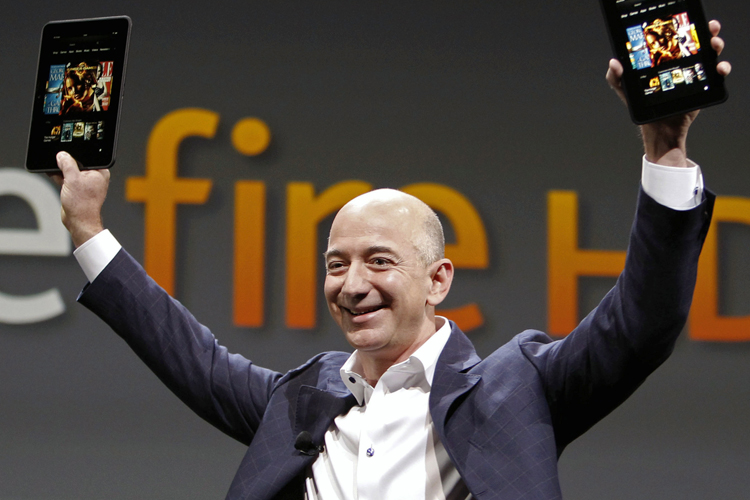
Everything you need to know about the great e-book price warJeff Bezos (Credit: AP/Reed Saxon)
Closing arguments for the Department of Justice’s antitrust suit against Apple concluded last week, although U.S. District Judge Denise Cote is not expected to reach a decision for another couple of months. If you’ve found the case difficult to follow, you’re not alone. Still it’s worth getting a handle on the basics because the suit — or, more precisely, the business deals behind it — have changed book publishing in significant ways. Furthermore, Judge Cote’s decision could have impact well beyond the book industry.
Apple was charged with colluding with publishers to fix e-book prices. At the root of the dispute lie two different ways that publishers can sell books to retailers.
First, there’s the wholesale model, the way that book publishers have sold printed books to bookstores and other outlets for years. The publisher sets a cover price for a book, sells it to a retailer at a discount (typically 50 percent) and then the retailer can sell the book to consumers for whatever price it chooses.
The other method of selling books is via the agency model, which means, essentially, on commission. The retailer offers the book to consumers at a price the publisher sets and gets a percentage of whatever sales are made. It’s rare for print books to be sold in this way, but it’s the method Apple uses to sell content like music and apps in its iTunes store.
Until 2010 — as Albert Albanese explains in his admirably lucid “The Battle of $9.99: How Apple, Amazon and the ‘Big Six’ Publishers Changed the E-Book Business Overnight,” a new “e-single” published by Publishers Weekly — book publishers had been selling e-books to Amazon using the wholesale model. They’d simply adapted the system they were already using to sell print books to the online retailer. This, they would soon realize, was a big mistake.
The wholesale model is widely seen as an odd way to sell e-books, since what the purchaser buys is “licensed access” to a digital file, rather than a physical object like a book. But what would torment publishers most about this arrangement was the freedom the wholesale model gave to Amazon to set the prices of e-books.


With the launch of the Kindle, Amazon promoted a low baseline price of $9.99 for most e-books. That meant that Amazon was selling virtually all newly published e-books at a loss.For example: A new book with a hardcover list price of $29.95 would be given an e-book price of $23.95 — 20 percent less to account for the publisher’s savings in printing, binding and distribution. The publisher would sell that e-book to Amazon for $12, and Amazon would retail it for $9.99, taking a $2 loss.
Why would Amazon do this? Observers have proposed several motives. Perhaps Amazon aimed to entice heavy readers to the newfangled Kindle; the customer could tell herself she’d make up the cost of the device in savings on the books themselves. Others have suggested that cheap e-books were loss leaders that drew customers back to Amazon over and over again, presumably so they’d go on to purchase high-margin items like TVs.
The most popular theory by far holds that Amazon intended from the start to totally dominate the e-book marketplace. By using its wealth to subsidize the sale of e-books at a loss, it could drive any competitors out of the market. Bricks-and-mortar chains like Barnes and Noble and online start-ups like Kobo (both of which would introduce their own e-reader devices) or device-neutral rivals like Google would simply not be willing or able to bleed cash as long as Amazon could. And because the Kindle is a “closed platform” — Kindle e-books can only be read on Kindle devices or apps — the more Kindle e-books a customer owned, the more reluctant she’d be to switch to a different device.
Obviously, however deep its pockets, Amazon would not be able to go on selling e-books at a loss indefinitely. But once Amazon was cemented in place as the uncontested sovereign of e-book retail, it could do whatever it wanted: force publishers to reduce their own prices, and/or raise prices on consumers.
If this was the retailer’s strategy, it was initially an effective one. By the end of 2009, Amazon owned 90 percent of the robustly growing e-book market. Even though e-books still made up a small percentage of overall book sales, publishers finally saw the writing on the wall. Amazon had a near-monopoly and was furthermore devaluing books in the eyes of consumers — they began to think of books as worth $9.99, not $23.95. Book publishing is a low-margin business to begin with, and the mammoth retailer seemed poised to scrape even those minimal profits away.
At that point, Apple entered the scene with a hotly anticipated new device, the iPad, and plans to open its own e-book store. Needless to say, the nation’s largest book publishers looked upon this rich new Amazon competitor with keen interest. The trial at the U.S. District Court for the Southern District of New York this month has provided a record of what happened next.
As narrated by Albanese and other observers of the trial, Apple approached book publishers about making their titles available in the iBookstore. Apple felt that it needed at least four of the “Big Six” publishers to launch the store, and it entered into discussions with all six. Initially, Apple’s primary negotiator, Eddy Cue, assumed they’d purchase e-books via the wholesale model. A couple of the publishers he spoke with proposed the agency model for e-books, an idea that had been kicking around the book world for a few months.
Apple liked the idea. So did the publishers — they would make less money per e-book this way than they did by selling wholesale to Amazon, but they could live with that. What Amazon was doing wasn’t sustainable anyway. Under agency terms, publishers could control the pricing of their books and assert that $12.99 to $14.99 was a fair market value for most new titles. Although authors would also receive less in royalties from agency sales, the Authors’ Guild endorsed the move as the only alternative to watching “Amazon destroy the physical distribution chain” — that is, brick-and-mortar bookstores — in the words of Guild president Scott Turow. (If you want to know why bookstores are especially important to authors, read this.)
However, Apple needed a critical mass of publishers to participate. Otherwise their store would have too few desirable titles. And none of the publishers wanted to be the first to go out on a limb and risk being the only one selling their titles for three to five bucks more than everyone else. Last but not least, Apple knew it couldn’t make the iBookstore a success if it sold the most in-demand titles for dollars more than Amazon did.
By early April 2010, when the iPad and the iBookstore officially launched, five of the Big Six publishers had entered into agency deals with Apple. Each of those publishers had also informed Amazon that if the retailer wanted to continue selling their e-books, it would have to buy them on agency terms as well. As the publishers saw it, they’d stood up to a “bully.”

for the rest go here:
http://www.salon.com/2013/07/01/everything_
you_need_to_know_about_the_great_e_book
_price_war/