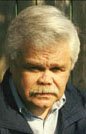
Many years ago, when I was editing a western anthology, I called a phone number I'd be given as contact for the late Steve Frazee's estate. Frazee had been a major figure in western fiction for three decades and was one of the people I studied when I started writing westerns myself. A man answered and I asked if he could put me in touch with the executor of the Frazee estate. And he said, "Maybe I can help you. I'm Steve Frazee." And indeed he was. I'd been misinformed. He wasn't dead.
One of the writers I admired (and imitated shamelessly) in the last throes of the true Gold Medal days (which ended, as I recall, sometime around 1975) was Charles Runyon. His Gold Medals usually featured small town working class protagonists who'd run afoul of local law. The stories were drenched with the drugs and crazies of the Sixties and were often driven by tangled often dark romances. A good deal of his material reminded me of the famous Joe Esterhaus (when he was a journalist and a damned good one) Rolling Stone piece about a Viet Nam vet returning to his small town home and finding a nightmare there that rivaled his time in Nam. Runyon got the era down very very well.
In 1973 a mainstream Gold Medal called Power Kill, a political thriller, was nominated for an Edgar and showed his range and his ability to write for larger audiences. All this time he was also writing science fiction and fantasy for the dominant magazines of the day. He published four sf novels and one horror novel (if my tally is correct). He was equally adept with these forms though this was an especially turbulent time in sf. The New Wave had swept aside many more conventional writers and got most of the publicity. It was a difficult time to make your way as a full-time sf writer.
I mention all this because when Greg Shepard and I were putting together the first three-fer for Greg's Stark House publishing (three Gold Medal novels long out of print for $19.95) my choice for one of the slots was Charles Runyon. He had to be in there with the novel many consider his masterpiece, The Prettiest Girl I Ever Killed, a novel invariably compared favorably to the best of Jim Thompson though, to me, it has its own voice and themes and ultimately isn't much like Thompson at all.
I had a hell of a time getting biographical material for my introduction to Runyon's book. He'd been dead for some time and had seemed to vanish from the writing world even before his demise. And then after three months of e-mails that I suspected might be hoaxes (and that turned ut to really be from his son after all), a woman wrote me and said that she'd known Runyon was she was a young woman and that she was sure he was alive. And here was his phone number and e-mail.
And damned if he wasn't. I had a very pleasant conversation with him this afternoon. And tomorrow I'll begin interviewing him by e-mail. I'll start running the interview here as soon as it's ready.
Saturday, March 31, 2007

Friday, March 30, 2007
The Vengeful Virigin
F. Scott Fitzgerald once noted that Hemingway (then at his peak) wrote with the authority of success while Fitzgerald (then in the dumps) wrote with the authority of failure.
The authority of failure is what animates virtually all of Gil Brewer's work and certainly The Vengeful Virgin (now out from Hard Case Crime) is no exception. In outline it's nothing new--a very James M. Cainian scenario in which a TV repairman gets involved with an eighteen year old temptress who is taking care of a dying old man (and one we don't take to at all). He's promised to leave her a fortune when he dies. The trouble is he's dying very slowly. It won't surprise you that the temptress has thoughts of inviting the Reaper in a little ahead of schedule.
What makes this one of Gil Brewer's most successful novels is that a couple of the plot turns are truly shocking and that he is in complete control of his material. He paces this one well right up to the end. And the end is a powerhouse.
I mentioned the authority of failure. In Brewer's case it's usually because his protagonists let their dissatisfaction with their lot become a kind of self-pity that let's them justify whatever they need to do to improve their lot. They generally learn too late that maybe the old TV repair gig wasn't so bad at all.
Contrast this attitude with the reckless but doomed romantics of Charles Williams (whom I prefer). They're smarter than Brewer's men and there's rarely any self-pity. They seem to be on some kind of quest, which is a twist on the Cain-style tale. Yes they meet a bad girl. Yes they do something stupid. But what gets them through is enormous energy and a sense of mission and an undertow of anger. They're like Brewer's men, too, failures. But they are the tarnished knights that Phillip Marlowe and all his imitators only pretended to be.
Thursday, March 29, 2007
Elliot Chaze
Bill Pronzini has written an excellent overview of novelist Elliot Chaze's literary career. You'll find it on Mystery*File available here http://mysteryfile.com/blog/?p=142
Chaze is known in pulp circles for his flawless novel Black Wings Hath My Angel, which many people feel is the single best novel Gold Medal published during its heyday. As Bill details, Chaze also wrote several other novels, a few of which are also fine books.
As I was reading the Chaze piece last night, I started remembering the two or thre phone calls I had with him. At that time the original Black Lizard Publising Company seemed to be flourishing. Both Barry Gifford, the line's editor, and I wanted to get Angel back into print. I agreed that I'd try and track Chaze down. Took awhile but I finally got a phone number.
He seemed almost amused that anybody remembered Angel with such respect and interest. He talked first about a few of his other books. My interpretation--and I may be wrong here--is that he felt hardbacks published by major houses should be of more interest than a paperback original.
But as we talked, I kept bringing up scenes from Angel. And finally he began speaking enthusiastically about it. That is, until I told him what we could pay him for it. He then went into a low key but bitter story about how "New York" screwed writers at every turn. They didn't pay much, they didn't promote, they cheated you on royalties. While these were all standard writer complaints, he delivered them with singular ferocity.
He assured me several times that he liked me, that he just might have to look up one of my books, that he'd appreciate seeing some Black Lizard novels to look over. He obviously didn't want to end on a bitter note. He even invited me to call him again, which I did. The next call we mostly talked books and movies we liked. And toward the end about his career as a journalist in the South during the most turbulent decades since the Civil War.
He was a bright, gifted man. We never did reprint Angel because the line was sold suddenly. But I sure wish we had. I can see it with one of those great Kerwan covers on that shiny stock the Lizards used. Chaze would have been right at home with the other hardboiled greats, Fredric Brown, Peter Rabe, Jim Thompson, Charles Willeford and many others--Barry had developed, for my taste, the best reprint line of American hardboiled fiction ever offered anywhere.
Wednesday, March 28, 2007
Our ancestors
I'm fascinated by our real heritage--the millions of years it took for us to crawl from the sea and then the additional millions of years it took to crawl from the beach and... The BBC ran this on the air today and I found it in print tonight. To me it's fascinating.
SEE THE FULL FAMILY TREE
The extinction of the dinosaurs 65 million years ago had little effect on the evolution of mammals, according to a study in the journal Nature.
One theory had suggested the rise of the mammals was directly linked to the disappearance of the dinosaurs.
The evidence challenging the connection comes from the most complete family tree compiled for mammals.
It shows how different groups, such as primates and rodents, are related and when they diverged.
An international team compiled the mammal "supertree" from existing fossil data and from genetic analyses.
Throughout the Cretaceous Period, when dinosaurs walked the Earth, mammals were relatively few in number, and were prevented from diversifying and evolving in ecosystems dominated by the ancient reptiles.
Explosive evolution
According to the established view, the extinction of the dinosaurs removed this constraint, allowing mammals to diversify and flourish, and placing them on course to their present position of dominance on Earth.
Under this model, placental mammals split into major sub-groupings, which originated and rapidly diversified after the mass extinction event - thought to have been caused by an asteroid or comet striking Earth 65 million years ago (a point in time recorded in rocks and referred to by geologists as the K-T boundary).
Co-author Kate Jones, from the Zoological Society of London, told the BBC Radio 4's Leading Edge programme: "The meteor impact that killed off the dinosaurs has traditionally been thought to have given mammals the edge they needed."
Some mammals did benefit from the demise of the dinosaurs
More details
However, the supertree shows that the placental mammals had already split into these sub-groups by 93 million years ago, long before the space impact and at a time when dinosaurs still ruled the planet.
After the origin of these sub-groups - or orders - the rate of mammal evolution fell and remained low again until the Eocene Epoch, 55 million years ago.
The start of the Eocene was marked by rapid global warming and an explosion in the diversity of mammal lineages.
"The [supertree] is a new way of showing all the mammal species on the planet, starting with a common ancestor. Species relationships can be inferred from morphological characteristics and genetic sequences," explained Dr Jones.
"If we had done this from scratch, we would have had to get molecular and morphological data for 4,000 different species.
"What we did instead was use already published information from hundreds of researchers around the world. We used a new technique called supertree construction which allows us to get all the information that's out there, re-code it and re-analyse it as if it's all part of one dataset."
'Straw man' theory
The composition of rocks and marine sediments laid down at the boundary between the Palaeocene and Eocene epochs show that global temperatures rose by around six degrees Celsius in less than 1,000 years - an event known as the thermal maximum.
Dr Rob Asher, an expert on mammalian phylogeny at the University of Cambridge, said: "Palaeontologists have known for over a hundred years that not all modern placental mammal groups appear right after the K-T boundary.
"Most orders of placental mammals - what I mean by that is cats and bats and whales and people - appear at the Eocene. On the flipside, not all dinosaurs disappear at the end of the Cretaceous.
"There was a period of several million years at the end of this period which witnessed several extinctions of non-avian dinosaurs. So the old textbook idea that at the K-T boundary dinosaurs disappeared and mammals appeared is a bit of a straw man."
But the idea that mammal fossils from the Cretaceous represent ones ancestral to today's mammals was a controversial question, said Dr Asher.
E-mail this to a friend Printable version
SEE ALSO
Mammals' lucky space impact
17 Jun 03 | Education
Methane theory gets frosty response
11 Apr 03 | Science/Nature
RELATED INTERNET LINKS
Nature
The BBC is not responsible for the content of external internet sites
TOP SCIENCE/NATURE STORIES
'Gorilla kingdom' opens in London
Mammal rise 'not linked' to dinos
Portugal opens major solar plant
| News feeds
MOST POPULAR STORIES NOW
MOST E-MAILED
MOST READ
Maradona is admitted to hospital
Iran TV shows seized UK navy crew
'Flaming debris' nearly hits jet
US Marines prohibit large tattoos
Dog saves US owner with Heimlich
Most popular now, in detail
FEATURES, VIEWS, ANALYSIS
Grief and shock
Nigerian village holds mass burial for victims of fuel tanker fire
In pictures
The place, the people - life in the capital of the Falkland Islands
Lines of inquiry
What have the police uncovered about Bob Woolmer's death?
PRODUCTS AND SERVICES
E-mail news
Mobiles
Alerts
News feeds
Podcasts
BBC Copyright Notice
Most Popular Now | The most read story in Africa is: Iran TV shows seized UK navy crew
Back to top ^^
Help
Privacy and cookies policy
News sources
About the BBC
Contact us
Monday, March 26, 2007
Ten Overlooked Classics; Richard Wheeler
Sf Site used to ask writers to list ten novels that they felt had been overlooked or unjustly forgotten. Here are ten crime novels, in no particular order, that I think should be read and re-read.
Odds Against Tomorrow William P. McGivern
The 31st of February Julian Symons
How Like An Angel Margaret Millar
The Blank Wall Elizabeth Sanxay Holding
Night and The City Gerald Kersh
The Far Cry Fredric Brown
Cocaine and Blue Eyes Fred Zackel
True Confessions John Gregory Dunne
On The Yard Malcolm Braly
Something in The Shadows Vin Packer
-----------------
From Richard Wheeler
Ed,
News that Anna Nicole Smith died, in part, from chloral hydrate awakened memories in me. Sure enough, that was the ingredient of the Mickey Finn. The encyclopedias claim it originated early in the 20th century, but I have found references to it being employed on the Barbary Coast in the 19th, and have occasionally used it in my western stories. It is a weird drug to prescribe in modern times.
Richard
The big C
I read three different op-ed pieces today about Mrs. Edwards and her cancer. All were well-meaning and sincere in their wish that she lives many long years.
But each of them talked about her "courage" and "bravery" in going on with her life pretty much as it was, at least till fatigue from chemo sets in.
I question the words "courage" and "bravery" for a simple reason. Like Mrs. Edwards, I have incurable but treatable cancer. But I'm a long way from being courageous or brave. I go on with my life pretty much as it was for a simple reason--what's the alternative?
Each piece also mentions a mythical person who "just gives up and dies." I suppose there are people like this but in five years including three substantial stays at Mayo I've yet to meet a cancer patient who did that.
On my last trip to Mayo I lay five hours a day in a ward where we were all having our blood pumped through machines for a stem cell harvest. Of the eight people on the ward, two seemed to me to be very near death. But even they joined in with the rest of us talking about what we were going to do when we finally got to go back home.
And it wasn't anything fancy. It was just going back home and getting on with our lives. Again--what else would we do? I've had jobs since I was ten years old. I know no alternative to work. I'm not as prolific as I once was but maybe as a result the books are a bit better. Maybe. But the point is, if I didn't get up every morning and head immediately to my office to work (I eat breakfast after I get 750 words or so down on the screen) how would I spend my time?
I'm cerainly not belittling what Mrs. Edwards is going through. I take chemo every day orally and then have an infusion once a month to keep my spine from cracking. That's a very easy regimen compared to what lies ahead for her. But as she was quick to say words such as "courage" and "bravery" are well-meant but maybe too much.
I'll add a PS here. I have met a few UNbrave cancer patients, those being men who are so afraid of dying they take their fear out on their wives. One guy I liked and respected became somebody I wanted punch out by the time he shuffled off. He treated his wife horribly. Hard to imagine she wasn't relieved to see him go.
Sunday, March 25, 2007
Ghosting
I've commented before on the business of one writer ghosting another writer's book. Writer one gets sick; falls off the wagon; wife dumps him. Something amiss anyway. He can't do the book. He asks a friend. Friend writes the book, it's published and is credited (unless it's a house name job) to the bibliography of writer number one.
Nobody will ever know. Well, almost nobody.
This is not a new process. It may well have gone on back in Shakespeare's time.
I bring this up because I admire a novel by Leigh Brackett called STRANGER AT HOME. I've been assured she didn't write it. I also admire a novel by Henry Kuttner called MAN DROWNING. Apparently it's an open secret that Cleve Cartmill wrote it.
I guess I have to accept this scuttlebutt as fact. But I wonder. Brackett's style--that sweeping almost mythic prose--is very much in evidence in Stranger. I grew up reading her. I know from Leigh Brackett. I find it difficult to believe that she didn't at least go through somebody else's first draft and make it her own.
As for the Kuttner, a man I admire as much as I admire Brackett, if Drowning is actually by Cleve Cartmill then Cartmill was suicidal when he wrote it. I also know from Cartmill. I can't recall a single Cartmill novel that displays this sense of loss and despair. Despite the fact that Harpers published this in hardcover, this is very much a true Gold Medal novel. And the grotesque woman who hires the protagonist is right out of Kuttner. Not Cartmill. Did Cartmill do the first draft and Kuttner the polish?
See the trouble you get into when you try to fool people?
Saturday, March 24, 2007
Herman Stein -- Composer
Ed: We rarely honor the men and women who help make even mediocore films bearable. Here was one such man. And there's one great laugh quote from him in here too.
Herman Stein, 91, Composer of Moody Horror and Science-Fiction Scores, Dies
COPYRIGHT 2007 THE NEW YORK TIMES
By MARGALIT FOX
Published: March 24, 2007
Herman Stein, a little-known craftsman who, unseen but very much heard, helped terrify the audiences of a spate of classic horror and science-fiction films, died on March 15 at his home in Los Angeles. Mr. Stein, a former staff composer at the Universal studio in Hollywood, was 91.
The cause was congestive heart failure, said David Schecter, a record producer who runs the Web site Monstrous Movie Music (www.mmmrecordings.com).
A largely self-taught composer, Mr. Stein contributed to the scores of nearly 200 films, including westerns, comedies and dramas. Though he labored in relative obscurity, he became known in particular — if only to an ardent cult following — for his work on dozens of movies featuring little green men, big hairy things and oceans of primordial ooze.
Among his best-known films are “It Came From Outer Space” (1953), “Creature From the Black Lagoon” (1954), “This Island Earth” (1955), “Tarantula” (1955) and “The Incredible Shrinking Man” (1957).
“Herman Stein was one of the architects of the sound of 1950s science-fiction movies,” Jon Burlingame, who teaches film-music history at the University of Southern California, said in a telephone interview yesterday.
But if there was honor in being the Mozart of “The Mole People” (1956), there was little glory. At Universal, several composers typically worked on a single picture. (Mr. Stein’s frequent collaborators included Henry Mancini.) On most of the studio’s films, only the music supervisor, Joseph Gershenson, received on-screen credit.
In many of these films, though, Mr. Stein’s work formed the bedrock of the score. “He either wrote the main themes, from which he and his colleagues worked, or, equally important, wrote the opening music, which often sets the tone for the film itself,” Mr. Burlingame said.
Mr. Stein’s best-known musical passage is probably the jittery, ascending three-note “creature theme” from “Creature From the Black Lagoon.” Played by shrill trumpets, it recurs more than 100 times on the film’s soundtrack, heralding the monster’s appearances.
Herman Stein was born in Philadelphia on Aug. 19, 1915. A child prodigy, he took up the piano at 3, playing his first public concerts at 6. As a teenager, he taught himself orchestration by studying scores at the public library; as a young man, he worked as an arranger for well-known popular bandleaders, including Count Basie and Fred Waring.
In 1948 he moved to Los Angeles, where he studied composition with the noted Italian composer Mario Castelnuovo-Tedesco. Three years later he joined the staff of Universal, where he remained till the end of the decade. Afterward, Mr. Stein composed mostly for television before retiring in the mid-1960s.
Among his other films are “Ma and Pa Kettle on Vacation” (1953); “Abbott and Costello Go to Mars” (1953); “Drums Across the River” (1954); and “The Intruder” (1962), a movie by Roger Corman about Southern racism starring a young William Shatner. Mr. Stein’s last film score was for “Let’s Kill Uncle” (1966), directed by William Castle.
He scored episodes of many television shows, including “Lost in Space,” for which he composed the warm, lyrical theme — oboe over strings — associated with the Robinson family.
Mr. Stein’s wife, the former Anita Shervin, a violist with the Los Angeles Philharmonic, died in 2001. No immediate family members survive.
Several of his film scores are available on compact discs in new recordings, produced by Mr. Schecter. One of Mr. Stein’s concert pieces, “Sour Suite,” for woodwind quintet, is featured on the CD “Woodwind Treasures,” from Crystal Records.
Throughout his life, Mr. Stein played down his contribution to Hollywood horror films — or, more precisely, he played down the films.
“There are pictures here you’ve never heard of,” he told The Philadelphia Inquirer in 2000. He added, “Because you’re lucky.”
Despite his own best efforts at self-effacement, though, Mr. Stein’s music remains indelibly imprinted in the minds of millions.
“The baby-boom generation grew up with these horror movies and monster movies,” Mr. Burlingame, the film-music historian, said. “We saw them all. And so we remember that music far more than a lot of the boring pictures that Stein wrote the music for that he was much prouder of.”
Friday, March 23, 2007
Freddie Francis, R.I.P.
Copyright 2007 Los Angeles Times
Obituaries
Print E-mail story Most e-mailed Change text size
OBITUARIES
Freddie Francis, 89; cinematographer
The two-time Oscar winner was best known for his exquisite black-and-white camera work in British films of the '50s and '60s.
From Times Staff and Wire Reports
March 23, 2007
Freddie Francis, a British cinematographer who won Academy Awards for "Sons and Lovers" (1960) and "Glory" (1989), died Saturday in London, British media reported. He was 89 and had suffered a stroke in December.
Known for his exquisite black-and-white photography in such British films of the 1950s and '60s as "Room at the Top" (1958) and "Saturday Night and Sunday Morning" (1960), as well as "Sons and Lovers," Francis finally got a chance to direct.
After his 1962 debut, "Two and Two Make Six," he quickly made several films in succession that established his credentials as a director. But they were all horror movies, and he found himself typecast.
"I realized I was becoming a cult figure in horror films," he told Daily Variety in 1998, "and nobody would back me to direct anything else."
Some of the more than two dozen films he directed became cult classics, including "Paranoiac," "Dr. Terror's House of Horrors" and "Tales from the Crypt."
But he grew dissatisfied and returned to cinematography when David Lynch hired him to photograph "The Elephant Man" in 1980. The success of that project led to jobs with other prominent directors, including Karel Reisz for "The French Lieutenant's Woman" in 1981 and Martin Scorsese for "Cape Fear" in 1991.
He was director of photography for Lynch two more times, in 1984 for "Dune" and in 1999 for "The Straight Story."
The American Society of Cinematographers honored him with its International Achievement Award in 1997.
Born in London in 1917, Francis got his first job as an apprentice to a feature stills photographer. He joined the British army when World War II broke out and worked as a cameraman and director making training films.
After the war he worked as a camera operator for John Huston on "Moulin Rouge" (1952), "Beat the Devil" (1953) and "Moby Dick" (1956) and for other directors before becoming a full-fledged director of photography on "A Hill in Korea" (1956).
Among Francis' survivors are his second wife, Pamela Mann, and their two children, Suzanna and Gareth, and another son, Kevin Francis, from his marriage to Gladys Dorrell, which ended in divorce.
MORE NEWS
- A history of replacing U.S. attorneys
- Times editorial page editor resigns | BLOG
- Inmate screenings yield detainees for ICE
- Police seek man who tried to abduct girl
Want to get away from it all in "Yosemite"? View our readers' photos and share your own at Your Scene.
Submit your photo now >>
ADVERTISEMENT
More Obituaries News
- Albert V. Baez, 94; physicist and father of Joan Baez, Mimi Farina
- Carol Richards, 84; sang 'Silver Bells'
- Freddie Francis, 89; cinematographer
Most ViewedMost E-mailedRelated News
ADVERTISEMENT
Partners: Copyright 2007 Los Angeles Times | Privacy Policy | Terms of Service | Advertise | Jobs | Permissions | Contact
Thursday, March 22, 2007
Crimewave
As I said last week, I'll be reviewing various mystery publications from time to time. And it's a pleasure to speak up for this one, Crimewave edited by Andy Cox of TTA publications in England. You can get a good look at this fiction magazine here http://www.ttapress.com/publCWcurrent.html .
The first thing I appreciate is that Andy publishes a wide range of story types. Many of them are dark, true, but he doesn't fall into the trap of pushing darkness for its own sake.
The latest issue is #9. It is the best issue yet. The packaging is striking, really slick, a bit like a literary magaine but with more punch. And the stories...
At this point I'm going to turn it all over to Andy and let him (via his own promo copy) tell you what you've been missing.
CRIMEWAVE 9: TRANSGRESSIONS OUT NOW
The Crimewave series continues to pick up rave reviews and endorsements from the likes of Ian Rankin ("A must-have collection of the hottest crime stories around"), Ed Gorman ("The best in cutting edge crime fiction") and Ellen Datlow ("Head and shoulders above every other mystery magazine"). You just can't read stories like this anywhere else.
Every CW is much bigger than it ought to be, making a subscription ever greater value for money: 160-172 large format pages for £5.50 including p&p? Bargain!
And now to the stories in #9
CRIMEWAVE NINE: TRANSGRESSIONS
Edited by Andy Cox
Reviewed by Terry Grimwood
The rules are: no noir, no hard-boiled, no procedural. So what exactly do you find in the pages of a journal named Crimewave? It was a mystery to me, until I opened the pages of the beautifully presented Issue Nine.
From first to last, the stories in Crimewave Nine are skilfully crafted, tightly plotted and a joy to read. The collection opens with Blue Morpho by Shelley Costa, a quiet yet menacing examination of discreet murder and its consequences, in which a lake and surrounding landscape are as much characters as the humans. From here, the weather gets stormy for Carlisle-set The Night of the Great Wind, Mick Scully’s dark meeting of disparate-yet-connected characters, literally and figuratively blown together during a gale.
Things get enigmatic and claustrophobic for Gary W. Shockley’s The Rainbow Killer in which a serial killer, who might or might not be a Judy garland fan, indeed, might or might not exist at all, apparently stalks the city. Who is the woman who arrives in a fear-wracked black community? Who is the streetwise scoundrel she gets mixed up with?
Stealing from Garbo by Ron Savage sharply, and with great wit, focuses on a career thief who finally meets his match and Dogwood by Susan Overcash Walker takes you into the mind of a serial killer who has to make one last sacrifice to stop his own lethal habit. A remorselessly brutal tale that is also strangely moving and one of the highlights of the collection.
Scott William Carter’s Last Stop on Dowling Street snapshots a violently seminal moment in the life of a racist bigot and leaves you as sweaty and over-the-shoulder-glancing as its unpleasant protagonist. You Will be Wearing Green by Daniel Bennett warns of the dangers of talking to strangers. In A Handful of Ashes by Ian R Faulkner a widower finds a way of being truly joined to his late wife, while Robert Weston investigates the secret of the Black Box and troubles you with the emotional dilemma of the man who intends to steal it in Thinking of Alice.
Final furlong now and it’s Kevin Prufer on The Gold Watch, dark yet optimistic and peopled with a truly affecting relationship between a sharp-witted young boy and a hardened cop, closely followed by Work in Progress, Scott Nicholson’s thoroughbred story of uneasy reunion and bloody art. Coming up on the outside as they round the last corner is The Frozen Lake by John Shirley, my personal favourite, which takes you into the model-kit filled attic of a taciturn, self-absorbed husband, where his long-suffering wife finds some vile secrets. So, what would you do in her place?
Andy Cox has, for me, always been a difficult editor to please. Not because he’s a sulking tyrant, but because the target he sets for submitted fiction is both notoriously specific and yet hard to define. A difficult target that, in this case, has resulted in a publication of excellence.
Crimewave Nine: Transgressions edited by Andy Cox. Digest size, 164pp, £6.99 or £22/4 (non-UK, refer website). Published by TTA Press, 5 Martins Lane, Witcham, Ely, Cambs CB6 2LB.
Website: - www.ttapress.com
[Home] [News] [Subscribe] [Current Issue] [Forums] [Wicked stories] [Columns] [Wicked poems] [About] [Art Gallery] [Reviews] [Recent Reviews] [Older reviews] [Interviews] [Story Store] [Wicked links] [Bookshop.] [Whispercon Oct 2005]
Wednesday, March 21, 2007
So long "Bud"
From Mark Evanier: News From Me
Over in the David Letterman newsgroup, Letterman authority Don "Donz" Giller has reported the death of character actor Calvert DeForest, who was a fixture of Dave's TV shows, first as Larry "Bud" Melman on the NBC show and later under his own name on CBS. According to Giller's posting, DeForest died Thursday night from a heart attack after contracting pneumonia.
DeForest was born in 1921 and did not intend to have a career in show business. His mother was an actress and discouraged it, but he told interviewers he needed no discouragement in that area. He did, however, appear in a student film that caught the attention of Mr. Letterman. To his surprise, DeForest (who was then working in a Social Services office) received an offer to be part of a sketch on Dave's show and that led to regular appearances as the character, Larry "Bud" Melman. Dave and the writers especially loved putting DeForest into sketches and situations where the hapless actor had no idea what he was doing. DeForest read everything off cue cards and could almost always be counted on to pause or stand in all the wrong places. Once after he showed a tiny bit of on-camera professionalism, Dave reportedly remarked, "If he ever gets good, he'll be of no use to us."
Ed:
There may have been odder ducks on TV--somebody like Tiny Tim I suppose--but none as hopelessly and hilariously as amateurish as Calvert DeForest. He never did quite master the notion that if you were interviewing somebody, you had to put the microphone up to his face. He'd even do it to himself--start talking and then turn the microphone away before he was finished speaking. He was incapable of guile.
And this lead to an honesty rarely seen on the tube, at least in the early days of the Eighties. He'd generally go along with Letterman's insults--Letterman for all his talent is a smug high school jerk--but one time Letterman dispatched him to Mexico (?) by SUV or somesuch vehicle and Larry Bud clearly didn't like traveling. He had to call Letterman's show every night from the road. He was none too happy at the top of the week. By the end of it he was angry. He kept saying "I want to come home, David. I want to come home, David." He damn well meant it.
I always felt sorry for him. He was a member of my tribe, the outcasts. When Letterman got especially mean I even felt protective of him. But, again like Tiny Tim, I'm afraid I had no interest in him as a human being. I didn't WANT to know anything about him because I figured that would be pretty fierce stuff. Maybe he had a reasonably happy life but somehow I doubt it.
So long, Calvert.
Tuesday, March 20, 2007
MURDER AMONG OWLS by Bill Crider
The only series I read regularly are those that offer worlds I want to visit. This may be because before I began reading mysteries reguarly I read science fiction. World building is critical in sf and fantasy.
And it is in mystery fiction, too. Sherlock Holmes. Agatha Christie. John Dickson Carr. Indelible worlds. Or Mr. and Mrs. North. Craig Rice's various detectives working out of Chicago. Hammett, Chandler, Chester Himes' Harlem novels.
And Bill Crider's small town Texas series, the latest of which is MURDER AMONG OWLS (St. Martin's, $23.95) This time Sheriff Dan Rhodes has to decide whether Helen Harris' death was accidental or criminal. At certain points in his investigation his deputies are his biggest hindrance to solving what is now clearly a crime. Wizards they're not.
Any novel that references the Warner Bros. cartoon icon Pepe Le Pew on the third page is a can't miss reading exprience for me. And Crider does this as he does everything else--nice and easy. The sentences and the scenes flow so gracefully you might overlook the difficulty of keeping the writing so spot-on.
If you think Andy Griffith of Mayberry with an edge and a tart tongue you'll have a good sense of of the world Crider creates in these fine books. He's admirably unsentimental about his town and its people, seeing them for what they are. The good ones are good without being saints, the bad ones are bad without being Hannibal Lechter. Real people doing real people things.
Two highlights--the dog who's scared of the cat and a hilarious chain saw chase between a lunatic and his seventy-something would-be prey. I've never read this scene in any form anywhere else before. It is pure Crider and the essence of his best work.
You'll like Rhodes and his town. And for sure you'll want to come back for more.
Monday, March 19, 2007
JEFF GOLDBLUM
Like just about every other reviewer, I was disappointed in the Jeff Goldblum show on NBC. Hwood folks are fond of saying that nobody ever sets out to make a bad movie and I'm sure that's true, the same way we all never intend to turn in a bad book. It happens.
The thing with the Goldblum show is that it isn't really bad. It's just bland and overly familiar. So, and this is a point nobody else has made, maybe there's hope. First of all, let Goldblum be Goldblum. Maybe not extreme Goldblum but 3/4 Goldblum. Second, I suspect that most of the scripts need some serious punching up. Though likely several of them are in the can. Lee Goldberg could tell us about that. Third, find a different way to handle the occult. Maybe kid it a little. This, for me anyway, is the blandest part of the whole show. Right now books for both adults and young adults are ripe with intriguing and amusing approaches to suoernatural themes. Steal a couple of those.
I want to see Goldblum succeed. Tenspeed and Brownshoes and the Kauffman remake of The Body Snatchers are two of my all-time favorite pieces of film. And both owe very much to the talents of Goldblum.
PLEASE, DUDES, BEFORE IT'S TOO LATE.
Sunday, March 18, 2007
Esquire Gallery; The circus is back in town
http://www.esquire.com/cover-archive?year=1966&p=1
In the 1960s Esquire magazine began running a series of covers that startled and rocked the design world. There's been no equivalent since. The mid-Sixties and the Viet Nam war brought a fiery boldness to every aspect of media. Here's the best of it.
THE CIRCUS IS BACK IN TOWN
Ed here: Thursday the LA Times ran a long article assessing Phil Spector's chances of being found innocent. Not too good. But then, after OJ, who knows? Spector was
a rock and roll genius, no doubt about it, though for me Brian Wilson's music will last much longer than Spector's. I didn't pay much attention to his personal life until I heard the story about him locking the Ramones in a studio overnight. Eccentricity is one thing (Elvis once put a bullet into a TV screen) but locking somebody in a studio because they wouldn't do it your way? He's a sad man. But
the woman he killed is infinitely sadder.
From the Hollywood Reporter:
The murder trial of pioneering rock producer Phil Spector finally begins on
Monday, more than four years after a B-movie actress was found shot to death at
his castle-like mansion outside Los Angeles.
The trial, delayed repeatedly since Spector was indicted in 2003, will be shown on live television amid fascination with the 1960s musical genius turned recluse who once described himself as having "devils that fight inside me."
Fifty news organizations applied for a seat in the Los Angeles courtroom for the biggest celebrity trial since pop star Michael Jackson's 2005 acquittal on child molestation charges.
Proceedings start on Monday with jury selection involving 300 potential jurors and questionnaires to assess how much media coverage of the case they have absorbed.
Spector, 67, is best known for his innovative "Wall of Sound" recording technique and work with The Ronettes, The Righteous Brothers, The Beatles, Tina Turner and Cher.
Spector, who is free on $1 million bail, denies the charges that he killed actress Lana Clarkson in February 2003.
He told Esquire magazine in an interview shortly after his arrest that Clarkson "kissed the gun" in a bizarre suicide for reasons he did not understand.
Los Angeles judges have been reluctant to allow cameras in court since the 1995 acquittal of actor and former football star O.J. Simpson on murder charges after
a trial telecast live that brought sharp criticism of the city's justice system.
Friday, March 16, 2007
The conspiracy that killed Marilyn Monroe...
From the Sydney Morning Tribune:
For four decades there have been rumours that Marilyn Monroe's death was not a simple suicide. Now a Los Angeles-based Australian writer and director, Philippe Mora, has uncovered an FBI document that throws up a chilling new scenario.
The screen legend Marilyn Monroe...the FBI report says she "expected to have her stomach pumped out and get sympathy for her suicide attempt", but it suggests she was left to die. Photo: Harold Lloyd/The Harold Lloyd Collection
BOBBY KENNEDY'S affair with the screen idol Marilyn Monroe has been documented, but a secret FBI file suggests the late US attorney-general was aware of - and perhaps even a participant in - a plan "to induce" her suicide.
The detailed three-page report implicates the Hollywood actor Peter Lawford, Monroe's psychiatrist, staff and her publicist in the plot.
The allegations suggest the 36-year-old actress, who had a history of staging attention-seeking suicide attempts, was deliberately given the means to fake another suicide on August 4, 1962. But this time, it is suggested, she was allowed to die as she sought help.
The document, hidden among thousands of pages released under freedom-of-information laws last October, was received by the FBI on October 19, 1964 - two years after her death - and titled simply "ROBERT F KENNEDY".
It was compiled by an unnamed former special agent working for the then Democrat governor of California, Pat Brown, and forwarded to Washington by Curtis Lynum,then head of the San Francisco FBI. Despite a disclaimer that it could not be sourced or authenticated, it was considered important enough to immediately circulate to the FBI's five most senior officers, including director J. Edgar Hoover's right-hand man, Clyde Tolson.
http://www.smh.com.au/news/world/kennedy-link-to-death/2007/03/16/1173722744304.html for the rest
------------------------
Ed here: Back in 1994 Tor published a novel of mine about Marilyn Monroe called THE MARILYN TAPES. The premise was that the Kennedy Brothers and J. Edgar Hoover had been audio taping Monroe's bedroom at the time of her death. Both tried desperately to get those tapes. The reels would destroy the Kennedys. Hoover could use them to blackmail Jack and Bobby whom he loathed (at this same time he was having Rock Hudson followed and constantly photographed leading one to conclude that Hoover was jealous of ass-bandits whether they be straight or gay).
I spent most of 1993 writing the book. For the first and only time I hired a reseracher. She lived in LA and had access to all kinds of Marilyn material. Early on I was intrduced to the Marilyn cult. One guy called me and said that his group would have to "approve" my manuscript before I pubished it. They cared deeply, he said, about her reputation. Other callers told me strange Marilyn stories they wanted to to see in the book. I still don't know how they learned I was writing it. Maybe the researcher told them.
I'm no Marilyn expert. In the course of writing the novel I came to dislike her enough to lose all interest in her. She wasn't smart but she was cunning; and her disloyalty to people was stunning.
But I learned enough to know this.
1) The Kennedy-Lawford-etc. conspiracy has been around for years. Here's why I doubt its valiity. Remember Monica Lewinsky? I saw her on Larry King one night where she allowed as how in the month after her first tryst with Clinton she told "only three or four people." Do the math on that. And those three or four people told how many other people? Who needs mass communications when you have this much word of mouth going on. Same with the Kennedy-Lawford theory. You've got a minmum of five people involved in this plot. No group of five people, including Lawford who drank a lot, can keep such a dark secret forever. They're going to share it with somebody. And that somebody is going to share it with somebody else. Etc. It just doesn't work. Sorry.
2) The book that contended that J. Edgar Hoover was a cross-dresser? No way. Made up of whole cloth. The same as the story, passed down through the decades, that Hoover wouldn't go after the Mafia because a mob boss had a photo of J. and Tolson in bed together. Urban legend. It's always put this way: "I didn't see it myself but a buddy of mine knows somebdy who DID see it." False. The even better story is the one about (this may have been the same book) Hoover dressing up in a nifty black cocktail dress for New Year's Eve 1958. Please. The most feared and despised man in Washington, D.C?. People praying for his downfall. And he goes out in a cocktail dress? Sure he does. Hoover and Tolson were probably gay but I wonder if they ever acted on it. My opinion only. In my reading I got the sense that Tolson was a decent guy. Hoover was a ruthless psychotic paranoid prick. Other than that I hold his memory in the highest regard.
Stanley Crouch on film noir from Slate
Noir AmericaCynics, sluts, heists, and murder most foul.
By Stanley Crouch
Posted Thursday, March 15, 2007, at 7:05 AM ET
Film noir evolved from the American crime thrillers that rose to pulp prominence between 1920 and 1940. Hollywood took those tales and put the focus on cynics,
fall guys, sluts, heists, and murders most foul. The huge screens in movie theaters provided lurid masks for the resentments that pulse within Americana. Our hatred of the upper class and of goody-two-shoes morality got plenty of play. So did our repulsive puritanical troubles with sexual attraction, our reluctant but ultimate belief in the righteousness of force, and our tendency to answer life's pervasive horrors with conspiracy theories.
Noir's popularity was inevitable. How could American audiences resist the combative stance of an unimpressed hero whose ethos could be reduced to: "Is that so?" How could they fail to be lured by all of the actresses cast as Venus' flytraps? Everything in film noir takes place at the bottom, in the sewers of sensibility.
It holds that the force of the world is not only indifferent to, but obviously bigger than, the individual, which is why personal satisfaction, whether illegal or immoral, is the solution to the obligatory ride through an unavoidably brittle universe.
A black and white phenomenon, film noir is thought to have achieved its greatest heights between 1945 and 1950, though the apparent moment of final brilliance arrived in 1958's Touch of Evil, directed with the heightened imagination of genius by Orson Welles. As a genre, film noir appeared as an antidote to the Hollywood conventions of pristine character and fulfilled romance because its creators sensed that "rah rah" was no longer the best prescription for the blues. Possessed of a shrewd aesthetic that was both meretricious and rebellious, film noir generously utilized sex and violence, firmly rooting itself in American culture.
A number of its most influential directors were European Jews like Fritz Lang,
Otto Preminger, and Billy Wilder, all of whom had escaped the Nazis. The enthusiastic support of the Third Reich by the German people had convinced such artists that conformity always had to be questioned, ridiculed, and perhaps resisted. Another assumption was that corruption hid behind images of a gilded civilization, high-class refinement, uplift, and thorough social improvement. So,
in one sense, Adolf Hitler was a major player in forming the sensibility of film noir. That Austrian boy whom Chaplin accused of having made off with his mustache had done it again but, as usual, not in the way the paperhanger intended.
With the recently released two-disc DVD of 1944's Double Indemnity and the three volumes of The Film Noir Classic Collection, one gets the essentials of the style and all of the information necessary to recognize the "school" that the French saw long before Americans did. Barbara Stanwyck, Claire Trevor, Jane Greer, and Peggy Cummins are each but separately the brilliant stars of Double Indemnity; Murder,
My Sweet; Out of the Past; and Gun Crazy. They are the essential film noir amalgamations of Eve, Salome, and Carmen: there to bring men down through the pulsating syncopations of their glistening orifices. After but one night with any
of them, men were not only willing to bay at the moon of homicide but snap at it with a determination that pushes a full circle of murder into the air.
Double Indemnity is the first film in which Billy Wilder's impeccable talent as a director and a screenwriter came forward in full force. It is also considered the first pure film noir. Though Stanwyck and Fred MacMurray have been rightfully praised as the murderous lovers, they are nearly overmatched by the imperishable skill of Edward G. Robinson. Robinson's extended speeches are delivered like dark, probing arias—they are full of wit, syncopation, and an intuitive recognition of
the sinister that we learn is essential to being a great insurance detective.
There is no better performance in all of film noir.
Claire Trevor, an adroit master of subtle vocal modulations, blooms downward in Murder, My Sweet, like a flower overladen with a working girl's perfume. The
actress appears lyrically jaded, but it is easy to see how she helped define the femme fatale in an era when only allusion was available. Opposite the spectacularly ominous Lawrence Tierney in Born To Kill, Trevor projects a sexual longing that is realistic but never overstated, compelling in its desperate but bungling confusion. Her performance gives a viewer the impression of eavesdropping on a soul excruciatingly barbed with tender and dangerous contradictions.
Ed here: as you can see this long piece is well worth reading. For the rest log on here:
http://www.slate.com/id/2161815/fr/flyout
Thursday, March 15, 2007
Carl Franklin; Mystery Scene*
From CHUD.com copyright 2007
HALLE’S GOT A THORN IN HER SIDE AGAIN
03.14.07
By Micah Robinson
Contributing sources: Variety
A little earlier this month, I brought you news of a new Halle Berry picture based on the real life incident in Tulia, Texas where half the town’s black male population was convicted and imprisoned in an absurdly shaky drug bust devoid of
any physical evidence whatsoever and based solely on the word of one rather undependable white cop. The film, Tulia, is going to be made by Lionsgate under
the direction of Carl Franklin.
Now comes word that the film will be hosting two reunions of sorts. They’ve just cast Billy Bob Thornton to star in it, so he would not only be reuniting with Berry after their Monster’s Ball, but also with Franklin, who directed Thornton in his first major theatrical film as one of the murderous leads in One False Move. Franklin’s also doing a rewrite of the script. There hasn’t been definite word on Thornton’s role, but I would imagine he’d have to be portraying corrupt police officer Tom Coleman, the man who instigated the entire incident.
I’m hoping that the pic will get past the obvious injustice done to these folks to look at the root causes that could not allow for something like this to happen in
a small southern town, but for it to be applauded by the townspeople and ignored nationally for far too long before something was done about it. This wasn’t an incident that occurred in 1939 or 1959. This was 1999, and for all of our talk and self-congratulations on how much progress we’ve made, incidents like this are ugly reminders of how deep the sickness goes and endures.
Ed here: For all the faux noir (guys who read a lot about the skids but have never lived them out) it is rare that we find a screenplay written by somebody who's been there. It's even rarer that the screenplay is then directed by a man or woman who understands the streets AND the actors it takes to embody those streets.
For me the best hardboiled film since Chinatown was One False Move. Not a fake moment in it. Not in the writing, acting or directing. So to me it's great news
that Carl Franklin is working again with Billy Bob Thornton. If this pcture even comes close to their previous teaming--and there's certainly that potential given the material--it will be a fine fine film. And with Halle Berry as a bonus!
-----------
Mystery Scene
For eighteen years I edited Mystery Scene magazine. By the end of my tenure I was completely out of ideas about how to improve it and thus take it up a notch or two.
Fortunately, Kate Stine bought the magazine and along with her husband Brian
Skupin proceeded to make it the pre-eminent news and feature magazine of the
mystery field. Hardboiled or cozy, old novels or new, movies, audio, tv…whatever aspect of mystery fiction interests you you'll find it in Mystery Scene. And presented in a package that's professional, easy to read and worthy of design and layout awards.
If you read only one magazine for mystery news and views, this should be the one. Accept no substitutes or imitators. Mystery Scene is the real deal. And that goes for advertisers, too. If you want THE news magazine for reaching readers and
buyers, Mystery Scene is the only place to go.
Wednesday, March 14, 2007
The Saint
From ComicMix
TNT drama series in development
They may know drama, but do they know genre?
TNT has a few new series in development that could be of interest to us all:
The Talisman – a six-hour limited series scheduled for summer 2008; a new project from DreamWorks Television and executive producer Steven Spielberg, based on the Stephen King and Peter Straub novel of the same title.
The Saint – a new one hour series based on the Leslie Chateris classic character – the famous Simon Templar. From executive producer William J. McDonald and producer Jorge Zamacona. The Saint was featured in movies dating back to the late 1930s (starring the great George Sanders) and the British television series from the
1960s starring Roger Moore. I can hear the theme song now...
The Company – a limited one-hour, six-part series debuting in August with Chris O'Donnell, Alfred Molina and Michael Keaton that looks at the CIA's activities during the Cold War, based on the bestselling novel by Robert Littell. Batman, Robin, and Doc Ock? Sure, why not.
----------
The Saint? Again?
Simon Templar debuted in 1928 and Leslie Charteris continued writing about him until1960 when he began using ghosts to help him. Movies, TV, comic books, radio, pulps, slicks over and over in various countries...This is one durable dude.
My favorite Charteris story dates back to when George Sanders was playing the Saint at the RKO B-movie unit. Charteris bombarded the suits with letters insisting that they try getting Cary Grant for the part. Grant was by then an enormous international star...and he was going to do a series of B movie? Doubtful.
When Sanders left his younger and more vulnerable brother Tom took over. Fifteen years later Tom was aboard a bus taking him to a body pile where indigent
alcoholics went to die. He didn't make it. He died en route.
The Saint may not be Tarzan or Superman or Sherlock Holmes...but he's certainly
a creation who adapts well to each generation.
Tuesday, March 13, 2007
Extras; The Real Housewives
A whole gang of you wrote me off-line (well, two people) to say that I never delivered on my promised reviews of the final episode of Extras or the first couple of this season's Real Housewives of Orange County.
There were some fine comic moments in the final Extras though I think the script
got away from Gervais and Merchant. Hearing the Gervais character denounced from
the rostrum of the big music award show was spot on. Just thinking of all the women you failed as friend, confidante, lover...and then one of them having an international audience to trash you for your failings...Very good. I was cringing all the way. It was mean hilarious stuff. The sub-plot about about Merchant as the dimwit agent getting arrested for doing (I think) coke in a bathroom stall along with a faded little comedian and an innocent Gervais...not so good. The Irish woman was as stupid and fetching as always so I wasn't surprised that Gervais ALMOST got sentimental in the last few minutes, a long shot of them walking in silhouette down a long hall and talking about how, if they couldn't find anybody else in five years, they'd become lovers.... A solid B.
Gervais is a major major talent. I don't know if Merchant has much of an acting range but his agent dude is one of the most pleasingly aggravating characters I've ever run into on the screen. A guy born to be punched out...several times a day. What was especially amusing this season was that they wrote in an assistant for the agent who was just as stupid as his boss. I've never seen Gervais-Merchant really bad. I doubt I ever will.
I only slogged through one full episode of Housewives. Maybe it was all their plastic surgery that bedazzled me for half their first season, though balloon bazooms of the size they prefer (or their men prefer as they're quick to remind us) border on comedy. The children are more interesting than the adults, spoiled, arrogant and yet confused and vulnerable, at least most of them are. (The two
wanna-be major league ballplayers are every bit as sneeringly upper-middle class
as their parent.) The kid in and out of various types of jails needs a lot of our prayers. Seriously. He's a lost kid and you suspect his ruthlessly self-absorbed mother (she actually had to live in a house most of us would envy after the
divorce--she makes it sounds like Whitechapel in the years of Jack The Ripper) sounds as if she's happiest when he's behind bars so that he won't get in the way
of her love life. His little sister's love for her brother is gut-wrenching. You don't seee a lot of real loyalty on the tube these days but when you DO see you remember what life should be about.
Miserable scheming greedy men and women in whom I have no interest .
Monday, March 12, 2007
Letter to Carol
Last week Carol attended a huge gathering of Young Adult writers and grade school students. As I've said before, she's not only an excellent writer but an excellent speaker. I thought I'd share with you the sort of leter she frequently receives after visiting schools. Wish there'd been more like Carol in my school days.
Dear Mrs. Gorman, I wanted to let you know how much I enjoyed listening to you recently at the Literature Festival in Warrensburg, Missouri. I especially wanted to thank you for the loving response you gave to a question from one of my 4th grade students. He asked you if you ever wrote science fiction and you responded that no, authors tend to write what they like to read. And then you asked him if he liked science fiction. He shared that yes he does, and he wants to be a film producer of science fiction movies. You asked his name and told him that you believed he would be able to make his dream come true and that you would watch for his name in the coming years. The grin from ear to ear on Jackson's face was priceless and I heard him retell the encounter with immense pride to other students on the bus ride home. I am sure it is a memory he will treasure for a lifetime! Thank you so much for mak ing the effort to validate one little boy's dreams! Best wishes to you and your family. Sincerely, Patricia Platt
Dear Mrs. Gorman, I wanted to let you know how much I enjoyed listening to you recently at the Literature Festival in Warrensburg, Missouri. I especially wanted to thank you for the loving response you gave to a question from one of my 4th grade students. He asked you if you ever wrote science fiction and you responded that no, authors tend to write what they like to read. And then you asked him if he liked science fiction. He shared that yes he does, and he wants to be a film producer of science fiction movies. You asked his name and told him that you believed he would be able to make his dream come true and that you would watch for his name in the coming years. The grin from ear to ear on Jackson's face was priceless and I heard him retell the encounter with immense pride to other students on the bus ride home. I am sure it is a memory he will treasure for a lifetime! Thank you so much for mak ing the effort to validate one little boy's dreams! Best wishes to you and your family. Sincerely, Patricia Platt
Subscribe to:
Posts (Atom)