Tuesday, September 08, 2015

Forgotten Books: SATURDAY GAMES by Brown Meggs*

SATURDAY GAMES by Brown Meggs*

Here's a golden oldie for you: SATURDAY GAMES by Brown Meggs. If I'm not mistaken (and I often am) I believe this was the novel that was first submitted to acclaimed mystery editor Babara Norville when she was editing the fine line of Bobbs-Merrill mysteries back in the early Seventies. She gave Meggs advice on how to make his manuscript marketable and he did just that. And then (or so the story goes) he promptly sold it for a better deal to Random House.

The novel was good enough to be nominated for a first novel Edgar and to go through a number of printings here and abroad. It's a dazzler. Three upper middle-class Southern California types have a little too much grass and booze fun with a gorgeous wild woman named Emjay (this was the early Seventies remember). A private pool, a lot of sex and...Emjay somehow gets herself murdered. Which of the three men is guilty? Or are all of them guilty? Or none of them guilty?

This is a real puzzler populated by real people. The hip cop Anson Freres spends the book getting to know a number of people he'd rather not brush up against but must in the line of duty. The SoCal background is wittily sketched. And the sex scenes are truly torrid. They're also proof that less is more. The novel is saturated with sexuality but there's not a hard core moment to be found.

Meggs went on to write several other novels. I've read Saturday three or four times since its original publication. It's the reading equivalent of watching a really good athlete on a really good day. The craft here is dazzling.

And Meggs' life was nearly as interesting as his books.

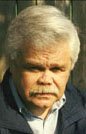
Brown Meggs

mystery writer
Born: 10/20/1930
Birthplace: Los Angeles
A successful executive for Capitol Records, Meggs was also a talented mystery writer. He was nominated for the Edgar Allan Poe Award for his first novel, Saturday Games (1974). His other books include The Matter of Paradise (1975), Aria (1978), and The War Train (1981). Though he specialized in classical music and opera, Meggs made his greatest coup for Capitol Records when he secured the rights to distribute Beatles albums in the United States.

Died: 10/8/1997

Monday, September 07, 2015

THE novel about the USA during the Viet Nam era-the great Robert Stone

MONDAY, SEPTEMBER 07, 2015

THE novel about the USA during the Viet Nam era-the great Robert Stone

I've always had the feeling that Robert Stone, not unlike Graham Greene, was a bit too much of a storyteller for the literary crowd and a bit too literary for the storytelling crowd. Which is shorthand for saying that he's never had the giant bestseller he's long deserved. He doesn't quit fit into a marketing plan. (He passed last year.)

"In Saigon during the waning days of the Vietnam War, a small-time journalist named John Converse thinks he'll find action - and profit - by getting involved in a big-time drug deal. But back in the States, things go horribly wrong for him. "

Stone uses Converse as our guide through underground America in the early 70s. Through him we meet drug dealers, killers, hippies, flambouyant street bullshit artists, police informers, crooked agents and high-minded intellectuals who find themselves reduced to babbling helplessness in the face of all their political nightmares.

Bare bones this is a powerful crime story. The real thing. Real criminals. Real cops. Real streets. Nothing tarted up for effect.

But it is also, for me, the truest portrait of that time I've ever read. His portrayl of the narcissistic foolish left and the brute fascist right are without peer in the literature of the time. And we see all this through the eyes of a man who is at least as delusional as everybody else in the novel. What redeems him is his cynical humor (the book is very funny in places as when Converse recalls stories he once hacked out for a low-rung tabloid, "Hungry Skydiver Eats Woman") and his obsession with trying to find a philosophical justifcation for existence. Good luck.

From the NY Times 1974 review:

"The plot is melodramatic: A confused and traumatized hack journalist in Vietnam buys three kilos of pure heroin and has it smuggled to his wife in Berkeley. She has gone from a job in the university anthropology department to selling tickets at a San Francisco porn film theater. The drugs are brought from Vietnam by an ex-Marine Corps friend of the journalist, a self-styled samurai, a zen psychopath, a desperado. The money will be very good, they "don't respond to the moral objections," they're all very frightened and fascinated by death.

"They are immediately discovered by "regulatory agents," who are extremely violent and obviously dealing in drugs themselves. The ex-Marine and the journalist's wife flee south from Berkeley to L.A., where they try to unload the stuff on a small-time Hollywood actor with gangster connections: he doesn't buy it; in a very crazy and chilling displaced act of revenge, the ex-Marine kills a naïve writer with an overdose. He has by now hooked the wife and fallen in love, of sorts, with her. She is terrified and attracted by him and enjoys the righteous and serene pleasure of a heroin high. They flee east into the desert and take refuge with a German zen roshi who had been a Ken Kesey-like master of dope (I am not now--nor have I ever been--God"). The journalist returns from Vietnam and is immediately picked up by the agents, tortured and put on his wife's trail. The book concludes with a Vietnam-style fire-fight on a California mountainside and a trek across the salt flats.

"It is all very suspenseful and convincing and cruel. It is very frightening. It is elaborately grim. Only the ironic energy and wit of the author's imagination and the authority of his voice suggest a less nihilistic or satanic way of living, acting, feeling. Stone took the epigraph for the novel from Conrad's "Heart of Darkness": "I've seen the devil of violence and the devil of greed and the devil of hot desire. . .I foresaw that in the blinding sunshine of that land, I would become acquainted with a flabby, pretending weak-eyed devil of a rapacious and pitiless folly." This is indeed the spirit that drives his desperate characters."

Ed again:

For thrills I rank it with the best of Greene's "entertainments." Non-stop thrills rendered in prose as stripped-down and evocative as early Hemingway. It has the power to truly shock.

A novel that deserves reading many times over.

Karl Riez's film adaptation of the novel is solid spoiled only in the third act when it gets wobbly with some overwrought activity. Extraordinary performances by Nick Nolte, Tuesday Weld, Ray Sharkey and many others.

Sunday, September 06, 2015

Gravetapping Warren Murphy, R. I. P.

Gravetapping


Posted: 06 Sep 2015 11:33 AM PDT

Ben Boiulden:
It was announced Saturday, September 5, that author Warren Murphy died. Mr. Murphy was a talented novelist who brought hours and hours of enjoyment to me through his work. He co-created the outlandishly successful The Destroyer series, the brilliant Trace novels, and a bunch of straight suspense thrillers in the 1980s and 1990s. I am particularly fond of his suspense novels. The best was probably The Grandmaster (1984), which won the Edgar Award for Best Paperback Original.

A handful of years ago I read several of Mr. Murphy’s suspense novels, and even wrote a few reviews. In his memory, and since there is nothing else I can do, I am going back in time to the reviews I wrote for four of his novels (click the titles and you will be taken to the review).


I just may go back to his work as well; maybe read a few of his Trace novels, and revisit Grandmaster .

From Dwayne Epstein the definitive biography of Lee Marvin 99 cents on Kindle


LEE MARVIN: POINT BLANK
Winner of the Bronze in Biography at the 2013 Independent Publisher Book Awards, a finalist in Forewod Magazine's Book of the Year contest, a NY Times & Wall Street Journal top ten best seller and, according to Time Magazine's Stefan Kanfer it's "Unforgettable... a surprisingly intelligent and heroic figure springs from the page... Epstein looks at a complicated figure and presents him in a full-length, three-way mirror. And it is absolutely impossible to look away."
Check it out at the Amazon link below as a 99¢ kindle (FREE w/ Kindle Unlimited), collectible hardcover or trade paperback with extra material.


The first full-length, authoritative, and detailed story of the iconic 
actor's life to go beyond the Hollywood scandal-sheet reporting of
 earlier books, this account offers an appreciation for the man and
 his acting career and the classic films he starred...
AMAZON.COM

Saturday, September 05, 2015

A Different Take on John D. MacDonald By Brendan DuBois (reprint)


A Different Take on John D. MacDonald

By

Brendan DuBois


The postings and writings about John D. MacDonald on Ed Gorman’s blog got me thinking about my own memories of this famed grandmaster.

One of the most embarrassing details about me being a mystery author is just how ill-informed I am about the field, especially when I first started out. I sold my first short story to Ellery Queen’s Mystery Magazine back in 1985 and knew nothing --- zip, zero, nada --- about mystery fiction. So I immediately began a crash course in reading the greats in the field.

At the time, I recalled seeing John D. MacDonald’s works in the bookstore, library, and listed on the New York Times’ bestseller list, so along with Robert B. Parker and Ed McBain, that’s where I started. The first John D. MacDonald book I read was one in the Travis McGee series, “The Green Ripper.” All right, it was number 18 in the series, but being the callow youth at the time --- I’m still callow but no longer youthful --- I remember it had a great cover, showing a man in monk robes, with an Uzi submachine gun slung over his shoulder.

I read the book in less than two days, loved the rip-roaring action and skilled writing, and noticed the listing for the other Travis McGee series. Thanks to a well-stocked town library, began reading the books in order, starting, of course, with “The Deep Blue Goodbye.” My, that was a fun couple of years, devouring all the Travis McGee books, as well as a number of his stand-alone thrillers, and his two collections of mystery short fiction.

One of my goals starting out was to meet this master in person, but this was never to happen. As a relatively new member of the Mystery Writers of America, I saw in the MWA newsletter one day in 1986 that he was ill and was a patient at a hospital in Milwaukee. I sent him a get well card, and learned a bit later that he died there on December 28, 1986.

A few years later, in the early 1990’s, I found myself in Florida with my wife Mona, near Ft. Lauderdale, and there was no question in my mind: we had to make a pilgrimage to the Bahia Mar marina and the famous slip F-18, where the “Busted Flush” had been moored for so many books.

Now, this was before the age of the Internet and Google, so I had no idea of what to expect… and I have to admit, as I drove into this area of Ft. Lauderdale, I was disappointed. It was so built up with condos, restaurants, high rises… and the traffic! I recall reading in some of the McGee books of how he would amble back from the beach to the “Busted Flush,” but based what I saw, poor old Travis would have had to used his football skills to race across all those busy lanes of traffic without getting run down.

Still, even with the built-up nature of Ft. Lauderdale, I did get a thrill of excitement when I saw the sign for Bahia Mar. After navigating past a grumpy traffic guard who didn’t know anything about John D. MacDonald or Travis McGee, we parked our rental car and walked into the marina store, which carried boat supplies, ropes, anchors and outdoor clothing. There, we met an older gentleman --- and damn me for not remembering his name --- who was proud of the marina’s connection with John D. MacDonald. He showed me a glass bookcase that had some of the McGee novels, some fanzines about John D. MacDonald, and a small framed painting of what the “Busted Flush” ---- McGee’s houseboat --- actually looked like. And no doubt seeing my fanboy reaction, he gave me a small print of the painting, which is one of my prized possessions.

Then we went out to the slips, and found a plaque commemorating slip F-18, which, alas, doesn’t actually exist due to their numbering technique. Still, there it was, and we took lots of photos, and before we left, I bought a Bahia Mar cap.

Later that year, no doubt partially inspired by this visit, I began writing my first detective novel --- “Dead Sand” --- and in doing so, I paid a slight homage to John D. MacDonald by ensuring all of my detective novels have a beach theme to the title, since they all take place in and around the tiny New Hampshire seacoast: Dead Sand, Black Tide, Shattered Shell, Killer Waves, Buried Dreams, Primary Storm, and the novel I’m currently working on, Barren Cove. Like the color scheme in MacDonald’s own works, I wanted to differentiate my detective novels from my stand-alone thrillers, such as “Resurrection Day” and “Twilight.”

And in another little homage, in the author’s photo published in Dead Sand and Black Tide, I’m wearing my Bahia Mar cap.

Alas, though, times and reading habits change. John D. MacDonald, who was such a publishing force in the 1970’s and 1980’s, is mostly forgotten now. I still have my collection of MacDonald novels, and still have my Bahia Mar cap. And a few years ago, once again, I found myself in Ft. Lauderdale, and I made my way back to Bahia Mar.

It was all different. The Bahia Mar marina was no longer a marina; it was a “yachting center.” The original marina store --- with its boating supplies, clothing and other goods --- was gone. In its place was a high-end gift shop, selling pricey gear with a generic Bahia Mar logo on it. Nobody in the shop had heard of John D. MacDonald, and the glass bookcase with the prized MacDonald books and artifacts was gone as well.

And in a few minutes, disappointed, so was I.

Friday, September 04, 2015

Publicity Push: Mark Coggins' August Riordan Novels

Posted: 04 Sep 2015 07:45 AM PDT

From Ben Boulden:
Mark Coggins is a crime novelist who writes mysteries because “of [his] admiration for the work of Raymond Chandler.” His novel, The Immortal Game, the first to feature hardboiled private eye August Riordan, was selected as a top ten crime novel of the year by both the San Francisco Chronicle and Detroit Free Press. There have been five additional August Riordan novels published, and the most recent, No Hard Feelings, is available now.

Mr. Coggins writing, and the August Riordan series, have received critical praise— 

“This third outing for Coggins’s private investigator August Riordan proves him a worthy successor to the iconic Sam Spade…[A] volume that fits comfortably alongside those of Hammett and Chandler. Highly recommended.”   —Library Journal on Candy from Strangers

“Riordan's deadly cat-and-mouse game involves surviving both the murderous intentions of members of Argentina's ruling class and the seductive advances of some beautiful Latin American women. First-person narrative, first-class yarn.” —Booklist review on The Big Wake-Up

The August Riordan novels are below—if you click the title you will be transported to each book’s Amazon page—with the publisher’s brief description and the first paragraph from each novel.


Publisher’s description : When the world's most innovative computer chess software is stolen, wisecracking, jazz bass-playing PI August Riordan is hired to find it.

Sifting through a San Francisco peopled with bruising, ex-NFL henchmen, transvestite techno geeks, and alluring, drug-addicted dominatrices, Riordan has got his work cut out for him.
But with a smart-ass attitude like Riordan's, nothing is easy ...

First paragraph : The left front tire of my battered Ford Galaxie jolted into a pothole, and the last of my factory hubcaps popped off and went rolling down the slope behind me. I slowed the car to a stop and watched in the rear view mirror as the hubcap hit the shoulder of the road and bounced into the brush below. I had planned to use the hubcap with my silver tea service as a crumpet tray, but I could see now those plans were kaput.


Publisher’s description : When venture capitalist Ted Valmont is belatedly informed that the Chief Scientist of NeuroStimix--a biotech firm in which he has invested--is missing, it's not just business, it's personal. Not only is the scientist an old school chum, but his disappearance jeopardizes the development of NeuroStimix's most important product: a device intended to aid spinal cord injury victims. Since Valmont's twin brother, Tim, was paralyzed in a college diving accident, finding the scientist and getting him back into harness is of the utmost importance to both brothers.

Valmont engages August Riordan to assist in the search and the men soon discover that the disappearance is part of a larger conspiracy to use NeuroStimix technology for perverse applications. And when a beautiful, mysterious young woman comes onto the scene, it's impossible to say whether the technology will provide the ultimate means to save them all or be the catalyst for tortuous, self-inflicted deaths…

First paragraph : KTVC was the station. Amelia Crenshaw was the reporter. Her producer, cameraman and the station van were arrayed along the narrow shoulder of Highway 280 while Amelia, microphone in hand, did a stand-up with the exit sign for Sand Hill Road looming behind her.


Publisher’s description  Caroline Stockwell has a secret: she and her best friend Monica are “cam girls.”

Soliciting cash donations and gifts via Amazon.com wish lists from anonymous admirers, the young women have put up a web site featuring still photographs, video and blogs to help pay their way through art college. But when Caroline goes missing and her mother Ellen engages jazz bass-playing PI August Riordan to find her, Riordan discovers her secret and it appears to everyone that someone she met through the web site is responsible for her disappearance.

Set against the real-world backdrop of Internet predators using social networking sites like Facebook to find and ensnare their victims, Candy from Strangers is the first novel to explore the phenomenon of teenagers and young adults displaying themselves online in exchange for material favors—often without their parents' knowledge—which some are calling the newest form of prostitution.

First paragraph : When Henry Glover wrote It Ain’t the Meat (It’s the Motion) in 1952 for the King Records R&B group The Swallows, I’m sure he never anticipated the trouble it would cause. The Swallows had made a modest hit of the song, but the risqué lyrics and the fact that white kids weren’t buying many records from black groups limited its play. It took Chris Duckworth belting it half-century later to really do some damage.

Runoff 

Publisher’s description : August Riordan—private investigator, jazz bass player, smart ass with a foolish heart—is going to find out. He's been hired by Leonora Lee, the all-powerful “Dragon Lady” of San Francisco's Chinatown, to investigate the results of the city's recent mayoral election. It seems the Dragon Lady's candidate failed to even carry the Chinese precincts, and she's convinced that someone must have rigged the outcome by hacking the city's newly installed touch-screen voting machines.

A runoff between the two remaining candidates is days away, but it takes Riordan mere hours to find the Director of Elections dead in his office. A visit to the offices of Columbia Voting Systems—the suppliers of the city's touch-screen machines—results in another corpse. A wide range of political interests share a stake in the election, so Riordan's got plenty of suspects.

First paragraph : I shouldn’t have been surprised when the backhoe materialized out of the Chinatown fog, ran onto the sidewalk and took out a column supporting the pagoda roof of the Bank of Canton. But I was.


Publisher’s description : The odyssey of María Eva Duarte de Perón—the Argentine first lady made famous in the play and the movie Evita—was as remarkable in death as it was in life. A few years after she succumbed to cervical cancer, her specially preserved body was taken by the military dictatorship that succeeded her deposed husband Juan. Hidden for sixteen years in Italy in a crypt under a false name, she was eventually exhumed and returned to Buenos Aires to be buried in an underground tomb said to be secure enough to withstand a nuclear attack.

Or was she?

When San Francisco private eye August Riordan engages in a flirtation with a beautiful university student from Buenos Aires, he witnesses her death in a tragic shooting and is drawn into mad hunt for Evita's remains. He needs all of his wits, his network of friends and associates, and an unexpected legacy from the dead father he has never known to help him survive the deadly intrigue between powerful Argentine movers and shakers, ex-military men, and a mysterious woman named Isis who is expert in ancient techniques of mummification.

First paragraph : ‘Are you hoping for a souvenir or checking to see if they’re your size?’


Publisher’s description :  Winnie doesn’t remember the last time she felt anything below her neck. Her spine is severed at the seventh vertebrae, but thanks to implants from a sabotaged biomedical start-up, she has regained mobility. She is a prototype: a living, breathing—walking—demonstration of revolutionary technology that never made it to market.

Her disability has become her armor. Because she doesn’t register fatigue, she has trained relentlessly. Her hand, arm, and leg strength are off the scales for a woman, and she has honed self-defense techniques to channel that strength. She’s a modern-day Amazon who feels no pain.

When the sociopath who torpedoed the start-up sends killers to harvest the implants from her body, Winnie must team up with broken-down private investigator August Riordan to save both their lives—and derail sinister plans for perverse military applications of the technology.

First paragraph : When she got to San Francisco and found that August Riordan wasn’t there, she decided to kill herself. She took a cab from downtown to the Presidio and walked out on the Golden Gate Bridge. She went past the historical marker placed by the Native Sons of the Golden West, past the section of the walkway bordered by a chain-link fence, and onto the part where the only barrier between pedestrians and a two-hundred-fifty-foot drop was a chest-high railing.

Thursday, September 03, 2015

Forgotten Books: The So Blue Marble Dorothy B.Hughes


I'm not sure exactly when Freud became an influence on popular culture but certainly in the Thirties and Forties his beliefs could be found in crime fiction and crime movies everywhere. Hitchcock sanctified him in Spellbound and many lesser directors followed suit.

One of the most prominent of Freudian tropes was phantasmagoria, the sense that the protagonist is lost in a chaos that may or may not be real. A nightmare or is he really about to die?

Dorothy B. Hughes certainly plays with this trope in her famous novel The So-Blue Marble (1940). Her lovely protagonist, saddled with the unlovely name Griselda, decides to visit New York and stay in her ex-husband's apartment, at his request. They haven't seen each other for four years during which he's become a major reporter for NBC worldwide and she's become both a writer and an unlikely (and unhappy) movie actress.

This is the Vogue magazine world just before the war. Everything is ridiculously expensive, everything ridiculously elegant, people, clothes, cars, apartments alike. There are always limos standing by and the proper servants to drive them.

Griselda is accosted in chapter one by a pair of diabolocially handsome twin brothers, one blond one dark haired, called the Montefierrow Twins by everybody who knows them. They are most frequently  seen in tops hats, tails and carrying gold-handled canes, one of which has a dagger on its tip. In any kind of company other than their international che-che world these two would be dead in under five minutes.

The lads want a blue marble that they believe Griselda has. This is the McGuffin. A lot of people want the marble. Only the twins are willing to kill for it, something they do frequently. The marble isn't just a marble of course and there are hints that spies from three different countries have been searching for it, too.

The phantasmagoric aspect comes in when you realize that at times the story teeters on the brink of being unbelievable. It really does have the quality of a nightmare. The writing and social observation are so well done--Hughes, a Yale Young Poet in those days, obviously knew this turf well--you're swept up in all the calamity without worrying about some of the stranger twists and turns.

The most interesting character in the book is Missy, Grisedla's seductive sixteen year old sister. A true psychopath and the lover of one of the those god awful twins. Humbert Humbert would no doubt find her enchanting. Few writers have ever been able to create terror as well as Hughes and Missy is borne of that terror, another unsettling element played off against the real world.  To me it's clear that Hughes dutifully read her Elizabeth Sanxay Holding and learned a great deal from the experience.

This is the novel that set Dorothy B. Hughes on a career that would include two of her novels becoming Bogart pictures, the best of which, In A Lonely Place, is a noir icon. This is a swift, tart, dark novel set in the months before Pearl Harbor. The coming war is felt on every page.


Wednesday, September 02, 2015

Character Actors; Jeremiah Healy Writing Award


I like to read while I eat. Lately I've been working my way through David Thomson's enormous Biographical Dictionary of Film at lunch time. Thomson is the most interesting and entertaining flm critic since Pauline Kael--and every bit as frustrating. When I disagree with him, I want to all him up and read him his rights--before violating every one of them.

Today I read his take on Edmond O'Brien. Thomson notes going in that movie stars aren't supposed to sweat. That makes them too much like everybody in the audience. Part of movie stardom is inaccessability, fantasy. But what a clever hook because beefy O'Brien sweated all the time, especially in his most memorable movie DOA. He was also fat, frequently out of breath, devoutly neurotic and often frightened. He was, in other words, pretty much like the people in the darkness watching him on the big screen. An Everyman of sorts.

In the course of his entry on O'Brien, Thomson makes clear that he enjoys the odd-ball actors and actresses far more than he does the stars. Thus he finds Warren Oates vastly more compelling than Robert Redford and Jeff Goldblum more intriguing than Paul Newman.

When I was a kid I rarely wondered about the lives of the stars. But I was always curious about character actors such as Elisha Cook, Jr. and J. Carrol Naish. There was a vitality to their performances that the stars were rarely capable of matching. And in the case of Cook, there was a melancholy and weariness that I recognized even then as being much like my own.

Same with the women. The ones I was always excited about were the second- and third-leads. They were the ones I got crushes on. They were often as pretty as the leading ladies, sometimes even prettier. And they frequently had more interesting roles, the bitch, the tart, the victim.

Barry Gifford once remarked that when you see a musical with all those young gorgeous girl dancers you have to wonder what became of them. The majority probably became housewives; more than a few probably took to the streets as parts became harder and harder to come by; and a lucky handful became the wives of powerful Hwood men.

I've been watching a lot of silent films of TCM and the same impulse grabs me then, too. Who were they? What happened to them? Did they know they'd become immortal? A full century later I sit in our family room and watch them as--most likely anyway--another century from now people will still be watching them. This is probably heresy of sorts but to me film immortality is far more imposing than literary immortality.


.absolutely amazing ebooks logo

and The New Atlantian Library

AAeN News:

Jeremiah Healy 
Mystery Writing 
Award  Announced

Award-winning mystery writer
 Sandra Balzo 
and Absolutely Amazing 
eBooks Publisher 
Shirrel Rhoades presented J. E. Irvin of 
Springboro, Ohio, with the 
inaugural Jeremiah 
Healy Mystery Writing Award
 on Saturday, 
August 15, during the annual 
Mystery Writers 
Key West Fest, a three day 
mystery genre 
festival set in the tropical paradise 
of the Florida Keys.
  
         Janet Irwin                                                                                        

Irvin was one of four finalists in a 
nation-wide 
competition for the prize, which 
garnered her  
book-publishing contract 
with AAeB, free 2016 
Mystery Writers Key West Fest 
registration with
 hotel accommodations for two 
nights, and a 
bobble-headed Jerry trophy.
Sponsored by AAeB, the award 
salutes late author 
Jeremiah Healy's legacy as a 
beloved and influential 
mentor credited with helping and 
advising many 
aspiring authors. Writers from all 
over the country 
answered the call that invited 
candidates to submit 
the first three pages of a finished, unpublished 
mystery manuscript.
  
            M ystery Writer Sandra Balzo         Publisher Shirell Rhoades                               

"Jerry often said a book either 
captures a reader in the 
first three pages ... or it doesn't," 
commented Shirrel 
Rhodes, who co-produces the  Mystery 
Writers Key West Fest  
along with Mad Mick Murphy Key 
West Mysteries 
author Michael Haskins. "We agree 
with that assessment 
and decided to use it as a 
yardstick for a writing
 competition in his honor. He 
helped us get the first 
Fest off the ground, and this way 
we will keep him as a part 
of it in future years."
Irvin says her submission, titled "
Dark End of the 
Rainbow," is a portrayal of the 
corrosive effects of 
secrets and the healing power of love. The other 
three award  finalists and their titles are:  
"All Hocked Up" by Jack Bates 
of Rochester, MI; 
"Portside Screw" by Gregory S. Dew 
of Ponce Inlet,
 FL; and "Square Grouper" by Lewis 
Haskell 
(previously identified under the author's
 pen name, Crichton Lewis) of Key 
West, FL.
Unable to attend the Fest due to 
a recent surgery, 
Irvin accepted the honor via Skype.
Information on submission 
criterion for 
the second annual "Jerry" award can be found at www.mysterywriterskeywestfest.com
A gathering of noted mystery writers at the
2015 Mystery Writers Key West Fest ...

Mark your calendar 
to attend
 the 3rd annual M
week in June 2016 
at the 
Doubletree Marquee 
Hotel in 
Key West, Florida.

  
ctorctors; Jeremian Healy Writing Award

Tuesday, September 01, 2015

Pro-File Phoef Sutton Brash Books


Phoef Sutton is the Emmy and WGA award winning writer of shows like CHEERS and BOSTON LEGAL. He's had three books out so far in 2015: FIFTEEN MINUTES TO LIVE from Brash Books, WICKED CHARMS co-authored with Janet Evanovich, and CRUSH from Prospect Park. He may still have one more book released before the year is out!
  
1.     Tell us about your current novel. I currently have three novels out. FIFTEEN MINUTES TO LIVE, published by Brash Books, is a re-print of my first novel. WICKED CHARMS, co-authored with Janet Evanovich and published by Bantam, is supernatural romp. CRUSH, published by Prospect Park Books, is about a nightclub bouncer and bodyguard in present-day Los Angeles. It features hard action and a lot of humor. This is my humble attempt to write a Travis McGee, though I’m embarrassed to even say that out loud.

.2. Can you give a sense of what you're working on now? I’m working a sequel to my last novel and a sequel to the novel I wrote before that. Sequels have their own pitfalls. Reintroducing characters in a new way but not repeating yourself? Very difficult. Telling a story that’s like the original but new? Ditto. This is new territory for me. In television they always say you should think of the first six episode of a series as different versions of the pilot. I suppose it’s something like that. 

3. What is the greatest pleasure of a writing career? Writing. I love the act of writing. I love being lost in the story, getting to know the characters. It is one of the few times when I am truly “in the moment.” 

4. What is the greatest DISpleasure? Pitching. Pitching my work before I’ve written it. I can’t stand it. I’m not a salesman, I’m a writer.

5. If you have one piece of advice for the publishing world, what is it? I’m still learning the ropes. There’s no way I can give advice.

6. Are there two or three forgotten mystery writers you'd like to see
in print again? Richard Prather; the author of the delightfully brash Shell Scott novels. Leigh Brackett; the writer and that everybody knows and nobody knows. As a screenwriter, she wrote everything from THE BIG SLEEP to THE EMPIRE STRIKES BACK. She was a successful science fiction novelist and fine mystery writer.  Robert Arthur, Jr; wrote fine mystery stories for Alfred Hitchcock as well as The Three Investigator kids novels and The Mysterious Traveller radio series. Worthy of rediscovery.

7. Tell us about selling your first novel. Most writers never forget
that moment. Like everything in life, it was mixture of highs and lows. I’d written my first novel, ALWAYS SIX O’CLOCK as an experiment. To see if I could it. I sent to my friends, asked them what they thought. My lawyer, for one, loved it. He sent it out to agents. One of them called me back. She wanted to handle it. She sent it out. We heard from a couple of people. One was a small the publishing house, who loved it. One was a big publishing house, who thought it needed work but wanted to buy it.  I couldn’t believe my good fortune. The big publishing house offered considerable more money and prestige. So I went with them. Big mistake. After the celebration, they got me to change the book, to take out what was special about it, to water it down. It was published and sank without a trace. I learned a lot from that experience. Don’t chase the money and the prestige. Go with the people who understand your work.  I was finally able to put out my original version of the novel, now titled FIFTEEN MINUTES TO LIVE, when Brash Books offered to publish it. It feels great to have the real McCoy available at last.