For those of us who can remember the gothic boom of the Sixties and early Seventies it's always been difficult to imagine that one genre would ever again dominate paperback sales the way the gothics did.
But my friend Paula Guran was quoted today on Mediabistro about fantasy and romance and I have to say I think these figures best (per centage-wise) even the days of gothic dominance.
Posted by JasonB | 04:03 PM | Email this post | 0 Comments
Not Everybody's Sales Are Going Down
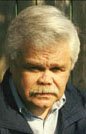
Juno Books editor Paula Guran (right) digs into the Nielsen Bookscan numbers to find some encouraging news about genre fiction sales:
"Fantasy mass market paperbacks sold 102,660 units last week," she reports. "A year ago, in the 49th week of 2007, fantasy mass market paperbacks sold 62,761 units... Romance, always the industry leader in [mass market paperback], sold 202,667 units for the week in 2007 and this year: 310,689."
Guran adds that the top seven fantasy paperbacks are Charlaine Harris novels, followed by urban fantasists Kim Harrison and Jim Butcher. In the romance category, Nora Roberts is at #1, but some of the other big sellers also have strong fantasy components; see Sherrilyn Kenyon, Heather Graham, and Katie Macalister.
But what about year-to-date sales, you ask? Overall, fantasy sales are down 18 percent compared to the first 49 weeks of 2007, but mass market paperback sales are up 14 percent—and overall romance sales are up 83 percent, with mass market paperbacks alone experiencing a 50 percent boost. And that's not even considering how many romance books might, in a different climate, have been categorized as fantasies...
Monday, December 15, 2008

Sunday, December 14, 2008
Popular Fiction Peridodicals
This is a pre-review of Jeff Canja's forthcoming "Collectors Guide To Vintage Pulps, Digest and Magazines" entitled Popular Fiction Periodicals.
In more than 350 tightly packed pages, Jeff reprints covers of everything from slicks such as Cosmopolitan to the men's magazine such as Rogue and For Men Only to the pulps such as Doc Savage and Thrilling Wonder. The gallery of covers spans most of last century and includes, in a following section, not only more covers but lists of writers and artists associated with particular publications. And all this is introduced in a rich and fascinating article by Jeff on the history of magazines in America. He couples this with recommendations on collecting the magazines.
This is a true spellbinder, a lavishly illustrated history of magazines of every kind, from the demure Redbook of the early Forties to the `spicy' girl magazines of the Thirties to the hardboiled bastions of Black Mask and Manhunt. Science fiction and fantasy is represented in page after page of covers that track the field from its `scientifiction' days to the rise of the great Galaxy.
This is a mandatory purchase. No collection of popular fiction--for collector, reader or library--will be complete without this exhaustive and dazzling book.
Saturday, December 13, 2008
Derailed
I'll have to start a list of things I'm Not Supposed To Like But Do Anyway.
The movie (and novel) Derailed would be near the top. Now I'm willing to admit that there are certain plot points that seem a mite far-fetched but overall this story of two married people who meet each other on a commuter train and embark on a few adulterous hours of fun in a dusty downtown hotel works very well for me. Not so well, alas, for them. Just as they are getting all snuggly a thug breaks in on them and beats both of them savagely. He also photographs them. Soon after the the blackmail calls begin.
My favorite kind of suspense fiction involves average people turned desperate by events. Which explains my fondness for Hitchcock and several of his imitators.
Derailed isn't a great movie but for me it's got three great plots twists and several sturdy if not quite memorable performances, not least by the star Jennifer Anniston who'd previously never done much for me. Here she's playing a woman of intelligece and sensitivy. She's also a lot sexier than in her Friends-type roles.
The reviews I've seen have been savage and I'm not sure why. No, it's not art; it's not even commercial film making. But it's a cunning, suspenseful movie that keeps dopes like me content for the full length of its running time. So what the hell more can you ask for?
Friday, December 12, 2008
Robert Bloch
On The Rap Sheet tonight writer John Peyton Cooke makes the case for The Scarf and not Psycho being Robert Bloch's true masterpiece. I'm not sure I agree but since they're both fine books what the hell.
Cooke's excellent review reminds me of another overlooked Bloch novel, the one that came right after Psycho and that nobody much seemed to care for, namely The Dead Beat. What I've always liked about it is the way Bloch took a sleazy no-good bastard and set him right down in the middle of a Midwestern family that could have doubled as sit-com people. Bloch really makes you care about these folks and how they are so slow to catch on to the psychotic jazz musician they make the mistake of trying to help.
The title signals the era, the early sixties when the beats were so much in the news. He shows us a kind of faux beat existence with the musicians we meet early on. Bloch gets the one night stand life (in both meanings of that phrase) down just as well as he gets the middle-class days and nights of the family the musician will ultimately turn on.
Reviewers of the time didn't like the relatvely slow pace. They also complained (as I recall) that the novel didn't offer the shock or sass of Psycho (I say sass because the novel is very funny in places--something Hitchcock picked up on immediately). While it's certainly not Bob Bloch's masterpiece, it's a novel that shows him in a more expansive mood, showing an interest not just in the story but in showing us life as it was lived back in the day.
Thursday, December 11, 2008
Tie-ins
Max Allan Collins along with Lee Goldberg is one of the founders of the International Association of Media Tie-in Writers. I'm also a member even though I've only one tie-in to my credit. But here's a letter Al (Max) put on line today that shows how serious the tie-in business has become and how many good writers are doing such fine work in the genre. Tie-ins are no longer thriwaways--in case you had noticed.
Max:
There's a very good and respectful piece on horror movie novelizations -- with lots of discussion about tie-ins in general, defending them -- in RUE MORGUE #85 (December). It's a good, slick horror mag from Canada (this time it has a fairly explicit article about horror porn spoofs, which I found a little surprising).
On another subject, I appreciated Karen's comments, re: her own specialization in the tie-in racket, er, I mean, medium. For me the rewards beyond the monetary have been quite the opposite -- I have been able to write all kinds of stuff that I otherwise wouldn't have an opportunity to explore. I am a mystery/suspense writer, outside tie-ins, but in our arena I've been able to do science fiction (WATERWORLD, DARK ANGEL), techno-thriller (IN THE LINE OF FIRE, AIR FORCE ONE), western (MAVERICK), outright comedy (PINK PANTHER), fantasy-adventure (THE MUMMY) and on and on.
On the other hand, I got turned down for STAR TREK -- I guess I did: after doing several samples with editorial input, the project just sort of fell away -- and after many months developing an editor-directed fifty page proposal, THE X-FILES bounced me, too...although I had the happy ending of getting the second film novel, which was one of the happiest tie-in experiences of my career (incredible support from Spotnitz and Carter...who'da thunk it?).
I'm not sure there's any such thing as a name-brand writer in tie-in. Some writers who have a track record make choosing them a no-brainer for editors; you can call that lazy editing, or you say that writers like Karen, Kevin. Jeff and Keith have earned their stripes and deserve the work.
Recently I went to a G.I. JOE website (I'm doing the novelization of that) to try to get a feel for the property and saw my name invoked by one fan as "a guarantee that it'll be a phoned-in job." Yessir, my big name goes far....
Max
Wednesday, December 10, 2008
Westerns
Every few weeks I get a letter from somebody who reads this blog asking about my western novels. As mystery readers they can't imagine reading one. I never know what to say other than they're not shoot-`em-ups but rather suspense novels set in the west, some even in the Midwest. I try to make them realistic to their time. I have a large volume written in the early 1900s compiling profiles of criminals of all kinds in the United States, including the frontier. Things haven't changed much. The weapons are more deadly but the men and women using them are the same. None too bright, most of them. And they were no doubt the same in ancient Greece and down through history.
Ben Boulden just published a review of my second western and I'm publishing it here with his permission because a) who doesn't like egoboo and b) he explains far better than I can what I try to do in my westerns. His website is Gravtapping and it's a damned good one.
http://gravetapping.blogspot.com/
Leo Guild is an aging bounty hunter. He is a former lawman, father and husband, but that is all behind him. Now he rides alone. He is melancholy, intelligent and violent; when he needs to be. He also has a past that sticks with him. He killed a little girl. The courts forgave him, but he can’t find the heart to forgive himself.
Death Ground opens on the evening of Guild’s 54th birthday. In lonely celebration he makes a date at the local brothel with a young “straw-haired” girl. Things don’t go as expected with the girl and his birthday truly turns for the worse when he is summoned to the Sherriff’s office.
Two men are dead. One—Merle Rig—hired Guild as a bodyguard and the other—Kenny Tolliver—was technically Guild’s employee. He hired Kenny to protect Rig while he paid a visit to the "straw-haired" girl. As he looks at the cadavers on the heavy mortician’s tables he figures his job is gone and it is time to ride on, but first he pays a visit to Kenny’s mother. A scene that unsettles Guild and also piques his interest; Kenny’s mother knew Rig and Kenny palled around with a couple local deputies.
Leo Guild decides he can’t leave town until he figures who really killed the pair and why. He has a feeling it is not the violent mountain man being blamed by the Sherriff, but he doesn’t have many suspects. He doesn’t have anything but a hunch, really.
Death Ground isn’t a traditional Western. It, like all of Gorman’s Westerns, is a noir mystery wrapped in the trappings of the Old West. That is not to say that the historical element isn’t accurate or interesting, because it is. It is also central to the story, but an Ed Gorman Western is more of a historical mystery than anything else. A hardboiled historical mystery at that.
The prose is tough and tender in varying shades. It defines the story, action, and protagonist with a lean, smart and melancholy and literate style:
“Then he started digging snow up with both hands, and he covered them good, the two of them, and then he stood up and looked out on the unfurling white land. There was blue sky and a full yellow sun. Warmer now, there was even that kind of sweetness that comes on sunny winter days. It made him think of pretty women on ice skates, their cheeks touched perfect red by the cold, their eyes daring and blue.”
Leo Guild is an everyman. He is the man who does what needs to be done. He isn’t a hero, or a villain, but rather he is simply a man; a man who has seen much, done much, and lost much. Guild is an example of what makes Ed Gorman’s fiction so damn good: characters that are measured and three-dimensional; characters that act, feel and sound real. His male characters are strong and pitiful, lustful and scared, vain and dangerous, lonely and weak—generally all at the same time—and more importantly they are recognizable. And his female characters exhibit the same steady qualities. Neither wholly good nor bad, just human.
Death Ground is a Western that should have wide appeal. It will please the traditionalist with its rugged description of frontier life and the people who settled it. It will also introduce readers of hardboiled crime fiction to a new genre, but mostly it will please any reader who wants something tangible and meaningful mixed into a well-told, excellently plotted and immensely entertaining novel.
This one is well worth searching out.
Death Ground is the second of three novels to feature bounty man Leo Guild. It was originally published by Donald M. Evans in 1988. The other two are: Guild (1987) and Blood Game (1989). I have also read Blood Game, and it is every bit as good as Death Ground. I can only imagine that Guild holds it own as well.
Tuesday, December 09, 2008
Editors & Writers
Well-known science fiction editor Lou Anders recently guest blogged about the relationship between editors and writers. While I'm basically a writer, I've worked three times as an editor so I have some sense of the give and take involved. Most of the writers I worked with while buying books were bright, friendly, cooperative. And, as Anders points out in his own case, a number of them became friends. But there were a few who came at it ready for combat, something I never quite understood. Of course as a writer I once ran into an editor who seemed profoundly displeased that I existed at all. And let me know it at every opportunity. I wish Anders had acknowledged that there are a few editors who aren't all that easy to get along with, either--though I have to say with that one exception years ago I've been damned lucky to work with smart, competent and helpful people.
Anders:
""Where's my check?" was probably not the most tactful response to my effusive welcoming email, an email praising a new author's magnificent manuscript and their powerful storytelling skills, and enumerating all the many reasons I was thrilled to add them to the Pyr roster. Checks are notoriously late in this business, but in this case, the signed contracts back from the author hadn't even reached me in the post; I'm not even sure they were signed as we'd just made a verbal agreement with the agent that morning.
"Uh oh, I thought, this doesn't bode well for the author/editor relationship.
"And it is a relationship.
(more)
"Publishing, like the film industry I worked in previously, is a business of friends. Sure, there's jealousies, back-biting, rivalries, hurt feelings, egos, crazy folk, etc... but for the most part, you work with people you really enjoy working with, because if you are going to spend a year or more enmeshed in someone else's imagination, it's a whole lot nicer for both of you if you can get along with them as people too.
(more)
"There's a reason why authors follow editors when the latter change jobs, and why conversations with your editor about sporting events, comic books, TV shows, and the price of tea in China are all classified as "working conversations". The editor is your editor because he/she loves your book and picked it out of the hundreds (thousands!) of other manuscript, pitches nd proposals that crossed his or her desk(top) in any given year. Building a relationship with an editor starts with realizing this."
for the rest go here:
http://theswivet.blogspot.com/2008/12/guest-blogger-lou-anders-on.html
Monday, December 08, 2008
Louis L'Amour
Louis L'Amour was more than a writer, he was a phenom. It's estimated that at one time he laid claim to nearly 75% of all available rack space in the western section. There were better western writers to be sure but a combination of luck, pluck and an ability to tell colorful stories in dramatic and uncomplicated ways made him a publishing icon.
As a journeyman pulp writer, L'Amour wrote for virtually every available market, from frontier stories to South Sea adventures to hardboiled stories of the mean streets. The sixth volume of his Collected Stories concentrates on the latter, mixing tales of gangsters, boxers, killers and detectives.
While there are no masterpieces here, L'Amour brought all his skills to the task of pulp crime. For me the run of boxing stories are the gems. L'Amour was himself a former boxer and he obviously had a real feel and affection for fighters and the ring. And the shadowy figures who have always run boxing.
The detetctive stories work both as tales and as snapshots of the big city in the Forties. Like O'Henry and New York, L'Amour understood that cities themselves are characters and he gives us tours of life at the very top and life at the very bottom.
I'd recommend this as a nightstand book. It's a large collection and is best read a few stories at a time. There are some clinkers (I'm not sure why the editors chose to lead with such a poor story) but if you like pulp fiction this is the book for you.
Sunday, December 07, 2008
Charles Paris
(Thanks to Sarah Weinman for the link here)
-------------------------CHARLES PARIS
Gillian Reynolds Telepgraph UK
"Charles Paris, the original creation of Simon Brett, exists in 17 novels. Brett was 28, working as a producer at BBC radio, when he first imagined him. Surveying his small pile of unpublished manuscripts he thought he’d try writing something other people might want to read. Up to then he’d been terrified of crime fiction, the perils of holes in the plot, the matching of character to dialogue. From his day job, working with lots of actors, came the idea of a fictional actor, middle-aged, resting more often than working, with a hopeless private life but the kind of cunning that solves crimes."
for the rest go here:
http://www.telegraph.co.uk/arts/main.jhtml?xml=/arts/2008/12/06/nosplit/bvtvgillian06.xml
Ed here: F. Scott Fitzgerald once noted that his sometime friend Ernest Hemingway spoke with the "authority of success" while he, Fitzgerald, spoke "with the authority of failure."
I've always imagined that Charles Paris was a background player in Fitzgerald's best work--a man of no particular note who drank at Gatby's mansion, perhaps. A bit old for the rest of the crowd but earnestly pursuing young women who, like him, were of no particular note, either, his charm not nearly as frayed as his suits. A man who knows all about "the authority of failure."
Most of us have favorite fictional detectives and Charles Paris has always been one of mine. He's a decent man adrift in drink and long years, the very things that help him solve crimes. He's drunk it all and seen it all so it's dfficult to deceive him.
Most of the early Paris novels I've read three or four times over the years. The later ones are very good, too, but I'm partial to the first five because Simon Brett was learning about Charles right along with his readers. If Charles was a bit inconsistent from book to book on occasion, that just made him more human.
The books are packed with the lore of theater and radio in particular. Brett is such a deft storyteller that his backgrounds never slow the pacing even though they always play vital roles in the plot itself. Brett obviously reveres working actors like Charles. The pubs where they drink, the dusty offices of their agents, the old friends who still manage to get the kind of work that eludes Charles... Brett makes the workaday world as interesting and entertaining as the murders.
Brett has a good ear and a good heart and it's always amusing to watch him go up against some of the more irritating aspects of modern media culture. God knows he never wants for targets.
It's a funny thing about Charles Paris. Of all the fictional detectives I've encountered over my lifetime he's the only one I imagine to be a real person. Brett has given him vivid life and me a long shelf of excellent mystery novels.
Saturday, December 06, 2008
Tom Piccirilli; Kris Rusch
Two excellent pieces on writers' blogs today:
Tom Piccirilli discusses eloquently the joys, frustration, heartbreak, terror and joys of writing full-time:
"Crises of faith, rages at peers, editors, and fans, disgust with the quality of work you read and the work you write, bouts of bitterness, thoughts of quitting, it's all a part of doing this insanity we do for a living. It's a part of the process, right up until the day that one of us actually quits and decides to 9-to-5 it and nab some health benefits.
One pal said that writing just wasn't fun anymore. It was a painful experience now having to make deadlines. Picking up the published books and seeing his work in anthologies and magazines didn't give him the same thrill anymore. The overwhelming, profound grandness of literature had downshifted into malaise. Writing had become just a job.
It's a lesson we all learn. Some early on and some later in life. I lost a lot of my bushy-tailed and bright-eyed sensility of fun early in the game. It's probably served me well over the long haul."
For the rest go here:
http://thecoldspot.blogspot.com/
-------The Nature of Heroes
Kristine Kathryn Rusch discusses heroism in the age of summer blockbusters:
"Okay. Explained that way, I understand that the filmmakers made the right choice after all. Just like I understand the machinations that Spielberg and Lucas went through to show us that 66-year-old Harrison Ford can play an action hero. Spielberg, Lucas, and the marketers of the film no longer trust us to recognize a very simple fact:
"A hero is defined by his (or her) actions in a moment in time.
"It took David Mamet to remind me of that fact. In a marvelous essay called, "Film Noir and He-Men," he talks about the way that modern moviemakers no longer trust us to appreciate an uncomplicated hero. "Their films," he writes, "depict the gentle progress of the protagonist toward self-actualization."
Note the words he chooses here: protagonist, not hero; gentle, not tough; and self-actualization, not action. Yet the box office this May (and probably throughout the summer) will yet again illustrate our desire for heroes—not just in our stories, but in our lives."
for the rest go here:
http://www.irosf.com/q/zine/article/10493
Thursday, December 04, 2008
Short fiction
I've been reading short stories all year in prepartion for the annual collection Marty Greenberg and I do. Because our deadline has been moved up by three months my reading has been intense lately.
I'd need three volumes to reprint all the deserving stories. Every sub-genre from hardboiled to traditional-cozy to paranormal deserves its own book. I have my prejudices, of course. I feel closest to noirish fiction but when I read a Robert Barnard or Nancy Pickard story I get just as excited. I suppose because my generation was raised on realistic fiction I like to see every day life explored and writers like Robert and Nancy do that with poetic expertise.
I've never gotten over my thrill of discovering a story that works perfectly. I was joking with Carol the other night after I read a story in an original anthology--I said I want to call this guy up and tell him how good his story is. It was after two a.m.
I find it impossible to keep up with all the new novelists. But I can at last get a sense of those who write short fiction. And believe me 2008 was a bumper crop.
Wednesday, December 03, 2008
Sam Peckinpah
Ed here: I'm not much for machismo or male swagger. Even the ones who are good at it are often just posing. To some degree drugs have changed this. There were monsters throughout history but today's drug-addled monsters are more numerous and more dangerous. But that don't make them cool.
I mention all this after reading a fine piece on Sam Peckinpah's films over on Cinema Retro. Oddly enough, for all the violence, machismo seemed alien to Peckinpah. His men were not John Wayne conquerors, they were the anti-thesis. Look at the roles of William Holden and Robert Ryan in The Wild Bunch. Or look how he turns macho upside down in Bring Me The Head of Alfredo Garcia. Peckinpah's men are generally losers, often forlorn, with no prospects. The more I watch Peckinpah's films the more I realize that his men are as confused and scared as modern men. The neuroses in his only war film The Iron Cross would keep an army of shrinks busy for a decade. I think that's why so much of today's book and screen violence strikes me as showy and empty. The men are like male runways models with guns. Posing.
From Cinema Retro:
"We’re perilously numb to the word ‘violence’ these days – and that’s the very last thing Sam Peckinpah was after. When he started shooting pictures in 1961 with The Deadly Companions (rarely screened since the ‘70s in the UK), Hollywood still had qualms about showing blood. The Wild Bunch (1969) changed everything; it was probably changing anyway – Bonnie and Clyde (1967) paved the way – but Peckinpah’s masterpiece was a seismic event in cinematic storytelling. The director wanted to bring Vietnam into the story, the daily diet of destruction on the TV news, but the violence wasn’t the point. The pointlessness was the point. Desperados who are no good and finally they know it. It’s only when they choose to die in vain that they find some kind of self-respect. But the art of it is how intensely we feel for them, every step of the way, every shuddering bullet wound, and every last breath.
"Though Peckinpah was brutal, cynical, hateful towards women and disgusted by men, in every instance the reverse is also the case. Only a true romantic has so much pain inside. Publicly, Peckinpah aligned himself exclusively with the outlaws and the mavericks, full of conflict and self-loathing; you see him in Dustin Hoffman’s David Sumner in Straw Dogs (1971), in James Coburn’s Garrett in Pat Garrett & Billy the Kid (1973) and in Warren Oates’ Benny in Alfredo Garcia – self portraits in which impotence and rage go hand in hand."
For the rest go here:
http://www.cinemaretro.com/index.php
Tuesday, December 02, 2008
Leigh Brackett; YA novels; Ellen Page
From Tom Piccirilii about my post last night re Stranger At Home by Leigh Brackett::
Believe it or not, Ed, STRANGER AT HOME as by Sanders actually is in print. Those Black Mask Online dudes have it available in a POD edition.
Amazon.com: Stranger At Home: Leigh Brackett, George Sanders: Books
-----------------------------------
From Galleycat
Twilight Versus Y.A. "Chippies"
"I hate Y.A. novels; they bore me. That's a disappointing fact of my reading life, because never have I had such an intense relationship with books as when I was a young girl," wrote Caitlin Flanagan in the Atlantic--launching a thousand Y.A. blog posts in the process.
Flanagan's essay praises the Twilight series (the second-most popular book among college kids) for its careful treatment of sexuality and relationships. At the same time, she bashes other popular stories like Gossip Girl ("these chippies could make a crack whore look like Clara Barton") and The Sisterhood of the Traveling Pants ("female empowerment as it's currently defined by the kind of jaded, 40-something divorcees who wash ashore at day spas with their grizzled girlfriends").
Ed here: There's more but why bother. She's so clearly wrong on so many counts a comment isn't necessary.)
-------------------------------Sorry Ellen Page you're not good enough
New York magazine today:
"In an effort to provide the shadowy cabal known as the Academy of Motion Picture Arts & Sciences with some much-needed transparency, AMPAS executive director Bruce Davis agreed to be questioned under hot interrogation lights about his organization's mysterious recruiting methods by the New York Times.
(more)
..... AMPAS has gone on the defensive to combat the perception that its voting branch is too old and too conservative. In fact, the opposite seems to be true; the Academy instituted a new, stricter admissions policy way back in 2004 with the intent of making the membership younger, hipper, and more culturally diverse (more Benetton, less Brooks Brothers).
(more) However, it seems that they may have gone too far, as rumblings have begun that the "new" criteria is too strict. No longer is an Oscar nomination sufficient enough to earn you an AMPAS bid (case in point: sexually ambiguous buzz magnet Ellen Page).
(more)
...nowadays, potential AMPAS nominees must take to brownnosing current members in order to gain admittance. Namely, The Lives of Others director Florian Henckel von Donnersmarck's composed this gratuitously treacly ode to the Academy: "Every time I walk through the doors of the academy building, I experience what I would imagine a pious Catholic could feel as he walks through the portal of St. Peter’s Cathedral in Rome" (ew).
Monday, December 01, 2008
Leigh Brackett
Way back in the Fifties I read one half of an Ace Double mystery novel called Stranger At Home. I really took to it. The writing was swift, dramatic, elegant. Supposedly it was written by the actor George Sanders. But even in my early teens, clueless as I was, I just assumed he hadn't written it. I'd read here and there about "ghosted" books.
The real writer turned out to be Leigh Brackett. I've mentioned this novel before because it's a fine whodunit set in the Hwood of the late Forties. For its time it's a blunt novel. Not even the protagonist Michael Vickers is much of a hero. The story centers on Vickers returning from the dead--one of his three friends (or maybe all of them) pushed him off the boat they were sailing on). Drunk, he nearly drowned. But he survived to return a few years later to find out what had happened to him that drunken night. He doesn't have amnesia, he just can't recall the moment he was pushed off the boat.
For years there were rumors that Brackett had farmed the book out but I don't think so. The writing is purely hers. Those sweeping sentences, those atmospherics, those bitter unhappy people. You find them in her science fantasy, her westerns, her mysteries. If there's an influence here it's Raymond Chandler, one of her idols. The difference is that Vickers, unlike Philip Marlowe, doesn't observe everything at one remove. He goes through the novel trying to find the culprit--and learning in the process what an arrogant ruthless bastard he was to those around him.
The book opens on a party scene that I'd out up against any party scene I've encountered in fiction short of Gatsby. Brackett must have known a lot of drunks because she gets them down just right.
This is a book that should be brought back and put on the Brackett shelf. It's one of her finest novels.
Sunday, November 30, 2008
Desperate Housewives; The Real Housewives of Orange County
A snowy night, a fireplace and not a hell of a lot interesting on tv. We ended up watching Desperate Housewives, something we hadn't done in a long time.
I have to give the writers one thing. They can pack more melodramatic twists and turns into one hour than the daytime soaps can in a year. The central problem tonight has to do with arson at a nightclub which leaves eight people dead. And Carlos blind. Lynette and her husband have to worry that their teenage son Porter set the fire while Edie's latest boy toy is the actual culprit. Orson gets his nose busted in the fire resulting in him snoring so loudly that Bree, about to start peddling her latest bestseller, can't sleep for the noise and kicks him out of their bed. But Orson being Orson drugs her late night tea so he can sneak into bed while she's happily dreaming and paying no attention to his snoring...
Has any group of people ever suffered more than these folks? And learned so little from their suffering? About halfway through we remembered why we gave up watching DH years ago. It used to be snarky and fun. Now it just trudges through its paces.
---------------
The real true Desperate Housewives are coming back to Bravo. You know the Real Housewives of Orange County who have dedicated themselves to accruing everyting life has to offer except dignity, intelligence, compassion and honor. And the same can be said for their men of course. A Bentley is not a subsitute for brains. Nor are store-bought knockers.
The show is a stacked deck in that it intends to shock and does. The wives don't seem to have a clue that they're dim and crass and dull. And why should they? Their men are draping them in clothes, cars, jewelry, houses, exotic vacations...the women are treated like thoroughbred race horses. All except for Vicki who enjoys looting and plundering as much as the men do. A Viking babe if there ever was one.
But every once in awhile actual pain and loss creeps in and it usually has to do with the children. I remember the episodes with the dragon lady Lauri (who incesstantly talks about being entitled to be taken care of by rich guys) dealing with her troubled teenage son. Yep, no doubt he was a pain in the ass. Troubled teenagers usually are. But you got the sense that nothing was going to deter her from marrying the golden boy of her dreams and that the kid had become a nuisance. That was when I quit watching the show. It got a little too real for me.
But I'll give it another whirl of course. It'll be intersting to see how these Bush babes function in the land of Obama. If they've ever heard of him that is.
Saturday, November 29, 2008
The Plastic Nightmare
Milipede Press will be bringing out a hardcover collectors edition of The Plastic Nightmare by Richard Neely. I was asked to write the introduction and was happy to do it.
I've written here before about Neely. He wrote non-series crime novels that pretty much covered the entire range of dark suspense. I mentioned that in the best of them the weapon of choice is not poison, bullets or garrote. He always prefered sexual betrayl.
Plastic is a good example. Using amnesia as the central device Dan Mariotte must reconstruct his life. Learning that the beautiful woman at his bedside all these months in the hospital--his wife--may have tried to kill him in a car accident is only the first of many surprises shared by Mariotte and the reader alike.
What gives the novel grit is Neely's take on the privileged class. He frequently wrote about very successful men (he was a very successful adverts man himself) and their women. The time was the Seventies. Private clubs, privte planes, private lives. But for all the sparkle of their lives there was in Neely's people a despair that could only be assauged (briefly) by sex. Preferably illicit sex. Betrayl sex. Men betrayed women and women betrayed men. It was Jackie Collins only for real.
Plastic is a snapshot of a certain period, the Seventies when the Fortune 500 dudes wore sideburns and faux hippie clothes and flashed the peace sign almost as often as they flashed their American Express Gold cards. Johny Carson hipsters. The counter culture co-opted by the pigs.
The end is a stunner, which is why I can say little about the plot. Neely knew what he was doing and I'm glad to see his book back in print. Watching Nerely work is always a pleasure.
Thursday, November 27, 2008
Rosie O'Donnell; Regency Noir (yes)
Ed here: There was a time when Rosie O'Donnell was actually fun to watch. Way back in the mid-eighties she was one of the faces on VHI and she armed herself with gently sarcastic comments on pop culture of various kinds. She was a very appealing young woman.
It wasn't difficult to imagine her background. She was the Catholic school girl who endured her years surrounded by people who paid her no attention at all. The prettier ones, the wealthier ones, the more accomplished ones. But it's easy to imagine that she kept her daydream burning bright no matter how dificult her personal life became. And by God she became a major star.
VHI, movies, her talk show and then...And then it was as if she became consumed by all the bitterness she must have felt growing up. To be honest I found her talk show cloying but I sure prefered it to the train wreck that was to come. I've always sensed her rage and pain. Even the blandest of her turns on VHI couldn't hide them. But until she left her talk show they were the coin of her particular realm. They were what she had in common with much of her audience, female and male alike. A tough background, a face and figure that wouldn't get her a lot of call backs from casting directors and a self-deprecating humor that showed she was able to rise above her grief. But then her grief became a weapon. She started clubbing people with it.
I didn't watch her show last night. I got tired of her a long time ago. But as soon as I heard she was fronting a variety show I started to wonder what kind of network wizard had come up with the idea. Or greenlighted it. Add one more to the growing unemployment line, in this case well deserved. I feel sorry for Rosie. She is aggrieved and there seems to be no stanching it. She rants on her website, she rants on her guest shots and--as Alessandra Stanley below notes, she even mildly rants on her variety show. It's hard to imagine where she goes from here. For a long time I prefered her to Oprah because she was willing to take risks with her persona. But right now Oprah's sanctimoniousness looks pretty good to me.
By ALESSANDRA STANLEY
Published: November 27, 2008
Rosie O'Donnell's Wednesday night special on NBC, "Rosie Live," was supposed to be a tribute to the variety shows of the 1970s, but she added a Nixonian twist: Christmas songs, tap-dancing twins and an enemies list.
In between skits, celebrity cameos and hokey novelty acts, the legendarily thin-skinned Ms. O'Donnell found time to take potshots at some of her favorite targets, including Donald Trump, Nancy Grace and Bill O'Reilly. She left out Barbara Walters, with whom Ms. O'Donnell has been feuding ever since Ms. O'Donnell left "The View," perhaps reluctant to draw attention to Ms. Walters's interview with Barack and Michelle Obama on ABC the same night. (Even that Barbara Walters special had a '70s feel, as Ms. Walters reprised her famous interview with Jimmy Carter, asking President-elect Obama if he intended to personally turn off the lights in the White House to conserve energy.)
Ms. O'Donnell's self-referential swats at detractors were light, but they clashed with the context, lending a hard, contemporary edge to what was intended to be a corny, heartfelt homage to variety shows of yesteryear, like "The Sonny and Cher Comedy Hour" and "The Carol Burnett Show." So did her bizarre product-placement duet with Jane Krakowski, a star of the NBC comedy "30 Rock," who performed a sultry striptease in front of a giant monitor flashing images of White Castle hamburgers, BlackBerrys and Crest Whitestrips.
for the rest go here:
http://www.nytimes.com/2008/11/26/arts/television/26rosie-web.html?ref=television
----------REGENCY NOIR
This piece by sf writer Jo Walton was on Tor.com. I thought it was interesting.
Jo Walton
It is a truth universally acknowledged that a Fallen Woman of good family must, soon or late, descend to whoredom.
Sarah Tolerance is a Fallen Woman of good family—instead of making a proper marriage she ran away years ago with her brother’s fencing instructor. She doesn’t want to be a whore, so she makes a living as a private investigator in a Regency London that’s just a little different from the Regency London you think you know.
The very idea is delightful—noir detective crossed with Georgette Heyer.
Point of Honor (2003) and Petty Treason (2004) follow the adventures of Sarah Tolerance as she solves her cases in the Queen Regent’s England. They’re charming, with just the right degree of mystery, adventure, period detail and romance. The mysteries are mysterious enough to keep the plot going as Sarah moves between the underworld and the upper classes. They’re more reminiscent of Kate Ross than anything else I can think of.
Wednesday, November 26, 2008
Bob Randisi; Jeffrey Goodman
Bob Randisi is interviewed at length over at Shots magazine. An excellent piece of work and a serious look at Bob's amazing career. If you want to know what the life of a working writer is like, it's all here. One of the things I noted was that while Bob and have been great friends for more than twenty years, and have always talked about our projects, there are still things Bob's done I didn't know about. Here's a sample from the interview.
Bob:
" Warren Murphy is both a friend of mine, and a hero of mine. Also, a mentor. We met in the 70s at MWA functions, and one night in a bar he asked me if I thought I could write a Destroyer novel. I had, at that point, read a few, so I said yes. There were 40 at the time, so he had the publisher send me the entire run. He sent me a detailed outline, paid me up front and I wrote one.
"Here’s why he’s my hero: I delivered the first half of the book and he said it was great. I delivered the second half and he said, “You screwed me,” only he didn’t say screwed. He said, “I paid you and you just walked away from the second half.” I offered him the money back and he said no. That book was Destroyer #43 (my actual first novel). I figured I’d actually screwed myself, but a few months later he had to go to Puerto Rico to work on the Destroyer screenplay, and he asked me to do another one. This time, when I delivered the entire book, he said, “Bobby, you gave me exactly what I wanted.” I did another after that, and one of his “Digger” books."
for the rest of the interview go here:
http://www.shotsmag.co.uk/interviews/2008/r_randisi/r_randisi.html
----------THE LAST LULLABY
Several of you asked me how you could see Al Collins' really fine new film, which I reviewed here the other night. Here's a message from the director Jeffrey Goodman:
I read where someone was asking how they could see the film. I just wanted to give you a couple of things as arsenal in case you field any more of those questions. First off, we have a LULLABY registry that I send updates to about once a month. These updates tell people where we are screening and when and also update people on our path towards wider distribution. To join the registry, people simply have to send an e-mail to register@thelastlullaby.com with "Register Me" in the subject of the e-mail. Also, for now, the only way people can see the film is at a festival. However, I expect LULLABY to begin some sort of distribution, around April of '09.
Tuesday, November 25, 2008
Catching Up
Hit a bad patch and am slowly gettng out of it...
----------A SHOT RANG OUT
Long before I started writing mysteries (selling to men's magazines mostly) I was reading Jon Breen's criticism. I felt then and I feel now that he's my generation's answer to Anthony Boucher, And in many respects--a finer eye for detail and style for one thing--he's even better.
Now I can prove my point by recommending his collection of author studies, essays, reviews and short takes on 100 writers. The long form author studies include eloquent and insightful takes on writers including Michael Connelly, Nicolas Freeling, Elmore Leonard, Margaret Millar and Ellery Queen.
The short takes are especially welcome because Jon looks not only at prominent writers but a number who don't get the press they deserve. The topical essays touch on everything from American Women Mystery Writers to How To Write Mysteries in Six Difficult Lessons.
He also writes something I would have thought impossible. In less than three thousand words he gives the reader a colorful detailed overview of the first eighteen years of Mystery Scene magazine. Since that involves Bob Randisi, Marty Greenberg and myself I was particularly interested in his conclusions. A lot of it made me laugh out loud. Thank God Kate Stine came long and turned it into a real magazine.
I have to note here that Jon dedicates the book to me, which makes me damnded proud. I'm not exaggerating when I say that if your shelf of mystery criticism and reviews doesn't include A Shot Rang Out it's woefully inadequate.
Order directly from Ramble House or Lulu. This is the perfect holiday gift for a mystery fan. I couldn't stop reading it. And I'll be going back to it again and again.
--------------------TV ROMANCES
Patti Abbott posted some entertaining comments on the running romances on tv series. She wonders if Pam and Jim on The Officee are too sweet for some tastes.
The answer is no, not for me anyway. But I have to say that I think this is a mediocore season for the show. Pam and Jim are at stasis point and so is this whole season. While some of the scenes are masterful the overall half hours seem to be on auto-pilot. I'm not sure why. I used to think 30 Rock was an amusing but not funny show. But this season we've found it to be the other way around. The belly laughs are to be found on 30 Rock. The episode with Jennifer Aniston was far wittier than anything on The Office this season.
Entourage has had a spotty season but when it was good it was very good. It's a romance in that each of the four principals are narcissists and thus having love affairs with themselves. The episodes with the German director were especially good. Maybe it's my age or because I spent so long in advertising but the only two characters I identify with are Ari and Eric. Vince and Johnny Drama and Turtle are stuck forever at nineteen years of age.
The final episode of the season suffered from having two hours worth of plot to cram into twenty-seven minutes. Martin Scorcese showed up in the last few minutes like the cavalry coming over the hill to rescue the settlers in an old B western.
Saturday, November 22, 2008
The Last Lullaby
The Last Lullaby, the feature film based on Max Allan Collins' short story "A Matter of Principal," is one of finest crime films I've seen in a long time. It is also unlike most crime films I've seen in a long time. When you have a hit man as the protagonist (Collins' famous Quarry character, here called Price) you expect wall-to-wall violence. While there's a good share of that what drives Lullaby is character.
I'd forgotten how good Tom Sizemore is. As Price he dominates the movie with his silence. Collins and co-screenplay writer Peter Biegen wisely limit Sizemore's dialogue to short responses for much of the film. He watches, he listens, he broods then he reacts. When he does speak at any length his words are all the more powerful for the contrast.
The set up is that Price has retired from being a hit man but is dragged back into the business when he's forced to kill a beautiful woman played by Sasha Alexander. He'd already gotten to know her when he saved her from a beating by her former boyfriend. Like Sizemore Alexander does her work quietly, subtly. There are layers to her performance. She's obvious at some points, unreadable at others. She's impossible not to watch.
One more actor who needs to be mentioned here and that's Bill Smitrovich. One of the many things that distinguishes Collins' Quarry novels is how he always shows the relationship between certain types of businessmen and the mob. Smitrovich;s Martin can be found at the Rotary Club, the Chamber of Commerce, the church of his choice. He's an upstanding man. Except he's not. He needs the Alexander character killed and fast. Smitrovich turns him into an angry, frightened bully who is watching it all go away from him. A fine performance.
Director Jeffrey Goodman never sacrifices story and pacing for character but by film's end you care about the two principals far more than you usually do people in crime films. He has a gritty sense of small towns and an even grittier sense of people who want to escape themselves and their pasts.
This is a movie you really should see.
Subscribe to:
Posts (Atom)